
Safe House
Written by L.B. Browne; Directed by Benjamin Vierte
Theatre Row |410 W 42nd St, New York, NY 10036
September 2 - 13, 2026
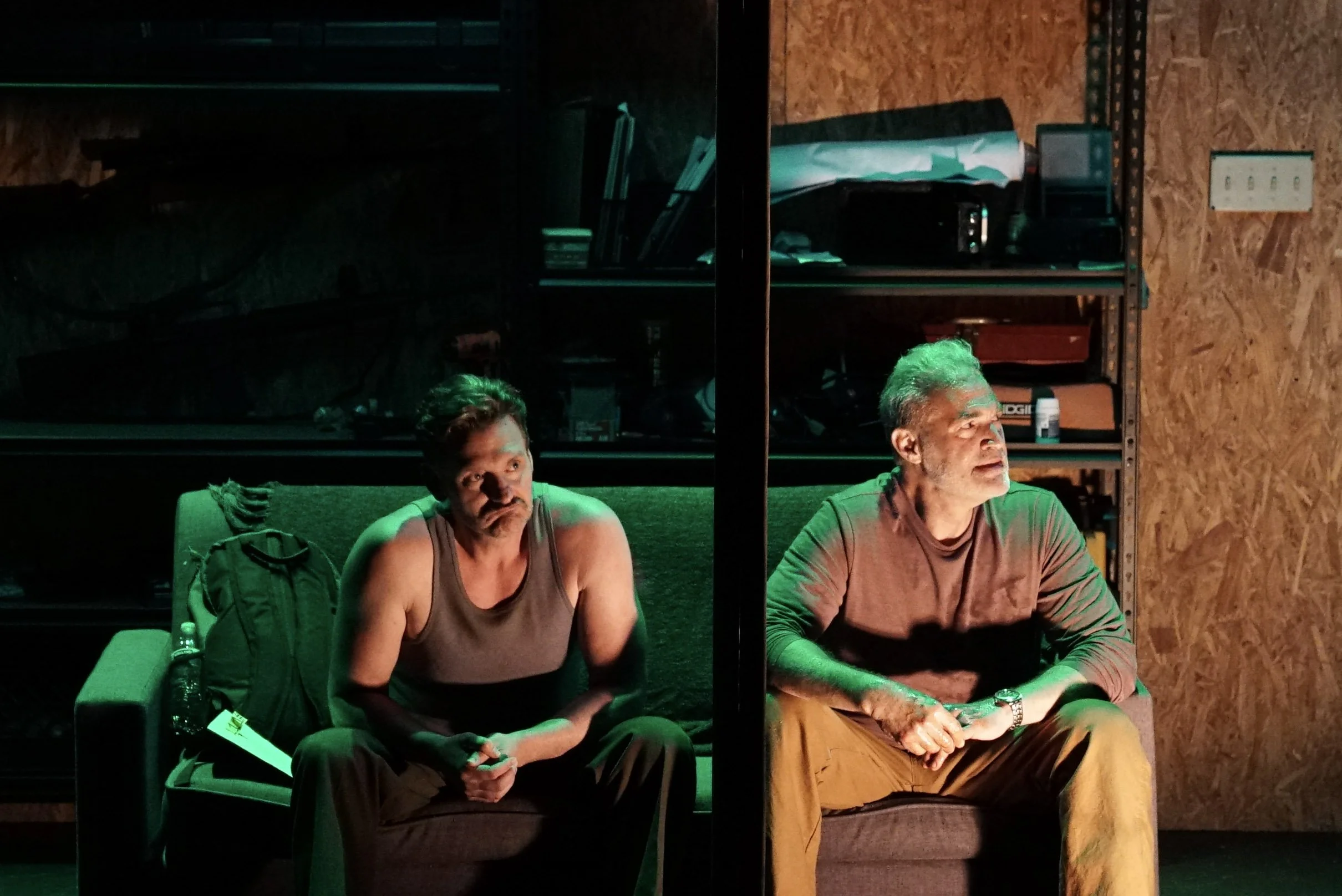
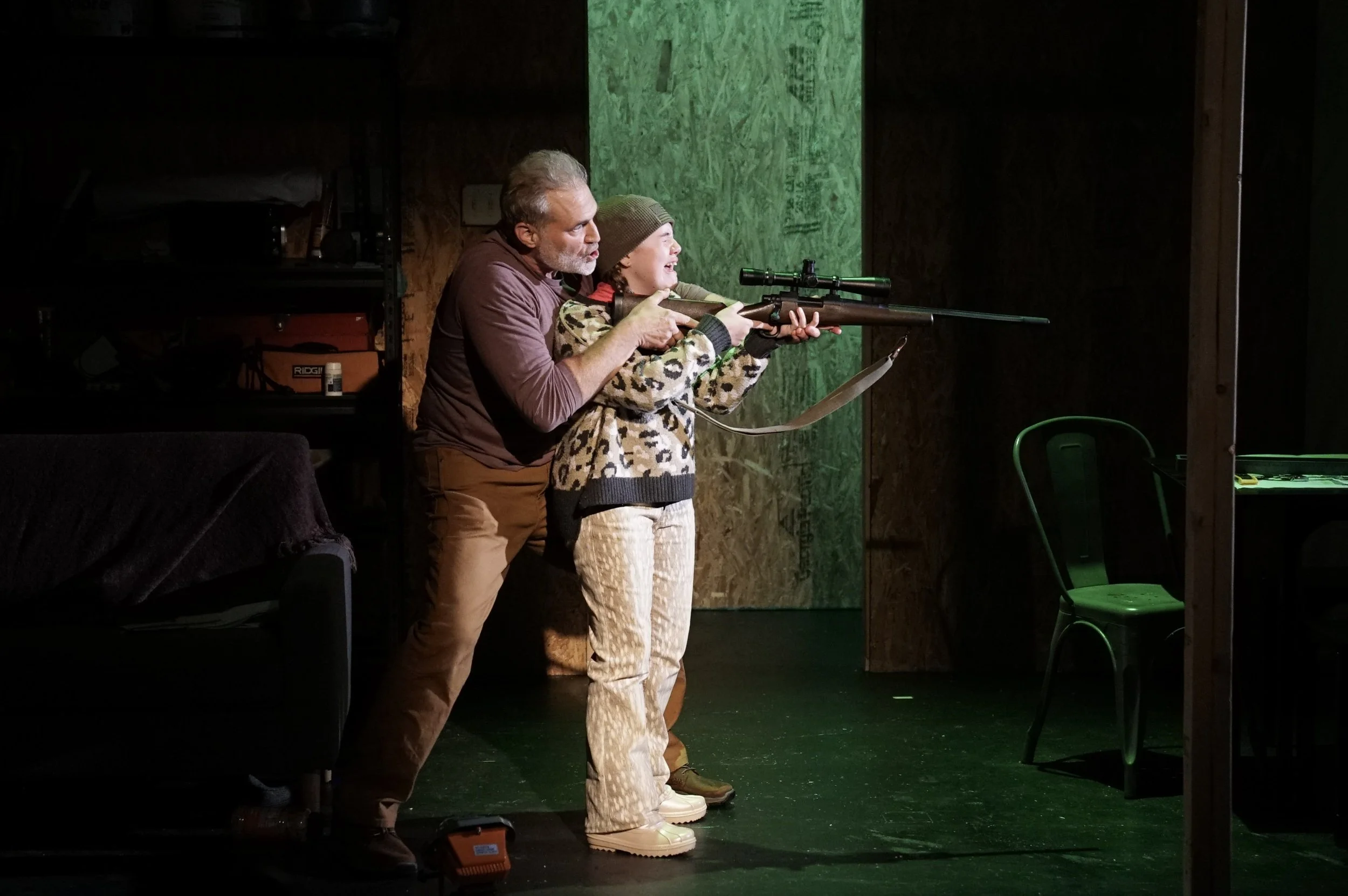
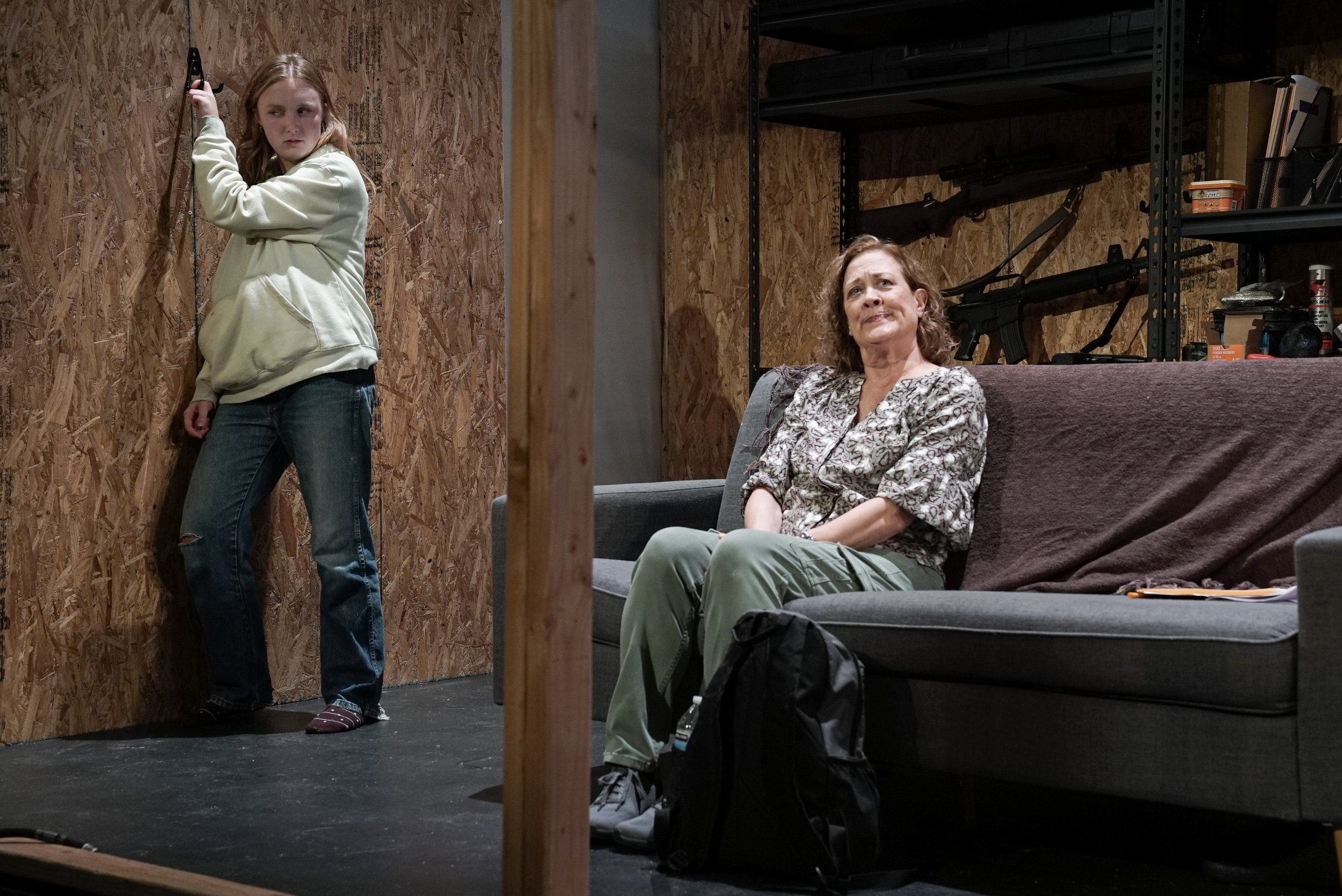
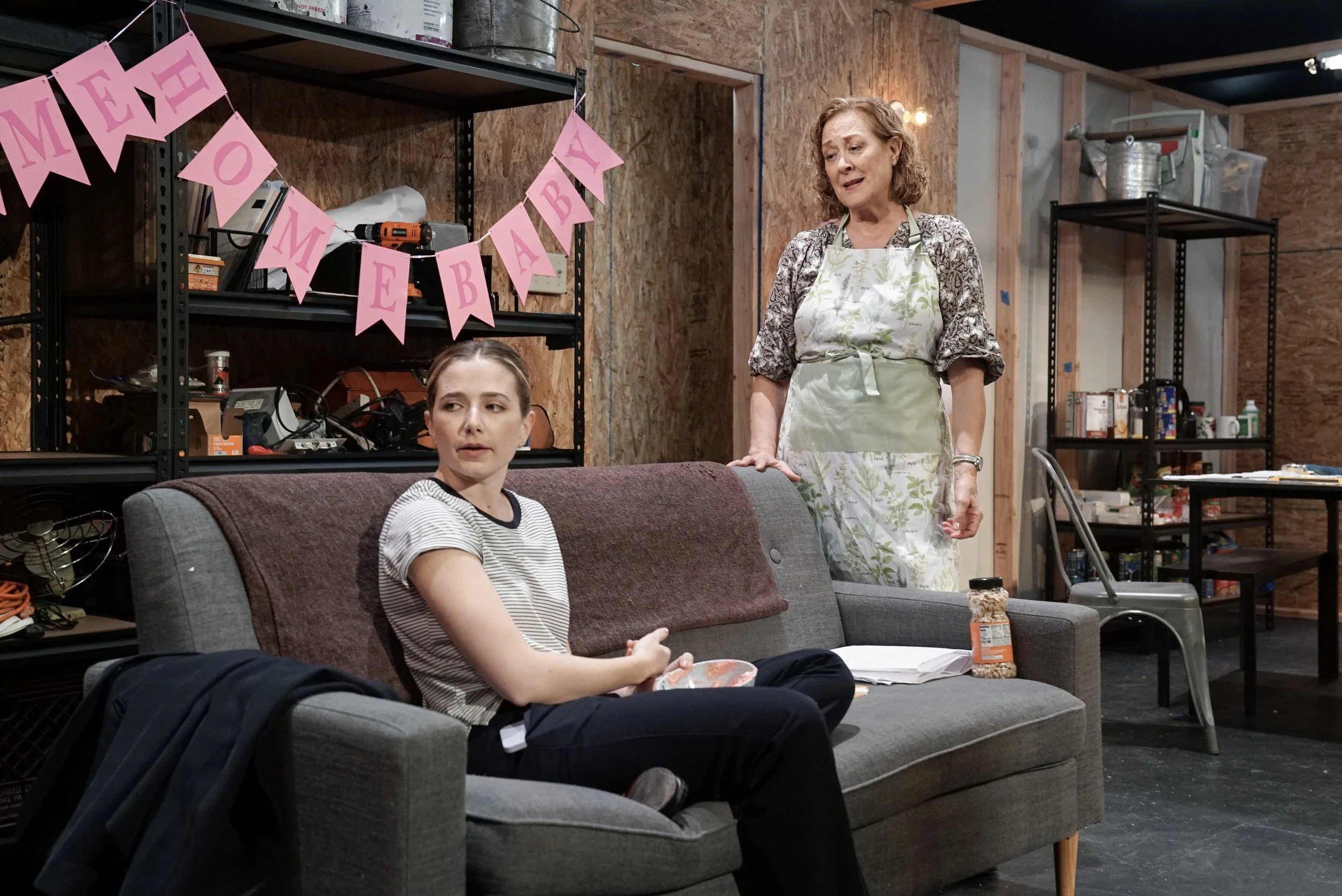
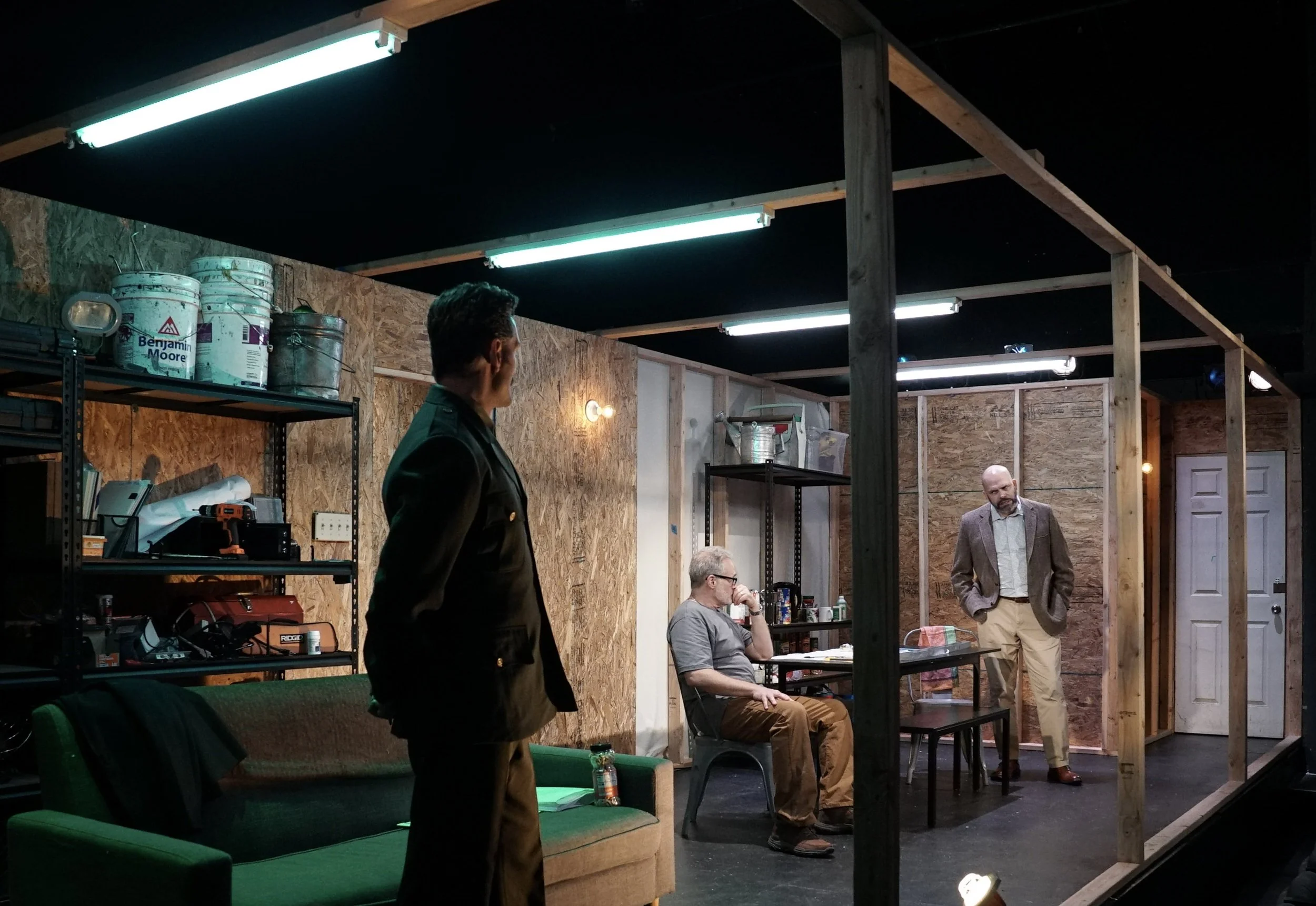
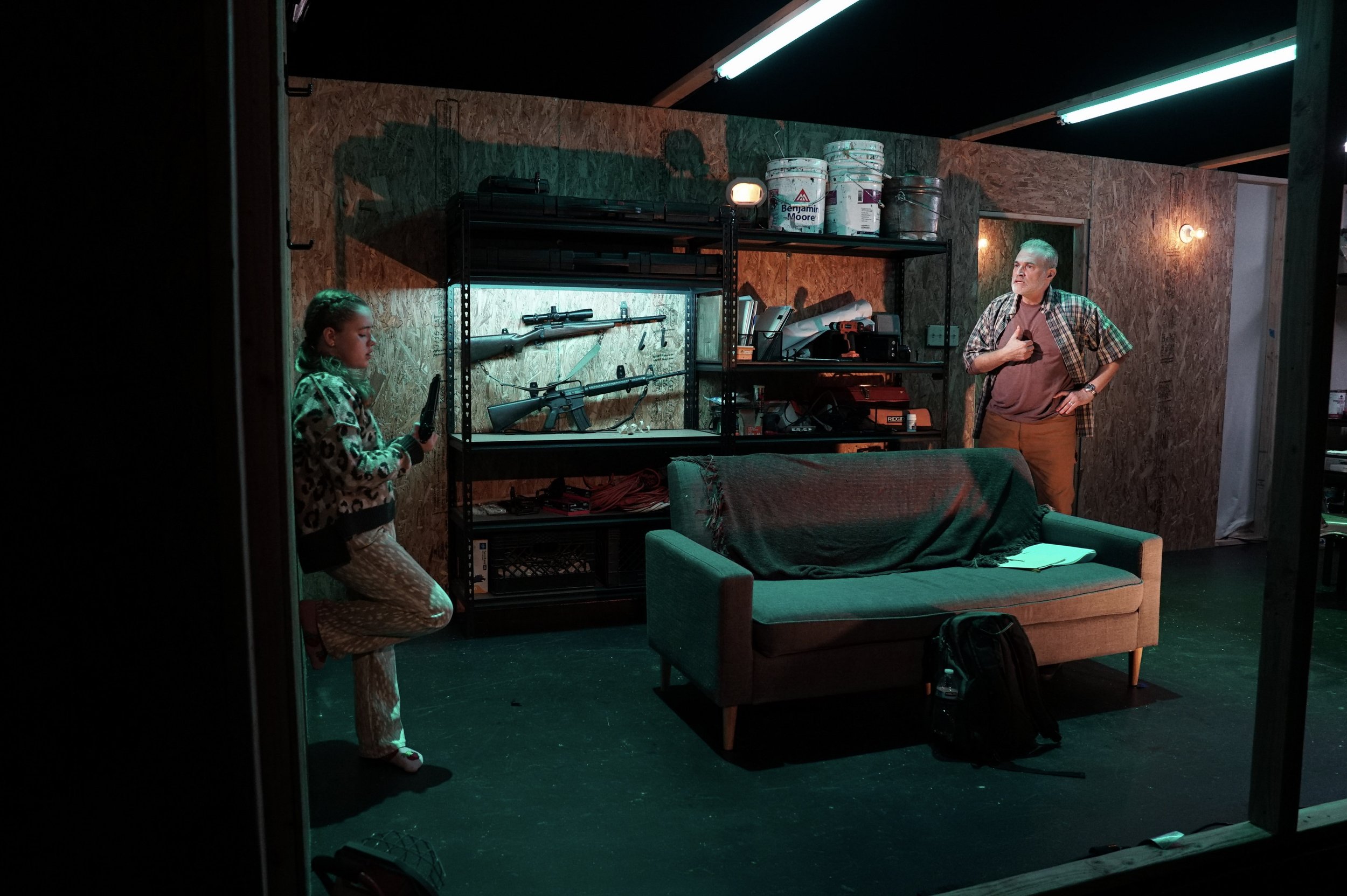
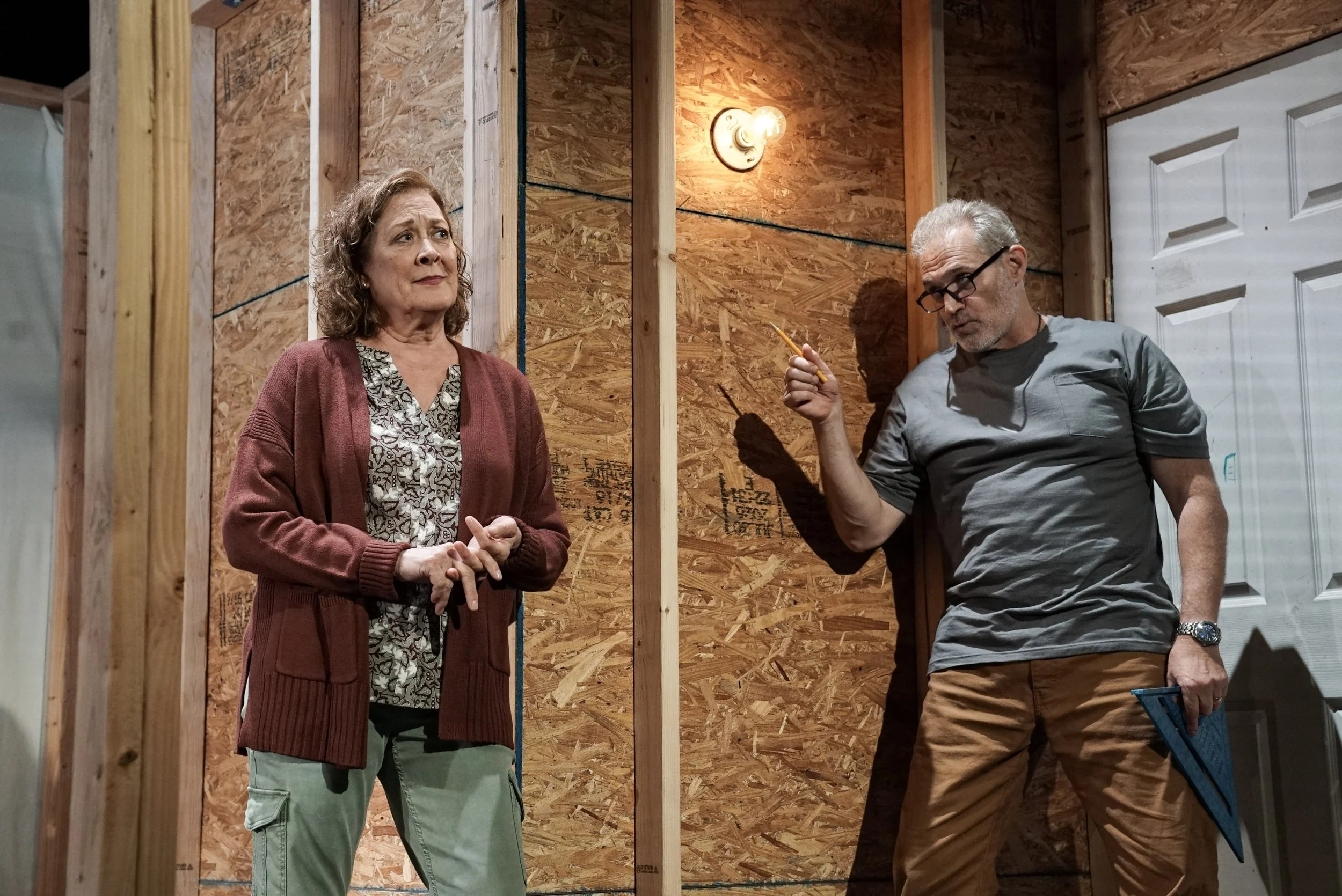
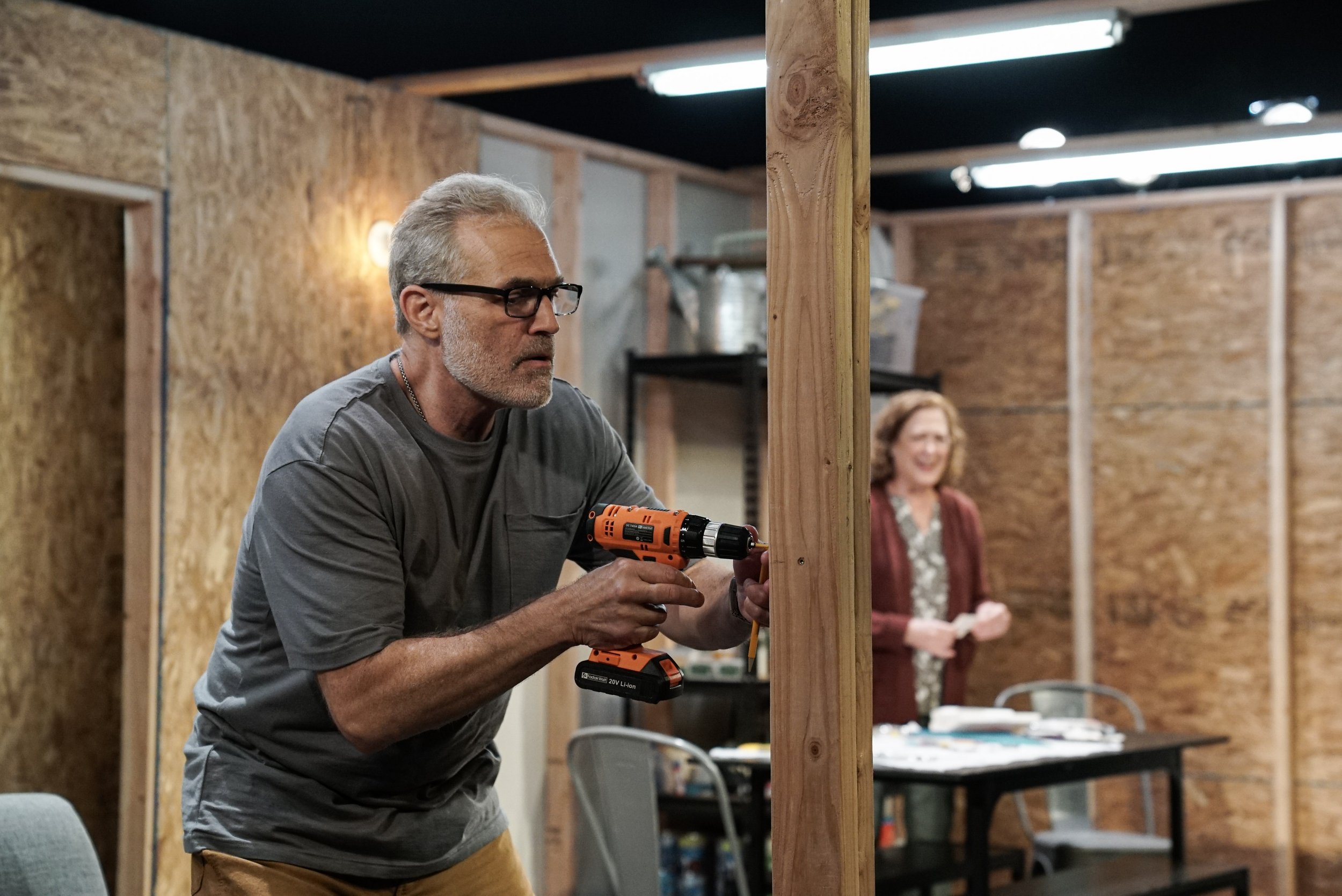
Photo Credit: Viktorija Mickute
L.B. Browne delivers a powerful, explosive yet intimate story about survival. Survival in an unstable world, where flux and confusion drive people to search for calm, peace, and safety. But in Safe House, safety is never quite as simple as finding shelter. What begins as an attempt to protect a family from an increasingly uncertain world slowly reveals another kind of confinement, one created by fear, secrecy, illness, expectation, and control.
As we walk into the theatre, we are greeted by rock music from yesteryear and an incredible set: a room of exposed wooden beams, plywood walls, storage containers, sparse furnishings, and the unmistakable architecture of emergency. We soon learn that Rock (Marc Kudisch) is trying to keep his family safe. He has transformed his basement into a doomsday bunker, driven by his increasing obsession with the possibility of a second American civil war after the coming election. As that obsession deepens, the line between protection and control begins to blur. The family prepares for the possibility of war outside while confronting the wars already taking place inside their home.
The bunker is both sanctuary and prison, rather than the safest place on earth.
Slipper (Karen Ziemba) attempts to balance being a supportive and understanding wife with being a mother who is doing her best to meet her daughters where they are. Ashley (Anna Roman) is the oldest, career-oriented and ten years older than her sister Claire. Still living at home, she often becomes the voice of reason in a house that is quickly losing its footing. Claire (Grace Church) is seventeen and has been away for a year. When she returns home pregnant, the carefully constructed order of the household begins to fracture. What follows is a reckoning with fear and the consequences of confusing love with control.
Secrets beget secrets. Silence creates more silence. And the things we do in the name of protection can ultimately become the things that imprison us.
Browne brings all of this together in a tightly written 100 minutes. Under the careful and thoughtful direction of Benjamin Viertel, the play moves with urgency while still allowing the intimacy of family life to breathe. We watch this family engage in the ordinary business of living: preparing, organizing, working, sitting, eating, talking, avoiding, and occasionally confronting one another. I often felt as if I were spying on them rather than simply watching a play. That feeling of observation makes the eventual revelations feel particularly intimate.
Each character has a clear story arc that can stand on its own, yet each is intricately woven into the larger family story. After all, a family story is not one story at all. It is made up of individual stories, histories, lores, and mores, passed down, protected, challenged, and sometimes deliberately concealed. And not every inheritance is financial. Sometimes what we inherit is a fear, a secret, a belief, an illness, a silence, or a way of loving that has been handed down through generations. Sometimes you simply do not want the inheritance. Safe House understands that a family is its own ecosystem, where one person's inheritance can become another person's imprisonment.
Forest Entsminger's set design and Mary Ellen Stebbins' lighting design excel in creating a space where the past and present flow naturally into one another. The production makes extraordinary use of a seemingly simple, one-room set. A couch, a table, storage, shelving, containers, empty paint buckets, two chairs, and guns mounted on the wall are enough to establish both a basement and a bunker. Yet there is never any doubt that we are in a bunker.
Through direction, movement, and lighting, the space continually shifts. Unexpected areas become active, and the physical environment seems to hold its own secrets. What appears to be one room contains multiple worlds. The design allows the family to inhabit the space domestically while constantly reminding us that they are living inside a structure designed for survival. It is domestic and defensive, familiar and threatening. It is a home that has been fortified against the outside world, but that same fortification creates confinement.
Viertel’s direction understands that action does not always require movement. Every aspect of the production is charged with intention. Even in moments of stillness, something is happening: a glance, a pause, an actor listening, a shift in position, or the quiet business of a family preparing for an uncertain future. The direction gives the actors the freedom to live inside the space rather than simply occupy it. The result is a production in which the smallest gestures can carry enormous weight. The bunker is not merely a set. It becomes an active participant in the story, holding the family's secrets while simultaneously closing in around them.
The cast is a remarkably strong ensemble, with each performer holding their own while contributing to the larger family dynamic. There is a sense that these people have histories together, that their silences existed before we entered the room and will continue after we leave. It is absolutely captivating to observe. Karen Ziemba brings warmth, restraint, and aching practicality to Slipper. She gives the character a lived-in complexity: a woman trying to hold the family together while slowly recognizing the cost of everything she has agreed to normalize. Ziemba lets us see both Slipper’s devotion and her exhaustion, making her quiet moments land with particular force. Marc Kudisch gives Rock a frighteningly human conviction. His performance is particularly important to the play’s central tension between protection and control, as Rock’s desire to keep his family safe becomes increasingly consuming. Kudisch avoids reducing him to a symbol or a warning sign; instead, he shows us a man whose fear has hardened into certainty, and whose certainty has become dangerous. Anna Roman brings a stoicism to Ashley that is both controlled and vulnerable. She carries the weight of someone who has learned to manage the room, anticipate the next rupture, and keep herself composed even when composure is no longer enough. Roman makes Ashley’s restraint feel active rather than passive, and her presence becomes one of the production’s strongest emotional anchors. Grace Church gives Claire a complicated and courageous presence, embodying the truths no one else is willing to speak. Justin Lee Miller plays the dual roles of Dr. Merritt and Officer Moxley, entering the home as a friend to the family in one role and a potential threat in the other. Glenn Seven Allen plays the General hauntingly, and uncomfortably underscores the military overtones that shape the family’s dynamics. Julianna Layne brings strength and toughness to young Claire, giving dimension to the younger version of the character and the choices she makes. Together, the actors create an ensemble that understands the particular language of family: unfinished sentences, familiar gestures, old grievances, private jokes, defensive reactions, and the remarkable ability to know exactly where to press when someone is vulnerable.
The play moves through difficult and deeply contemporary territory: abortion, sexuality, disease, war, politics, cults, anarchy, family, and generational trauma. Yet these subjects never feel like a list of issues. They function as pressure points, revealing how differently each character understands safety, freedom, responsibility, and love.
There is also something distinctly American in the production's cultural landscape. The pre-curtain music (Boston, the Blues Travelers, Tom Petty, and This Land Is Your Land) place these characters within a recognizable national mythology. It is striking to hear these familiar cultural touchstones inside a bunker built in anticipation of national collapse. The characters are preparing for the destruction of a world while carrying pieces of that world with them.
Perhaps that is what makes Safe House so compelling. The apocalypse may be looming outside, but the more immediate danger is the inheritance each character has carried into the room. We build walls to keep danger out, but walls also keep people in. We construct systems to protect ourselves, but those systems can become cages. We inherit beliefs, fears, illnesses, expectations, and secrets, sometimes without ever consenting to carry them. The bunker may be the safest place in the world. But safety without freedom has another name. Prison.
Click HERE for tickets.
Published by Theatre Beyond Broadway on September 5, 2026. All rights reserved.