
The Real Ivanov
Written by Anton Chekhov; Adapted and Directed by Laura Strausfeld
Presented by Initiative Productions.
Lynn F. Angelson Theater | 36 E. 13th St., New York, NY 10003
Aug 17 - Sept 19, 2026
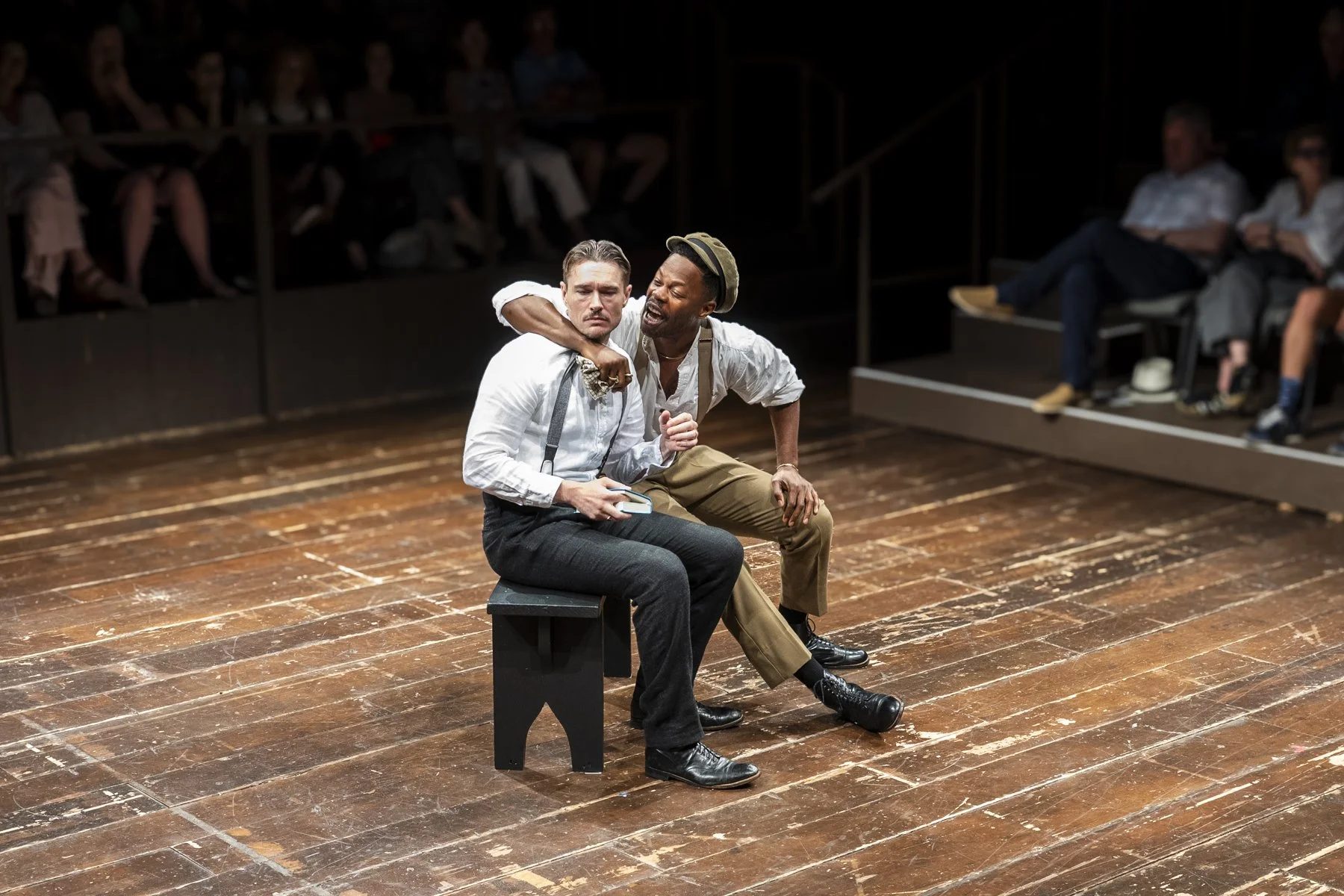
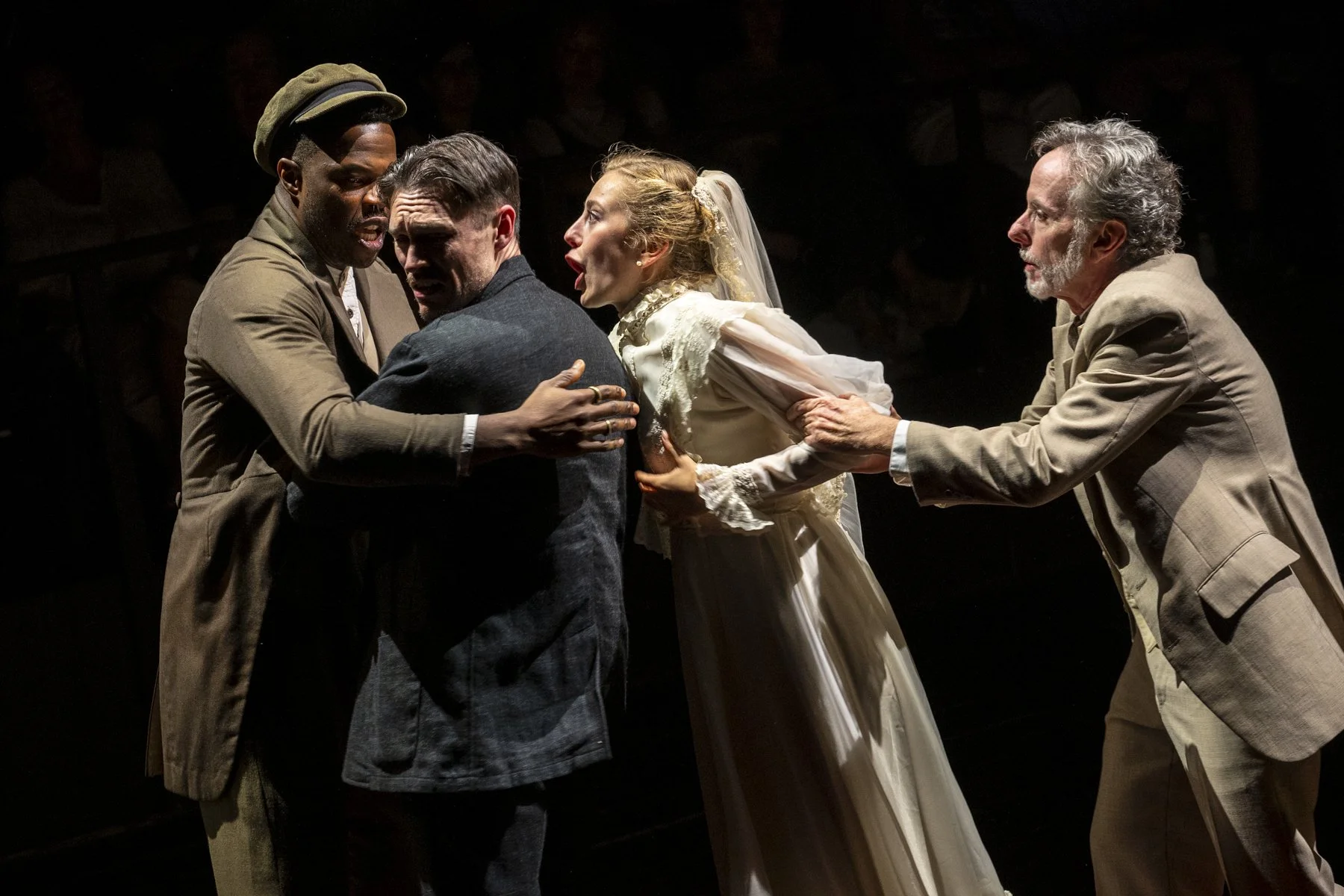
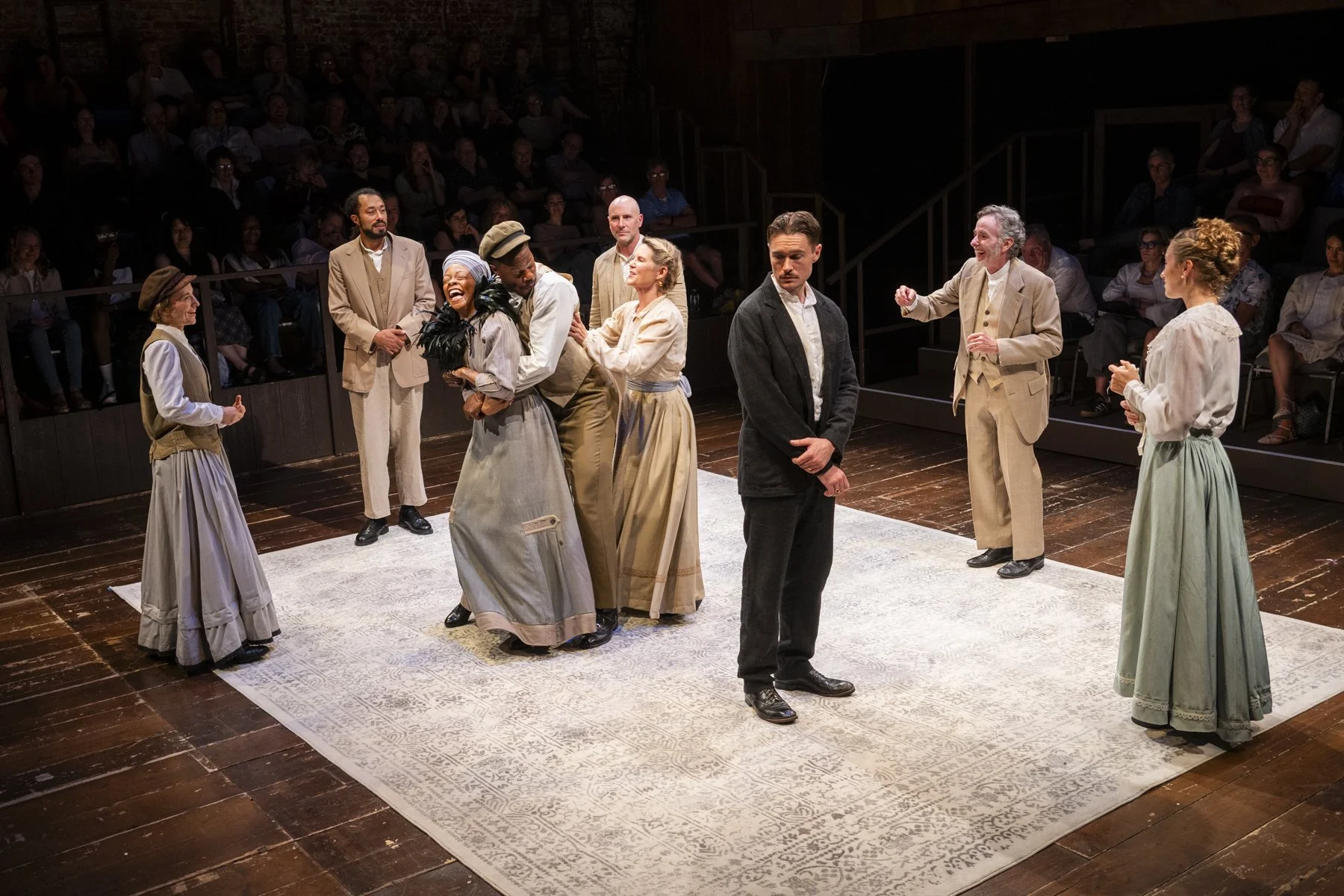
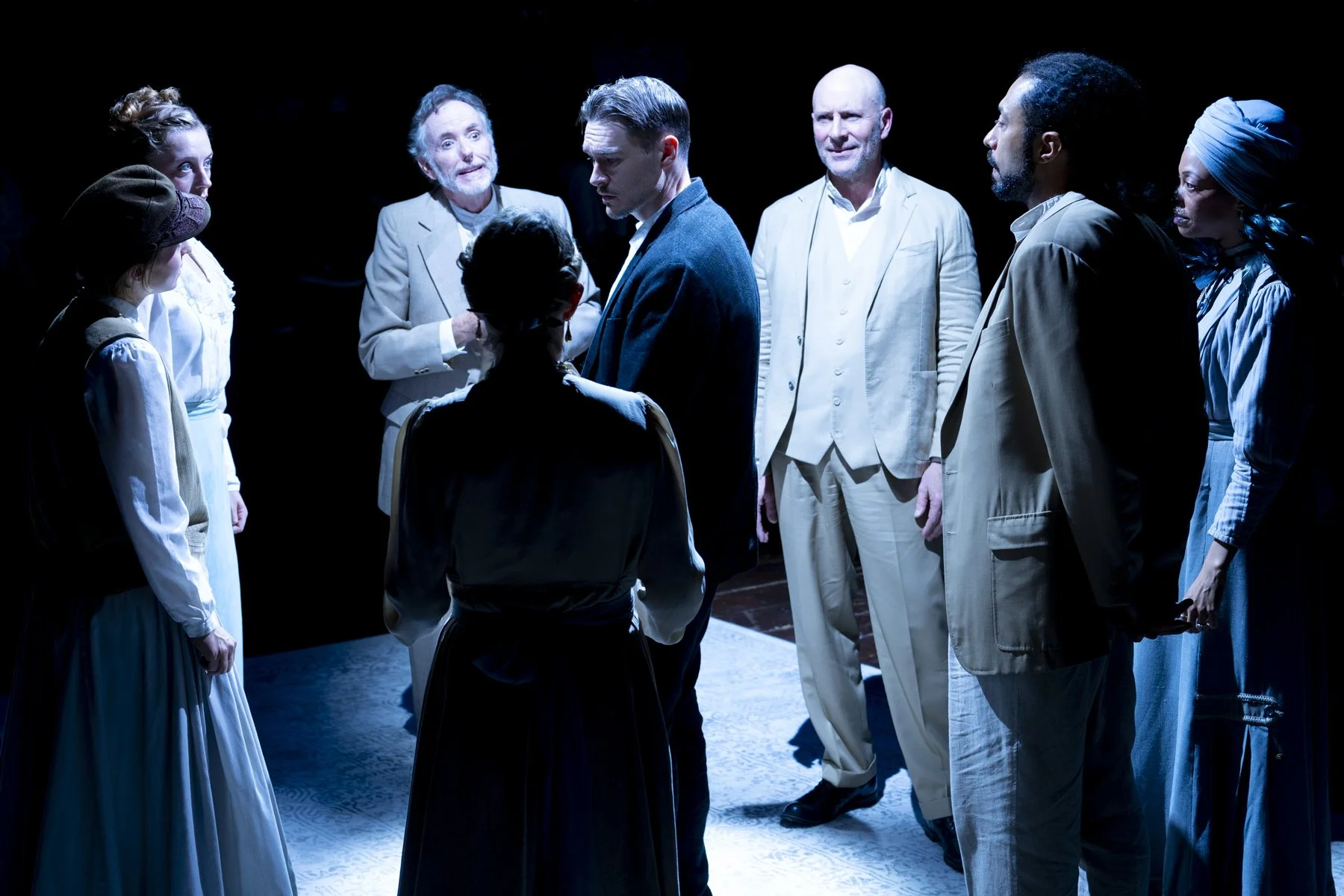
Photos by Russ Rowland
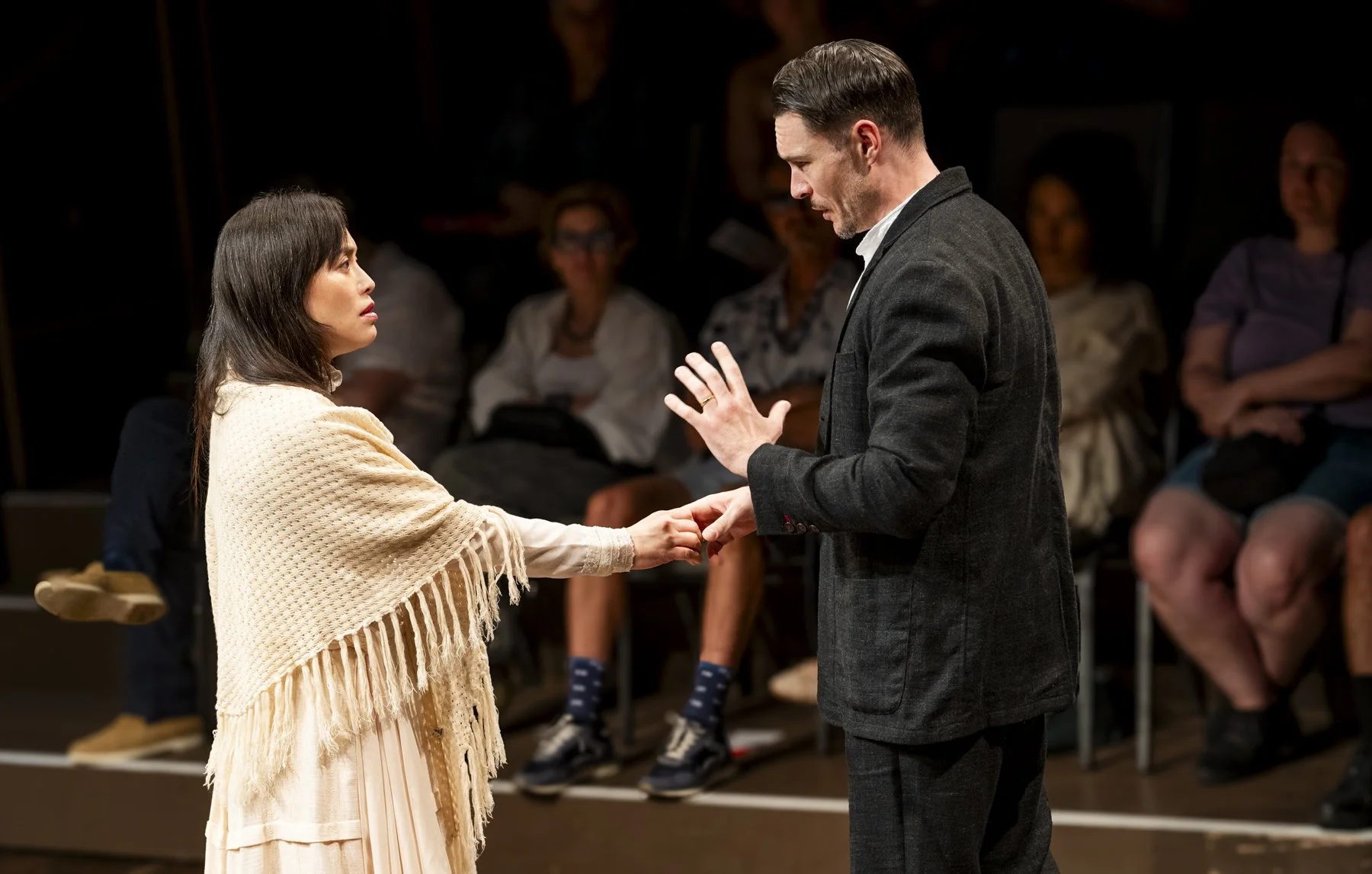
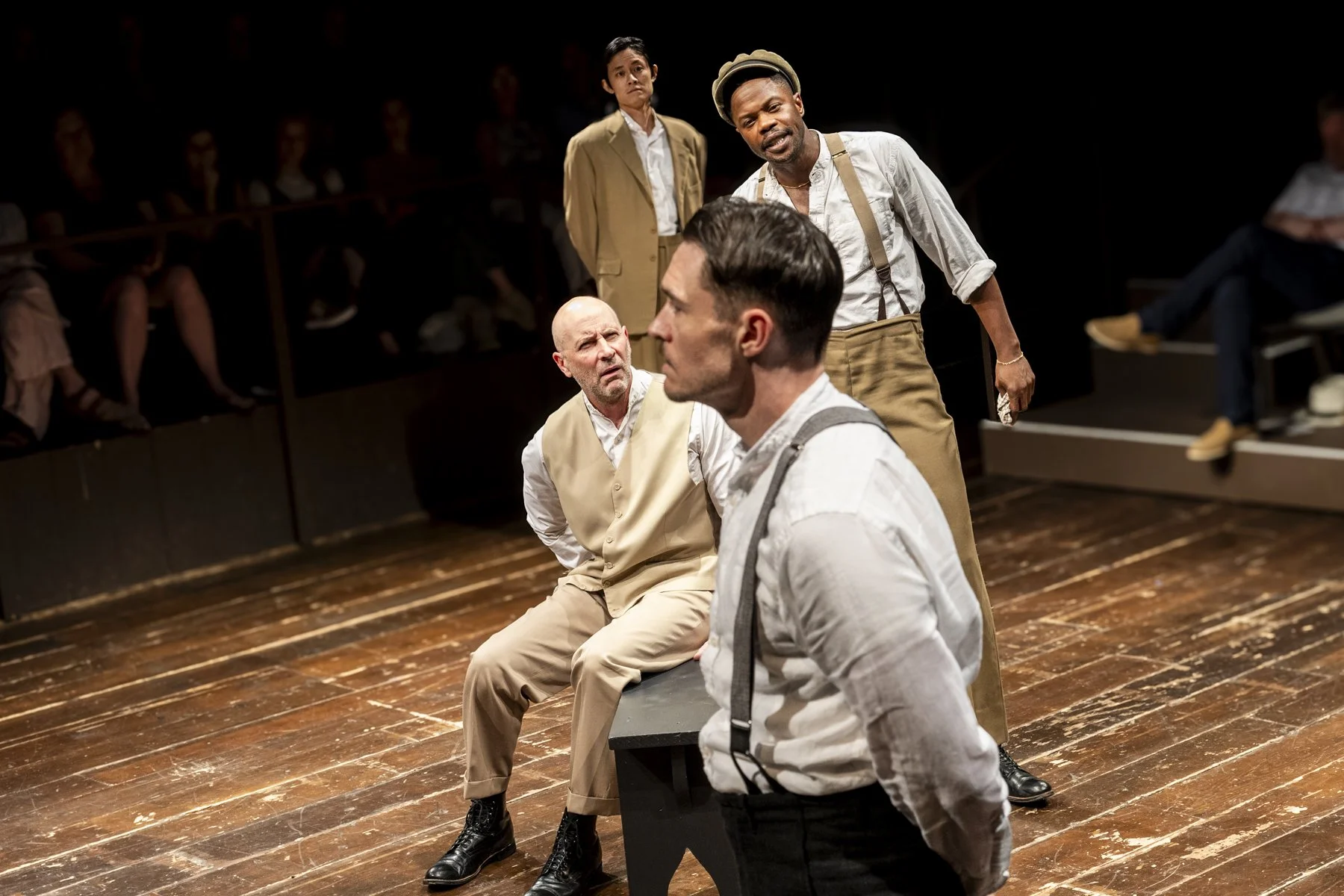
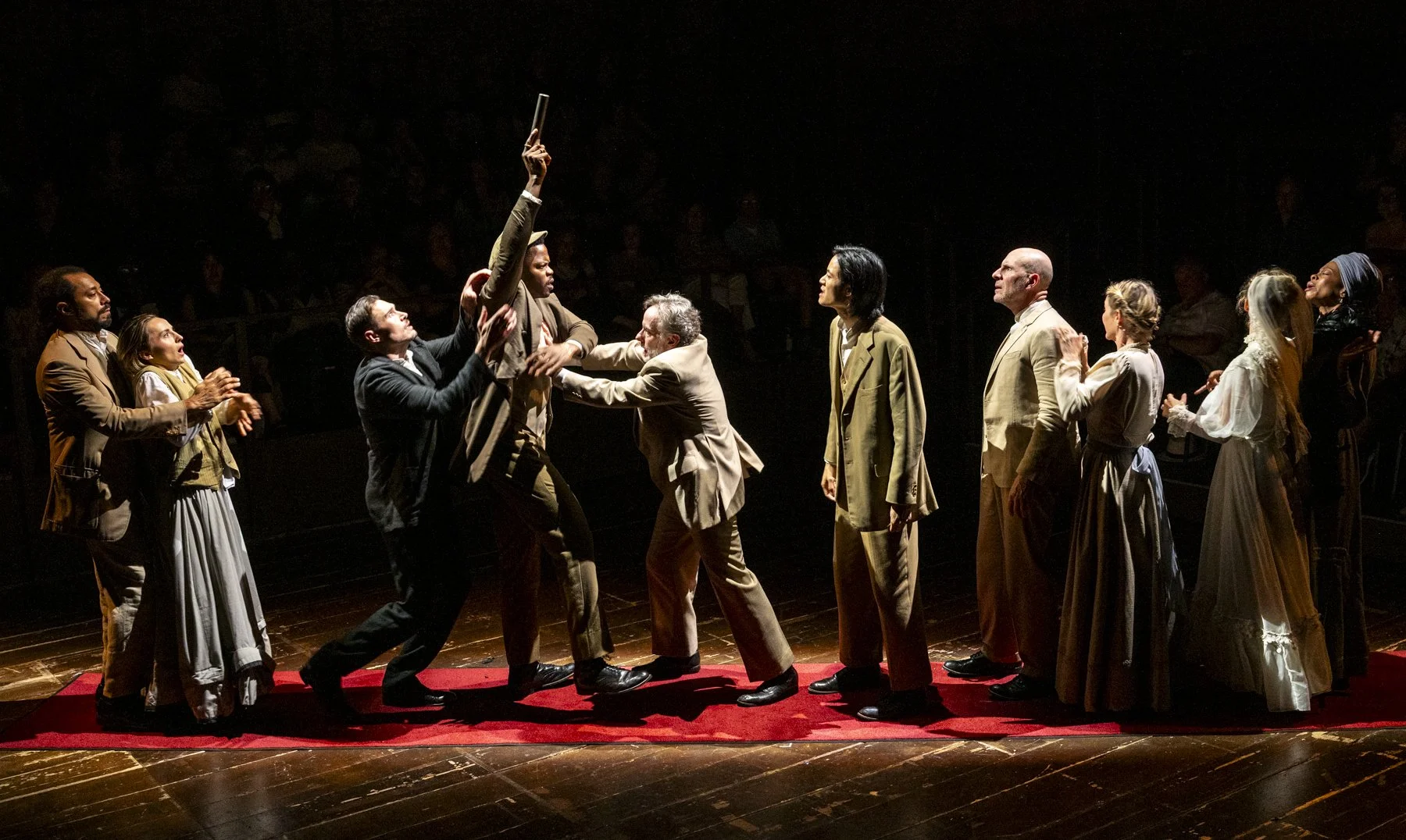
Furniture is the first casualty in Laura Strausfeld's The Real Ivanov, a swift 100 minutes at the Lynn F. Angelson Theater, Classic Stage Company's home on East 13th Street. No tables, no teacups, no props of any kind, just strips of carpet standing in for a bench, a house, a wedding hall. It's a bold choice for a play whose four acts each pivot on domestic clutter: Lebedev's card table, Ivanov's study, Zinaida's chest of drawers. It also pays off exactly when it should. Strip a world down to bodies alone, and the bodies become the only stock left to trade. The world of Strausfeld's Ivanov runs on ruthless capitalism, an infernal marketplace where everyone, healthy or dying, rich or freshly ruined, is inventory, and relationships are unapologetically transactional. The party scene a third of the way through and the wedding that closes the show both stage this literally: guests rearranged like furniture careening about the room, all angling for a better spot at the auction, a better view of the figurative car crash. When the concept clicks, it clicks hardest in these well-staged scenes. It's the smartest idea in the show.
It also exposes every seam it doesn't paper over. Any production requires the actors to agree on what kind of play they're in, and this cast hasn't reached a consensus. Some performers work in the hushed, granular realism of a Horton Foote drama, while others lean into Chekhov's debt to commedia: broad, playing for the laugh, playing lazzi. Neither reading is sufficient on its own. Significant productions of Chekhov fuse the two into a kind of gallows humor: a wasted, morally questionable life treated as a joke because the alternative is unbearable. Staged side by side, without a stronger directorial hand to reconcile them, they confusingly read as multiple productions sharing a floor plan rather than one. Its arena staging doesn't help: an actor can commit fully to a monologue and still lose three-quarters of the house the moment blocking turns their back to it, and that happens often enough to cost pivotal moments in the play.
At the center of that inconsistency sits Sam Underwood, appealing and clearly capable, yet he hasn't solved the title role's central puzzle. Ivanov compares himself to Hamlet, a man frozen mid-decision, but that paralysis reads as fascinating to watch only when we see the deeply human struggle against it. Underwood one-notedly plays a man who has already concluded that his formerly unexamined life wasn't worth living, rather than one still fighting to believe otherwise. There's craft in that stillness. There's very little friction, however, and friction is what makes the gunshot at the end cost anything, or indeed, interesting. A character who never fights for agency can't be devastating when he loses it: the ending lands with an inconsequential thud, more of a shrug than a rupture, more a blessed relief than a catastrophic loss.
Two performances, at least, understand exactly what this production is reaching for. Spencer Aste's Lebedev, the put-upon father footing everyone's bills and hosting everyone's despair, finds comedy in contradiction rather than shtick: a man who loves his daughter and resents her, who is generous because he's too tired to be anything else. Amelia Mason's Sasha, hopelessly devoted to a man who can't meet her there, holds several motivations at once without flattening any of them, which is where Chekhov's comedy actually lives. Aste and Mason play as if they got the same memo as set designer Jiyoun Chang: strip away the set, and what's left has to be fully realized human beings. The rest of the ensemble should ask them how.
Click HERE for tickets.
Cast: Sam Underwood (Ivanov), Ivory Aquino (Anna), Amelia Mason (Sasha), Spencer Aste (Lebedev), Sam Adegoke (Borkin), Jordan Lage (Shabelsky). Also featuring Elijah Guo, Sarah Long, and Kimberlee Walker. Scenic and lighting design by Jiyoun Chang.
Review by Ariel Estrada
Published by Theatre Beyond Broadway on September 4, 2026. All rights reserved.