
The Body of Mary: A Play in Three Acts (of God)
Written and directed by Katie Cappiello
The Gym at Judson | 243 Thompson St, New York, NY 10012
September 8 – October 8, 2026
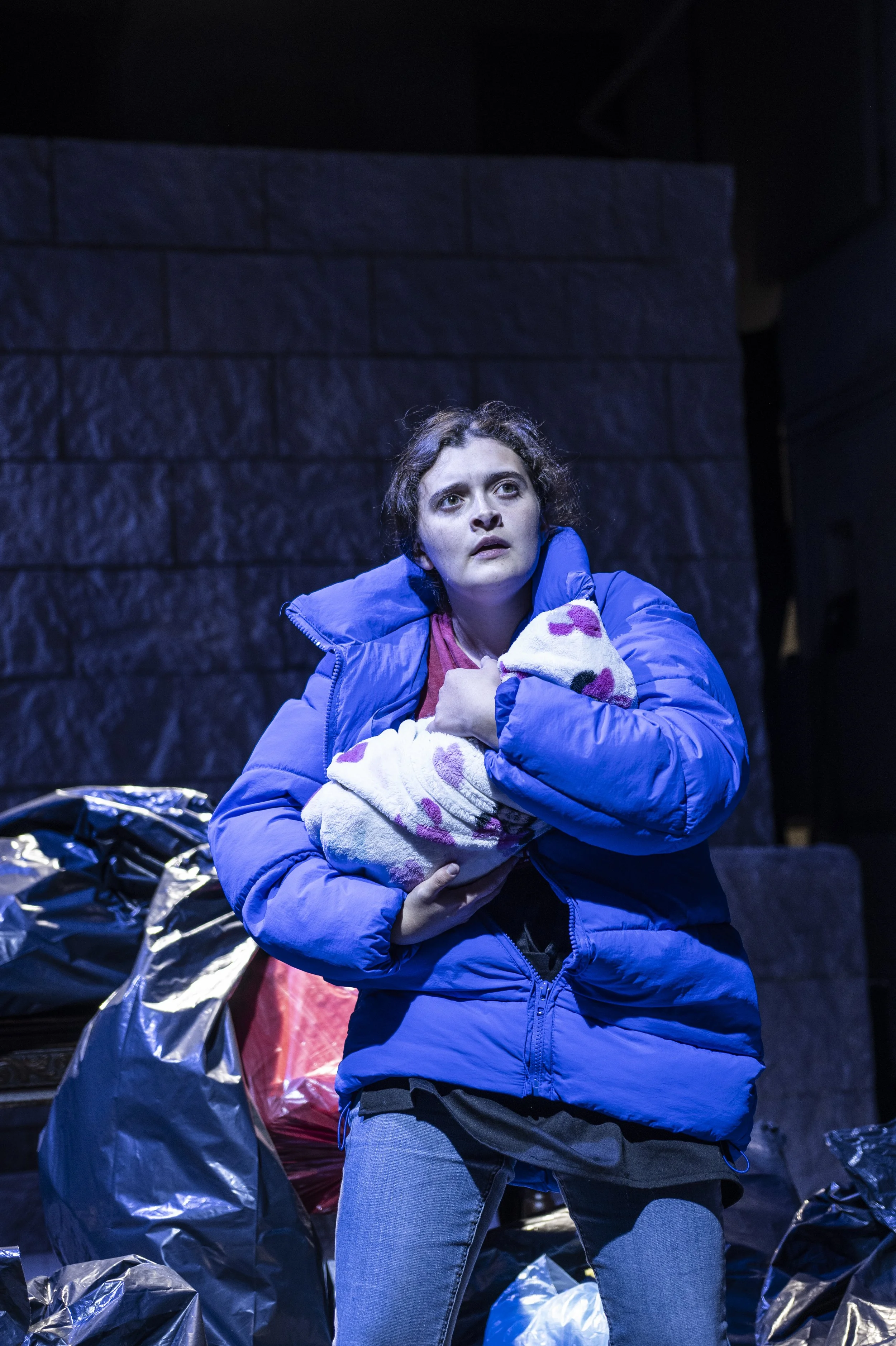
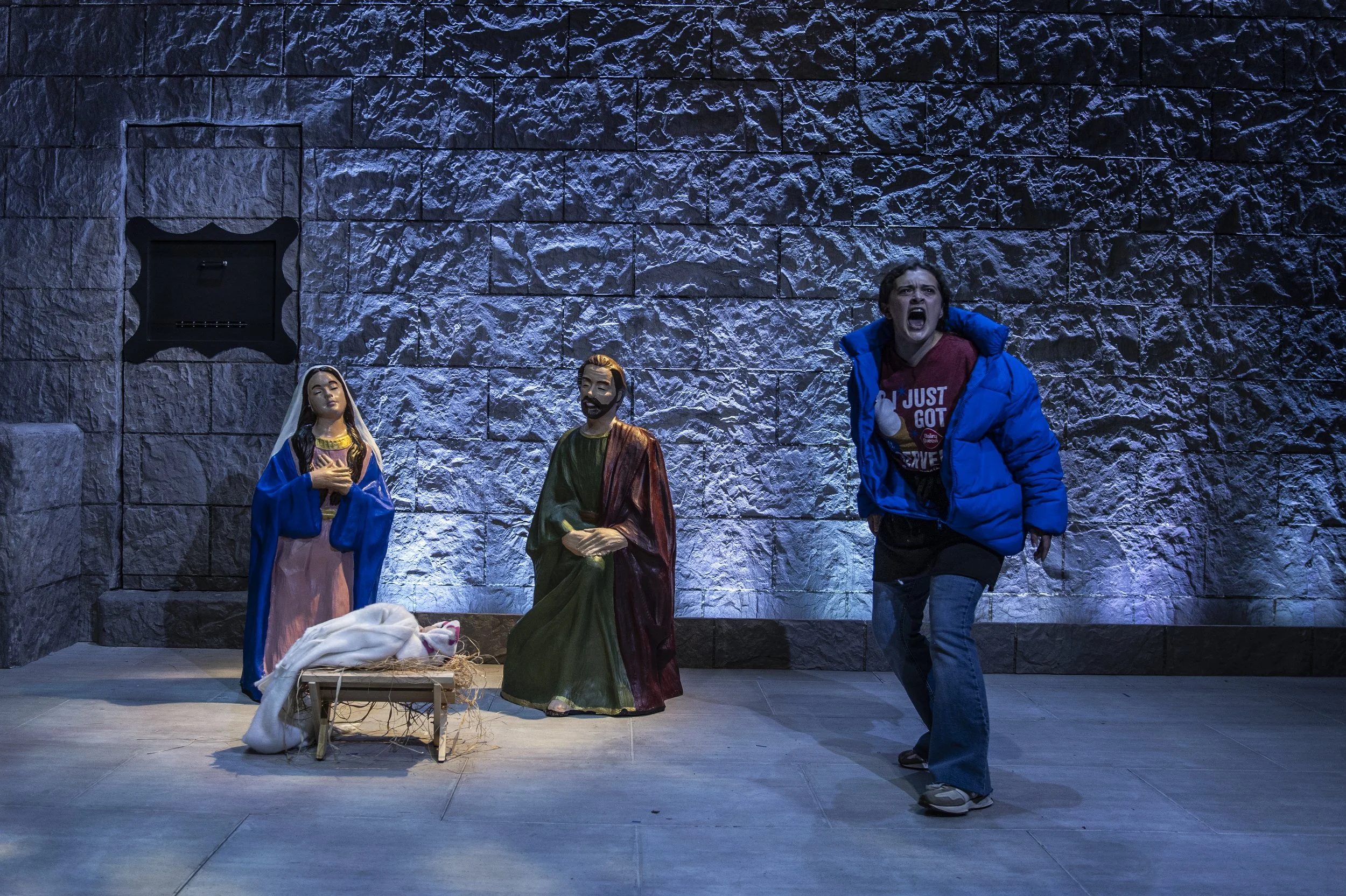
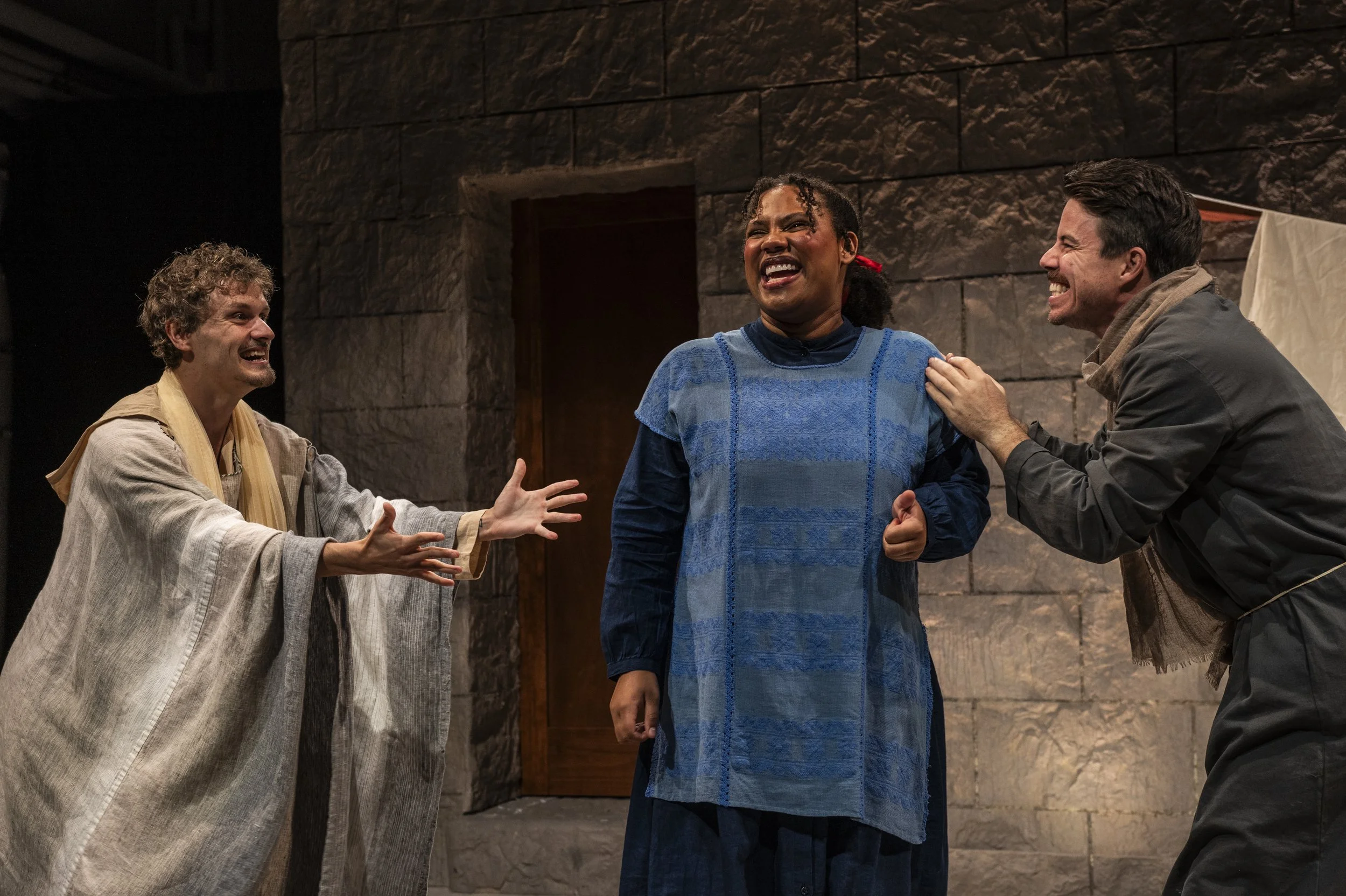
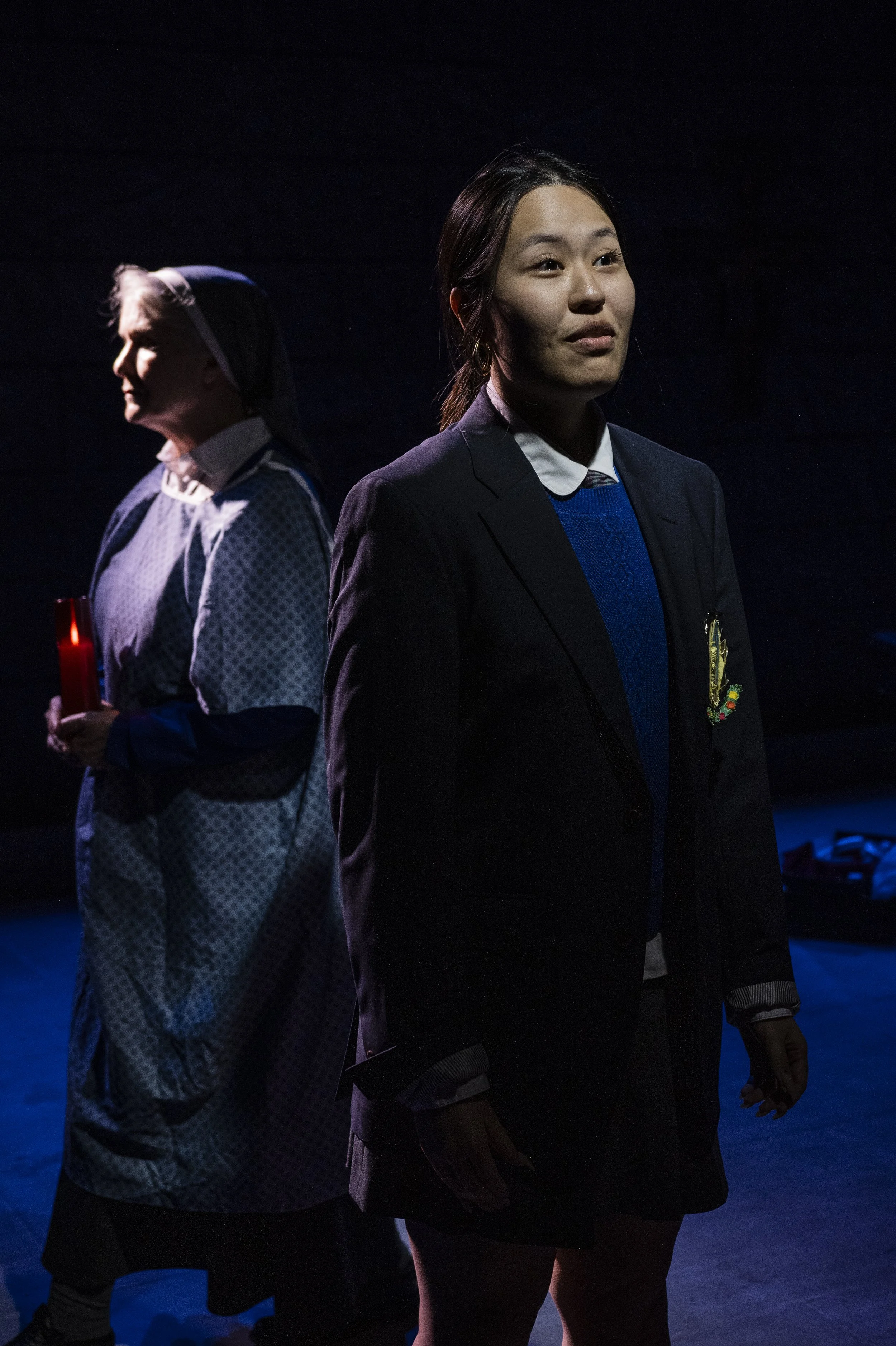
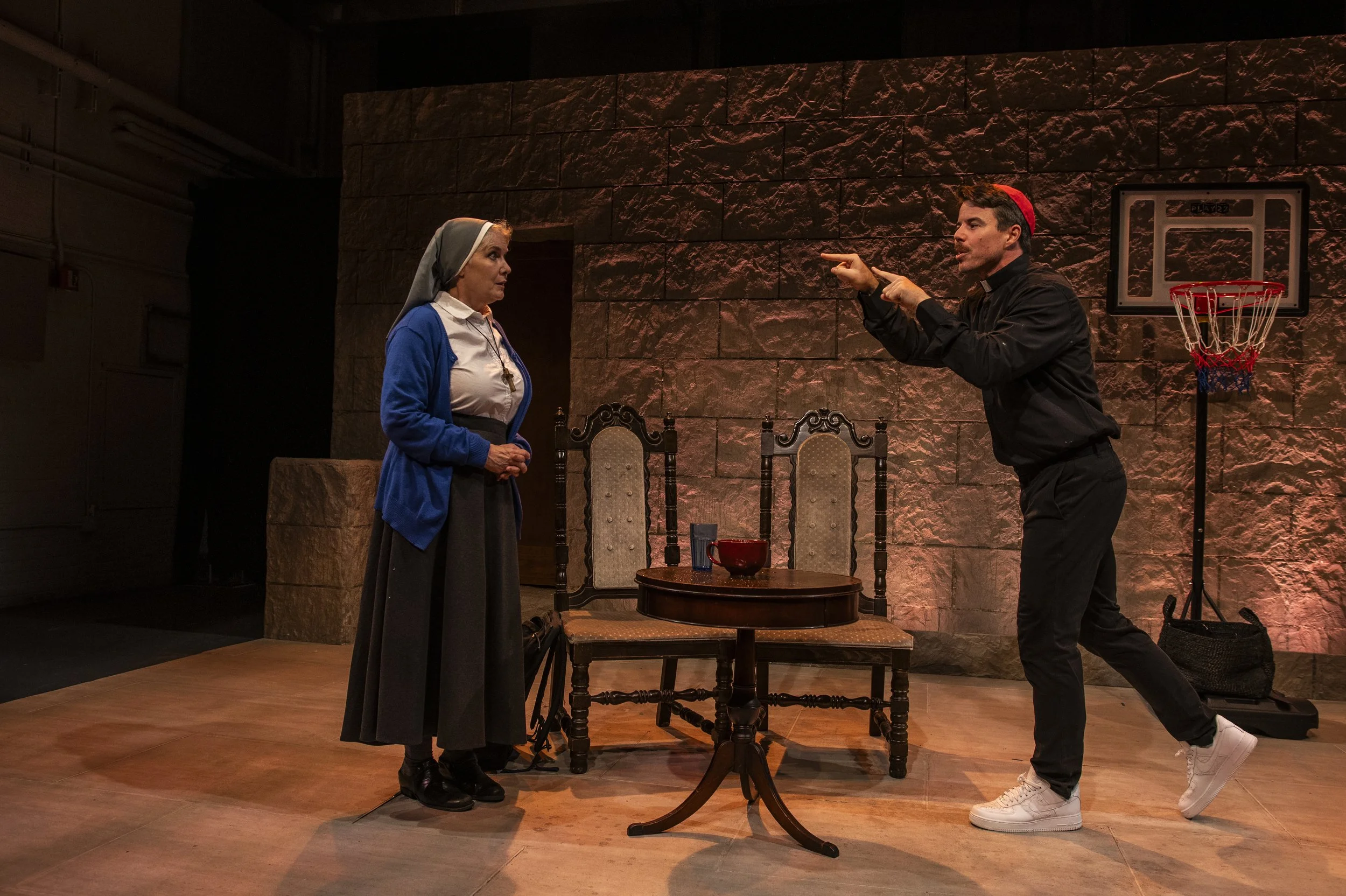
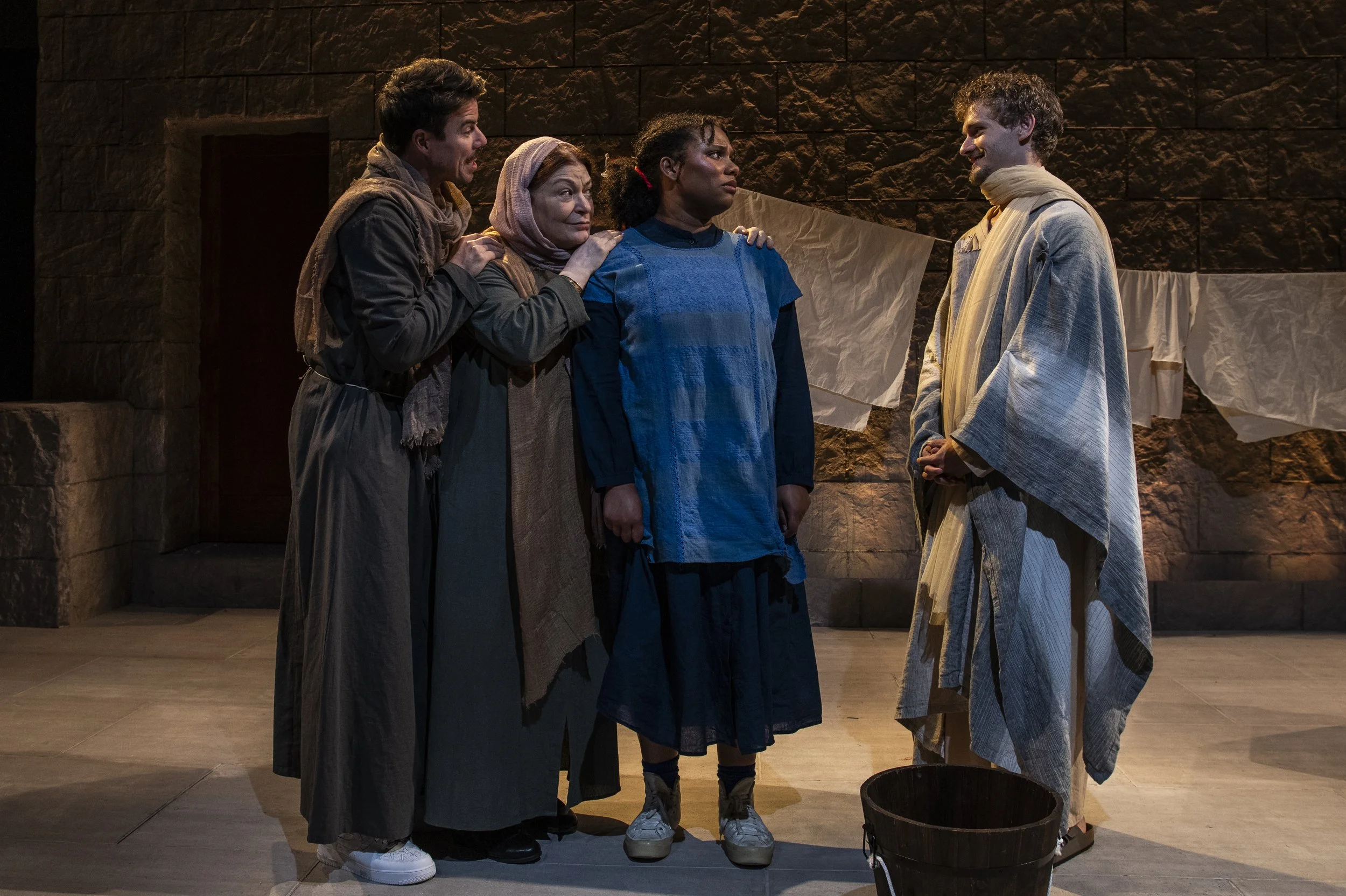
Photo Credit: Alley Babcock
Gloria Steinem recently passed away. The matriarch of the feminist movement. At least, that’s what we say. But she wouldn’t agree with that statement.
I was sad. I found myself asking, who will emerge? Who can boldly step into this role? Who among us is ready to step into that space? Will it be me? Will it be an artist, a politician, a grassroots organizer? Who carries the work forward?
Then I saw Katie Cappiello’s The Body of Mary: A Play in Three Acts (of God) and realized: it’s all of us.
Cappiello, who was raised Catholic, examines feminism through the lens of Catholicism, creating a play that is both provocative and deeply human. Through three interconnected stories, she explores womanhood, motherhood, sacrifice, faith, and choice while confronting the ways women’s bodies have been revered, controlled, politicized, and mythologized across centuries.
The play introduces us to three Marys. Mary of Nazareth, the young girl chosen to bear Christ. Mother Mary Joseph, a contemporary nun serving the vulnerable in New York City. And Mary of Nazareth, Texas, a Dairy Queen employee whose late-night discovery becomes a life-altering event. Though their circumstances are separated by centuries and geography, their stories are connected by questions of autonomy, faith, motherhood, and the power others claim over women’s bodies.
And this is where The Body of Mary becomes particularly compelling. Cappiello doesn’t offer easy answers. She wrestles with consent, choice, sacrifice, equality, religion, and institutional power, asking us to sit with the contradictions rather than neatly resolve them.
Since Roe v. Wade was overturned, conversations about reproductive freedom and bodily autonomy have become even more urgent. But the play reaches beyond the politics of any single moment. It examines the larger systems that shape women’s lives: patriarchy, classism, racism, religion, economics, and the institutions that decide who gets to have choices and who does not.
Each act offers a distinct perspective, but it is the ensemble that makes the production feel whole and palpable. Annalisa D’Aguilar, Mary Jo Mecca, David Hull, Ben Cook, Tracy Sallows, Lu Yi Peng, and Gracie Conn bring remarkable depth and versatility to the many worlds of The Body of Mary. Moving between characters, centuries, institutions, and circumstances, they never lose sight of the people at the center of these stories.
In “The Virgin,” D’Aguilar brings Mary of Nazareth into sharp focus, allowing us to reconsider the familiar biblical story through a contemporary feminist lens. “The Mother” shifts to New York City, where Sallows’ Mother Mary Joseph confronts social justice, institutional hypocrisy, and the complicated relationship between church and state. “The Dumpster,” perhaps the most unsettling and emotionally charged of the three acts, moves to Nazareth, Texas, where Conn’s Mary confronts childbirth, abandonment, and impossible decisions. Cappiello's direction moves seamlessly through the worlds surrounding these women, giving the production the texture and complexity necessary to hold its many themes.
This is a true ensemble piece. The actors aren’t simply delivering the playwright’s ideas. They are embodying them. Their collective work allows the production to move between humor, faith, anger, grief, tenderness, and confrontation without losing its center.
That tension feels essential to The Body of Mary. Faith, motherhood, community, and the possibility of choosing one’s own path can be bewildering when confronted at the same time. There is also something harrowing about the systems that have historically claimed authority over women’s bodies and choices. The production doesn’t allow us to separate those realities neatly. It asks us to hold them together.
The design team contributes significantly to that experience. Forest Entsminger’s scenic design is simple, clean, and effective, built around a wall and door that become the anchor for the three worlds. Lauren Bremen’s lighting design makes each scene distinctive, while the transitions provide some of the production’s most striking visual moments. I particularly loved seeing the outlines of the actors as the production moved between scenes and time periods. Florian Staab’s music and sound design add another layer to the play as a whole. The offstage sounds enter the scenes seamlessly, expanding the world beyond what we see onstage and creating a fuller sense of place and atmosphere. Together, the scenic, lighting, music, and sound designs create a world that feels both grounded and fluid.
Ultimately, The Body of Mary is not about a single heroine. It is about what happens when we recognize that the work belongs to all of us. The actors. The creative team. The producing team. The audience. All of us actively fighting for women’s rights, for autonomy over our bodies and reproductive systems, for equality, for the right to make decisions about our own lives. For the humans at the center of all of these debates.
So perhaps the question isn’t who will become the next Gloria Steinem.
Perhaps it’s the wrong question.
Perhaps no one person is supposed to step into her shoes.
Someone has to pick up the work. Cappiello’s play suggests that perhaps the answer has been sitting in the room all along.
All of us.
Click HERE for tickets.
Review by Malini Singh McDonald.
Published by Theatre Beyond Broadway on September 16, 2026. All rights reserved.