
The Diary of Ana Fernandez
Written by Joseph P. Krawzcyk; Directed by Eddie Lew
American Theatre of Actors | The Sargent Theatre, 4th Floor; 314 West 54th Street, New York, NY 10019
September 9 - 20, 2026
“We are citizens. Does that matter anymore?”
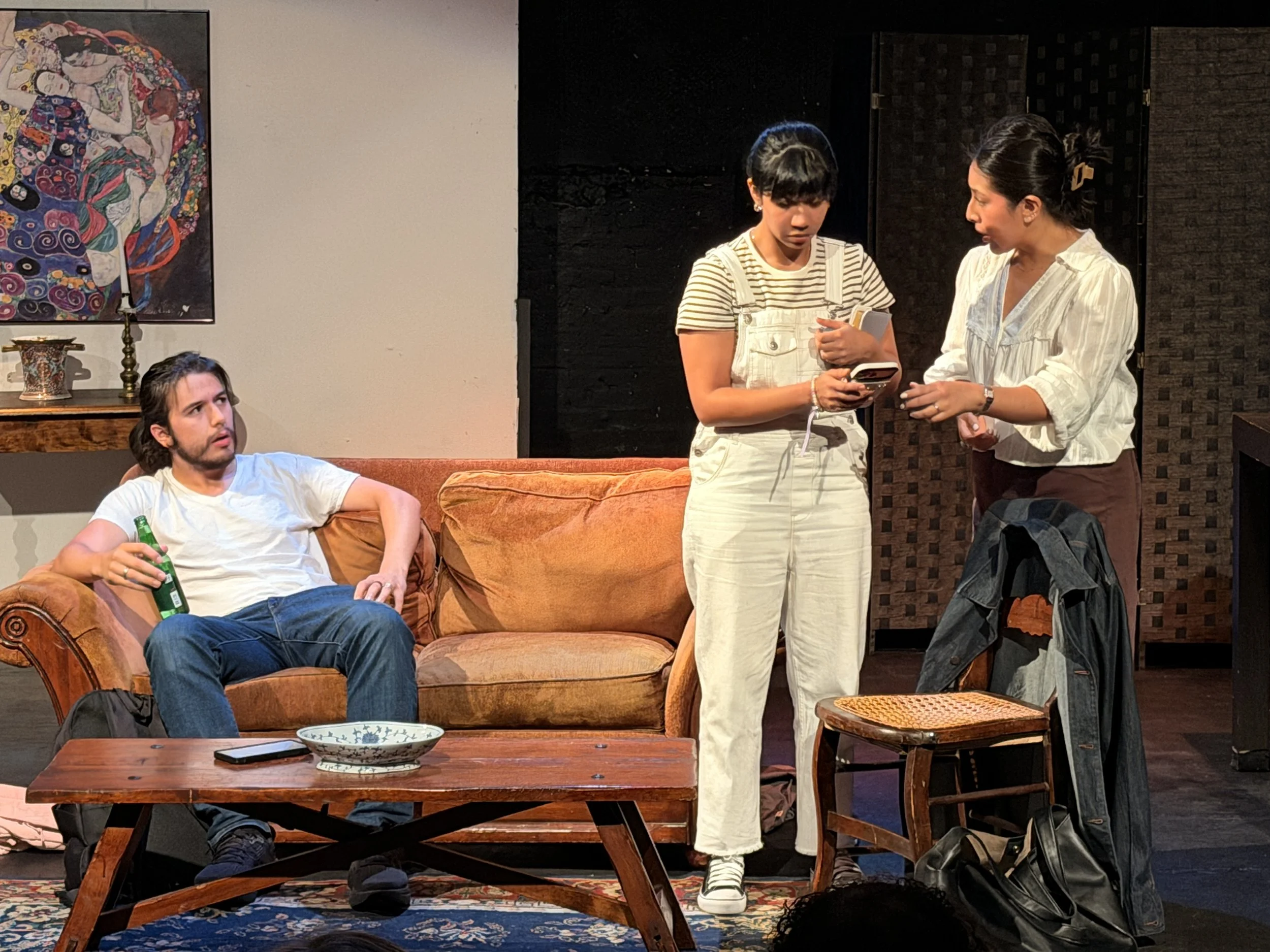
It is a question that lands with particular weight in The Diary of Ana Fernandez, Joseph P. Krawczyk’s timely and deeply human exploration of immigration, family, fear, and the search for safety, directed by Eddie Lew. Set in Queens, New York, The World’s Borough, the play centers on 14-year-old Ana Fernandez and her father, who suddenly find themselves being tracked by ICE.
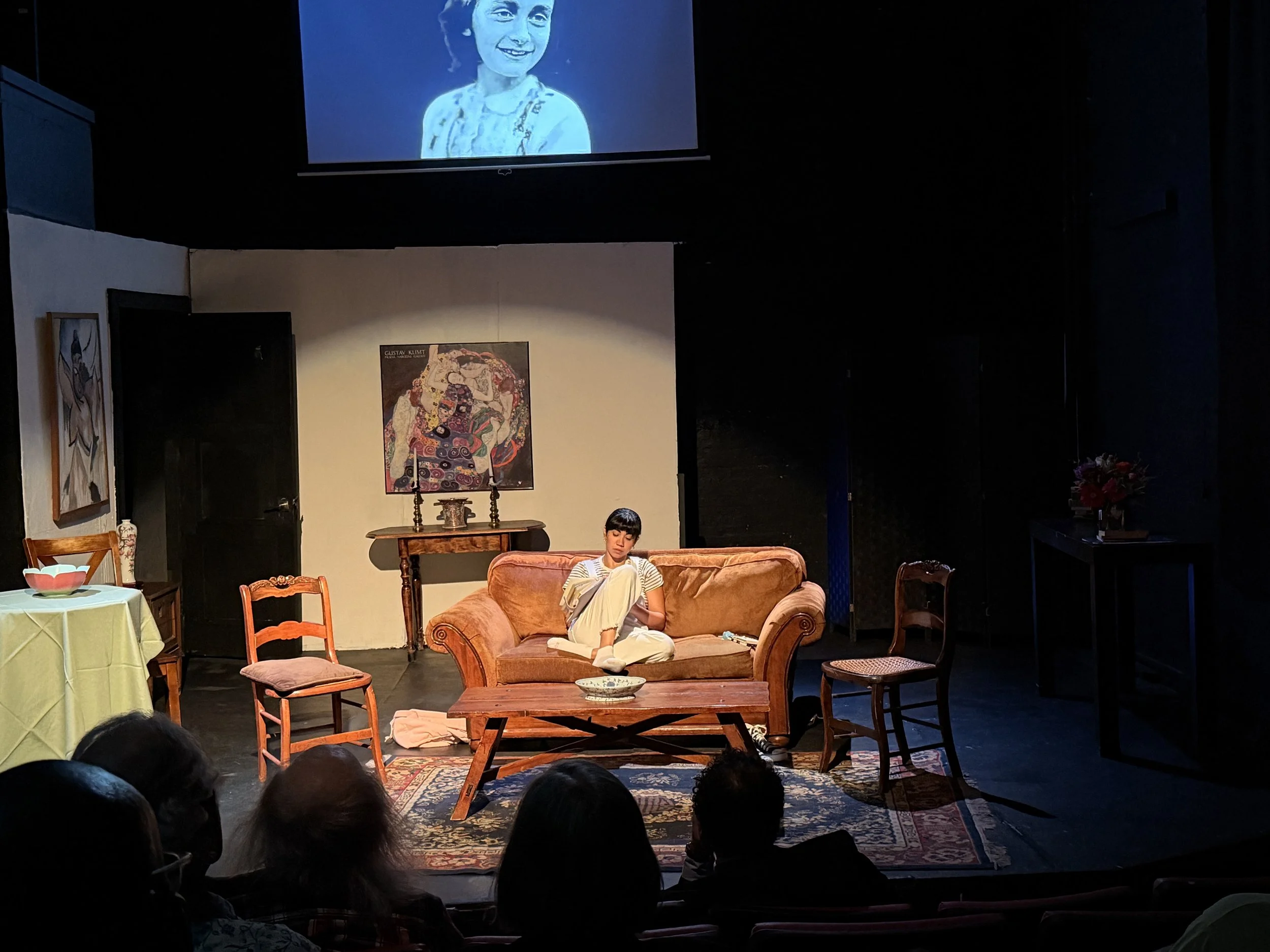
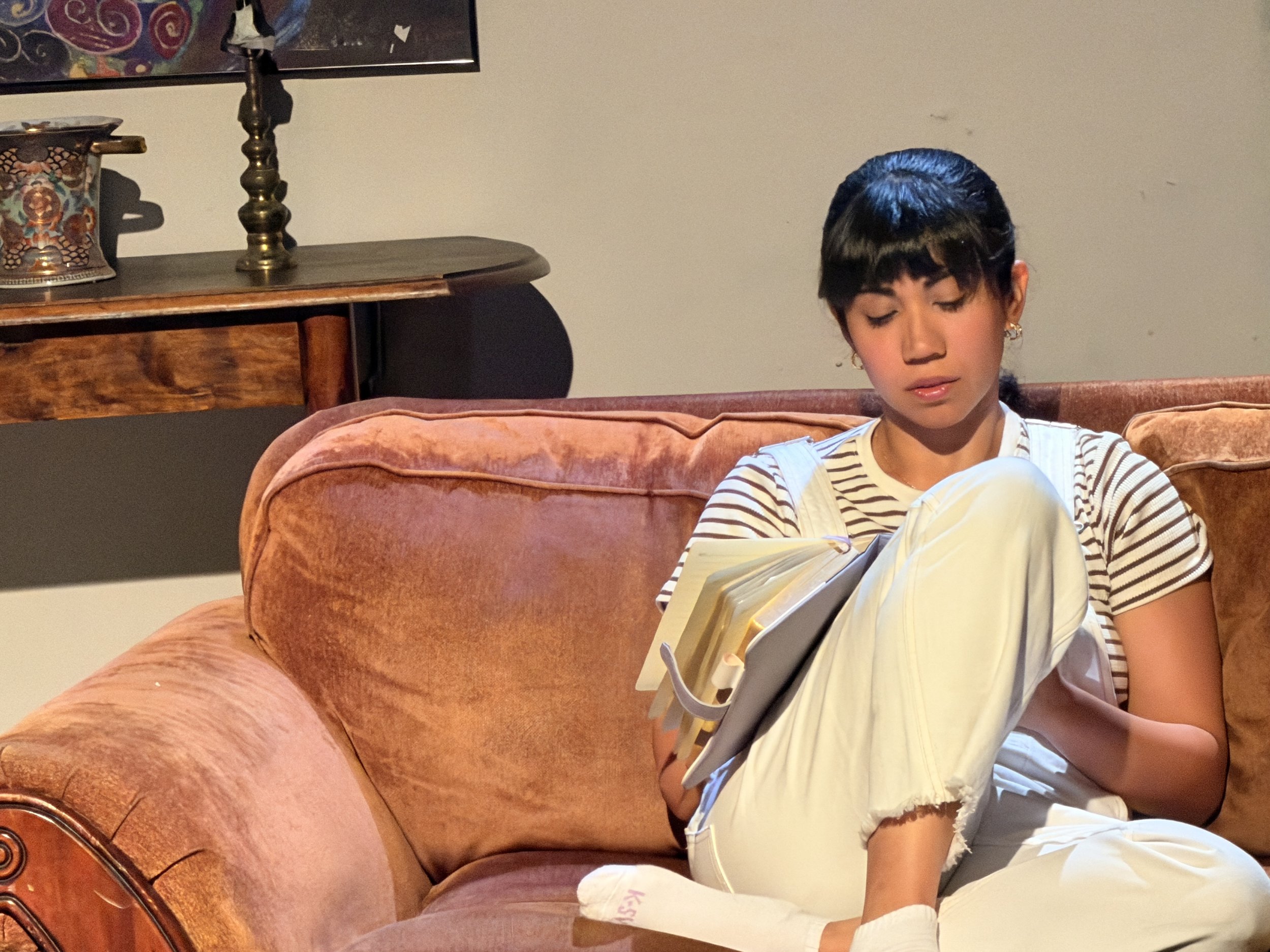
When ICE agents arrive at Ana’s school, her life changes in an instant. Forced into hiding, Ana turns to the one person from history who seems to understand what she is experiencing: Anne Frank. She begins writing to Anne in her diary, creating a bridge between two young girls separated by decades and vastly different circumstances, but connected by fear, confinement, hope, and the desire to simply live their lives.
The production uses the framework of Anne Frank’s diary effectively. Ana’s entries become voiceovers, accompanied by projections of Anne Frank, her image and words serving as a visual reminder of the connection Ana has created. It is not an attempt to equate the two experiences. Rather, Ana uses Anne’s story as a way to process her own.
The entire production takes place within a living area, with the actors making effective use of the space. The relatively small cast allows the story to remain intimate, while transitions between scenes keep the action moving without distracting from the central relationships.
And those relationships are what make the play work.
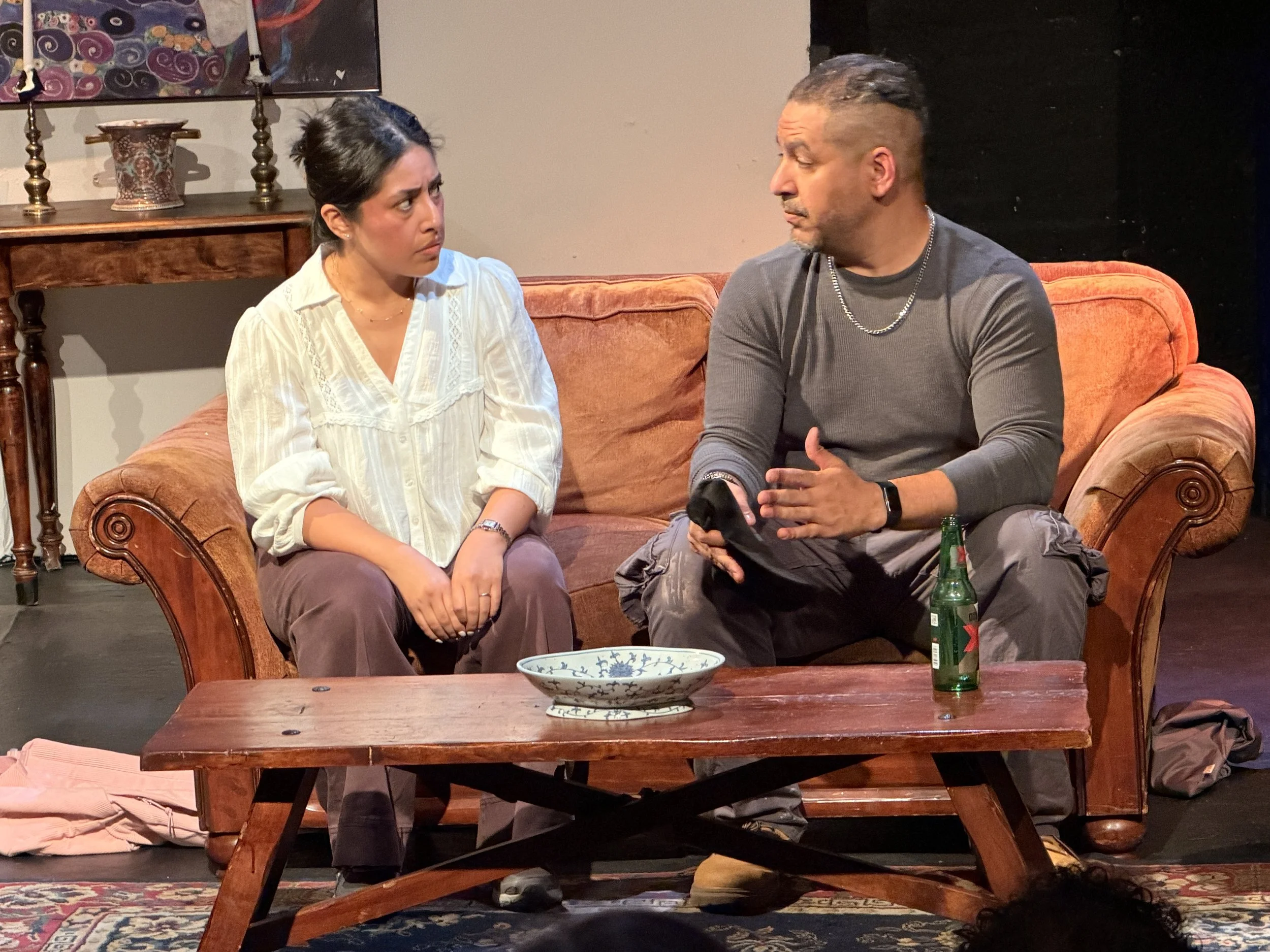
Ana is bright-eyed, hopeful, rebellious, and very much a teenage girl under her father’s watchful eye. Rodrigo, played by Alan Cordoba-Diaz, is a father trying to raise his daughter the best way he knows how. He is protective, strict, loving, and understandably afraid. His instincts are not always easy for Ana to accept, but they come from a very recognizable place: a father trying to keep his child safe.
Marjorie Cabrera brings that youthful energy and vulnerability to Ana, allowing us to see both the teenager and the circumstances that are forcing her to grow up too quickly. Juan, played by Nathan J. Cusson, and Dolores, played by Jessica Panora, are also caught in an impossible situation. A childless couple from Guatemala and Ecuador, respectively, they have built a life for themselves while watching the world around them become increasingly unstable. Their decision to hide Ana and her father places their own safety at risk. They are not superheroes. They are people doing their best to create and protect the lives they have worked so hard to build.
That is one of the play’s greatest strengths. These characters are not presented as political talking points. They are parents, teachers, construction workers, business owners, daughters, friends, and neighbors. They are people trying to live their lives.
The stakes are high because of what their parents risked to get here. Ana’s mother has already been caught in the crossfire, leaving father and daughter to navigate an increasingly frightening reality. The varied professional and vocational backgrounds of the adults further ground the story in the everyday lives of working people. Immigrants contribute to communities in countless fields, including essential vocational and technical jobs, yet the mass targeting and removal of people can create significant social and economic gaps. These are people who are often reduced to statistics in political conversations, despite being an integral part of the communities they call home.
Krawczyk’s decision not to fill the stage with a team of ICE agents is particularly effective. There is no need for an army of people rushing onto the stage to remind us of the danger. The incessant knocking on the theatre’s double steel door is enough. That sound changes the atmosphere. A knock becomes a threat. A door becomes a boundary. A home becomes both sanctuary and prison. And for Ana, the diary becomes a lifeline.
Her writing to Anne Frank gives her somewhere to put her fear, loneliness, anger, and hope. It also gives the audience access to the inner life of a young girl trying to understand circumstances far beyond her control. Through Ana, the play asks us to consider what it means to feel safe, what people are willing to risk for one another, and how easily the word “immigrant” can obscure the human being behind it.
At its heart, The Diary of Ana Fernandez is about people doing their best in circumstances they did not choose. It is about an empowered father and daughter, a couple willing to put themselves at risk for others, and a teenage girl who finds strength by reaching across time to another girl who once wrote from hiding. The political reality surrounding the play is unavoidable. But Krawczyk wisely gives us something more personal than policy. He gives us people. And sometimes, the most powerful way to understand a crisis is to hear the knock on the door and remember who is standing on the other side.
Click HERE for tickets.
Review by Malini Singh McDonald.
Published by Theatre Beyond Broadway on September 11, 2026. All rights reserved.