The Bookstore
Written by Michael Walek; Directed by William Carden
59E59 Theaters, Theater A | 59 East 59th Street, New York, NY 10022
January 10, 2026 - February 15, 2026
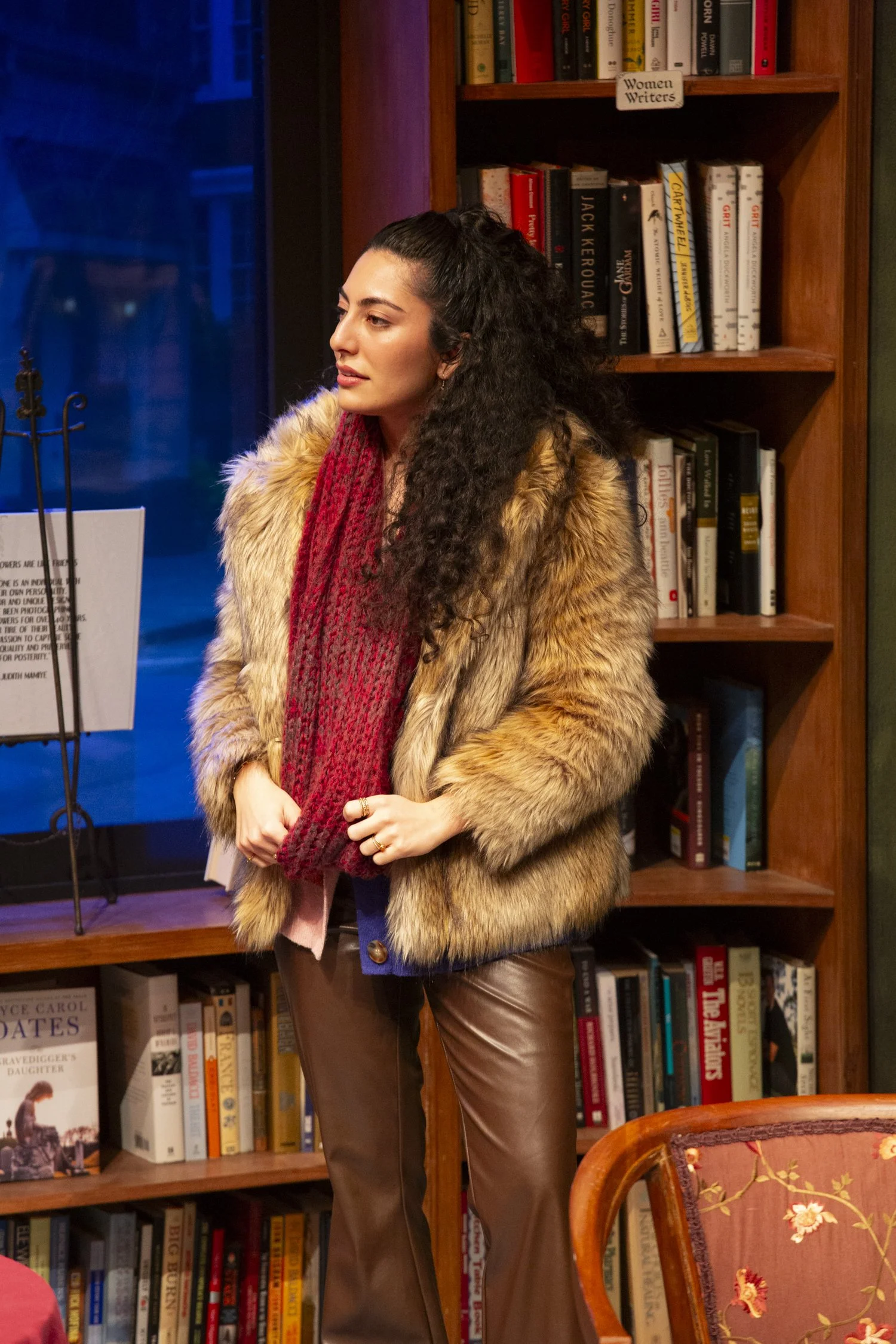
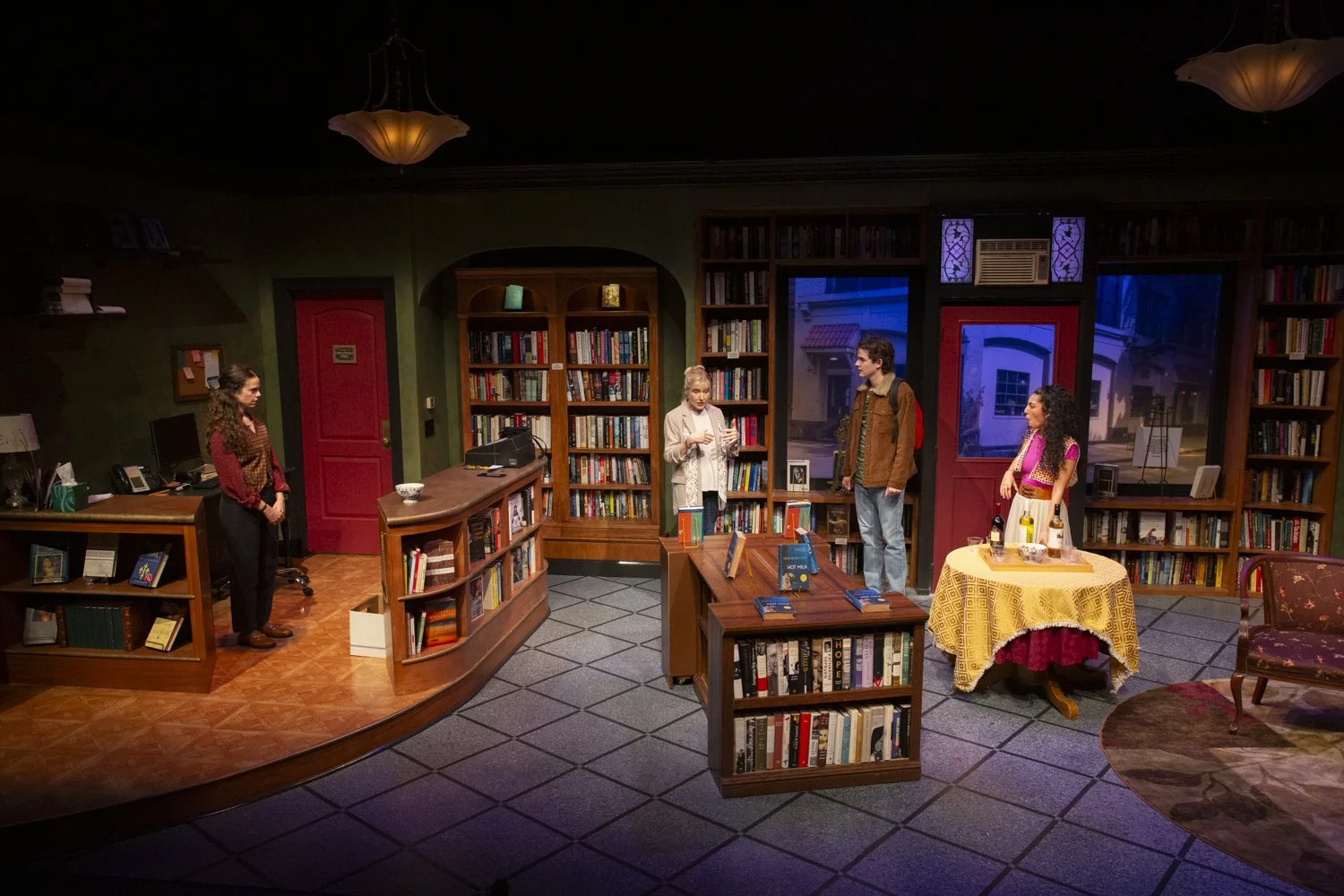
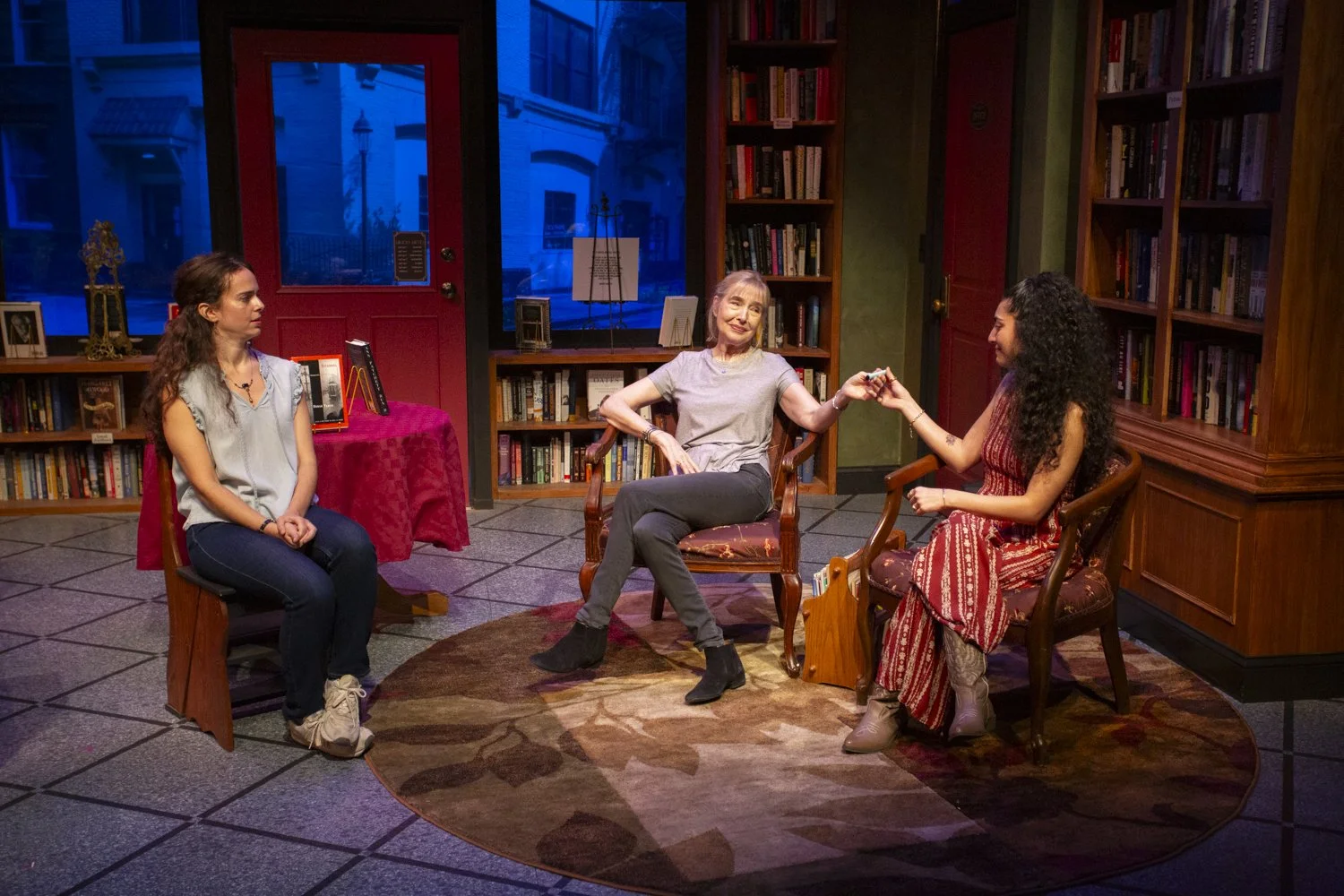
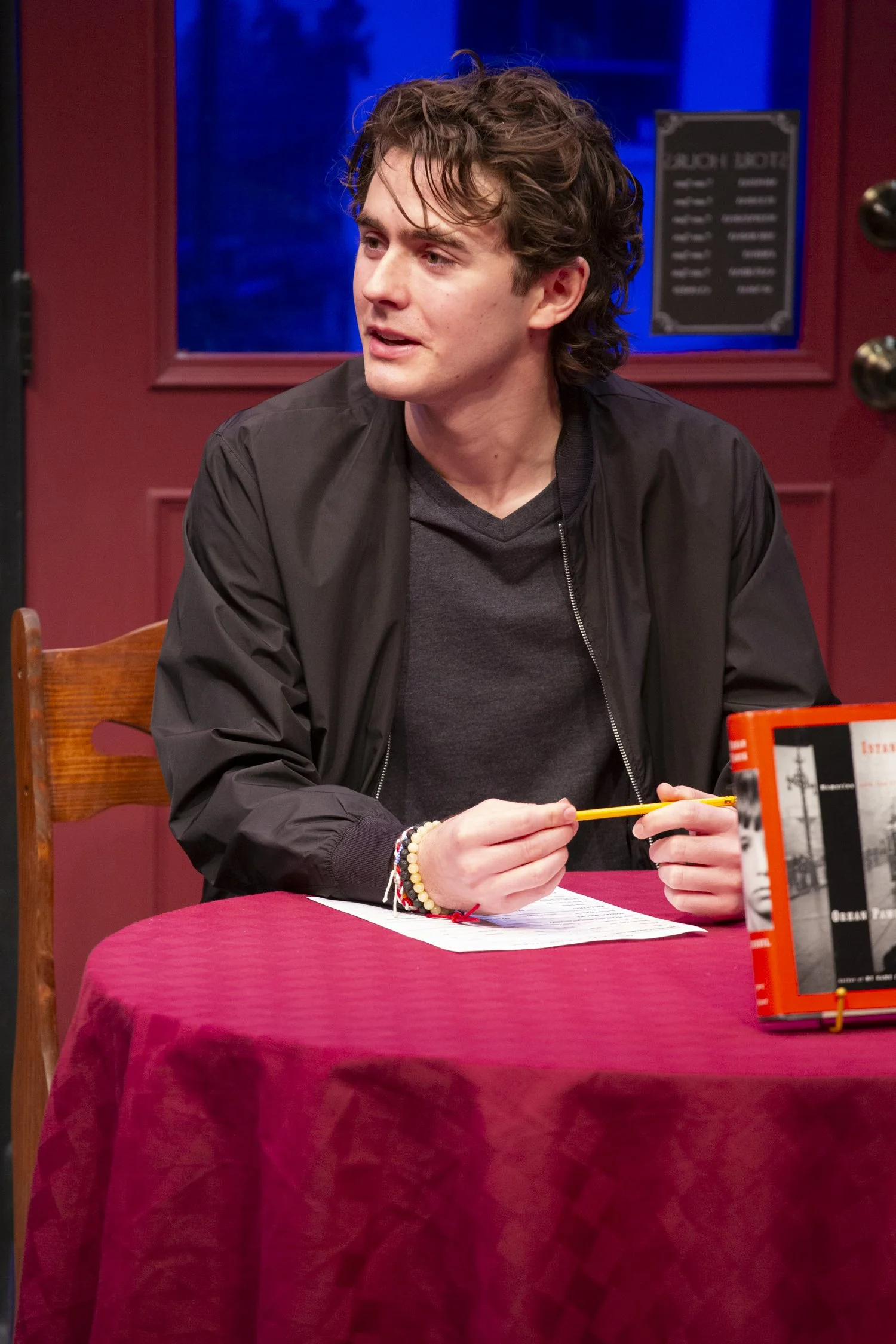
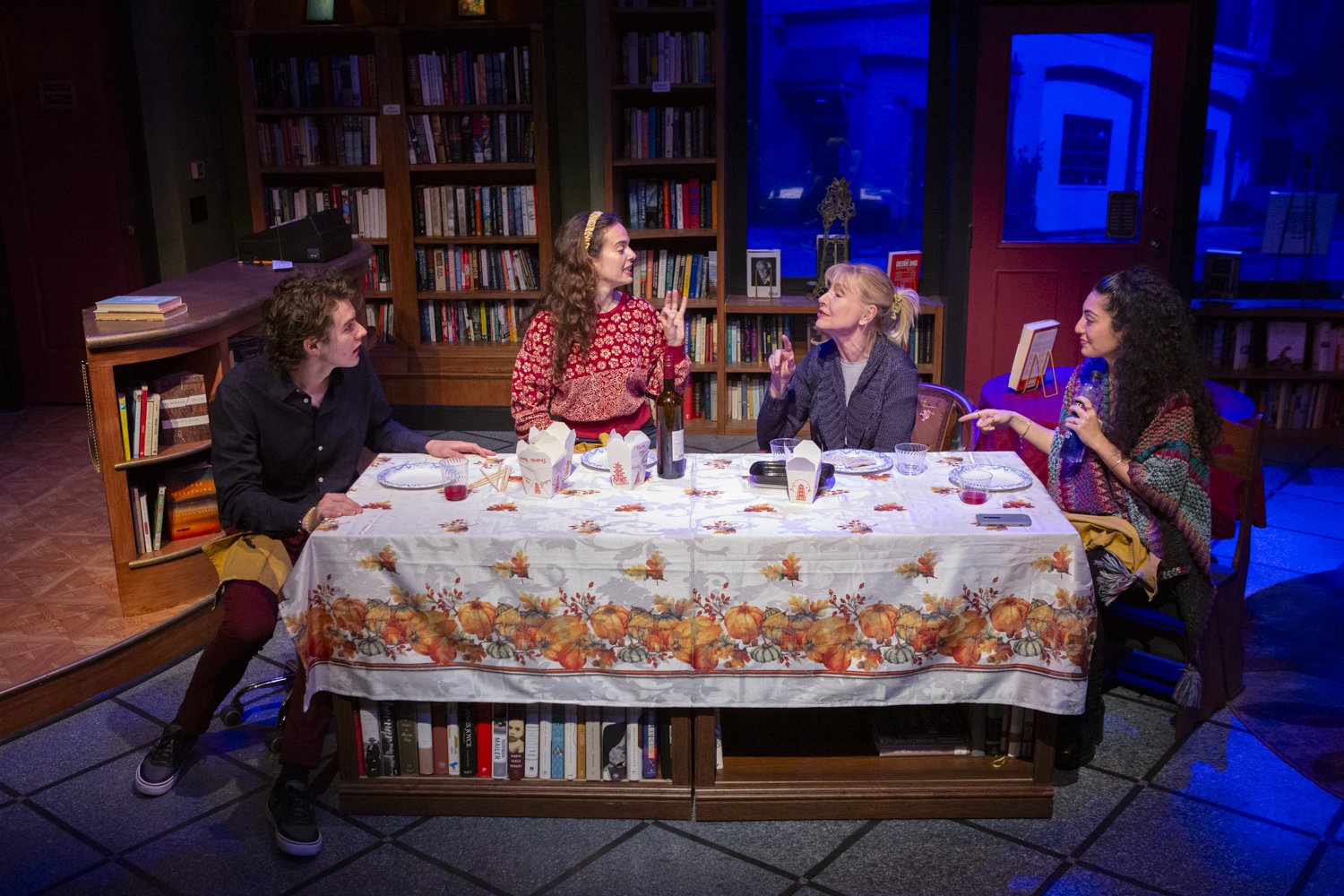
Photo Credit: Hunter Canning
In an era when the romance of bookselling has reentered the cultural bloodstream—fueled by novels, films, and a collective yearning for tactile pleasures—The Bookstore arrives not as a corrective to fantasy but as its most generous fulfillment. Michael Walek’s play, which transferred this winter to 59E59 from New Jersey Repertory Company, understands that the dream of a bookstore is itself a kind of literature: a story audiences long to inhabit. Rather than resisting that impulse, the production luxuriates in it, and in doing so offers a theatrical experience of uncommon warmth and grace.
From the moment we enter the unnamed West Village shop—realized in Jessica Parks’ sumptuous design of towering shelves, dark-wood tables, and maroon-cushioned armchairs—the audience is enfolded in an atmosphere so meticulously observed it feels scented with dust and tea leaves. This is not mere décor but dramaturgy by other means. When Carey, the store’s owner, played with luminous delicacy by Janet Zarish, unlocks the door each morning and sets her kettle to boil, the gesture lands like a ritual consecration. We are in a sanctuary for the printed word, and Walek treats it as such.
Under Carden’s direction—modest in its flourishes but quietly exacting in its architecture—the company settles into their characters with the ease and authority of performers who expect to inhabit these souls for years. There is nothing showy in the approach; instead, the staging grants the actors room to breathe, to discover, to accumulate detail. They wear their roles: not as costumes donned for the evening, but as lived-in garments, softened by time and use. The result is a gallery of performances shaded with recognizably human contradictions—tics of humor, flickers of hurt, reserves of tenderness—that invite the audience to lean in with sympathy rather than awe.
The talk here is of books, of course—of someone’s favorite piece of literature being George Eliot’s Middlemarch, of Virginia Woolf’s family, of literary gossip both grand and minute. Yet what might sound rarefied on paper becomes, in performance, a lively music of minds in communion. Walek has an ear for how book lovers flirt, spar, and bond through references; the dialogue glimmers with the pleasure of recognition and the intimacy of shared reading lives. For devoted readers, it is like overhearing one’s own inner monologue given voice.
What distinguishes The Bookstore is its confidence in the small, the daily, the accrued meaning of ordinary time. Structured as a year in the life, with one scene for each month, the play gently resists melodrama in favor of something more novelistic: the slow revelation of character through presence. We watch Carey and her employees not chase plot but build a community, and the cumulative effect is deeply moving. Walek seems to suggest that in a world obsessed with spectacle, continuity itself can be dramatic.
The fourth-wall confessions—particularly Carey’s early revelation about her mortality—do not feel jarring so much as tenderly conspiratorial. They invite the audience into a circle of trust, transforming us from observers into keepers of her story. Zarish handles these moments with a plainspoken serenity that is quietly shattering; she does not demand our tears but earns them through honesty. Her Carey is wry, cultured, and open-hearted, a woman who has lived among books long enough to greet life’s final chapter with composure and curiosity.
Walek’s first play displays a remarkable generosity toward its characters. Brittany and Spencer, brought to life with appealing naturalism by Ari Derambakhsh and Quentin Chisholm, register as people still writing themselves into being. Their direct addresses become less a structural device than a portrait of a generation fluent in self-narration, trying to understand their lives by telling them. The performances find the vulnerability beneath the composure, the longing beneath the wit.
Arielle Goldman’s Abby is a particular delight: a young woman haunted by the suspicion that she hasn’t read enough, hasn’t been enough, hasn’t yet caught up to the person she hopes to be. Her anxious bravado around literary knowledge is both comic and piercingly relatable. In her, Walek captures a distinctly modern insecurity—the fear of being unmasked as an impostor in a culture of curated intellect—and turns it into gentle, humane comedy.
Jessica Parks has furnished the production with a bookstore so inviting it seems to exhale warmth: a snug storefront whose wide windows gaze onto an almost storybook West Village streetscape. The set does not merely suggest a shop; it conjures the particular hush of a place where time politely slows for readers. Jill Nagle’s lighting completes the illusion, pouring in a wash of naturalistic daylight that shifts with the hours and seasons, as if the sun itself were a silent scene partner.
The shelves, gratifyingly, are not theatrical impostors but teem with familiar spines—real volumes that lend the space the credibility of a true literary haunt. Their provenance, a blend of treasures from the New Jersey Rep staging and generous loans from the Strand, gives the store the pleasingly mismatched abundance of a shop curated over years rather than installed overnight. One senses a history in these stacks, a thousand private journeys waiting to be reopened.
Suzanne Chesney’s costumes sketch the characters with quick, affectionate precision. The palette leans toward an understated, bookish chic—cardigans, textures, silhouettes that suggest people who dress for a life among ideas—though Spencer, tellingly, stands just a half-step outside this aesthetic, as if still auditioning for his final form. Nick Simone’s sound design, meanwhile, binds the months together with tasteful musical interludes that glide in and out like remembered songs, cushioning each transition and gently reminding us of time’s passage. The effect is less that of scene changes than of turning pages, each cue a soft rustle in the larger narrative.
If the play is “about” anything beyond its surface pleasures, it is about chosen family and the quiet heroism of caretaking—for books, for stories, for one another. The bookstore becomes a vessel for memory: of the AIDS crisis, of youthful rebellions, of roads not taken. Walek wisely avoids tidy resolutions. Life, he reminds us, rarely offers them; what it offers instead are moments of connection, cups of tea, conversations that linger.
By December, The Bookstore has worked a subtle magic. The audience, like the characters, has lived a year inside these walls. We have come to feel that the shop exists somewhere beyond the theater, its kettle still warming, its shelves still waiting. Some plays dazzle; others comfort. A rare few, like this one, do both by affirming the enduring, unfashionable belief that stories—and the places that hold them—matter. Walek may have begun with a “year in the life of a cozy bookstore” but what he has written is a love letter: to readers, to community, and to the fragile, persistent hope that even in a digital age, a room full of books can still be a world.
Click HERE for tickets.
Review by Tony Marinelli.
Published by Theatre Beyond Broadway on February 17th, 2026. All rights reserved.
