Wild Wild Christian
Written and performed by Simone McAlonen
SoHo Playhouse Huron Club | 15 Vandam Street, New York, NY 10013
June 5, 12, and 19, 2026.
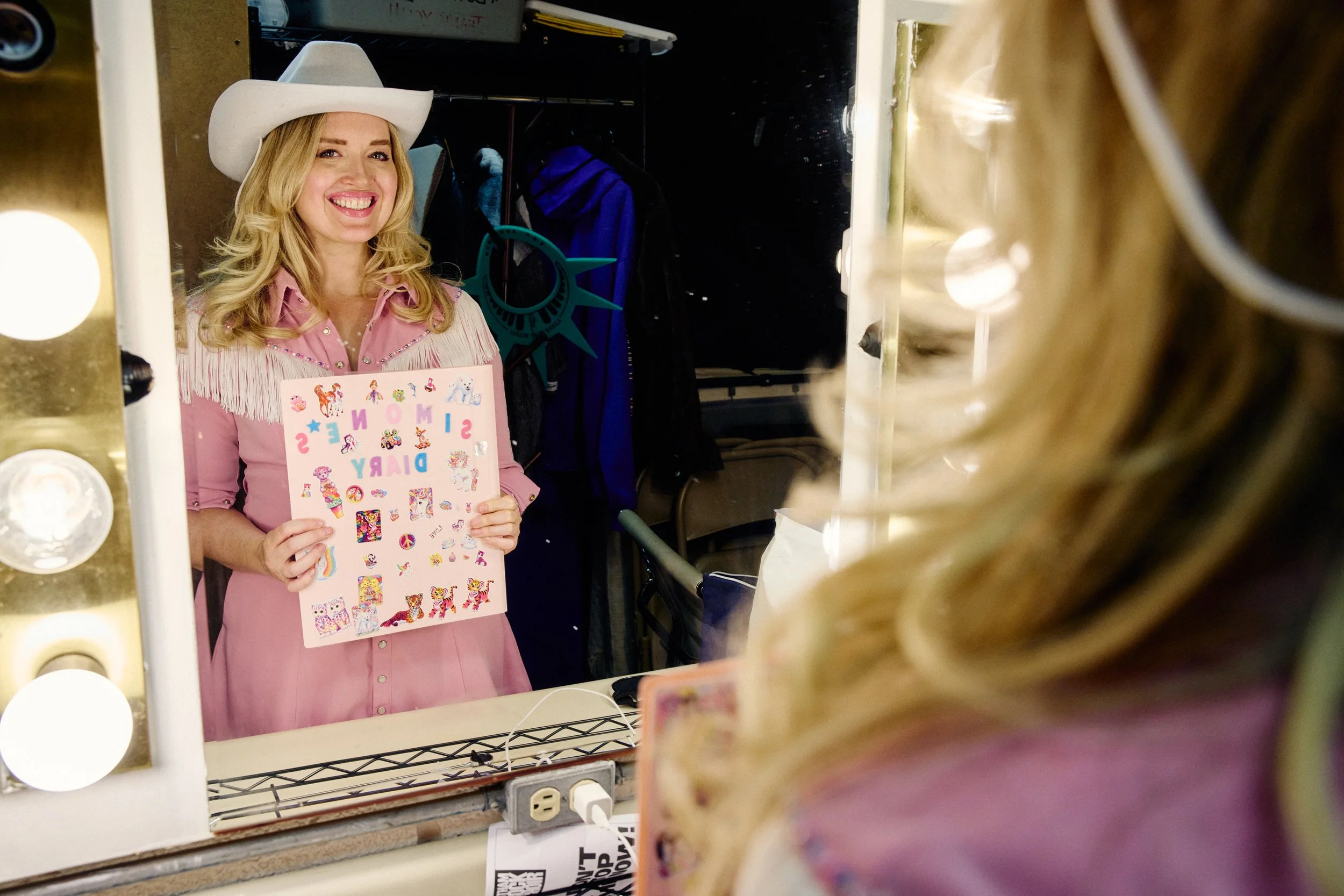
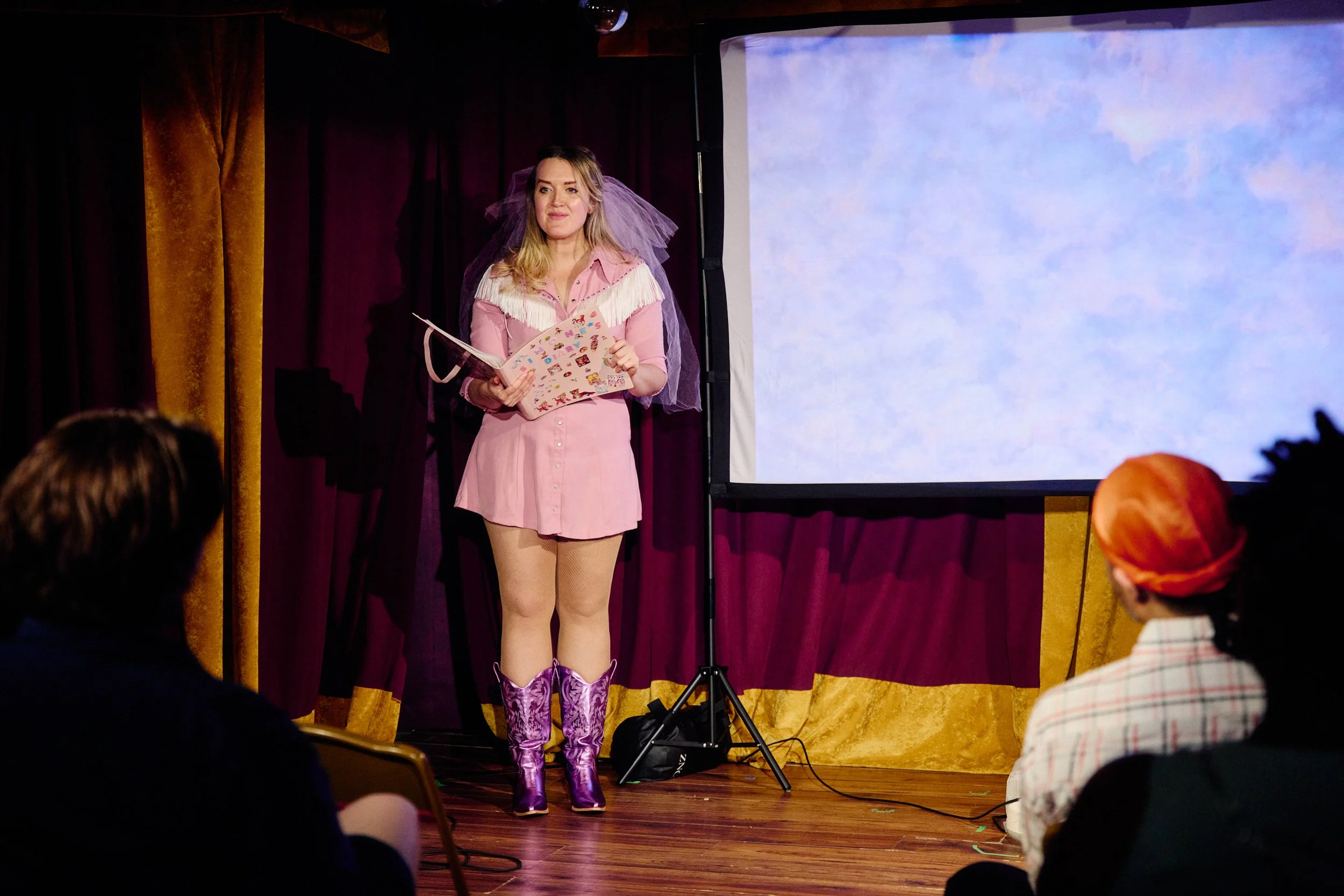
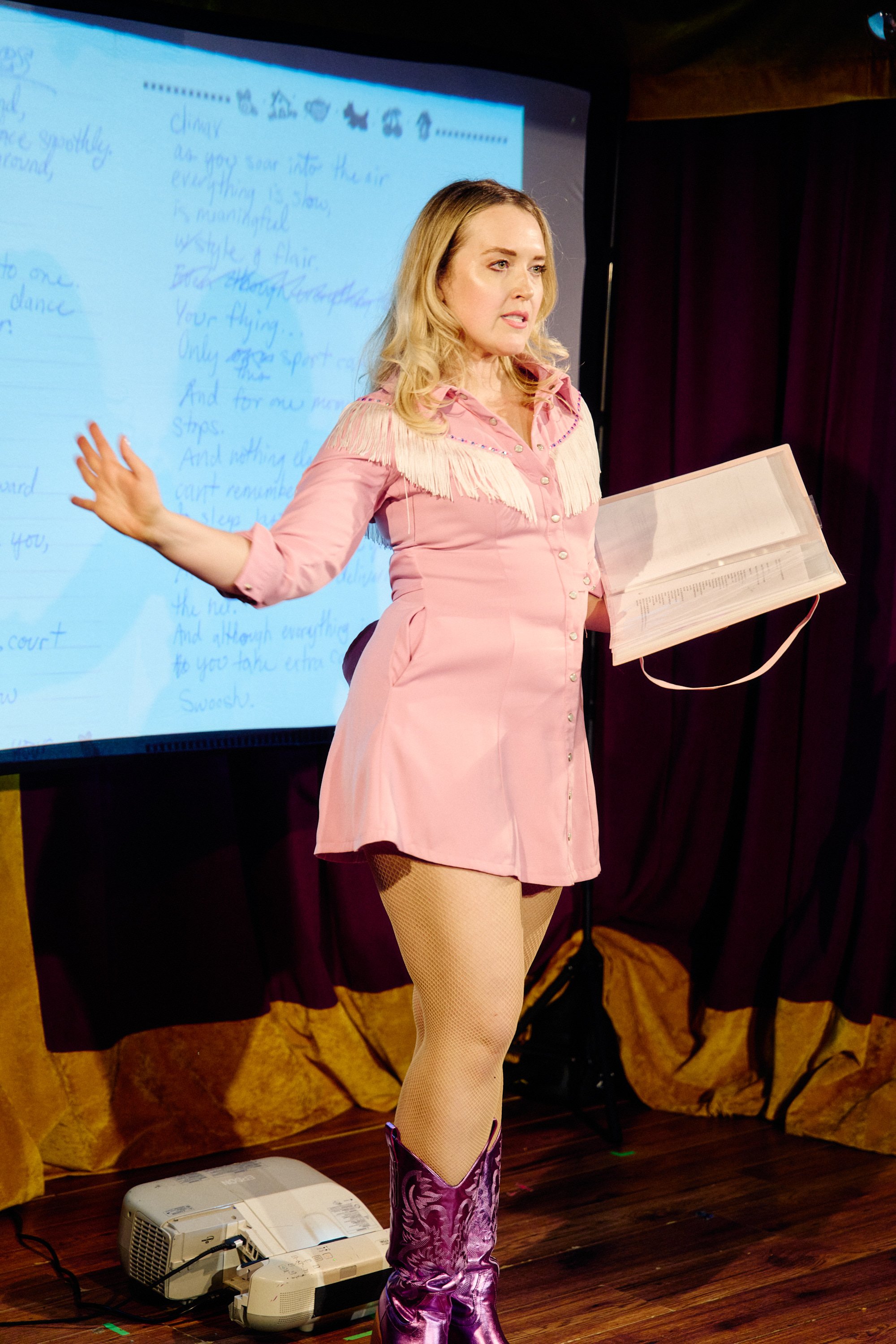
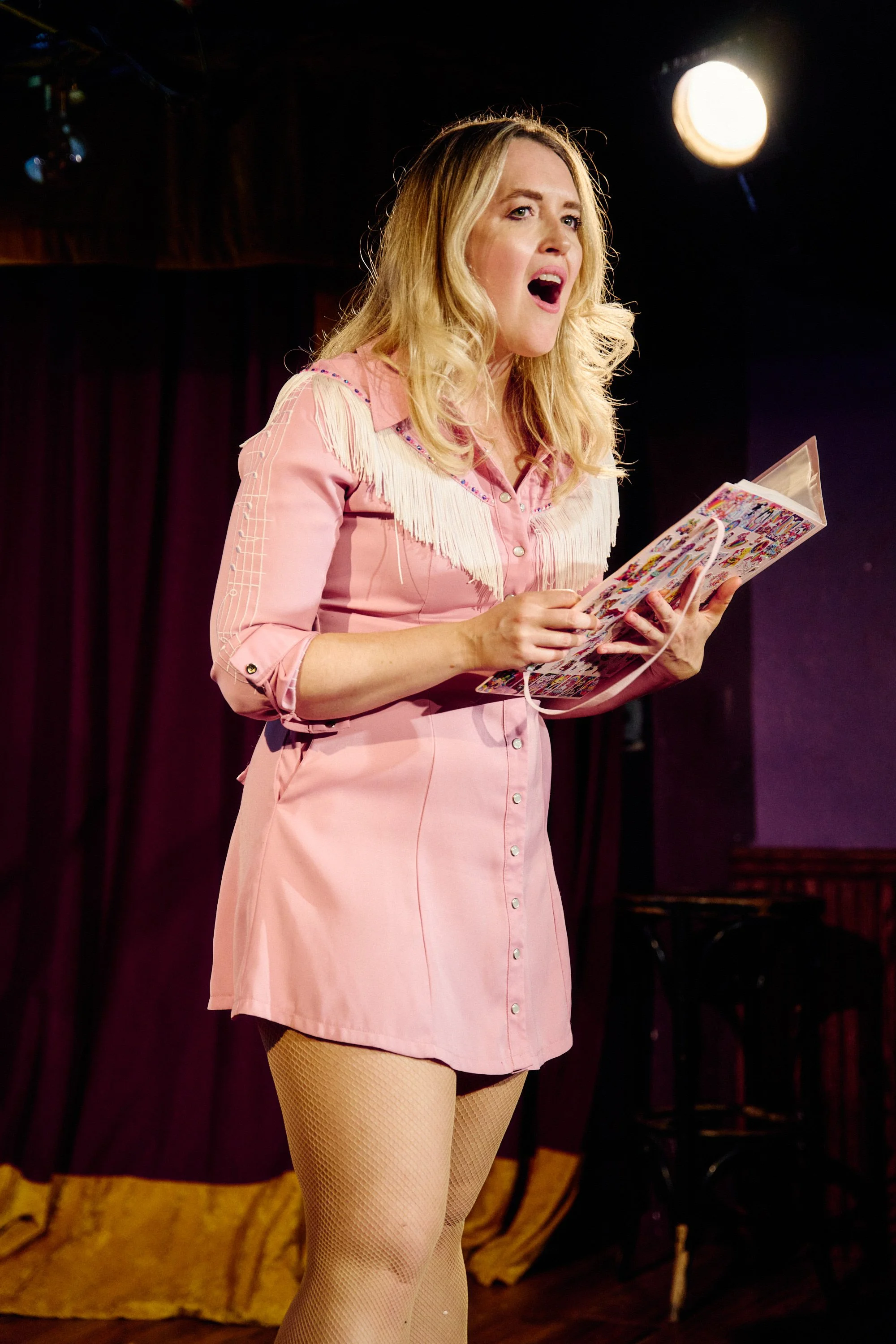
Photo Credit: Caroline Xia
There is something particularly compelling about Wild Wild Christian because so much of its power comes from what remains unspoken.
The evening starts with an opening act, which is not common but absolutely works with the theme of the show. Marcia Belsky is a songwriter and comedian who grew up Jewish in a white Christian environment in Oklahoma. Her act practically writes itself as she shares stories about Chick-fil-A and her time in Portland, Oregon, where there is the highest number of strip clubs per capita. She then launches into a song about camping and how she is not a fan, just like me.
It is the perfect setup for a larger conversation about faith, identity, and belonging, leading into a performance for an energetic audience filled with Jesus cookies and the calming fragrance of lavender.
Written and performed by Simone McAlonen, this solo comedy begins with the pages of her childhood journals, chronicling her years at Young Life, a Christian summer camp that inherited the grounds once occupied by the Rajneesh movement in Oregon. The setting itself is haunted by bad energy and complicated ideas. The relics of the town are not removed but repurposed, becoming a metaphor for certain ideologies and evangelical fundamentalism.
The production smartly contextualizes the history of Rajneeshpuram, the controversial commune that transformed Antelope, Oregon, before collapsing under the weight of criminal investigations and scandal. What remained was not simply abandoned land but the symbolic skeleton of a movement.
The Huron Club space is used effectively. On the main stage, McAlonen reads from her actual diaries, written between the ages of twelve and sixteen, sharing her own poems, reflections, and even an ode to basketball. These are not recreated memories but the original writings of a young girl trying to make sense of God, crushes, and the impossible task of becoming the "right" kind of Christian. Audience participation keeps the evening interactive, but the emotional center remains the singular voice of a teenager trying to navigate shame, guilt, and fear.
One of the evening's strongest visual metaphors revolves around the color purple. McAlonen demonstrates, using blue and red Kool-Aid, that within the camp's teachings blue belongs to boys and red belongs to girls, and their combination becomes a symbol of contamination. Watching her dip her original veil into purple dye creates a striking image: once stained, it can never return to its original state.
Some of the most haunting moments come from repeated diary entries where youthful crushes sit alongside desperate prayers: love Jesus, love a boy, and "please God, I don't want to be raped." The line surfaces more than once, never fully explained, hanging over the performance like a storm cloud that never breaks.
Wildhorse Canyon is a neighboring cowboy camp where she was sent at the age of twelve as an ambassador between the two camps. McAlonen also recalls being there during September 11th and witnessing the xenophobia that accompanied the attacks. These memories create a clear throughline between the religious culture of her childhood and the divisions that continue to shape contemporary America. The production suggests that these systems were not accidental but carefully constructed to define who belongs and who does not.
Yet what stayed with me most was the absence of answers. We hear little about her parents. The recurring fears, the fixation on boys, and the repeated prayers hint at deeper wounds without fully naming them. That ambiguity becomes one of the production's greatest strengths. It creates an emotional distance that is compelling, but it also leaves the audience wanting to know more.
In many ways, Wild Wild Christian feels like the first chapter of a much larger story. McAlonen has crafted a thoughtful, funny, and unsettling examination of faith and fundamentalism, but there is a sense that another layer remains buried beneath the journals. If she ever chooses to excavate that terrain, it would make for an equally powerful companion piece.
Sometimes the stories that linger longest are the ones that trust silence as much as confession.
Click HERE for tickets.
Review by Malini Singh McDonald.
Published by Theatre Beyond Broadway on June 15, 2026. All rights reserved.