Fear & Wonder
Written by Jason Tseng. Directed by Emily Hartford.
Presented by Flux Theatre Ensemble at the Jeffrey and Paula Gural Theatre, A.R.T./New York Theatres, 502 West 53rd Street.
June 8, 2026 - June 27, 2026
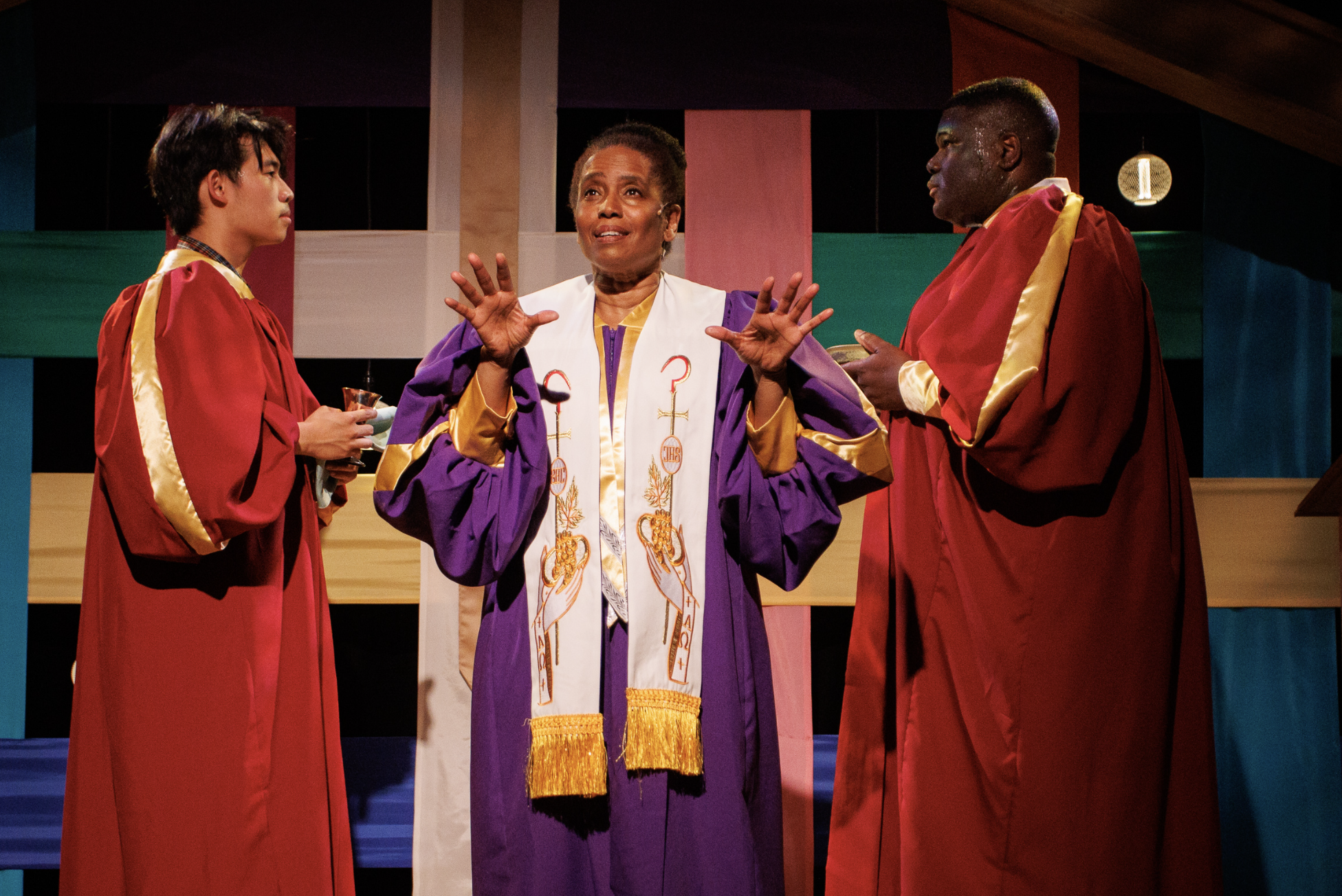
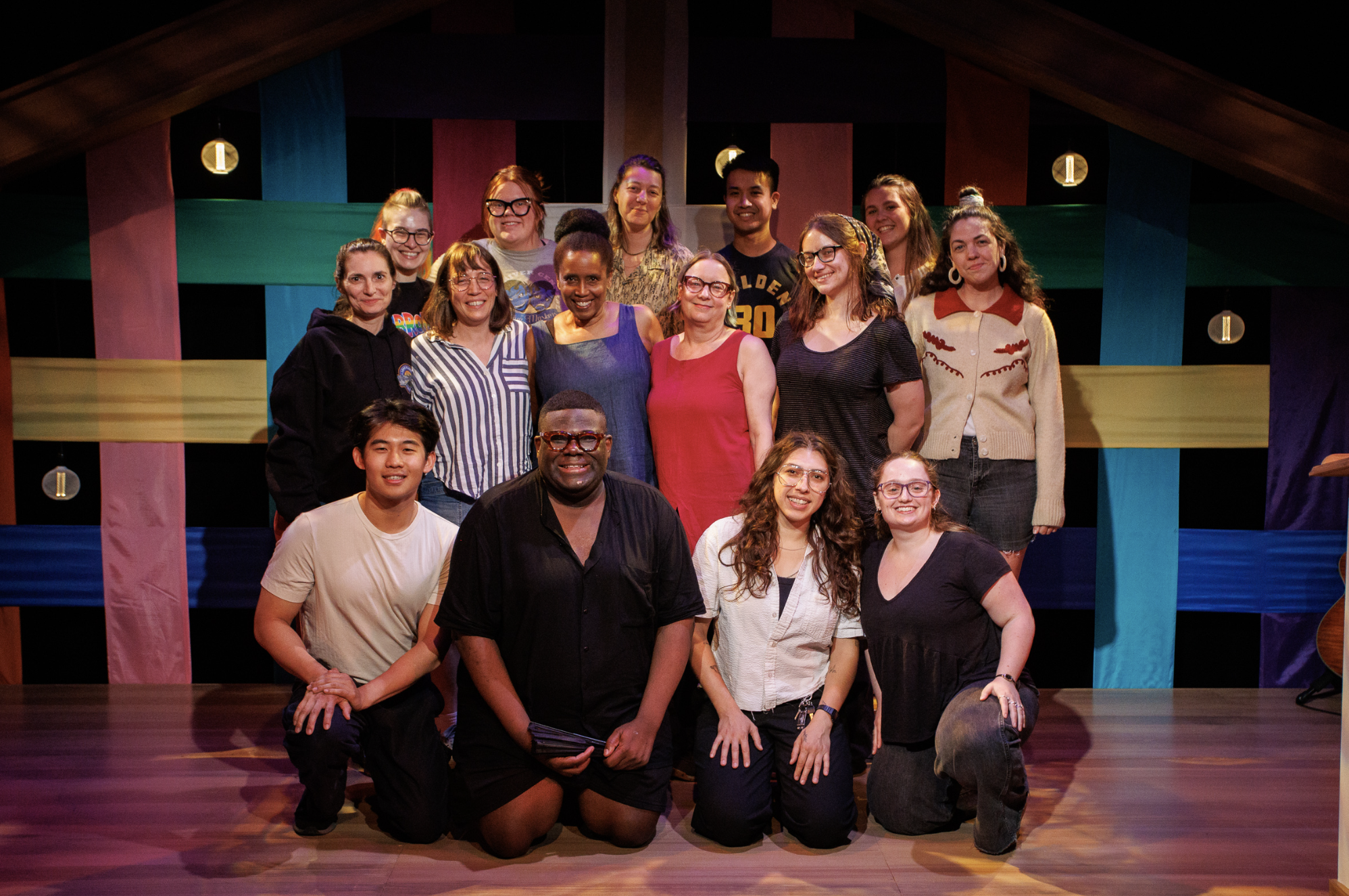
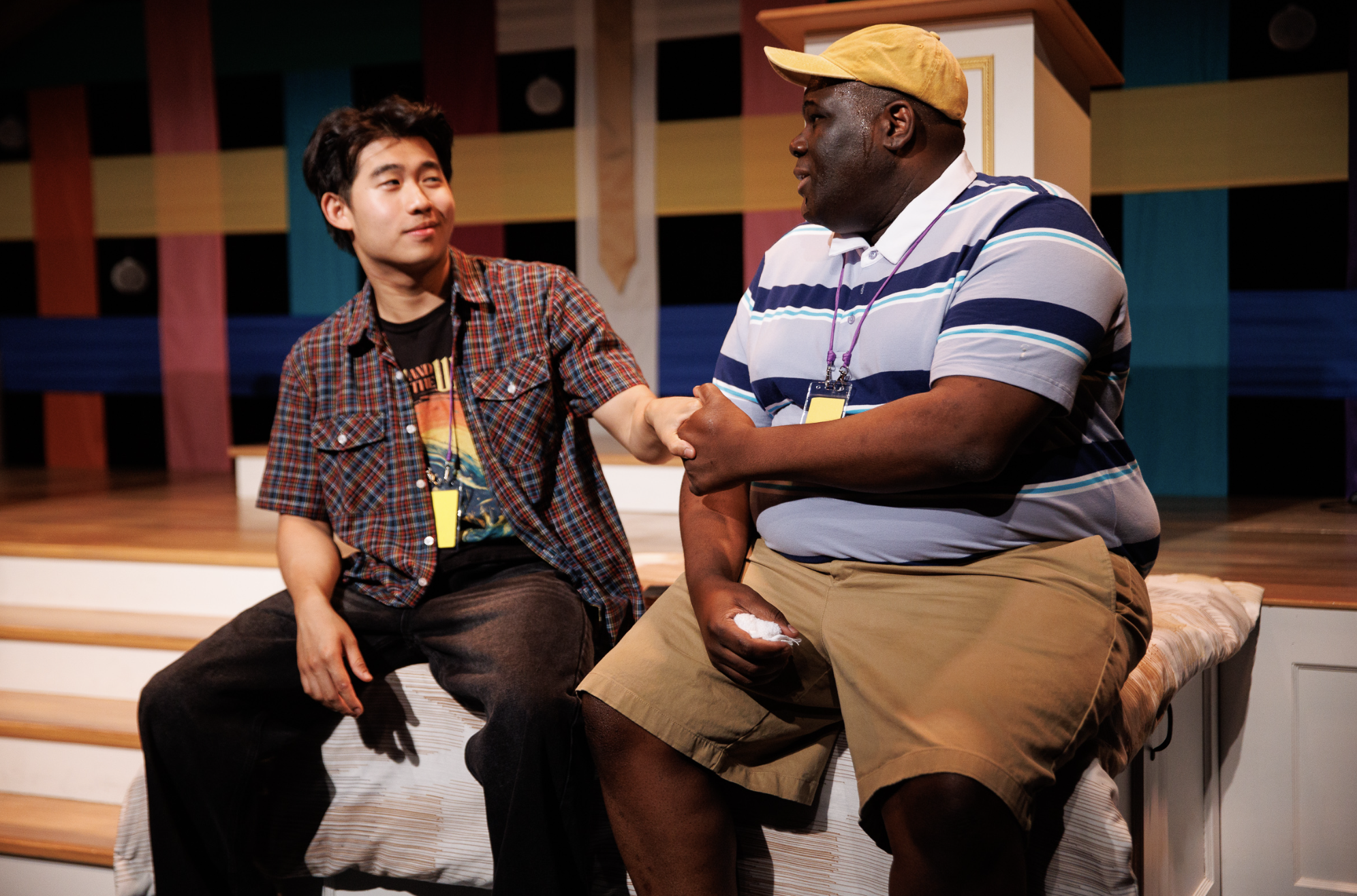
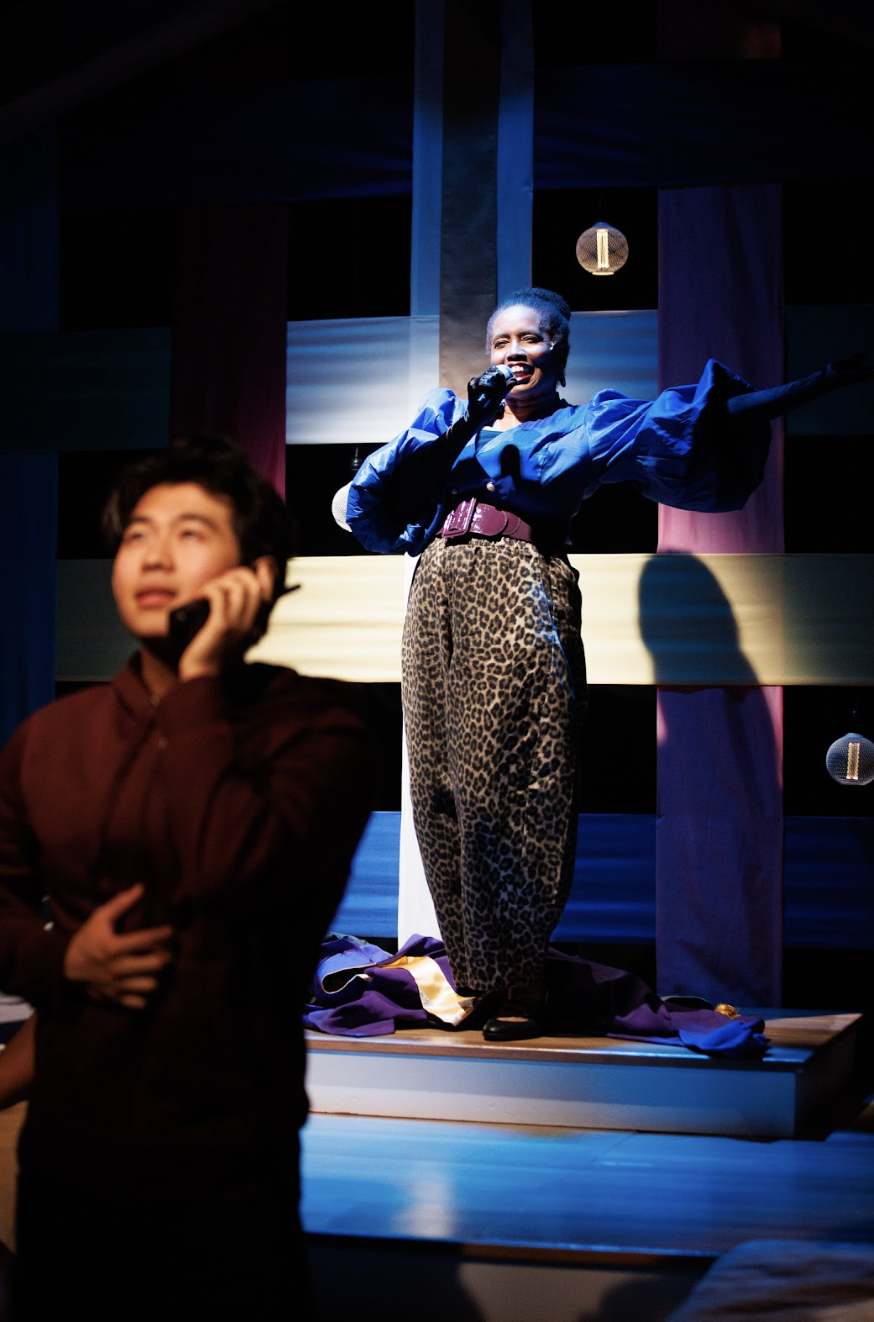
Photo credit by Justin Hoch
The ushers at Fear & Wonder greet you at the door with the bright, probing hospitality of people who have already read your file. How did you hear about our church? Did a friend bring you? The conceit is irresistible, and Flux Theatre Ensemble commits to it completely. The lobby alone is worth arriving early for: altars and meditation stations, icons of contemporary queer saints, communion bread and juice for intermission, and a Sacred Texts book swap that asks you to trade a book you hold sacred for a stranger’s, all of it curated with evident care for the play’s themes. Jason Tseng’s new play, a world premiere, wants you seated inside a worship service before it tells you a love story, and for long stretches that double identity is its central puzzle.
That love story is the good one. In 2003, at a National Christian Youth Leaders Conference in Orlando, two teenagers of color end up roommates because the white adult organizers have sorted them that way. Ryan (Neil Tyrone Pritchard), an African American Pentecostal from Tampa who plans to become a youth pastor, believes with his whole chest. Jabez (Brian Tong), an Asian American kid from a Chinese church in Washington, doubts everything, loudly. “They stick the one Asian and one Black guy in the same room,” Jabez says, and Tseng’s ear for that exact indignity, the tokenism, the constant compliments on how articulate Ryan is, gives the early scenes a charge no thesis could manufacture. When Fear & Wonder is being that play, the one about two specific boys finding their way to each other, it is tender, funny, and genuinely moving.
What grows between them survives mostly by phone, in coded Saturday-afternoon calls timed to the hours Ryan’s parents are out, and Tseng stages those calls with delightful ingenuity. When Ryan plays Sade down the line, and the two bedrooms dissolve into one, the production catches the erotic, dangerous intimacy of a bond that could get both boys hurt. The world around them is just as carefully made. Will Lowry’s set, a rainbow patchwork of churchly warmth that suggests a prosperous suburban congregation, serves as the memory play's anchor, while Izzy Fields’s costumes slide between teenage scruff and dazzling liturgical finery without a seam showing. Overhead, Kia Rogers lights it all with a painter’s restraint, her quietest cues, a bar of morning light bisecting a sleeping body, doing more than the loudest ones. Through all of it, Emily Hartford directs with a fine feel for the masks these boys wear in public and the faces underneath.
Pritchard is the evening’s clear gift. His Ryan is understated and fully present, a young man cradling his faith and his shame in the same two hands, and when he sits at the keyboard for “Spirit of the Living God,” the performance opens into something transcendent, lifting past the room toward something vast, celestial, and far bigger than all of us. The voice is glorious, and the dramaturgy is glorious with it: in that one number, we feel precisely what the closet will cost him, because we finally feel how much he loves the thing he is being asked to surrender.
The harder assignment, and the sunnier instrument, belongs to Tong. His Jabez is quick, funny, and thoroughly winning, which matters more than it sounds: Jabez is also the one whose rash, self-protective teenage choices fall hardest on Ryan and bend the course of both their lives. In another actor’s hands, that boy could read as the show’s villain. Hartford’s production wisely keeps Jabez a little oblivious to his own selfishness, and Tong makes that obliviousness charming rather than damning, a kid doing damage without ever quite meaning to, so you stay on his side even when you probably should not. He and Pritchard share the kind of chemistry a play like this cannot fake.
Around this two-hander, Tseng erects an entire church service, presided over by a Transition Minister (Tonia E. Anderson, warm and assured) who narrates the action, runs the call-and-response, and ferries us through the timeline. Anderson is lovely. The device is the trouble. Part of its job is to hold us, the audience, to keep promising that these two boys will be all right, and that care only lands once a play has first made us afraid. Here, comfort arrives before the pain. So, each time the service returns, the play stops dead, because the Minister rarely pressures either boy or bends their story; she consoles, and consolation without fear is not drama. When the Minister finally does intervene in the story, late and decisively, it works as divine machinery rather than as a choice anyone on stage earns, which is a steep tab for a device that has spent most of the evening holding our coats.
The ending is where the strain shows, though some of its instincts are sharp. When the play hands a teenage confrontation to a song instead of a shouting match, the choice is clever, and the ambiguity it keeps is truer than a screaming scene would be; reaching for a rom-com answer to a real-world problem is the most teenage thing these boys do. The trouble sits one level up. The play never lets us watch them reckon their way into adulthood. It cuts to adulthood instead, arrived at by chance, with all the growing and forgiving that should cost them something left to happen offstage. We are handed the result of change without watching anyone change, and, in the end, nothing is earned in view.
To its credit, the play keeps insisting that Jesus is for everybody, believer or doubter or none of the above, and it means it. Underneath that generosity sits a thornier question about what the play believes. Fear & Wonder presents itself as ecumenical, hospitable to anyone’s higher power, yet its machinery is specifically Christian, and the only future it fully imagines is a churchgoing marriage and a pulpit. A play whose stated aim is that the church must atone to its queer children should be wary of staging a gentler version of the same purity culture, the kind where the redeemable queerness is monogamous, married, and back in the pews, and where phone sex and the chat room get coded as things to repent.
Honesty requires the disclosure: I was raised a strict Catholic, then spent twenty years inside a high-control group, which makes me close to the hardest audience a closing worship service could draw. My cynicism would not switch off. Neither would the anger at being cued to answer “God is good” on demand. However, that reaction is mine to own, not the play’s to answer for. And here is the harder thing to admit: the discomfort is the point. Fear & Wonder dares you to sit with your own judgment about faith communities and the people who still find home in them, and it refuses to let you off easy. What is theatre for, if not that?
Whatever quarrels the script has with itself, Flux backs its hospitality with more than atmosphere. The company prices admission on what it calls a Living Ticket: no one is turned away for lack of funds, and those who can pay choose among three tiers tied to real wages, $26 to meet New York’s minimum, $53 to reach an actual living wage, and $66 to cover the unpaid administrative labor that usually goes uncounted. Most pay-what-you-can models ask the patron to guess. This one shows you what the art costs to make and to pay the people who make it, then trusts you with the math. The welcome the play preaches from the pulpit, the company has already practiced at the door.
There is a real and aching play inside Fear & Wonder, two boys and a phone line and everything to lose, and it is closest to greatness whenever Tseng trusts it to be exactly that. Go for the romance, go for Pritchard at the keyboard, go for a company that means every word of its welcome. The fuller play is still arriving. This one is already well worth the trip.
Click HERE for tickets.
Review by Ariel Estrada.
Published by Theatre Beyond Broadway on June 16, 2026. All rights reserved.
