BROKEN SNOW
Written by Ben Andron, Directed by Colin Hanlon
Presented by Broadway Engine Daveed Ben-Arie Willette Klausner
In association with NewYorkRep
Theatre 71, 152 West 71st Street, in Manhattan
April 19, 2026 - May 31, 2026
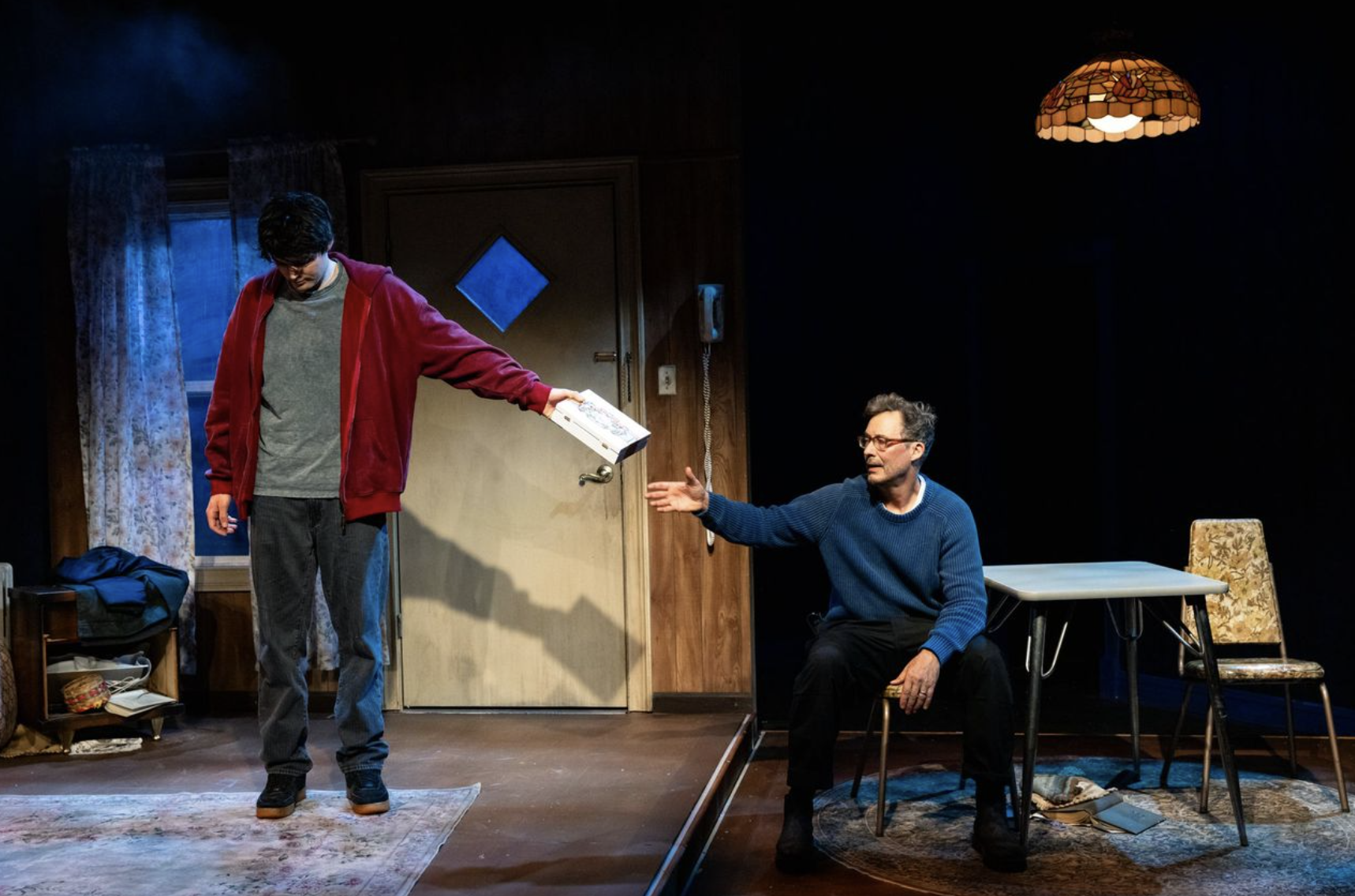
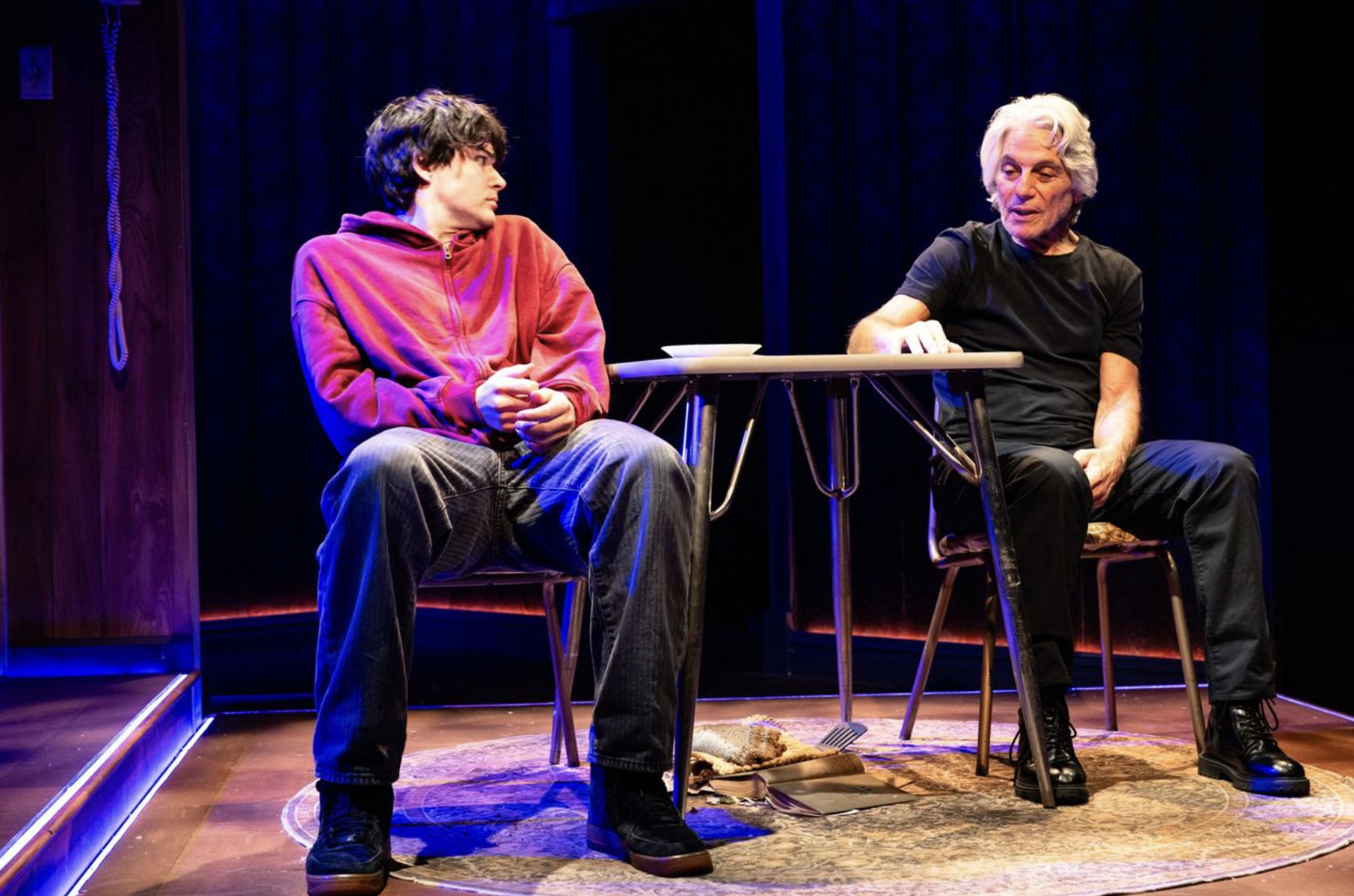
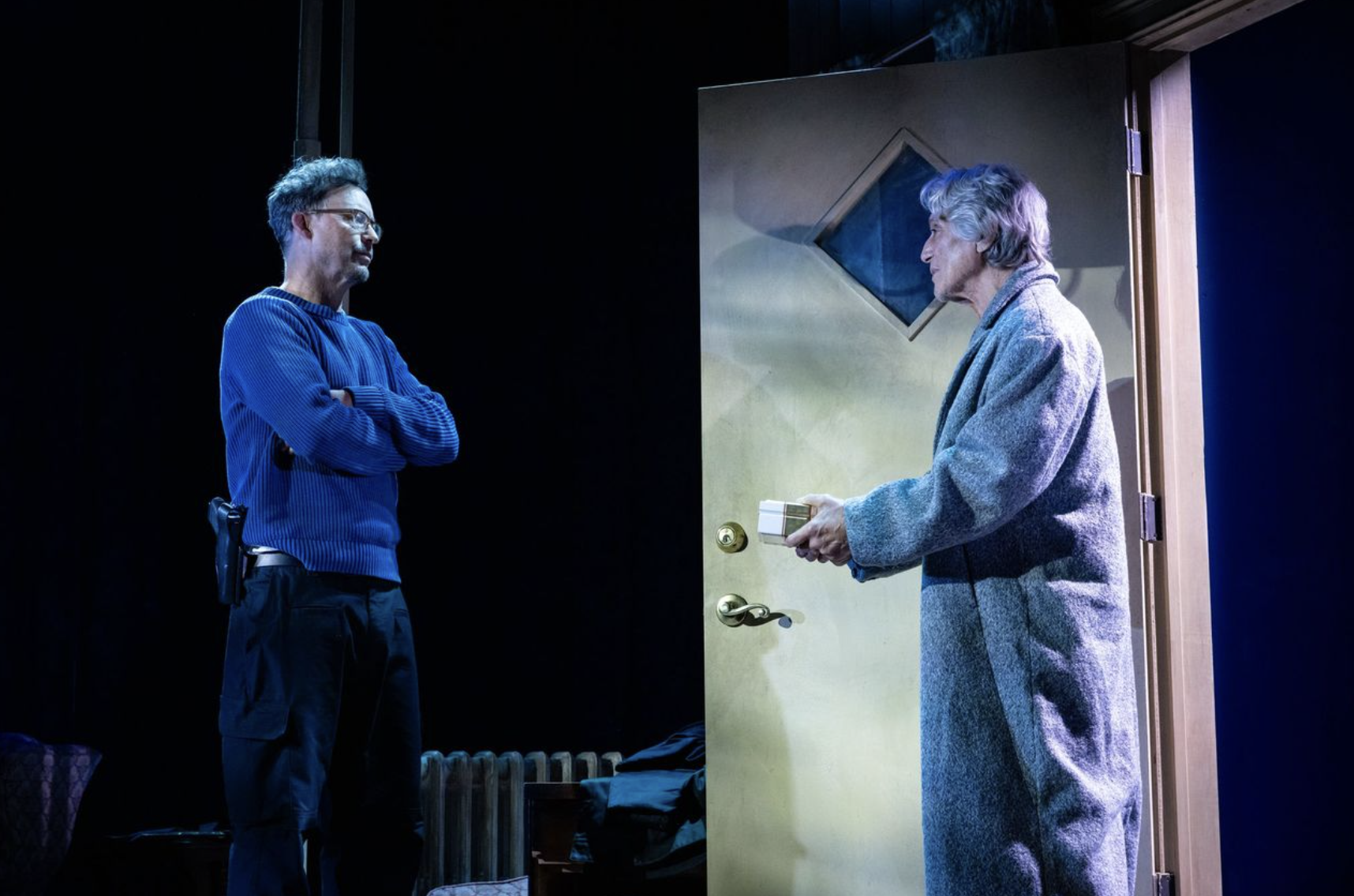
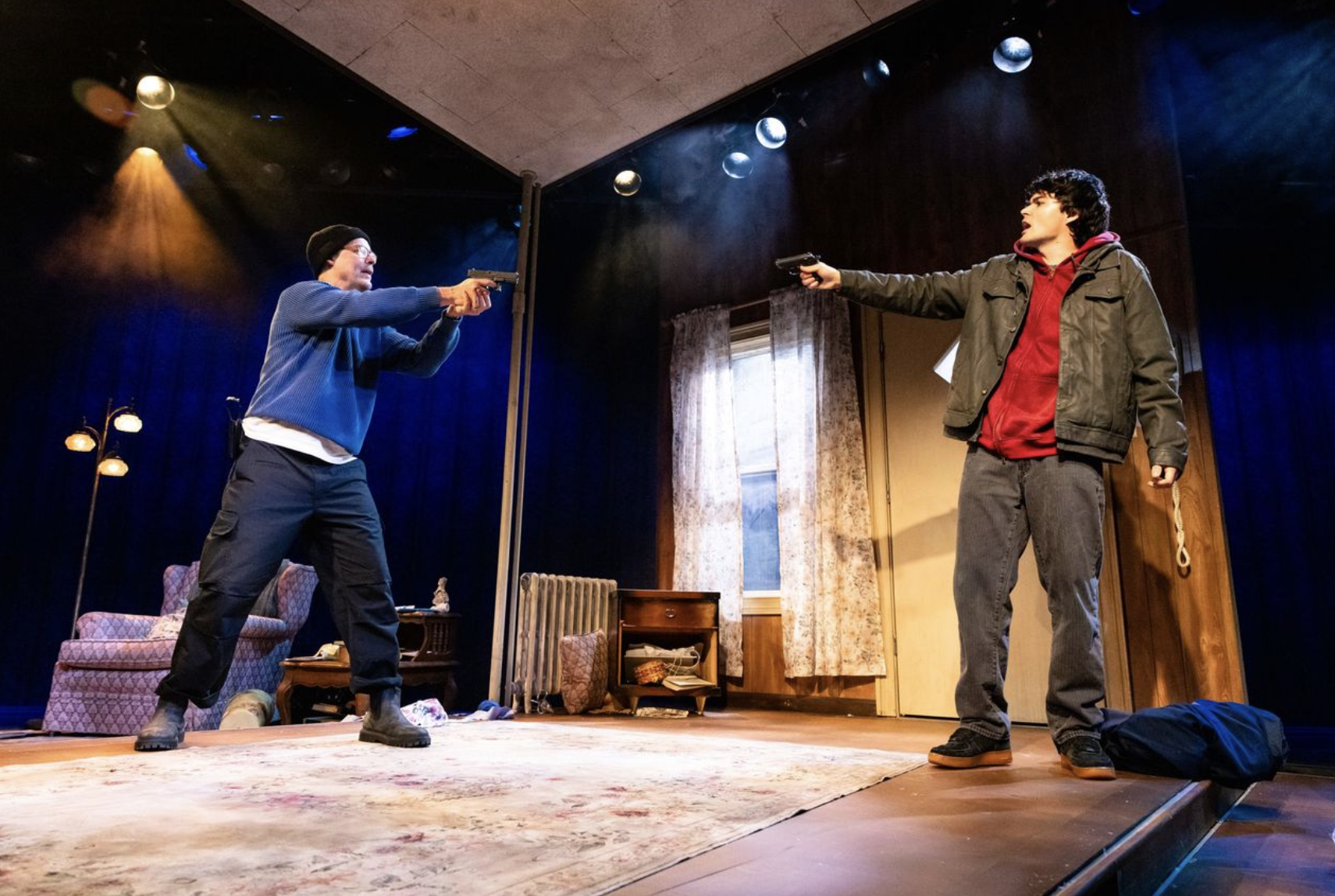
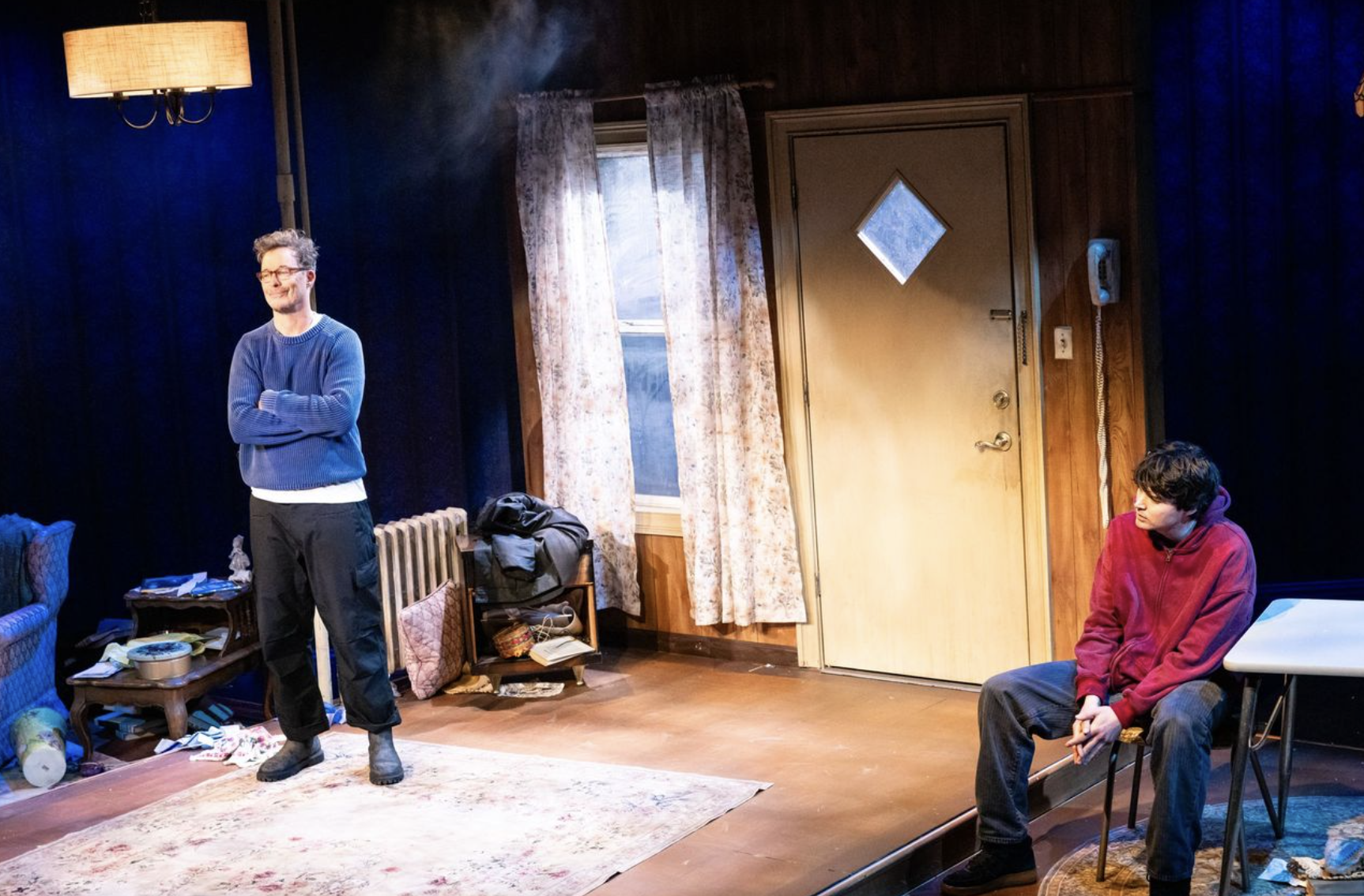
Photo credit by Shirin Tinati
Ben Andron’s Broken Snow, recently completing an engagement at Theatre 71 under the assured direction of Colin Hanlon, begins with the sort of theatrical proposition that immediately captures one’s attention. In a dilapidated house somewhere far removed from civilization, a weathered man named Kris, played by Tony Danza, steps forward to announce that he is about to tell us a story of enormous consequence—a moment, he says, when everything changed. Then, almost perversely, he vanishes from direct address altogether. The play that follows unfolds less as a conventional narrative than as an excavation, a rummaging through memory, regret, and family wreckage in search of whatever catastrophe left its mark on three damaged lives.
The setup has undeniable allure. Two strangers arrive separately at an abandoned home and, within moments, are pointing guns at one another. One is Steven (Tom Cavanagh), guarded, authoritative, and claiming to be an officer of the law. The other is James (Michael Longfellow), younger, scruffier, and possessed of the defensive wit common to men who have learned to weaponize humor before anyone else can wound them. Their tense encounter soon reveals a startling truth: they are half-brothers meeting for the first time, united only by the recent death of the father who spent a lifetime keeping them apart.
Andron structures the evening as a memory play disguised as a thriller. Flashbacks interrupt the present-day confrontation, gradually revealing the relationship each son had with Kris, a deeply troubled man whose influence continues to dominate their lives after his death. The script’s ambitions are admirable. It seeks not merely to solve the mystery of who Kris was but to explore how children spend decades trying to decode the private traumas of their parents. The question that hangs over the evening is not simply what happened to Kris, but whether understanding him can ever undo the damage he inflicted.
The production itself serves these ambitions beautifully. Scott Adam Davis’ scenic design conjures the abandoned house with remarkable economy, using skeletal platforms and fragmented architecture to create a space that feels simultaneously real and dreamlike. Jeff Croiter’s lighting is even more impressive, outlining walls and memories with eerie precision, transforming the stage into a landscape where past and present coexist. Lisa Zinni’s costumes are understated but exactingly observed, sketching character through small but telling details. Most striking is Kris’ weathered gray overcoat, which transforms Danza into something almost spectral whenever he appears in it—a looming figure from memory, carrying the chill of the past with him. Together with Bill Toles’ evocative sound design, the visual and auditory elements lend the play an atmosphere of chilly unease. One often feels as though the empty house itself is remembering.
Hanlon’s direction is similarly elegant. The movement between timelines is fluid and lucid, no small achievement in a script that depends heavily on temporal shifts. He wisely trusts the audience to follow the emotional breadcrumbs rather than overemphasizing exposition. Most importantly, he maintains a palpable tension throughout, even when the play’s central mystery occasionally threatens to stall under the weight of its own deliberateness.
The performances are consistently strong. Cavanagh brings tremendous gravitas to Steven, allowing us to see both the competence he projects and the profound hurt he struggles to conceal. His transformation from wary intruder to vulnerable son is handled with admirable subtlety. Longfellow, meanwhile, delivers perhaps the evening’s most emotionally complex performance. His James uses sarcasm as camouflage, but Longfellow repeatedly allows glimpses of loneliness and yearning to break through the character’s defensive posture. The result is a portrayal that grows richer as the evening progresses.
Then there is Danza, whose casting initially seems almost mischievous. Audiences familiar with his genial television persona may spend the opening scenes wondering whether he can convincingly embody a man capable of the cruelty Kris routinely displays. Yet Danza largely succeeds by refusing to play the character as a monster. Instead, he presents a man hollowed out by fear, regret, and unresolved wounds. Even when Kris behaves monstrously, Danza finds flashes of humanity that make him more troubling, not less. Wrapped in his heavy overcoat and drifting through the stage like an apparition, he becomes the play’s most haunting presence.
What ultimately prevents Broken Snow from achieving the full force it seeks is not the production but the script itself. Andron is often so determined to preserve mystery that crucial elements remain frustratingly vague. The recurring imagery of the “serpent with the black feathery wings,” invoked repeatedly as though it contains the key to everything, never acquires the clarity or symbolic resonance necessary to justify its prominence. Likewise, the final revelations about Kris’ past feel less convincing than the play believes them to be. The explanation offered for his behavior narrows rather than deepens him, reducing a fascinatingly inscrutable figure to a case study. One leaves wishing Andron had trusted ambiguity more and explanation less.
Still, even when its writing strains toward significance it does not entirely earn, Broken Snow remains compelling thanks to the artists interpreting it. Hanlon’s sensitive direction, Davis’ evocative set, Croiter’s atmospheric lighting, and three committed performances continually elevate the material. The evening may not fully solve the mystery at its center, but it captures something recognizable about the lingering confusion left by difficult parents: the suspicion that understanding them completely may be impossible, and the equally stubborn hope that we will keep trying anyway. The play’s answers may be imperfect, but its questions linger long after the snow has settled.
Review by Tony Marinelli.
Published by Theatre Beyond Broadway on June 1, 2026. All rights reserved.
