
DAD DON’T READ THIS
Written by Eliya Smith, Directed by Chloe Claudel
Presented by TRY FOR BABY PRODUCTIONS and THE GOAT EXCHANGE
St. Luke’s Theatre, 308 West 46th Street, in Manhattan
May 4, 2026 - May 30, 2026
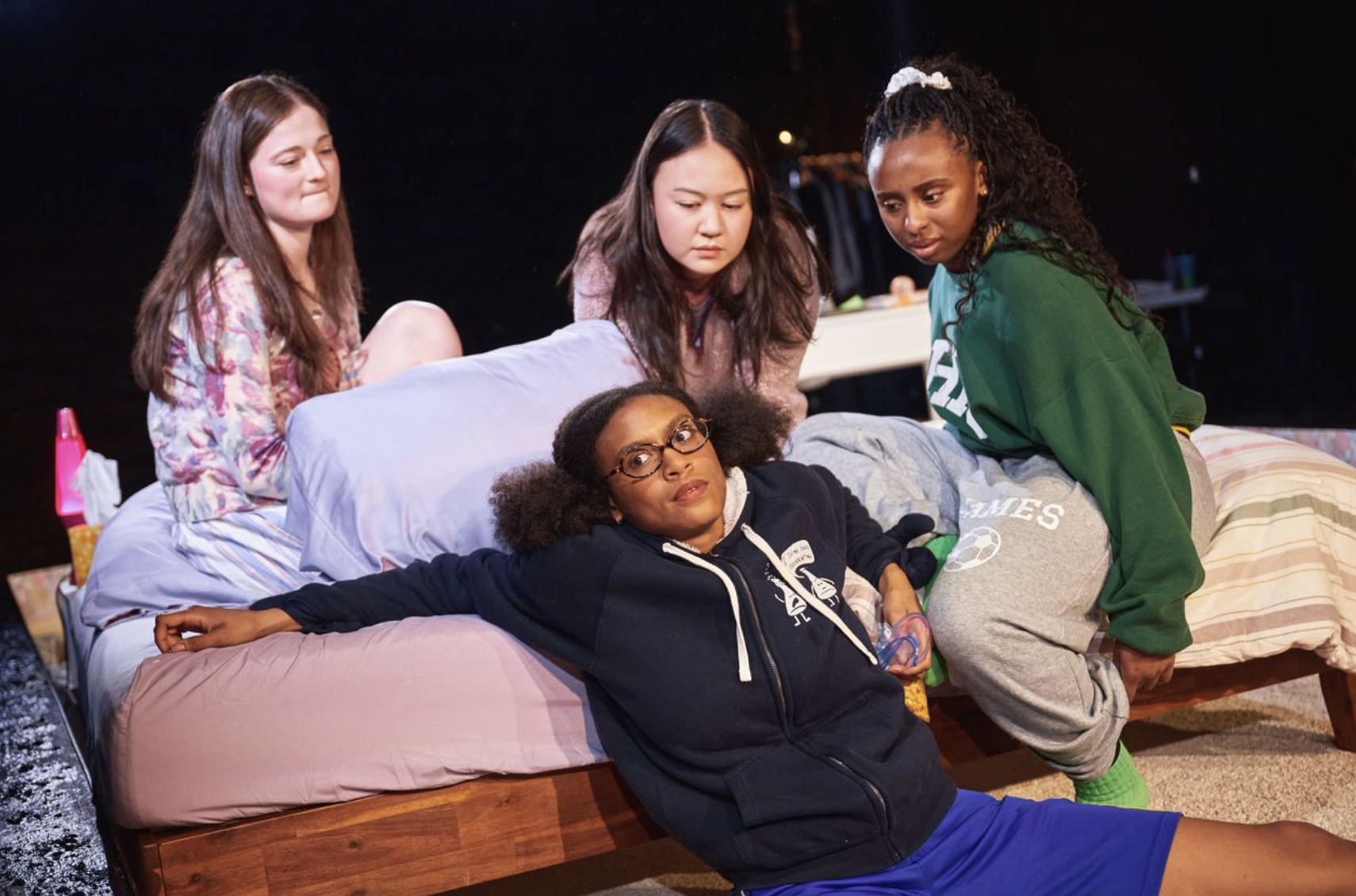
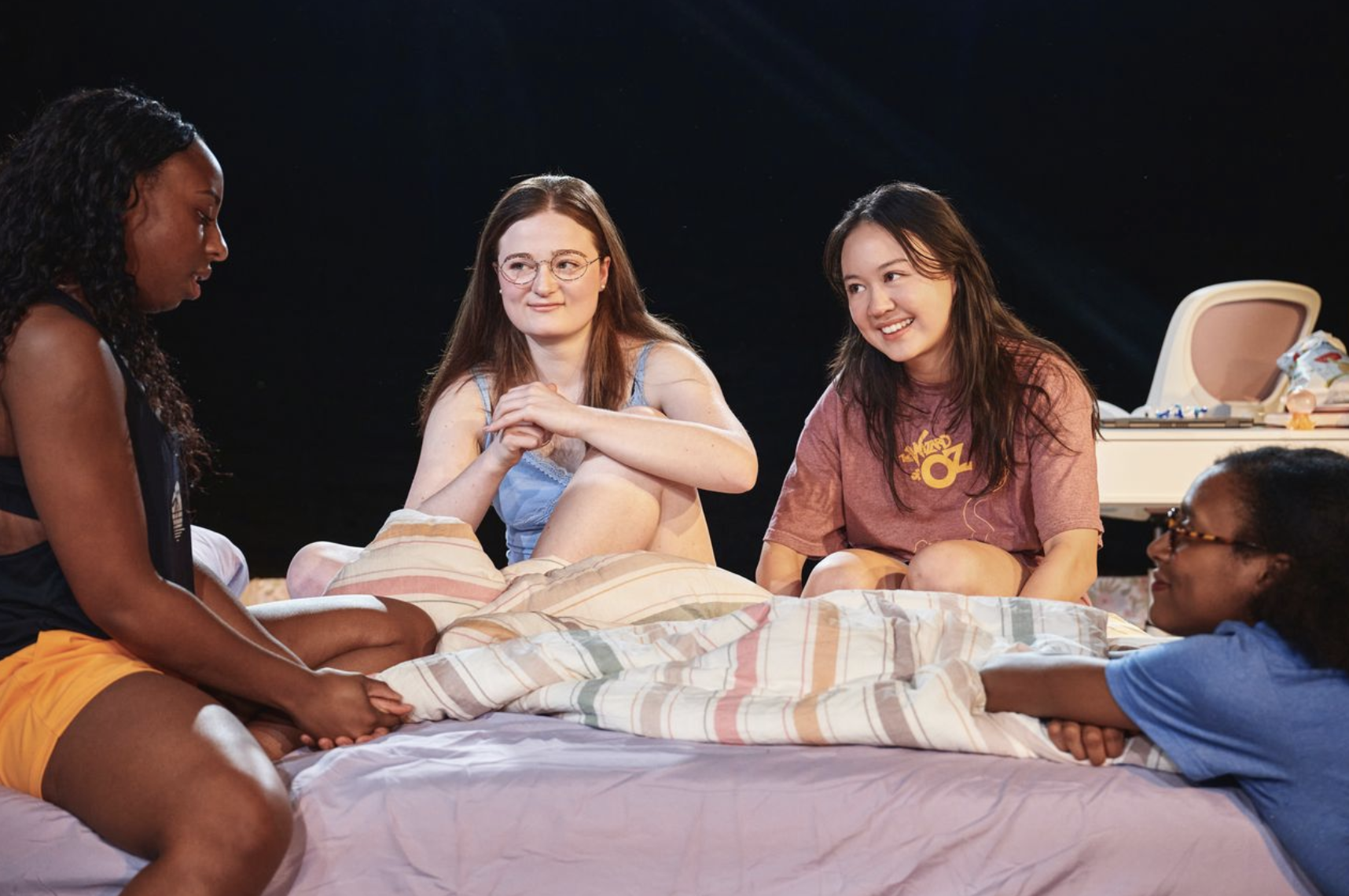
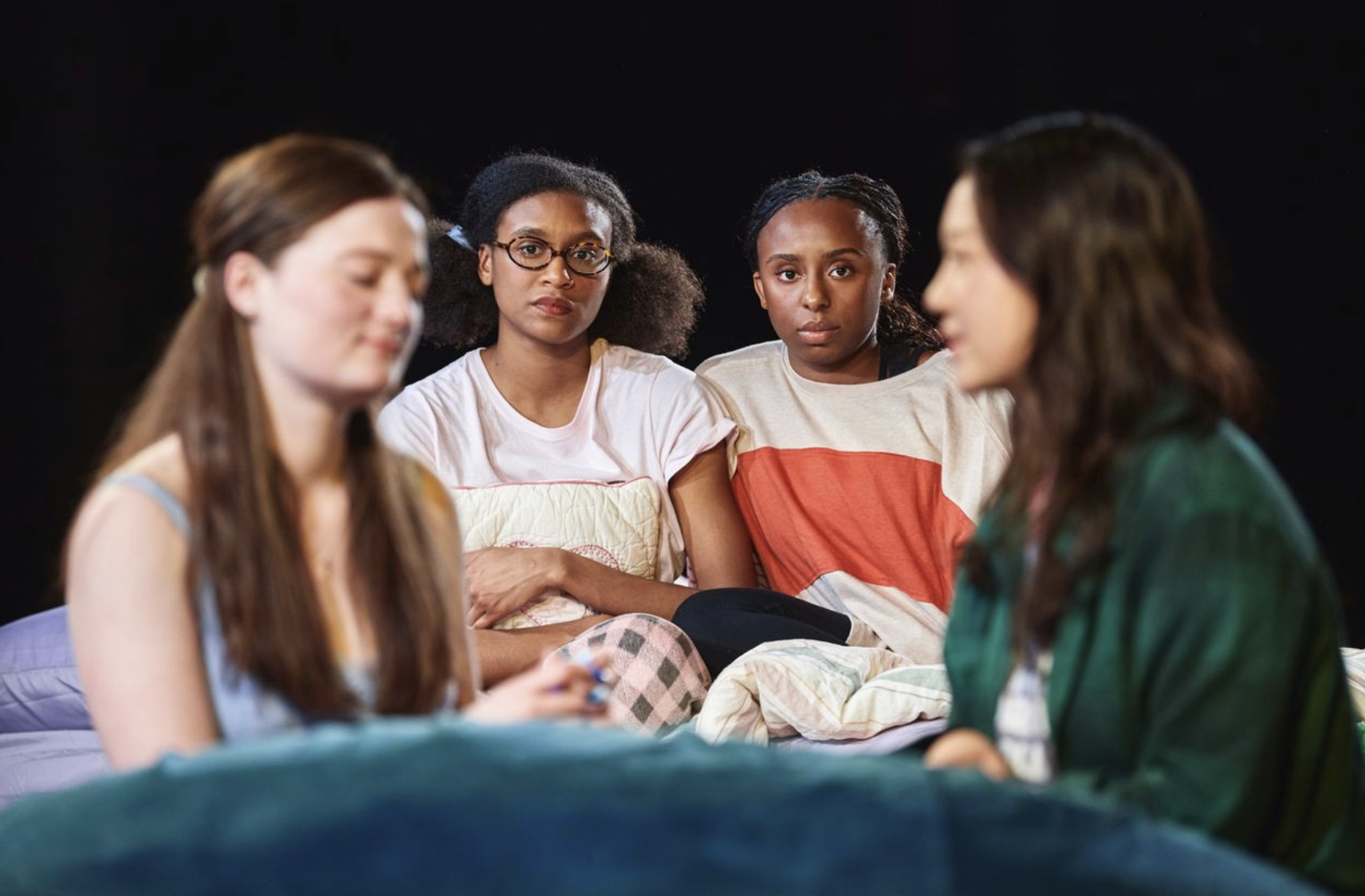
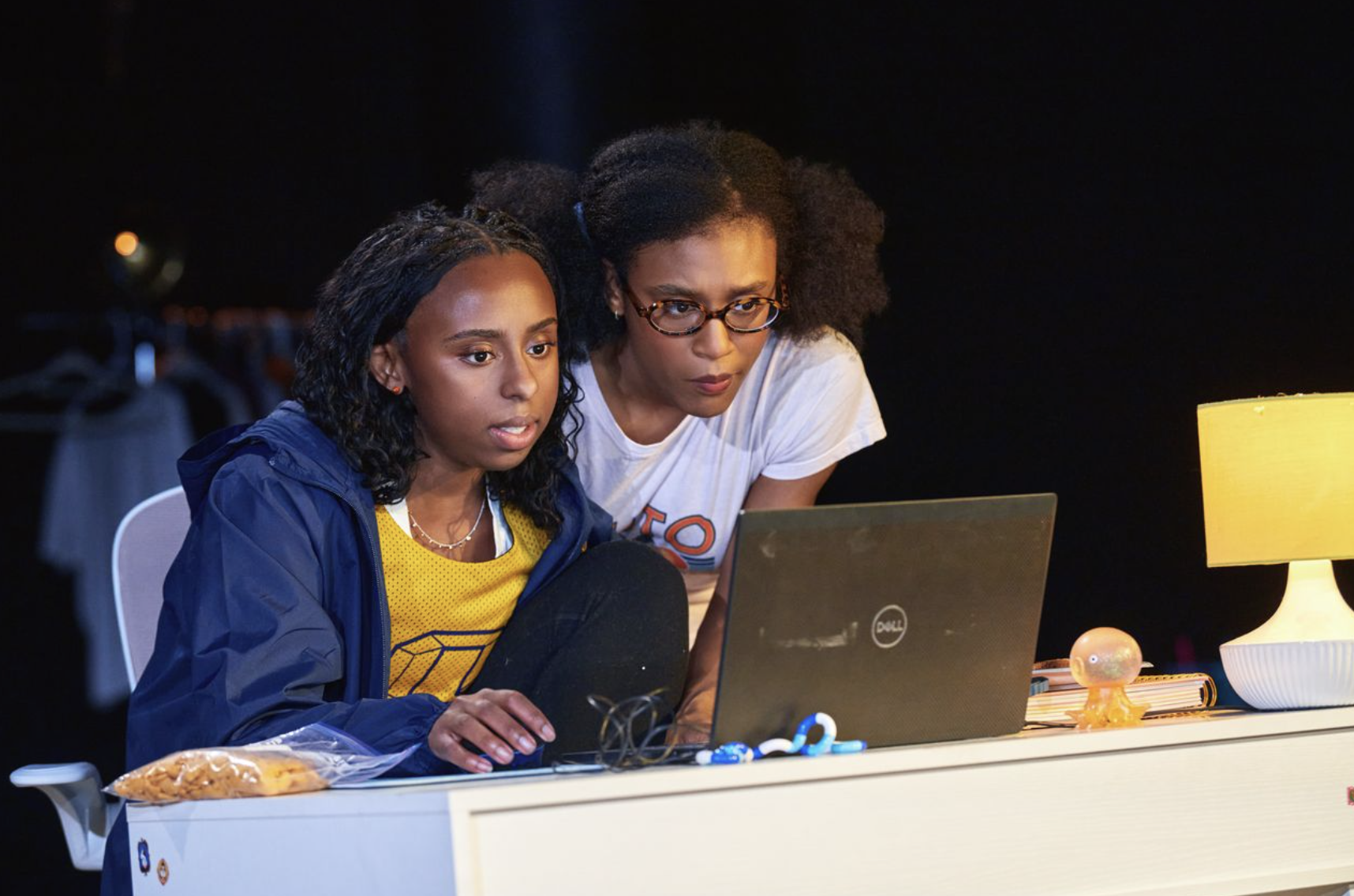
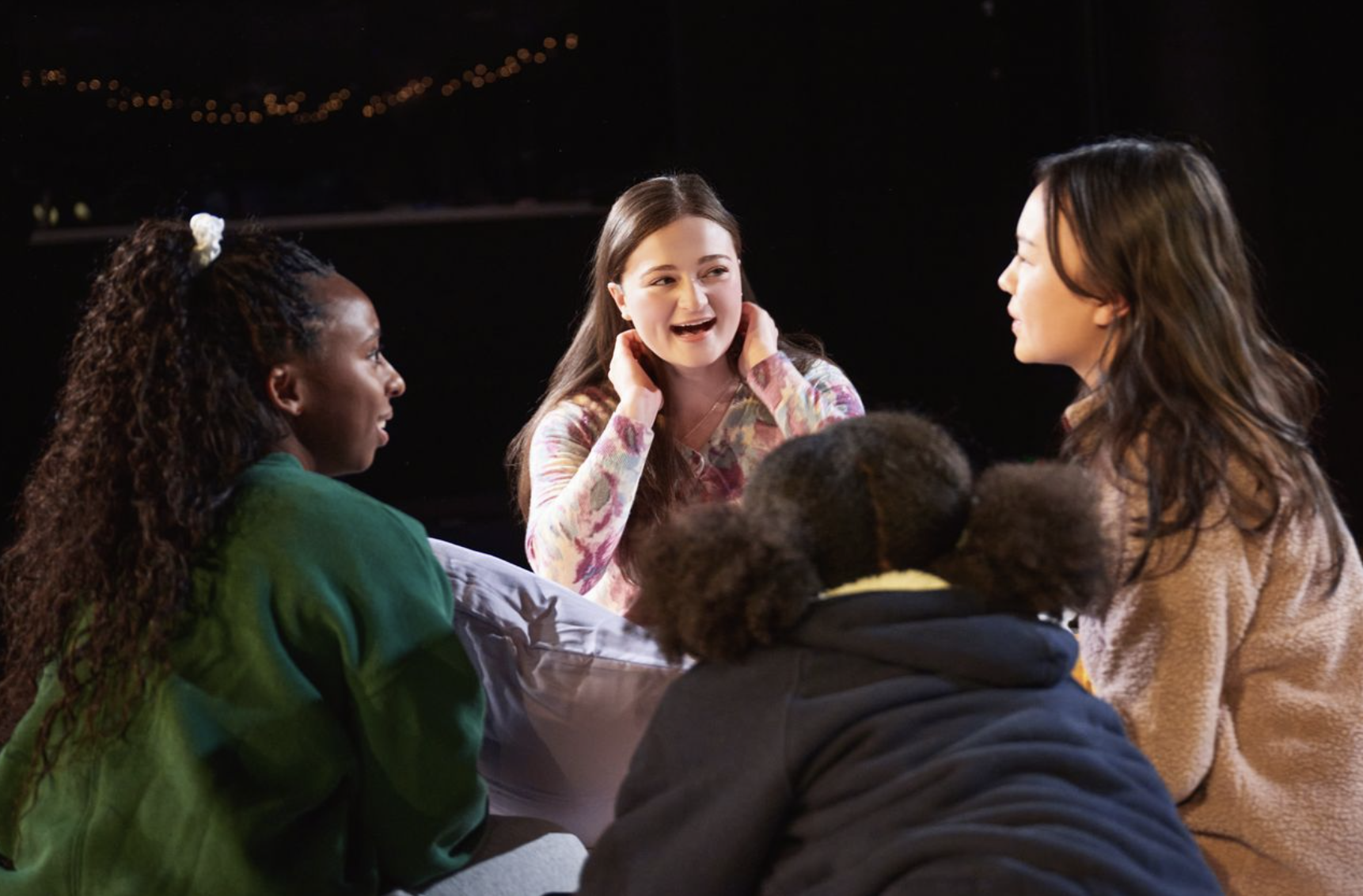
Photo credit by Valerie Terranova
Absolutely everything matters in Eliya Smith’s astonishingly perceptive Dad Don’t Read This. Every offhand joke lands with the precision of a dagger. Every humiliation feels life-alteringly catastrophic. Every friendship is both a sanctuary and a battlefield. Set in suburban Ohio in 2014, Smith’s play captures adolescence with such unnerving specificity that it often feels less like a work of theater than a recovered memory. Under Chloe Claudel’s exquisitely calibrated direction, this coming-of-age drama becomes something rare: a portrait of teenage girlhood that is unsparing in its honesty yet incandescent with compassion.
The play unfolds largely within the sacred confines of sixteen-year-old Mal’s bedroom, a place where four friends gather to gossip, drink stolen liquor, nurse grievances, invent futures, and hide from the incomprehensible world of adults. Plot is almost beside the point. Smith understands that adolescence advances not through events but through emotional weather systems: sudden storms of jealousy, flashes of ecstasy, inexplicable cruelties, and moments of tenderness so profound they feel almost unbearable. The result is a work propelled not by narrative mechanics but by the volatile rhythms of feeling itself.
What makes Dad Don’t Read This so remarkable is Smith’s ability to capture the peculiar dual existence of contemporary adolescence. The girls live simultaneously in reality and online, spending countless hours constructing alternate selves through The Sims, the game that serves as the play’s central metaphor. In that digital universe, relationships can be measured, desires quantified, and destinies controlled. Real life, meanwhile, remains a bewildering tangle of yearning, confusion, and half-understood pain. The contrast gives the play much of its emotional force, illuminating the universal desire to impose order upon experiences that resist interpretation.
Smith’s writing is rich with anthropological precision. The dialogue reproduces the texture of teenage conversation without ever descending into caricature or nostalgia. These girls gossip, rank friendships, overshare, conceal, wound, forgive, and circle endlessly around truths they cannot yet articulate. Their world is saturated with social anxiety and longing, yet also with an exuberant sense of possibility. The play understands that adolescence is not merely a period of becoming but a complete emotional civilization unto itself, governed by rules that adults have forgotten but audiences instantly recognize.
Claudel’s production achieves a kind of miraculous naturalism. The ensemble behaves not like actors performing friendship but like friends who have somehow wandered onto a stage. The girls pile onto beds, collapse into beanbags, burst into spontaneous dances, and drift through constantly shifting alliances with an ease that feels entirely unmanufactured. Claudel wisely avoids melodrama, trusting the material’s emotional truthfulness. The restraint pays enormous dividends. The production’s most devastating moments arrive not through theatrical grandstanding but through tiny changes in posture, fleeting glances, and words left unsaid.
At the center stands Amalia Yoo, delivering a performance of extraordinary depth and intelligence. As Mal, she embodies a teenager perpetually caught between self-awareness and self-misunderstanding, desperate for connection yet unable to explain her own unhappiness. Yoo possesses a magnetic stage presence that grows steadily more powerful as the evening unfolds. Beneath Mal’s sarcasm, impulsiveness, and theatrical bravado lies a profound loneliness, and Yoo reveals each layer with breathtaking subtlety. Her recurring monologues about The Sims become not comic digressions but existential meditations on control, identity, and the desperate wish to fast-forward into adulthood.
The surrounding ensemble is equally superb. Renée-Nicole Powell brings Noelle a hard-earned confidence that barely conceals vulnerability. Sophie Rossman gives Sophie a haunting fragility, making her struggles feel both painfully private and universally recognizable. Kayta Thomas is a revelation as Lida, transforming social awkwardness into a source of both comedy and heartbreak. Together, the four performers create a portrait of friendship so vivid and intricate that every shifting alliance feels consequential.
The production’s design team matches the emotional acuity of the writing at every turn. Olivia Vaughn Hern’s sharply observed costumes further enrich the characterizations, revealing entire biographies through sweatshirts, T-shirts, athletic gear, and carefully chosen details. Forest Entsminger’s scenic design creates a bedroom that feels at once intensely specific and mythically universal, a cluttered adolescent refuge that becomes the entire cosmos for its inhabitants. Abigail Sage’s lighting design subtly shifts between realism and reverie, bathing the stage in moods that mirror the characters’ emotional states while helping the play’s dreamier passages emerge organically from everyday life. Mitchell Polonsky’s sound design supplies an equally vital layer of atmosphere, evoking both the private intensity of teenage interiority and the omnipresent hum of a world increasingly mediated through screens and digital connection.
What lingers most powerfully is the play’s refusal to sentimentalize its subjects. Dad Don’t Read This recognizes adolescence as both absurd and terrifying, a period when every feeling arrives at maximum volume and every wound seems permanent. Yet Smith also finds beauty in that intensity. The production’s occasional eruptions into dreamlike theatricality—moments when reality bends toward something stranger and more poetic—suggest possibilities beyond the confines of Mal’s bedroom and beyond the limitations these girls currently experience. By the final moments, one feels not merely that these young women will survive adolescence, but that they are already becoming the adults they will someday be. Few plays capture the bewildering agony and exhilaration of growing up with such precision. Fewer still do so with this much humor, generosity, and grace. Dad Don’t Read This is an extraordinary achievement.
Review by Tony Marinelli.
Published by Theatre Beyond Broadway on June 3, 2026. All rights reserved.
