CHASING GRACE
Book, Music, Lyrics, & Directed by Elizabeth Addison
ART/NY Mezzanine Theatre | 502 W 53rd St, New York, NY 10019
March 12 - 29, 2026
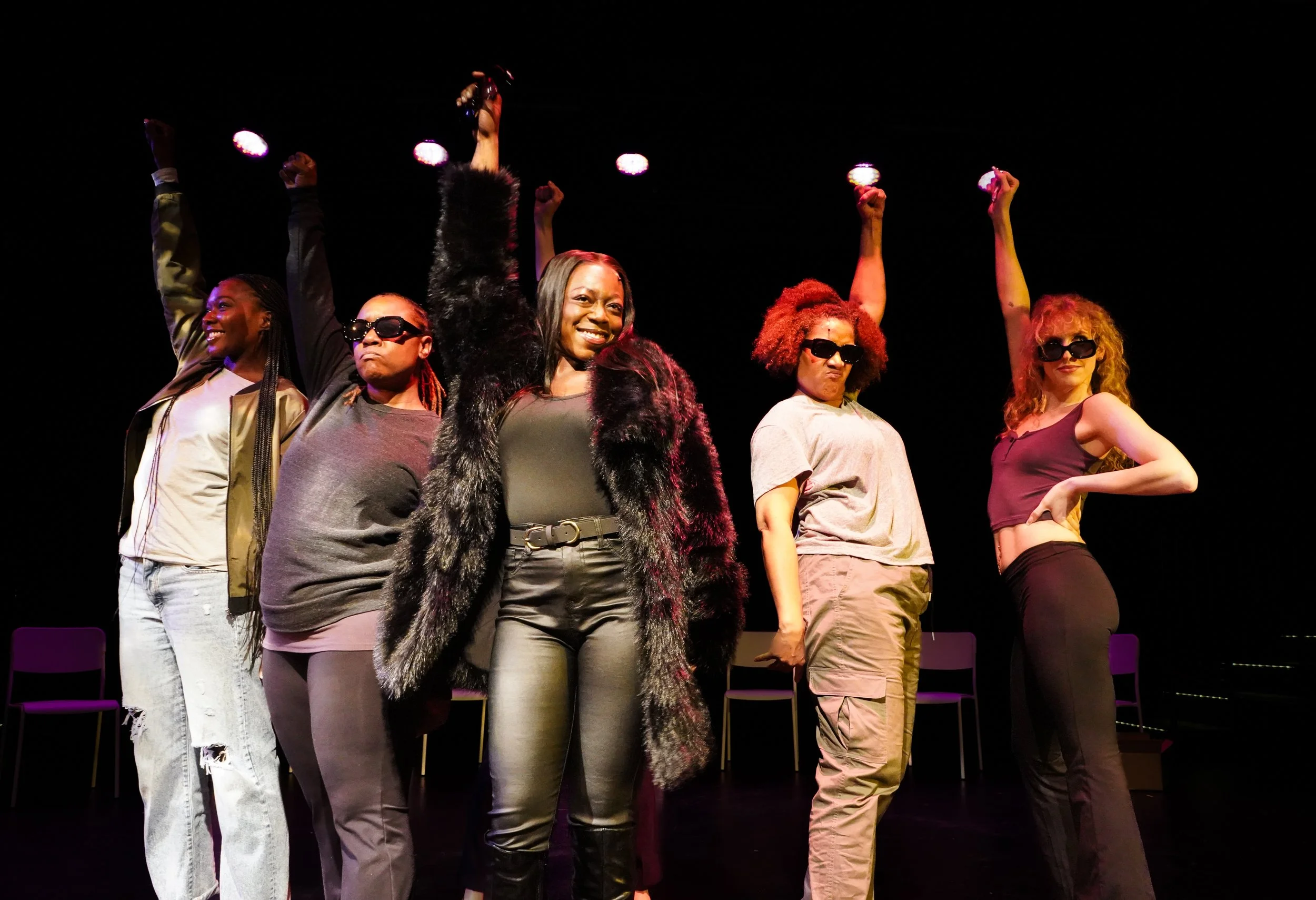
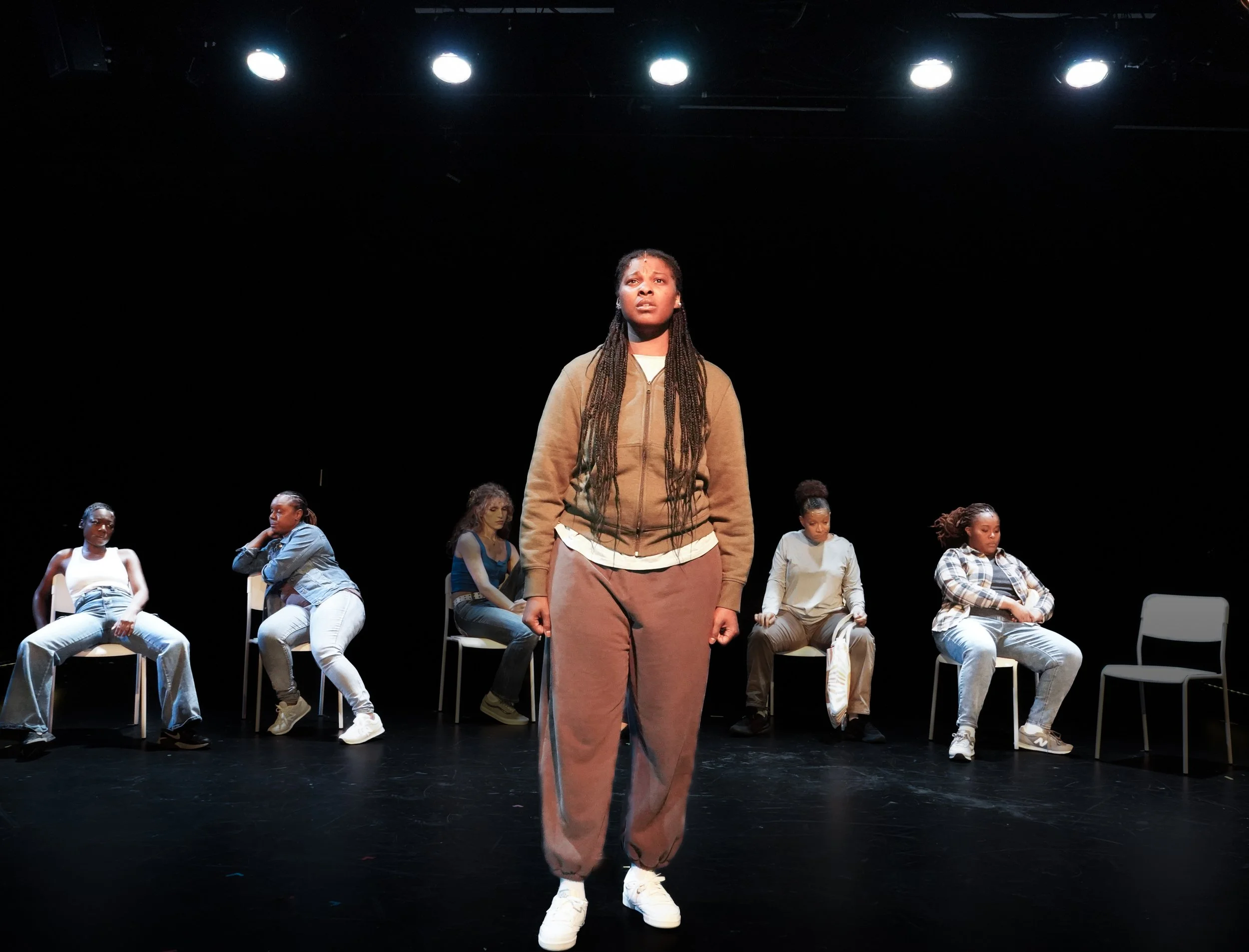
As I settled in my seat, I took in the configuration of the space at the Mezzanine Theatre at A.R.T/N.Y. Set in a thrust, we see seven white chair, a box, and hear the orchestra behind a black curtain. There’s a subtle sound of writing on paper as the instruments warm up. It is a lively Tuesday night as await Chasing Grace.
I have been following this project for some time and was intrigued by this phase of the project helmed by Elizabeth Addison. She is a triple threat: writer, composer, and director. Addison creates two worlds for us. The show, Treatment, and the making of Treatment.
Moving fluidly between a women’s treatment facility, memory, and the rehearsal room, Chasing Grace positions itself as a meta-musical about recovery, authorship, and the cost of telling the truth out loud. Inspired by Elizabeth Addison’s lived experience, the piece asks a compelling central question: what happens when the pursuit of success begins to erode the very truth that made the work necessary?
The answer, at least in part, lies in the show’s strongest assets: its ensemble, its music, and its writing at the micro level.
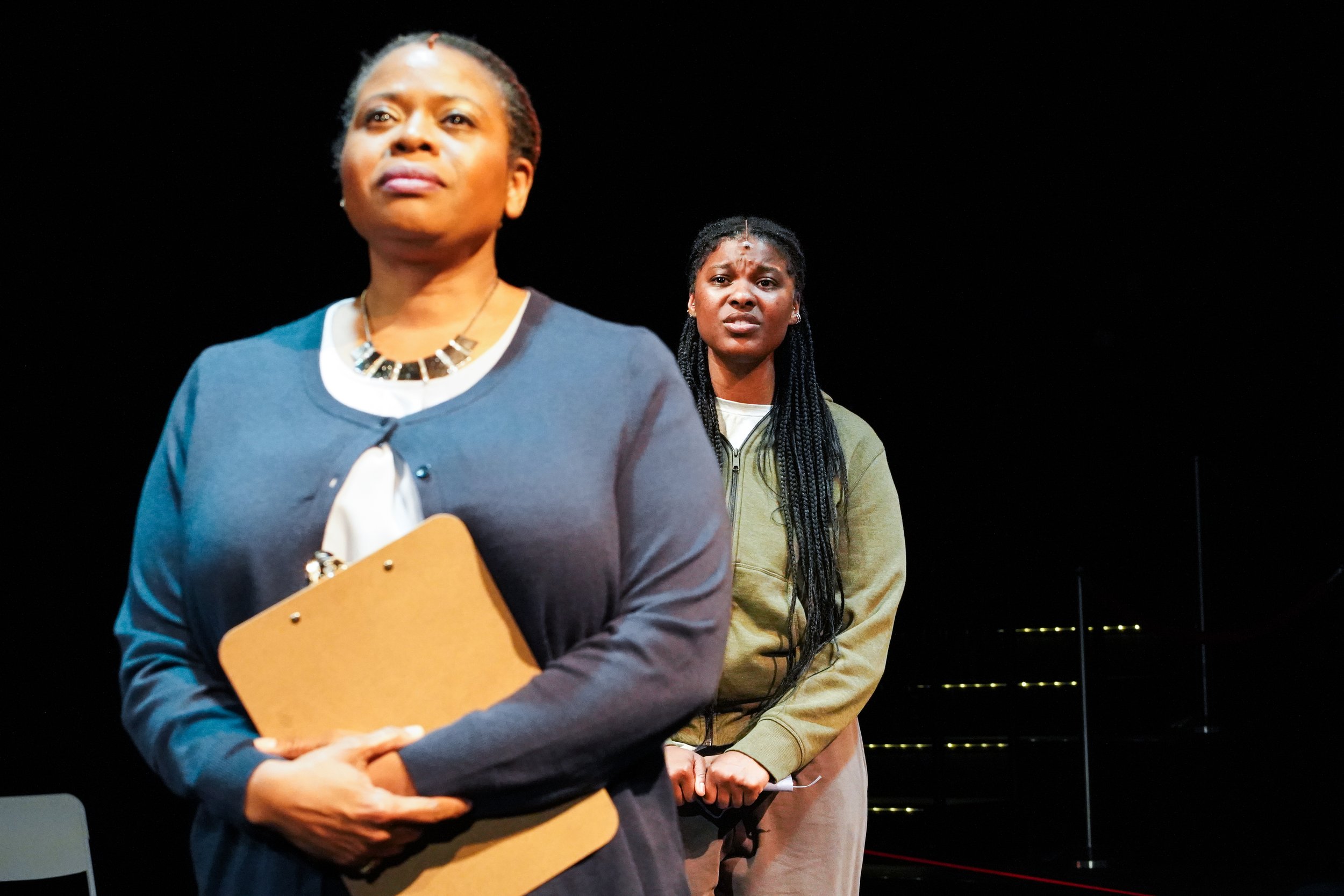
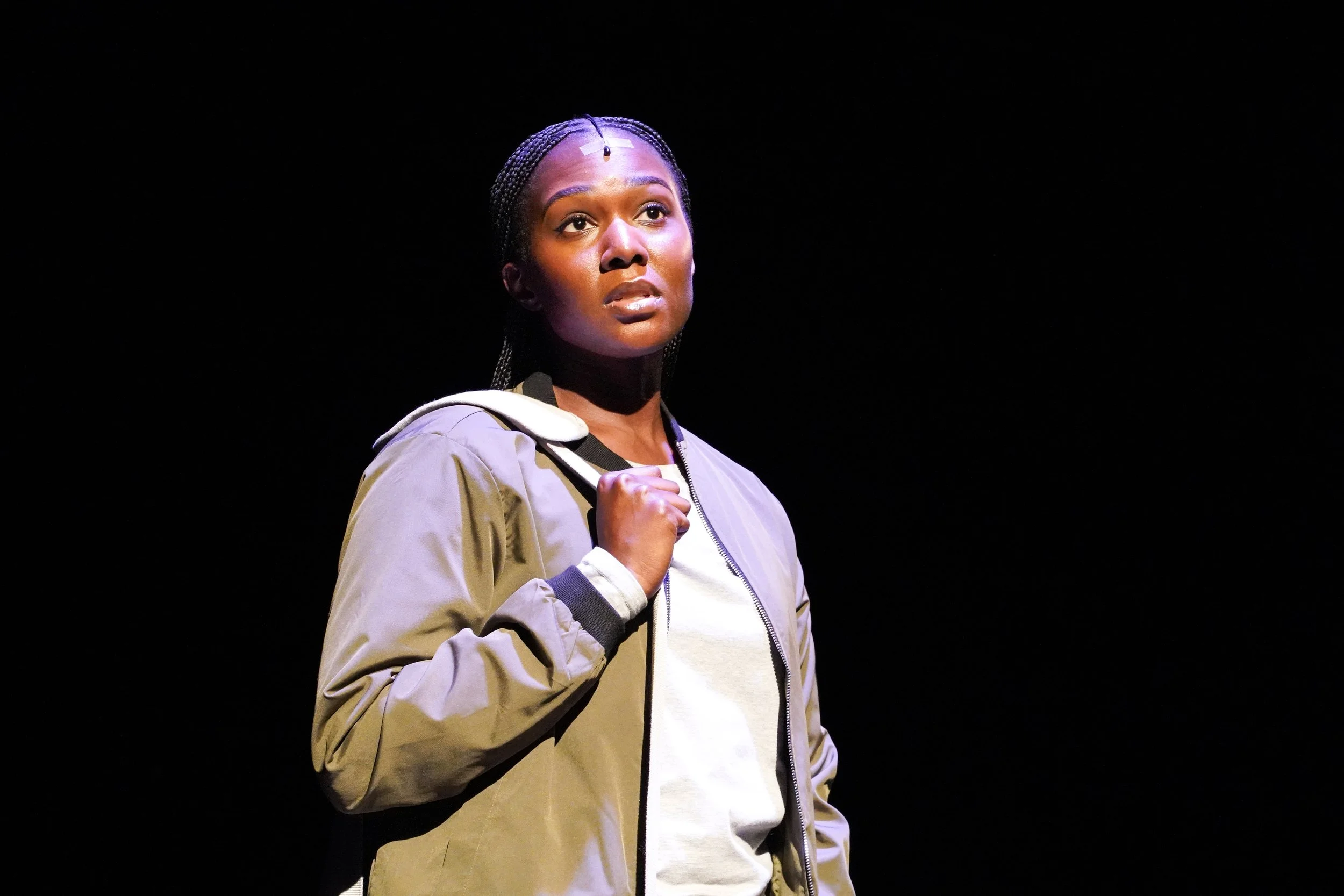
The cast is a powerhouse. Led by Harper Miles as Grace and Gabrielle as The Writer, each representing Addison. Kiara Wade, Shamiea Thompson, LaDonna Burns, Chantelle Guido, Tracey Conyer Lee, Theo Michaela, Marlaina Powell, Indya Cherise as the ensemble bring intensity, artistry, and humanization while each navigating different stages of recovery. They bring a striking level of specificity and humanity to the stage. Their stories unfold with care, revealing trauma not as spectacle but as lived reality. There’s a generosity in the performances that invites us into the room rather than asking us to observe from a distance.
Musically, the show soars. Blending contemporary musical theatre with pop and R&B influences, the score is both fresh and emotionally grounded. Individual numbers are beautifully crafted, often feeling like complete worlds unto themselves. Vocally, the performers rise to the challenge with clarity, power, and nuance. The inclusion of live instrumentation woven through the soundscape, adds texture and intimacy, though the orchestra’s placement behind a curtain occasionally muffles what should be some of the show’s most resonant moments.
Act One is where Chasing Grace feels most assured. Set within the treatment center, we meet women in varying stages of healing, alongside a counselor whose own recovery may not be as steady as it appears. The world is clear, the stakes are grounded, and the emotional throughline is compelling. The show captures the fragile ecosystem of recovery spaces: the small triumphs, the resistance, the grief, and the uneasy humor that often coexists with pain.
And then, Act Two arrives and shifts the gravitational field entirely.
What initially reads as a continuation of these women’s journeys reveals itself instead as a different musical altogether: a meta-examination of the first act as a piece being developed for Broadway. The Writer, now at the center, navigates industry pressures, creative compromise, and the seduction of external validation. It’s an ambitious pivot, and not without merit. There are important ideas here about ownership, exploitation, and the commodification of stories—particularly those centered on Black women and addiction.
However, the sudden change in play structure pulled me out. The transition between acts feels less like a deliberate evolution and more like a rupture. Characters we’ve invested in disappear, their arcs unresolved. The emotional contract established in Act One is effectively abandoned, replaced by a new narrative that asks the audience to recalibrate without sufficient grounding.
The meta-theatrical elements, while conceptually intriguing, become overextended. Satirical moments - particularly those leaning into stereotype and discomfort - linger past their point of impact. What begins as sharp commentary gradually blurs into something unfocused, diluting the clarity of the critique. Instead of sharpening the show’s thesis, Act Two obscures it.
Most notably, the central arc of the playwright’s own recovery gets sidelined as she places her dreams before her recovery. As a result, the climactic relapse lands without the necessary groundwork. It reads less as an inevitable breaking point and more as a narrative insertion.
There is a compelling idea embedded here: that in telling stories of recovery, one risks losing their own footing. That the act of shaping truth for consumption can, itself, become destabilizing. But the balance between these two musicals - the one about treatment and the one about telling that story - never quite settles.
What remains undeniable, however, is the talent driving the piece. The writing, on a line-by-line level, is vibrant and insightful. The music is memorable and emotionally rich. The ensemble delivers performances that are grounded, generous, and deeply felt.
Chasing Grace is a work of immense promise. It holds, within it, a powerful and necessary story about recovery, community, and the complexity of self-definition. With a more cohesive structure and a clearer integration of its meta elements, it has the potential to land with even greater impact.
Right now, it feels like two compelling musicals sharing the same stage, each worthy of attention, but ultimately competing for the same breath.
Click HERE for tickets.
Review by Malini Singh McDonald.
Published by Theatre Beyond Broadway on March 26th, 2026. All rights reserved.