
Written and Directed by Emily Batsford
MITU580| 580 Sackett St., Brooklyn, NY 11217
April 15–May 3, 2026
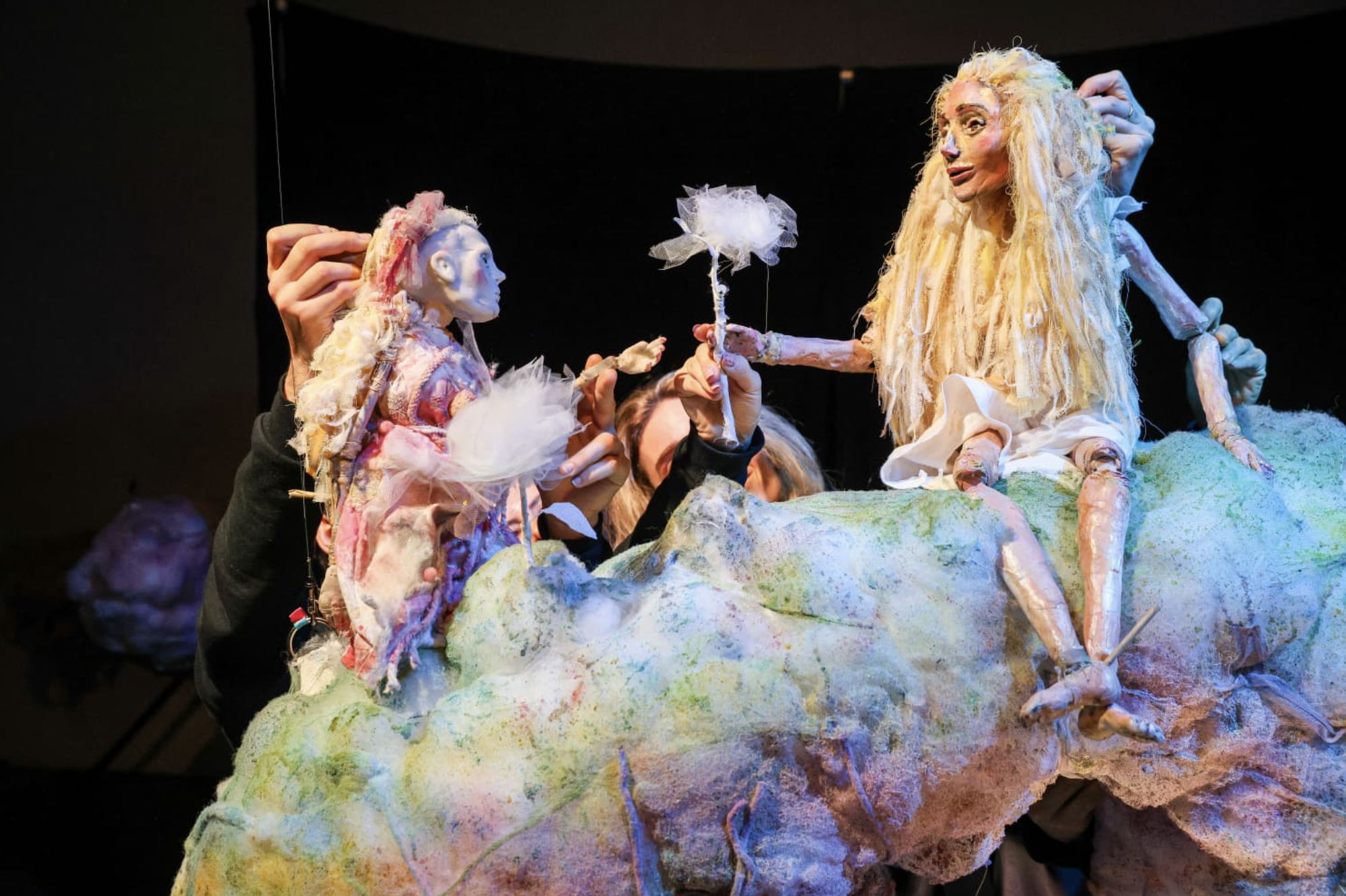
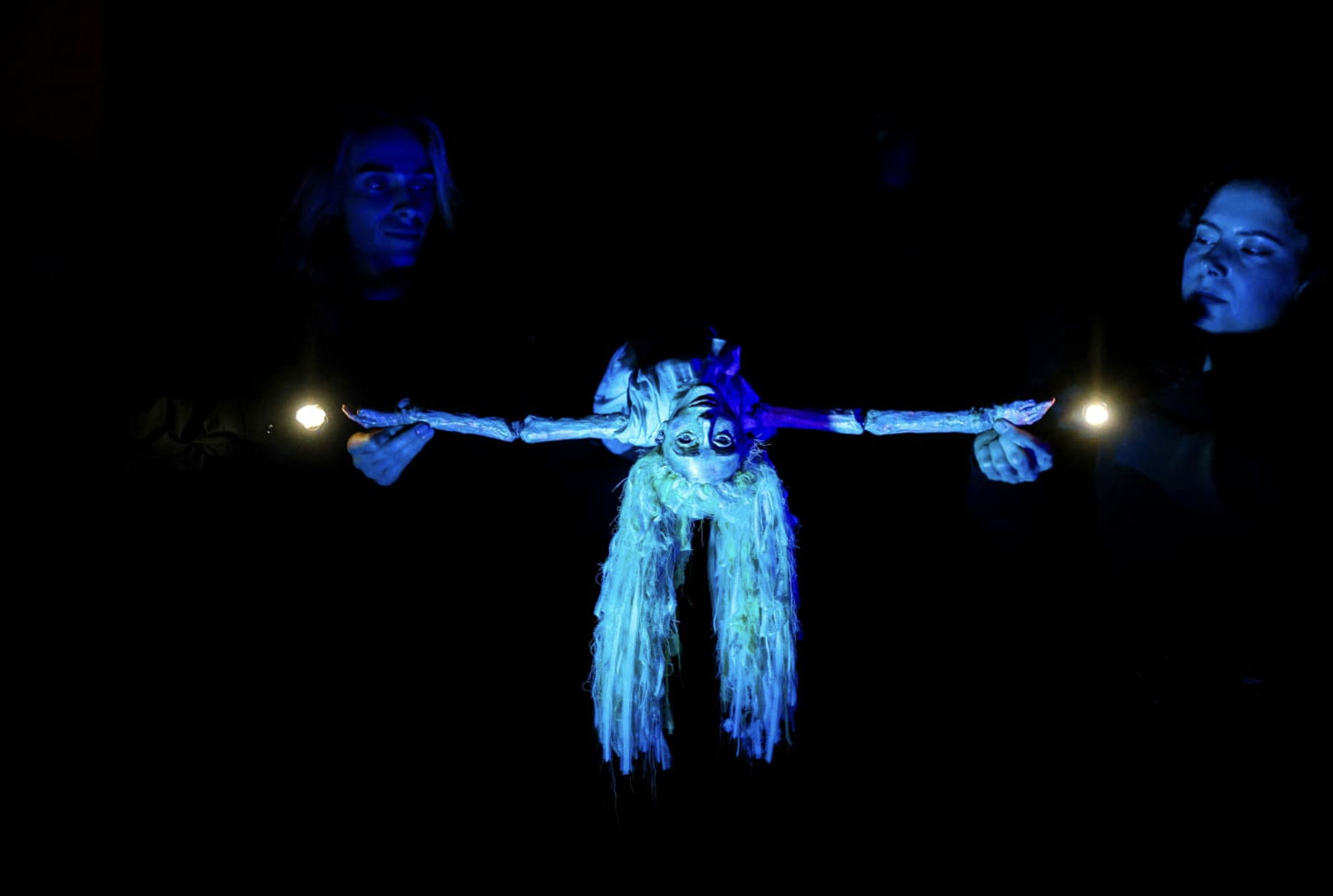
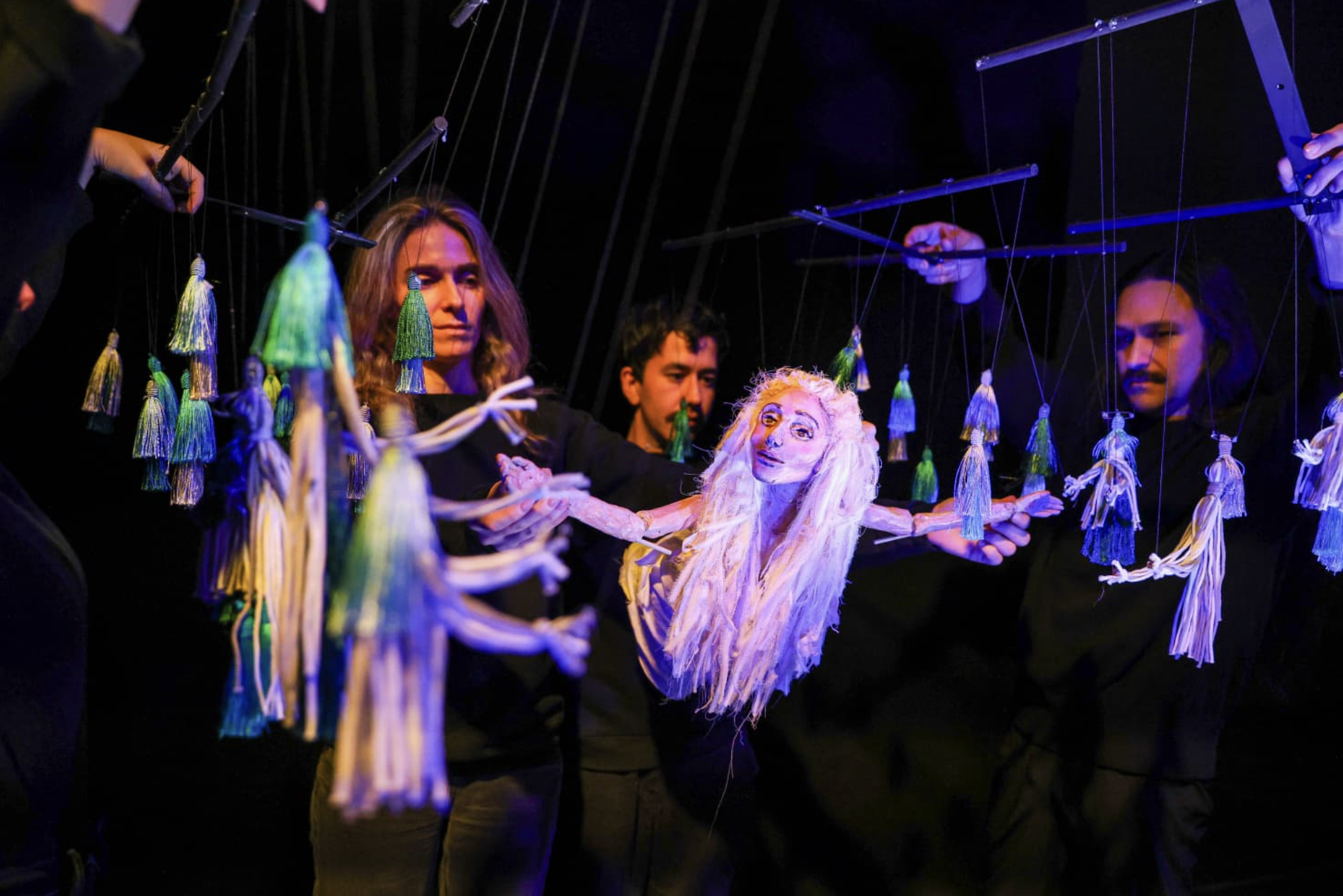
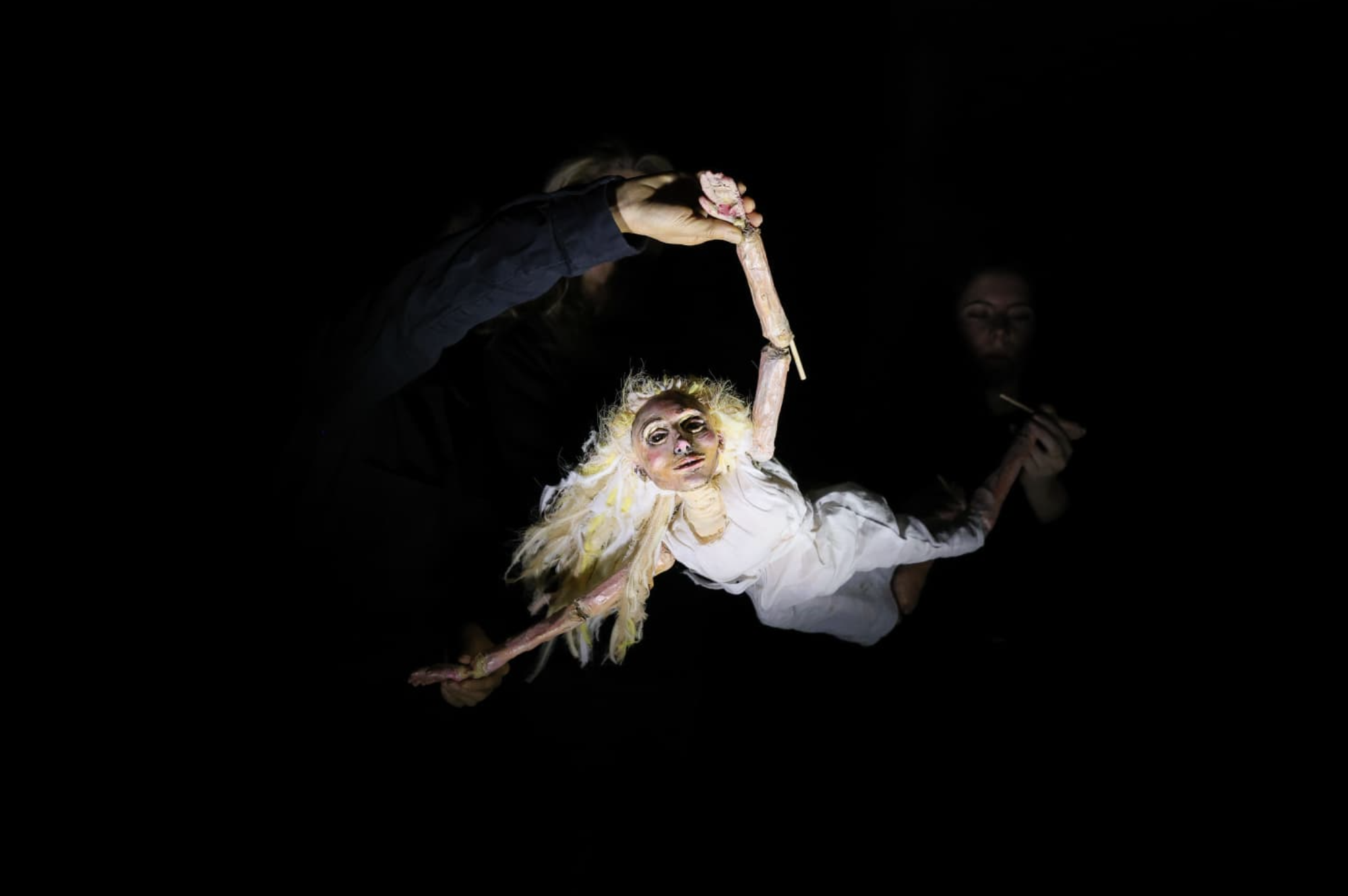
Photo credit by Ken Pao Studio
The moment Plum arrives in the world of clouds, still tumbling from wherever they fell from, the first thing that happens is hostility. Not wonder. Not welcome. Hostility. That detail unlocks everything about CUMULO, Emily Batsford’s fifty-minute puppet piece at MITU580: Plum hasn’t fallen into a landscape. Plum has fallen into a mind.
Clouds are thoughts in CUMULO. The creatures that harry Plum are thoughts. The Rain Queen, arriving at two or three times Plum’s height with a physical presence that makes the rest of the world suddenly feel improvised, is a thought enormous enough to contain weather. Batsford never states any of this. CUMULO is wordless, operating entirely through motion, music, and fabrication, but the internal logic is consistent and rigorous. This is a psychomachia, a battle through a cognitive space made material, and one that resists the obvious allegory. Other critics reached for Alice in Wonderland. What Batsford built is older and stranger: a figure learning to survive inside the space between their own ears.
Yuliya Tsukerman’s puppet design places Plum in the bunraku tradition, with five operators working a single figure, their presence visible, their coordination precise enough that Plum’s limbs, spine, and the tilt of their head each carry distinct emotional weight. Batsford has performed in work by Basil Twist, and that lineage shows. Twist studied at the École Nationale Supérieure des Arts de la Marionnette in France, and the aesthetic that filtered through his work and into CUMULO is distinctly continental: image-driven, poetic, trusting motion to carry what text would only reduce. Joe Silovsky’s cloud machine, a circular track that rotates clouds of different sizes and heights through the space, gives the puppeteers the vertical grammar they need. One passage, where Plum falls and the ensemble’s coordination makes you feel the velocity in your own body, no wires and no actual vertical movement worth speaking of, is pure physical language. You believe the fall because the bodies in front of you believe it.
That cloud world is already occupied. The Guide, a second humanoid puppet roughly Plum’s scale but sterner in expression and more assured in movement, greets Plum with suspicion before offering something like partnership. Familiar thought patterns don’t welcome disruption. They resist, then adapt, then disappear, which is exactly what the Guide does. The predatory creatures that emerge from the cloud architecture feel like the mind’s immune response to a foreign presence, thoughts gone feral from neglect. They harry Plum without prevailing.
Then the Rain Queen arrives.
She is two or three times Plum’s height, fashioned from tassels and yarn and paper clay, accompanied by a shift in David Leon’s score toward chimes and xylophone. The scale alone changes the room. What came before was Plum navigating a world that didn’t want them. What arrives now is something so large and self-contained it has no need to want or not want anything. Her acceptance and embrace of Plum is the piece’s emotional center, and Batsford earns it: not victory, but belonging. Plum stops being an intruder. The mind makes room.
Leon’s score is doing something more precise than atmosphere. At least one other critic found the music assaultive, which surprises me. What I heard was weather. The dissonance in the earlier sections is turbulence, the mind’s resistance to what has fallen into it. The shift when the Rain Queen arrives is meteorological: pressure dropping, the storm clearing. Leon is a Cuban American composer and improviser who describes his practice as a search for vitality through autonomy, contradiction, hyperbole, and humor. That description maps onto what CUMULO asks of him exactly: score not the emotions of a protagonist, but the climate of a consciousness.
Before leaving MITU580, spend time at the touch table in the lobby. Tsukerman’s fabrication materials are laid out for handling, the everyday stuff of tassels and yarn and paint that becomes, in her hands, the gorgeous and uncanny inhabitants of a mind in freefall. Pick them up. What seems ordinary reveals itself.
Batsford chose an epigraph from Lindy West’s Adult Braces for the program: “maybe the only metric we can trust, the only thing that really matters, is how we feel in the now.” Not how we think. How we feel. Plum’s fifty-minute arc through a world built entirely from cognition ends with that insight made physical: belonging isn’t found outside the mind. It arrives when the mind finally accepts what has fallen into it.
Click HERE for tickets.
Review by Ariel Estrada.
Published by Theatre Beyond Broadway on April 29, 2026. All rights reserved.
