ISMAEL LOUTFI: HEAVENLY BABA
Presented by Hasan Minhaj
Written and Performed by Ismael Loutfi, Directed by Greg Walloch
SoHo Playhouse, 15 Vandam Street, in Manhattan
April 2, 2026- April 26, 2026
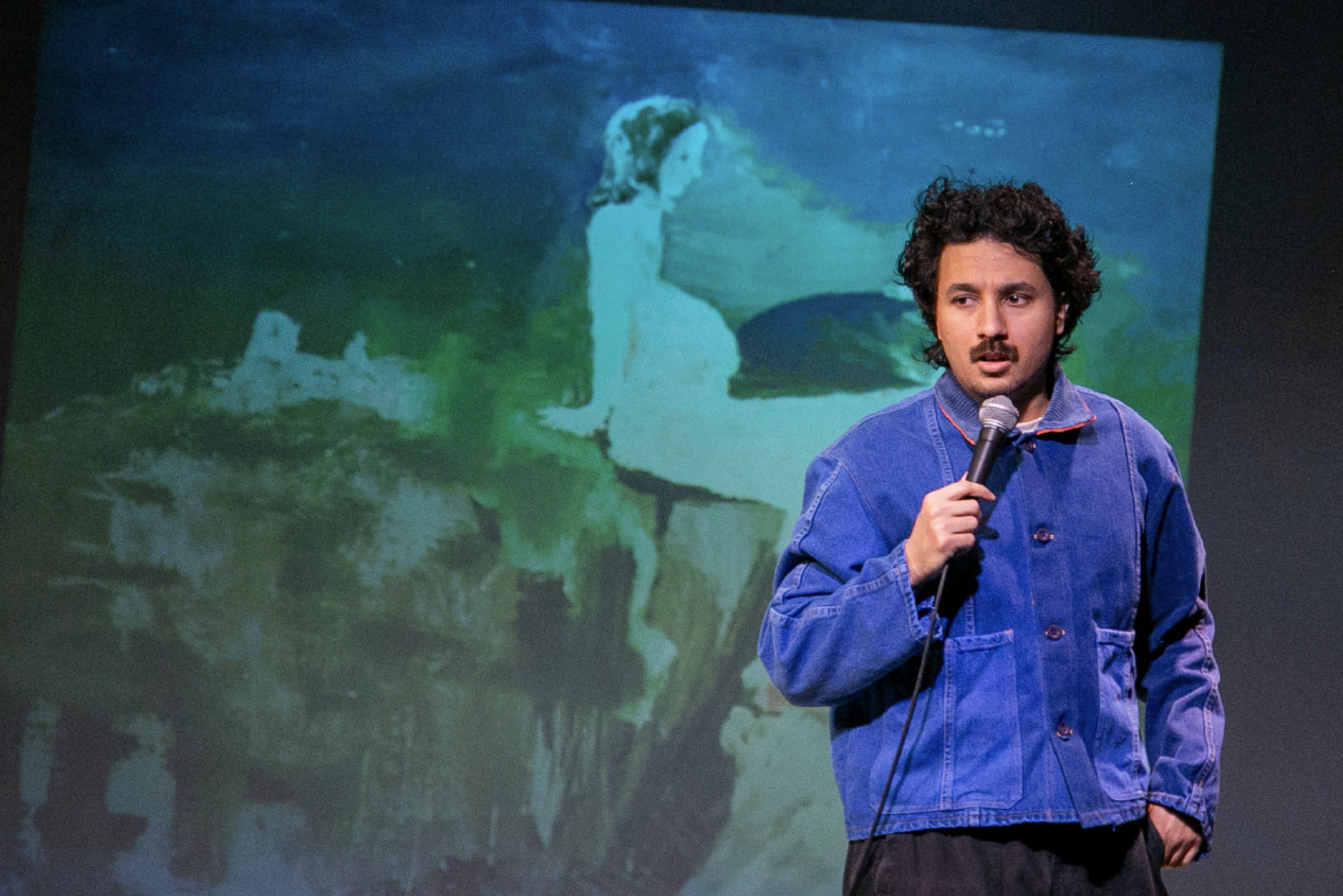
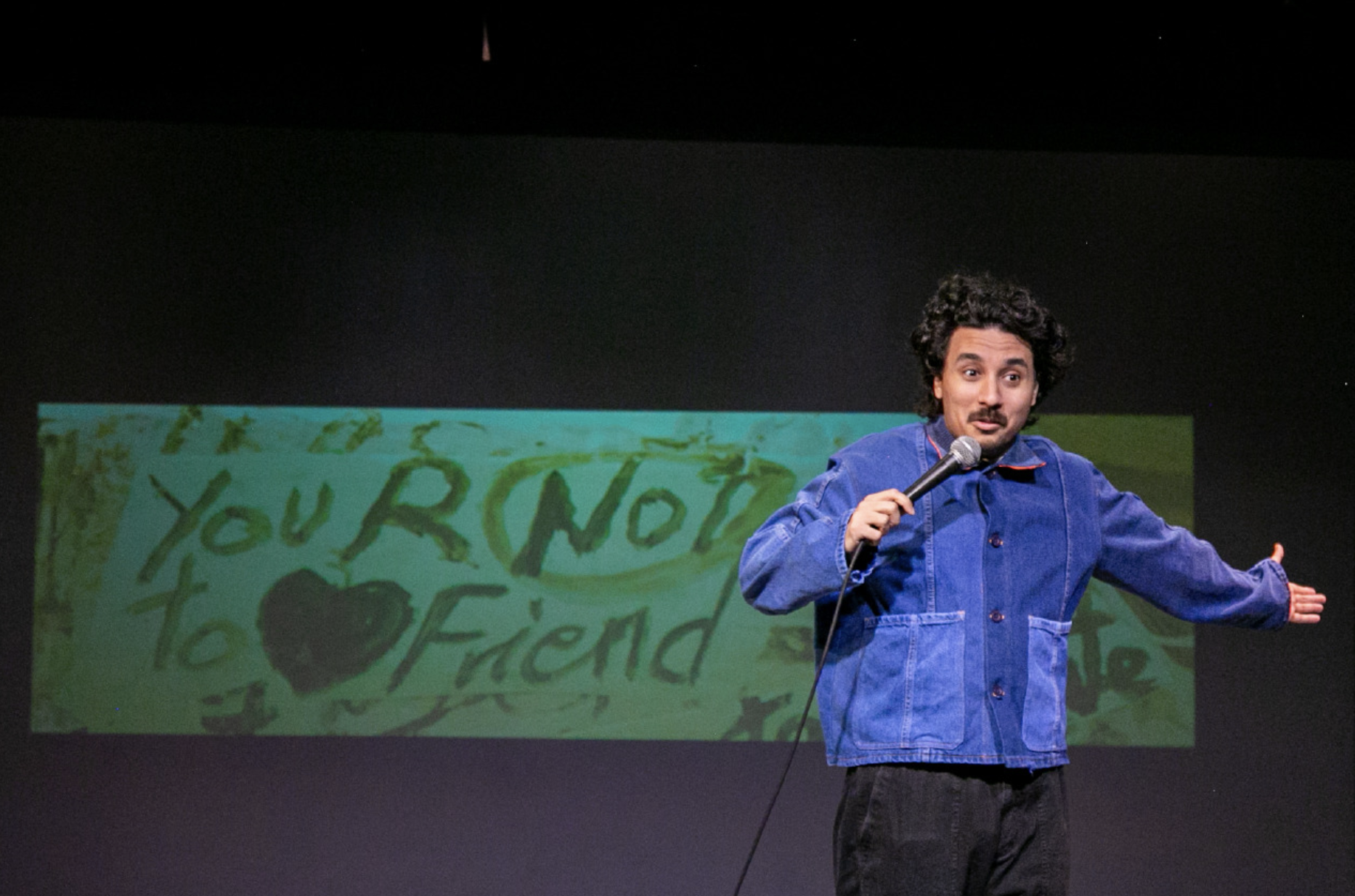
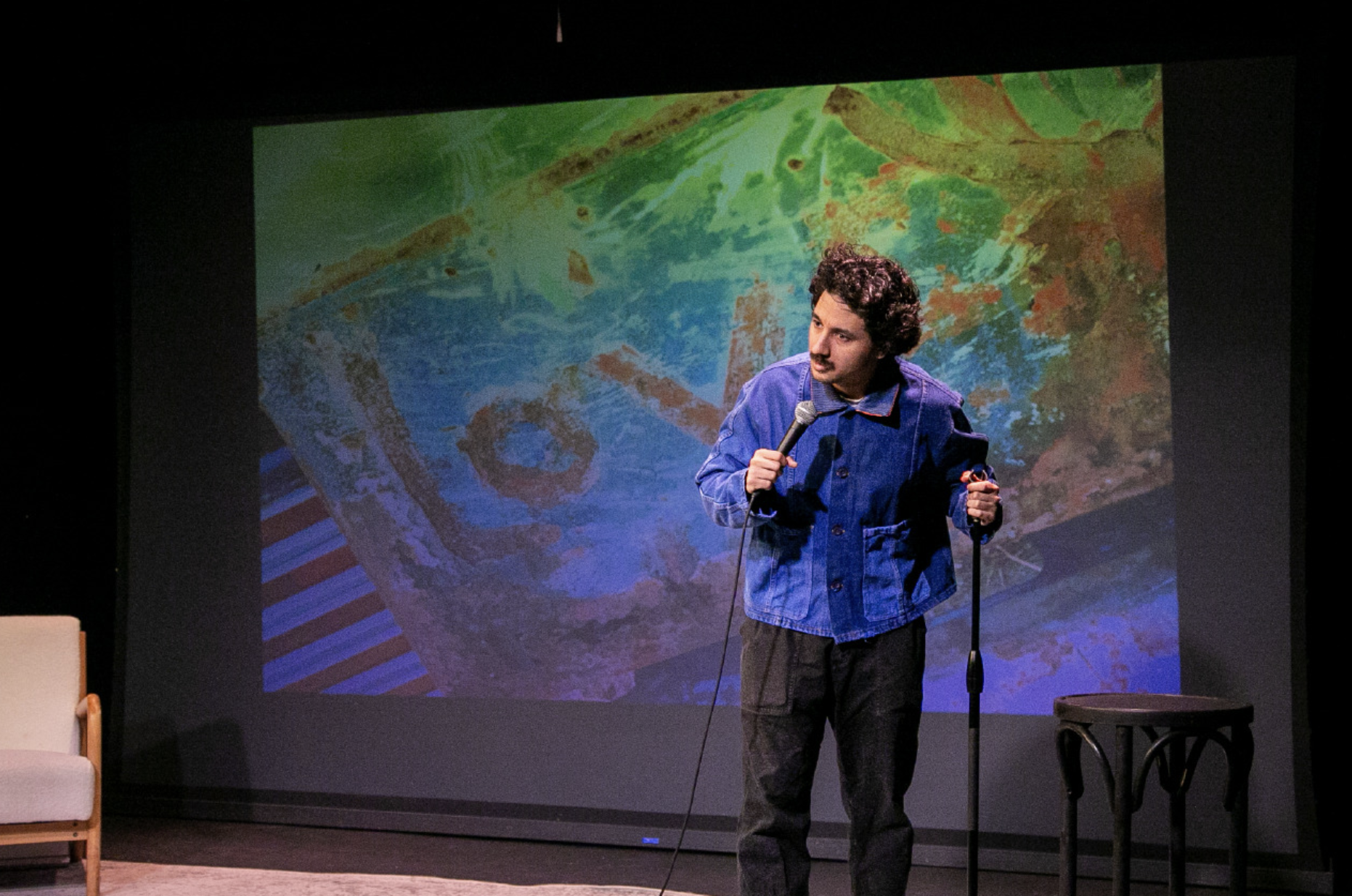
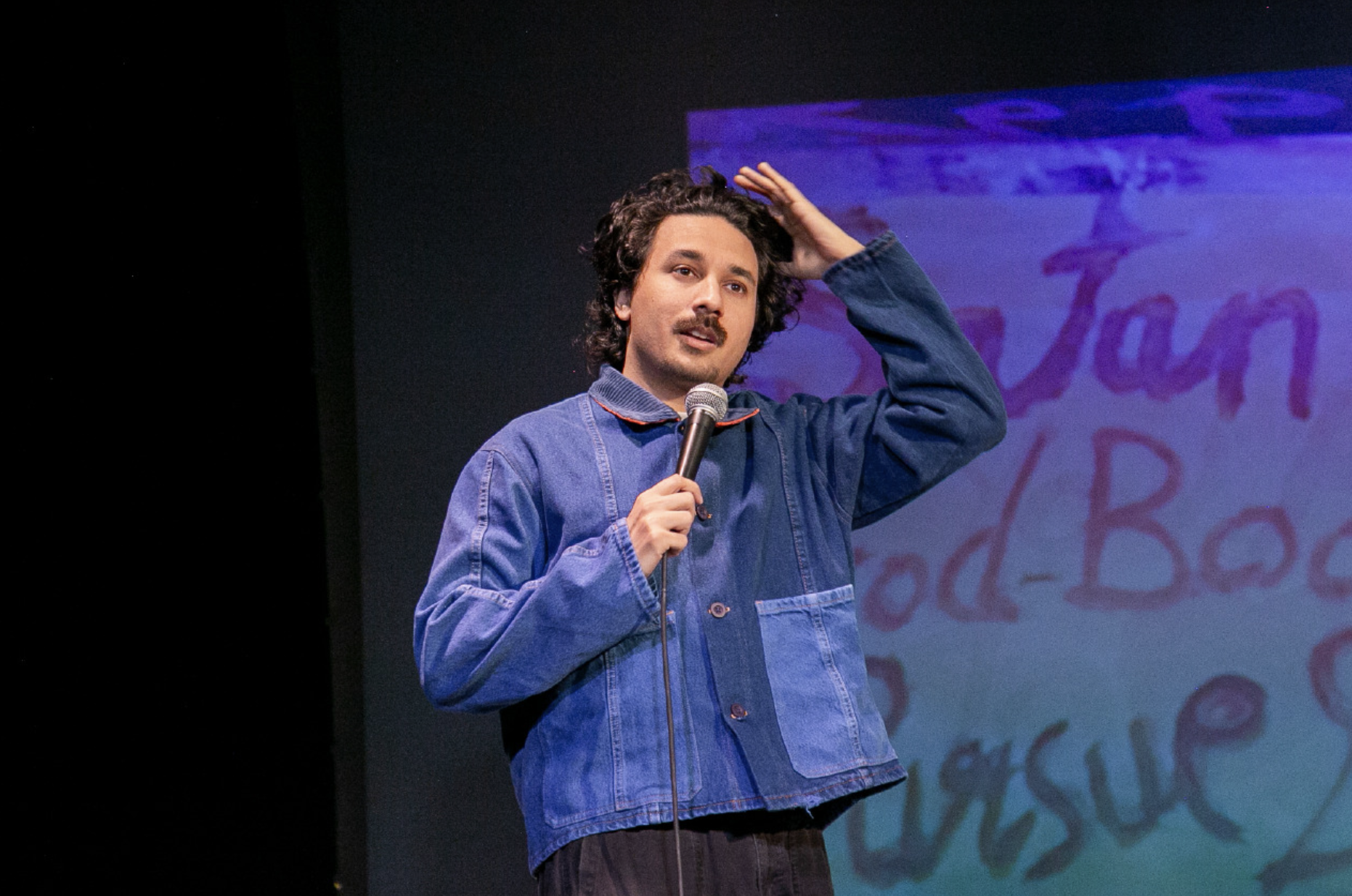
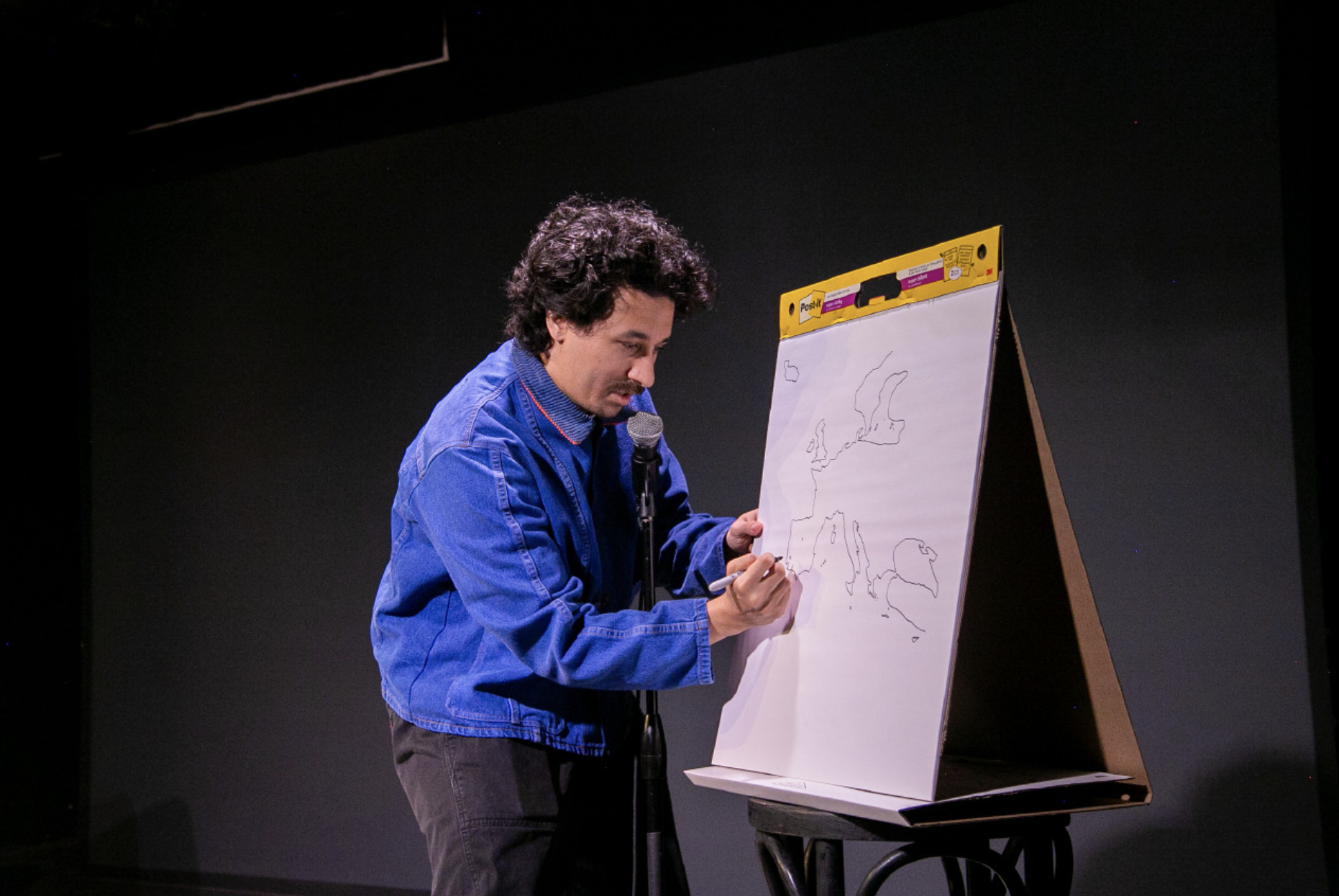
Photo credit by Jordan Ashleigh
One occasionally encounters a work that seems not merely polished but lived-in, burnished by the peculiar alchemy of audience, time, and necessity. Heavenly Baba, the remarkable solo offering by Ismael Loutfi which has just completed a run at SoHo Playhouse, is one such piece: a work of stand-up storytelling that manages, with deceptive ease, to be at once riotously funny and piercingly humane. It is a show that does not so much announce its ambitions as quietly fulfill them, leaving, in its wake, an audience subtly but unmistakably altered.
Loutfi possesses that increasingly rare commodity among contemporary solo performers: an unforced command of the room. His stage presence is neither aggressively confessional nor archly ironic; rather, it unfolds with a relaxed, conspiratorial intimacy, as though one were being let in on a series of family secrets whose humor derives not from exaggeration but from their stubborn, unvarnished specificity. Recounting his adolescence as a visibly Muslim boy in Florida during the uneasy years of the War on Terror, Loutfi deftly sidesteps the well-worn grooves of immigrant narrative, opting instead for something far stranger, and therefore far truer. The details accumulate—his steadfast commitment to wearing a kufi into late adolescence, despite pressure from peers and even teachers—and cohere into a portrait of identity as both chosen and imposed, a negotiation conducted daily, sometimes painfully, often absurdly.
Under the deft guidance of Greg Walloch, Heavenly Baba expands beyond the expected confines of solo stand-up into something more visually and theatrically articulated. The production is enriched by a suite of design elements—cleverly deployed photos, video, and lighting by Matt Lazarus, alongside the quietly evocative set by Carter Ford—that together lend the piece a dimensionality rare in the genre, deepening its emotional textures without ever distracting from Loutfi’s intimate, finely wrought storytelling.
It is, however, in his evocation of his father that Heavenly Baba finds its animating force. The elder Loutfi emerges as a figure of almost novelistic dimension: stubborn, devout, quixotic, and, in his own idiosyncratic fashion, morally exacting. His decision to emblazon his car with slogans—“ISLAM ALWAYS.COM,” among them, a phrase that captures with uncanny precision the early-aughts collision of faith and digital optimism—becomes less a comic anecdote than a gesture of defiant self-definition. That this act ultimately renders him and his son pariahs, even within their own community, only deepens the pathos. Loutfi, to his considerable credit, resists the temptation to caricature. Instead, he offers a portrait at once affectionate and unsparing, suffused with the complicated reverence that often attends filial love. A lot of us will find ourselves sincerely sorry to have never known Baba.
The show’s humor—sharp, agile, and frequently disarming—derives much of its potency from Loutfi’s keen awareness of the cultural and political frameworks within which his story unfolds. A former writer for Patriot Act with Hasan Minhaj, he brings to bear a sensibility attuned to the absurdities of contemporary discourse: the flattening tendencies of liberal multiculturalism, the incurious hostility of certain conservative imaginaries, the performative anxieties of well-meaning allies. His jokes land with a satisfying double-nature, eliciting laughter even as they expose the fault lines of the narratives they inhabit. One senses, throughout, a performer keenly aware of the risks of such material—and equally convinced of its necessity.
Yet what ultimately distinguishes Heavenly Baba is not its topical acuity, impressive though that is, but its moral architecture. In the wake of his father’s death in 2020, Loutfi turns, with a kind of quiet courage, toward questions of legacy, belief, and the ethics of representation. He interrogates his own earlier comedic instincts—the easy laugh secured at the expense of one’s own community—and charts, in real time, a more exacting path forward. The result is a work that feels, in the deepest sense, earned: a comedy that does not merely entertain but aspires to tell the truth, however provisional that truth may be.
In an era eager for both authenticity and provocation—qualities too often mistaken for one another—Heavenly Baba offers something rarer: a synthesis of the personal and the political that neither collapses into didacticism nor retreats into solipsism. It is, instead, a work of generous intelligence and emotional precision, one that enlarges the audience’s capacity for empathy without ever insisting upon it. Though Heavenly Baba has clearly been honed over years of performance, its arrival in New York feels almost uncannily well-timed. This is, unmistakably, a work for the era of Zohran Mamdani—a clear-eyed meditation on Muslim identity in America that resists the flattening impulse of stereotype in favor of something more supple, more exacting, and unabashedly heartfelt.
One leaves the theater not with the blunt certainties of revelation but with a quieter, more durable sensation: that of having been entrusted with a story told in good faith, with humor, rigor, and love. If belief is too strong a word, then perhaps admiration will suffice—for in Ismael Loutfi, one encounters a performer of uncommon depth, whose voice lingers, persuasive and humane, long after the lights have come up.
Click HERE for tickets.
Review by Tony Marinelli.
Published by Theatre Beyond Broadway on April 29, 2026. All rights reserved.
