
DAVID COPPERFIELD
Presented by Guildford Shakespeare Company as part of 59E59 Theaters’ Brits Off Broadway 2026
Written by Charles Dickens
Adapted by Abigail Pickard Price with Sarah Gobran and Matt Pinches
Directed by Abigail Pickard Price
59E59 Theaters, Theater A, 59 East 59th Street, in Manhattan
May 29, 2026 - June 28, 2026
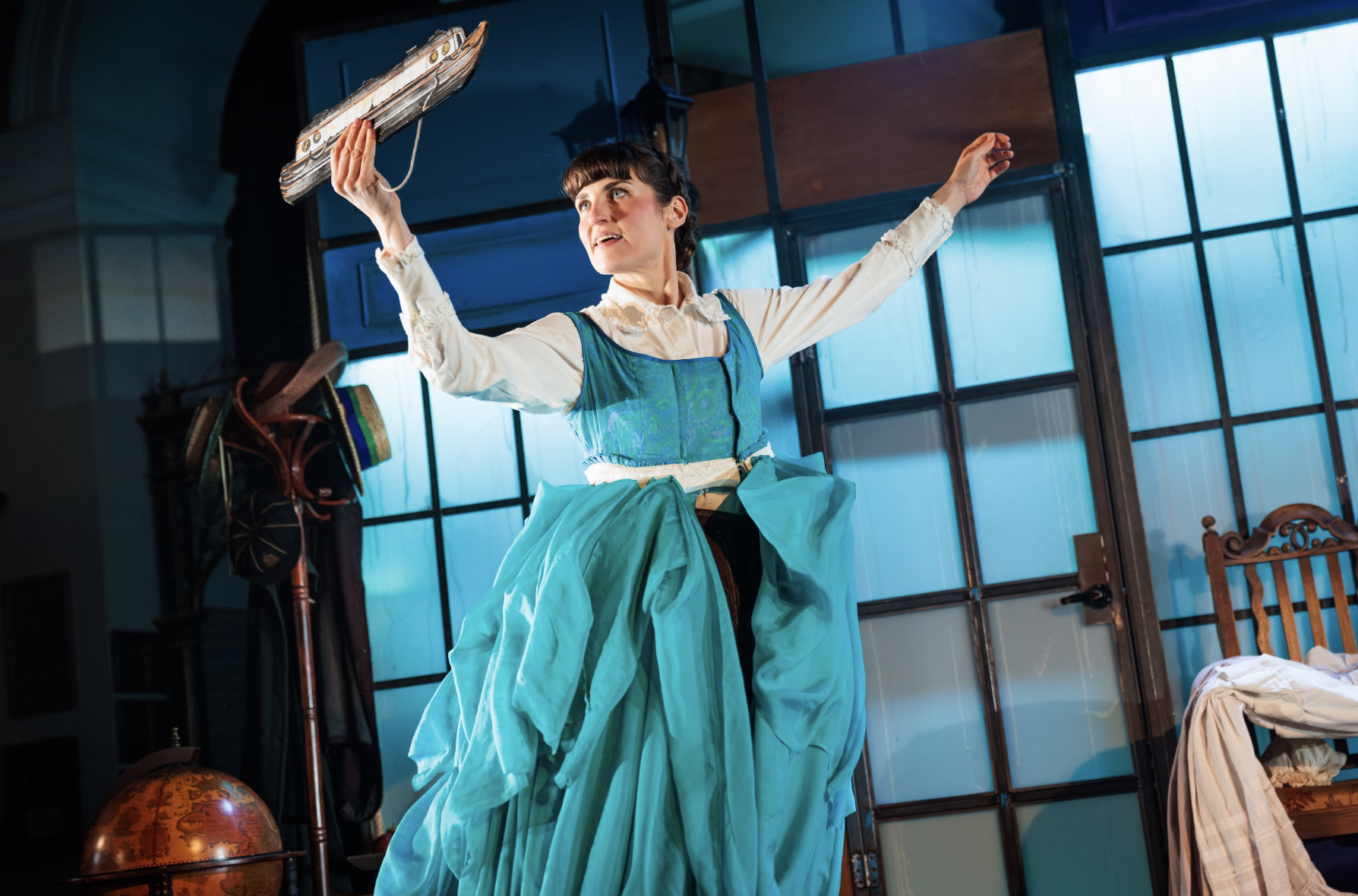
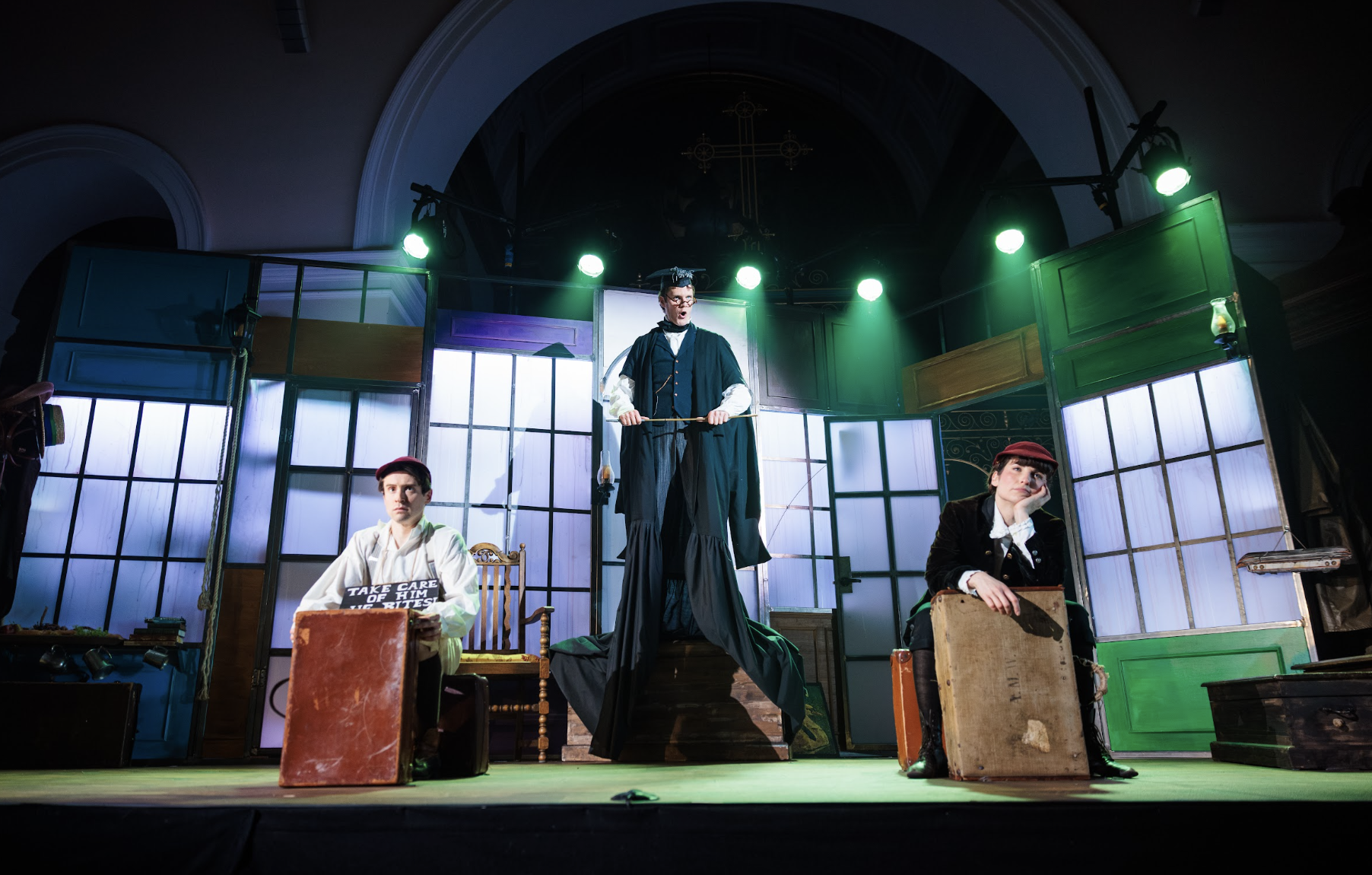
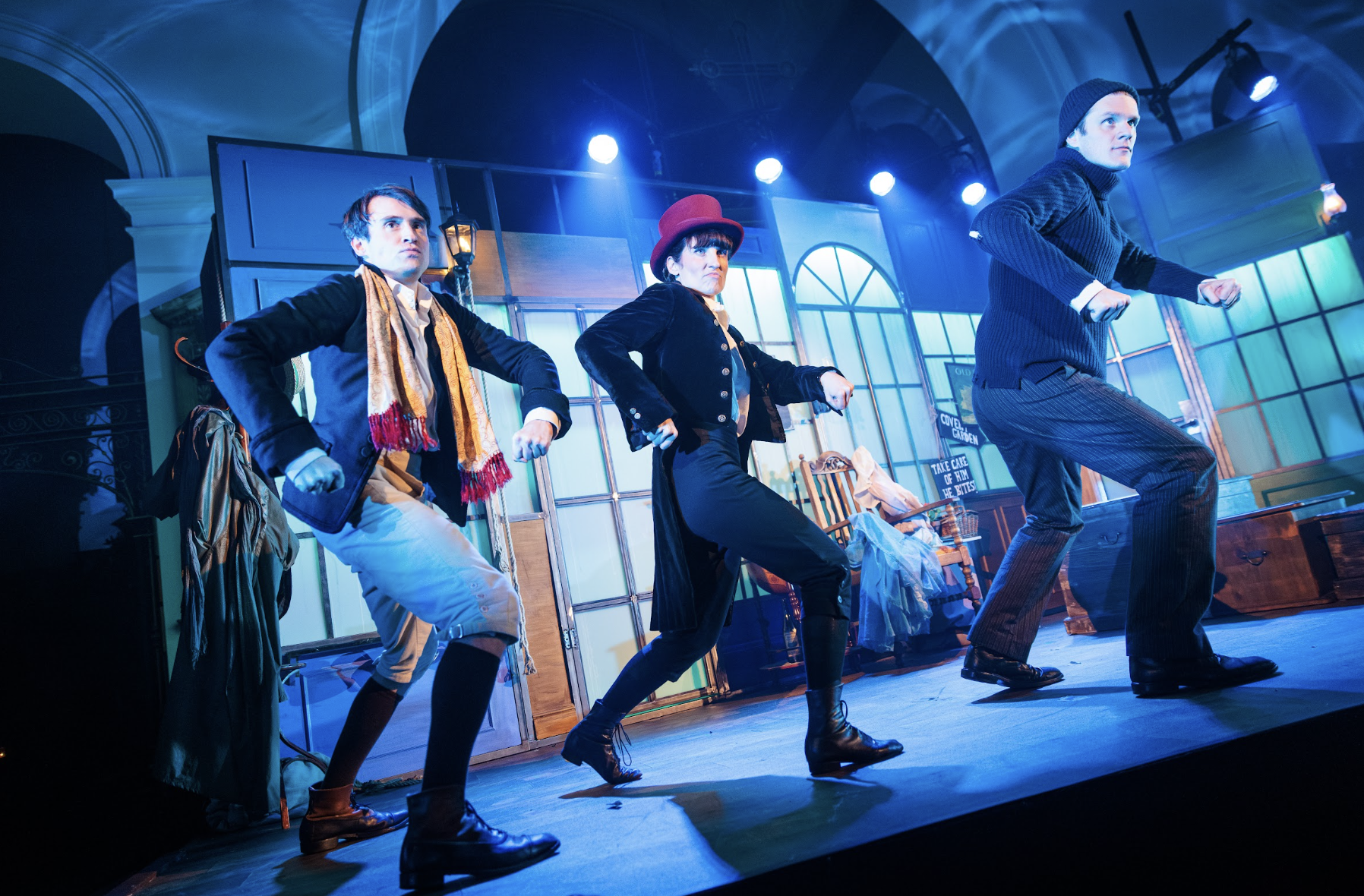
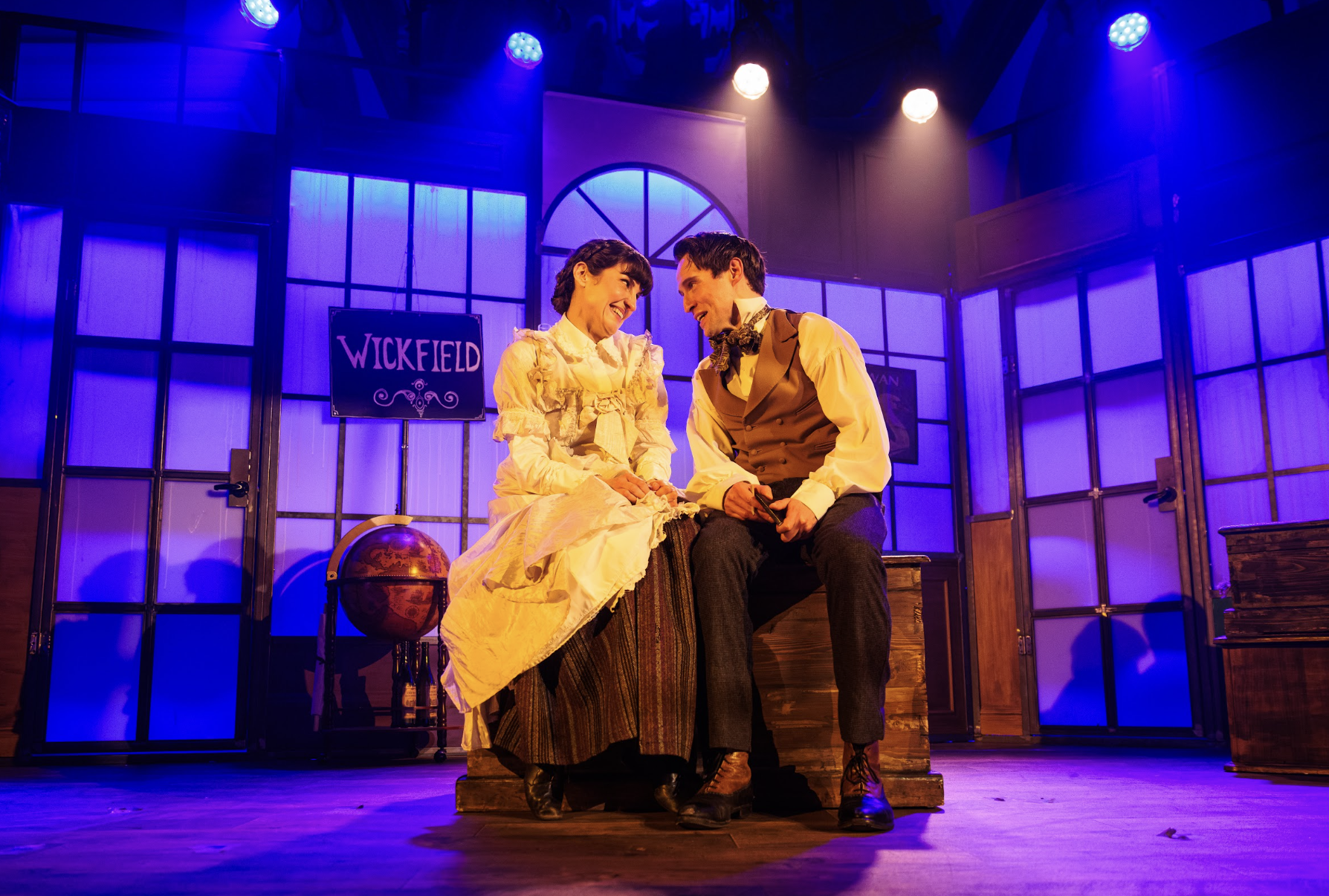
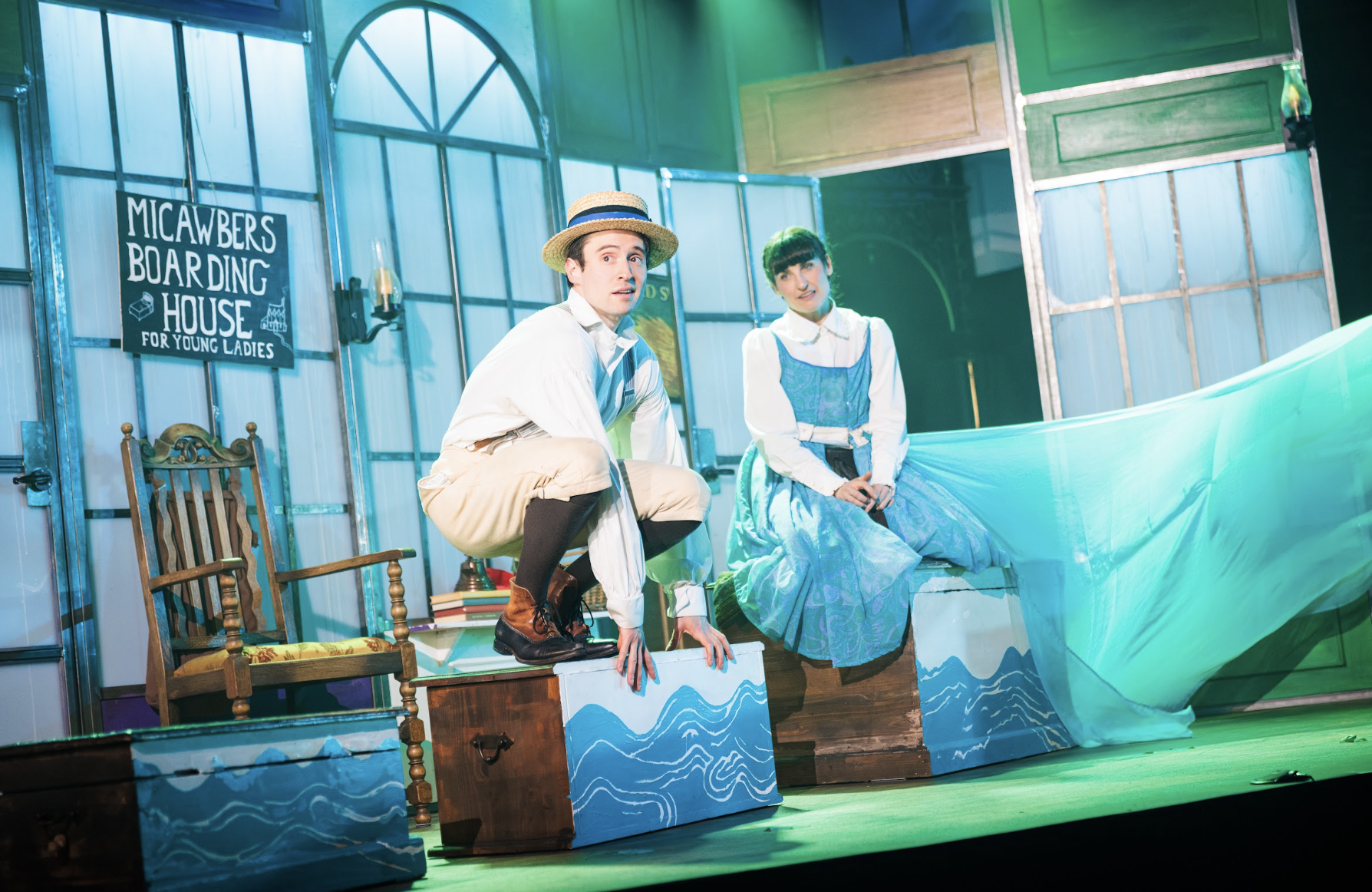
Photo credit by Harry Elletson
Abigail Pickard Price’s exhilarating adaptation of David Copperfield achieves something that ought to be, by all reasonable measures, impossible. Charles Dickens’s vast, semi-autobiographical masterpiece sprawls across hundreds of pages and contains enough eccentrics, villains, innocents, romantics, and dreamers to populate an entire theatrical season. Yet here, in a production of barely two and a quarter hours performed by only three actors, Guildford Shakespeare Company manages not merely to condense the novel but to distill it, preserving its exuberant spirit while discovering theatrical possibilities that Dickens himself might have admired.
This adaptation understands that the essence of Dickens is not fidelity to every plot turn but the conjuring of a world. Price, working alongside Sarah Gobran and Matt Pinches, performs precisely that feat. What emerges is not a dutiful summary of a beloved novel but a theatrical act of prestidigitation, transforming a literary monument into a living, breathing piece of stagecraft.
The story remains the familiar bildungsroman: the fatherless David grows up under the shadow of the monstrous Mr. Murdstone, endures childhood exploitation, survives humiliations and disappointments, discovers friendship and betrayal, stumbles through unsuitable romance, and eventually finds both artistic fulfillment and emotional maturity. Yet the narrative never feels like an assignment. It unfolds with the buoyancy of memory itself, one episode tumbling into the next as David looks back upon the strange procession of souls who shaped his life.
At the center stands Eddy Payne, delivering a performance of remarkable stamina, charm, and emotional intelligence. Rarely absent from the stage, Payne guides the audience through decades of experience while making every age of David entirely believable. He possesses the open-hearted wonder of a child, the awkward uncertainty of youth, and the reflective wisdom of adulthood, often within the span of a single scene. His narration creates an atmosphere of intimacy, as though we have been invited into the confidence of an old friend recounting the adventures that made him who he is.
Around him whirl two virtuosos. Luke Barton and Louise Beresford undertake the daunting task of embodying eighteen characters between them, accomplishing it with such precision and delight that one quickly loses count. Barton is a marvel of physical transformation. Whether appearing as the nurturing Peggotty, the terrifying Mr. Murdstone, the delightfully eccentric Mr. Dick, or the perpetually optimistic Micawber, he seems to alter not merely costume and voice but his entire physical architecture. Beresford matches him at every turn, moving effortlessly between the formidable Betsey Trotwood, the slippery Uriah Heep, the spirited Dora, Agnes, Steerforth, and numerous others. Each characterization arrives fully formed, vivid enough to linger long after the actor has vanished into yet another disguise.
The pleasure of watching these transformations becomes one of the evening’s chief delights. Hats, coats, accents, gestures, and postures are deployed with astonishing economy. A simple costume adjustment can produce an entirely new human being. The production frequently invites the audience to witness the mechanics of its own invention, yet this transparency only deepens the enchantment. Like a great magician revealing just enough of the trick to heighten our amazement, Price allows theatrical artifice to become part of the fun.
That spirit of invention permeates every aspect of the staging. Mr. Murdstone materializes through a looming coat and towering hat, animated with chilling menace. In Yarmouth, Little Emily’s dress unfurls into the turquoise sea itself. A Punch-and-Judy puppet theater becomes both joke and narrative device. Cardboard figures, puppets, trunks, signs, suitcases, and fragments of costume continually transform into landscapes, households, offices, beaches, and ships. These visual ideas arrive not as gimmicks but as expressions of a playful theatrical imagination working at full capacity.
Neil Irish’s designs deserve particular praise. His costumes, co-created with Anett Black, are feats of engineering as much as aesthetics, enabling lightning-fast transformations while remaining evocatively Victorian. His deceptively simple set of trunks, panels, windows, and luggage proves endlessly versatile, functioning almost like an oversized toy box from which entire worlds emerge. Mark Dymock’s richly atmospheric lighting bathes the action in color and texture, while Matt Eaton’s sound design provides an elegant musical undercurrent that helps bind together the production’s constantly shifting locales and moods.
What is perhaps most remarkable is the sheer fluency of the storytelling. A lesser adaptation might have collapsed beneath the weight of Dickens’ crowded narrative. Here, however, movement director Amy Lawrence’s contribution is evident in every transition. Scenes glide into one another with balletic precision. Actors move scenery while remaining fully in character. Narrative exposition, comic business, emotional revelation, and physical choreography coexist seamlessly. The result is a production that seems perpetually in motion yet never loses clarity.
And clarity matters because this adaptation understands something essential about Dickens. His novels are not merely collections of events; they are celebrations of human oddity. Price’s script preserves that generosity of spirit. Villains are grotesque, eccentrics are glorious, fools are lovable, and even minor figures leave vivid impressions. The evening captures Dickens’ extraordinary ability to regard humanity with equal measures of satire, compassion, and delight.
By the final scenes, one realizes that this David Copperfield has accomplished something rare. It honors Dickens’s masterpiece without becoming enslaved to it, translating a sprawling Victorian novel into a theatrical language of movement, transformation, and wit. Rather than attempting to replicate the book’s vastness, Price and her collaborators embrace the unique strengths of the stage, creating moments of surprise, delight, and wonder that exist only in live performance.
Ultimately, Guildford Shakespeare Company’s David Copperfield is a celebration of theatrical imagination at its most resourceful and joyful. The production preserves Dickens’ humanity, humor, and emotional generosity while discovering fresh ways to bring them to life. By the final curtain, one feels not that a classic has been compressed, but that it has been reawakened. Whether encountered by devoted Dickensians or newcomers alike, this exuberant production offers a masterclass in inventive storytelling and a stirring reminder of the limitless possibilities of theater.
Click HERE for tickets.
Review by Tony Marinelli.
Published by Theatre Beyond Broadway on June 19, 2026. All rights reserved.
