
THE PECULIAR PATRIOT
Presented by New York Theatre Workshop as part of In The Bricks Festival, & National Black Theatre, in association with Lena Waithe
Written & Performed by Liza Jessie Peterson, Directed by Talvin Wilks
New York Theatre Workshop, 79 East 4th Street, in Manhattan
May 5, 2026 - June 14, 2026
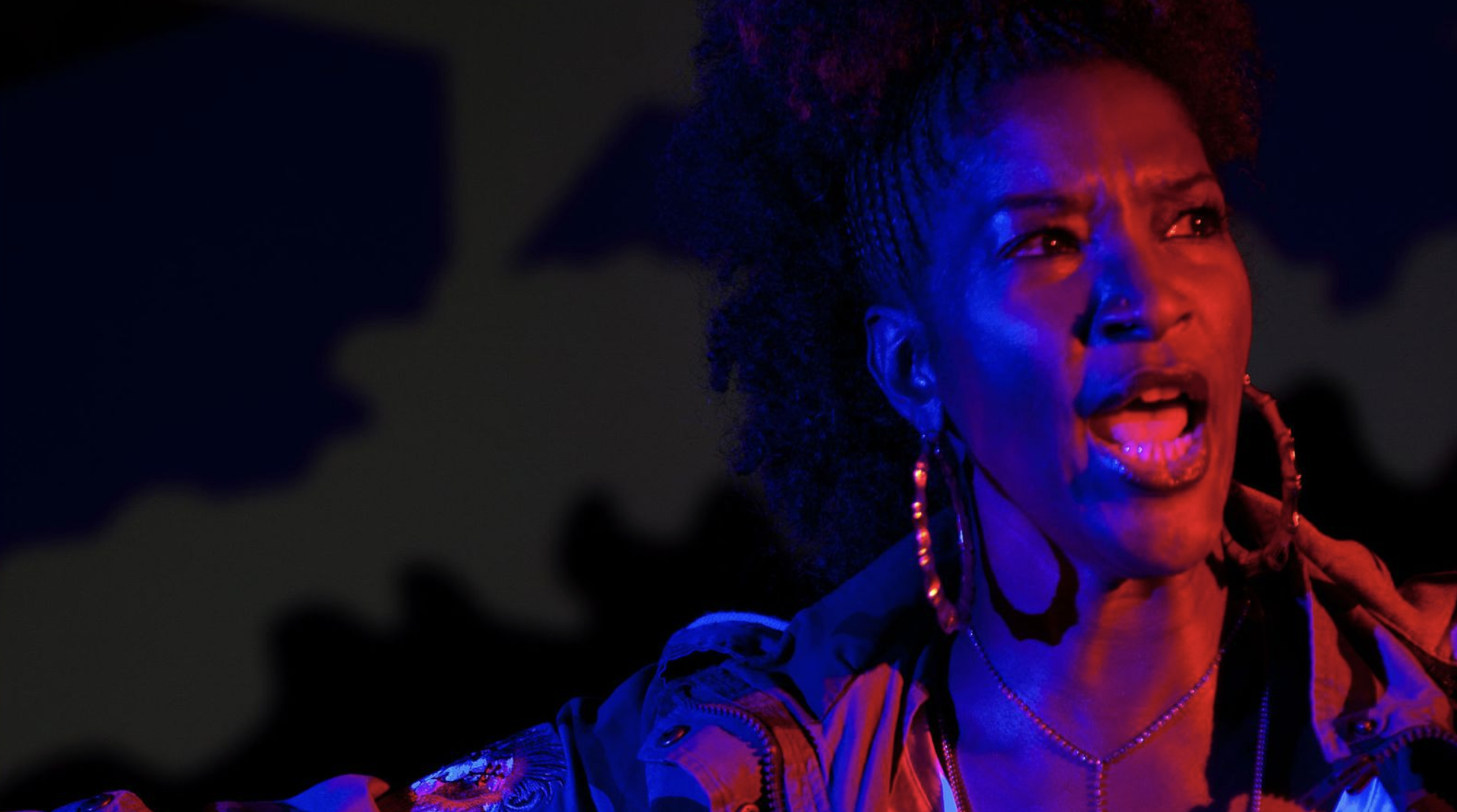
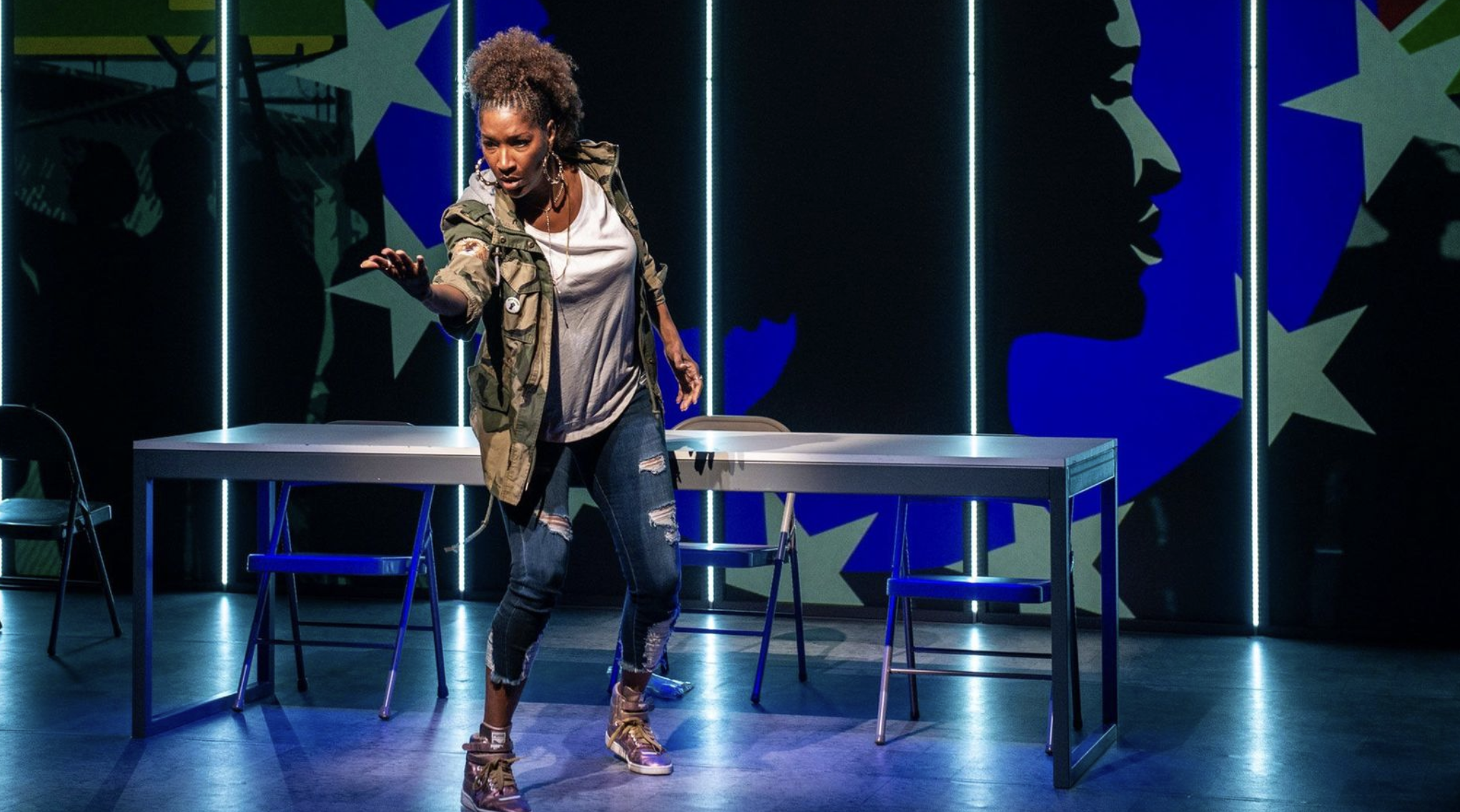
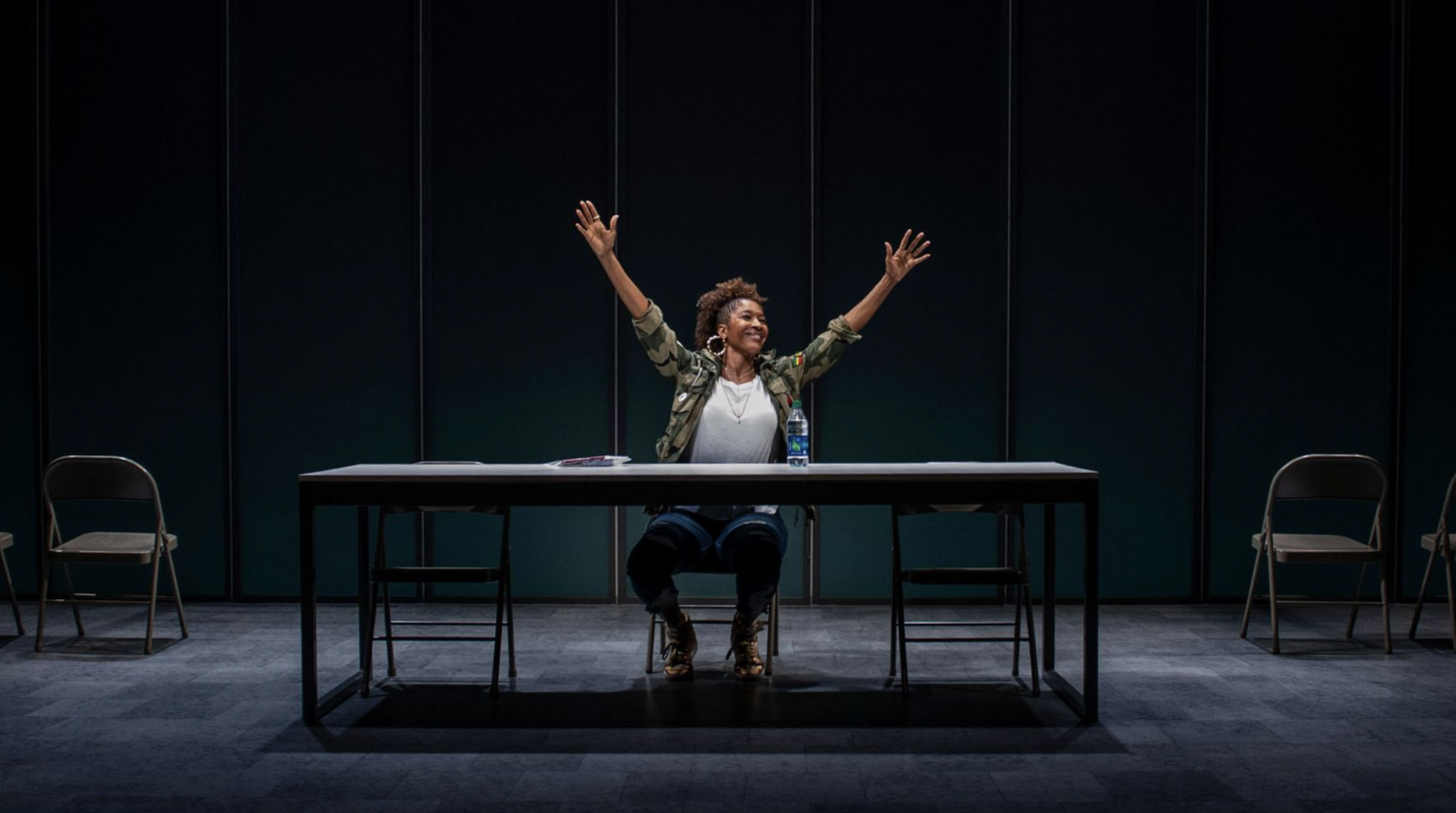
Photo credit by Christine Jean Chambers
There are solo performances that display virtuosity, and there are solo performances that seem to generate an entire social world from thin air. Liza Jessie Peterson’s extraordinary The Peculiar Patriot belongs emphatically to the latter category. Part character study, part political testimony, part love letter to the forgotten casualties of the American prison system, Peterson’s one-woman play transforms a prison visiting room into a stage vast enough to contain generations of history, systemic injustice, communal resilience, and stubborn hope. It is among the rare works of activist theater that never sacrifices humanity for argument; indeed, its argument derives its power precisely from its humanity.
Peterson writes and performs the role of Betsy LaQuanda Ross, a self-described “peculiar patriot” whose chosen civic duty is visiting incarcerated friends and family members scattered throughout the prison system of upstate New York. The title is rich with implication. “Peculiar” evokes the nineteenth-century euphemism for slavery, while “patriot” is reclaimed from the realm of flags and slogans and redirected toward an act of radical care. Betsy’s patriotism consists not of celebrating America’s institutions but of tending to those most damaged by them. She boards buses before dawn, endures humiliating security procedures, carries gossip, encouragement, and love into bleak visiting rooms, and returns home to do it all again.
The genius of Peterson’s creation lies in Betsy herself. She is one of those instantly recognizable theatrical figures who feel less invented than discovered. Smart, funny, flirtatious, sharp-tongued, compassionate, and gloriously unfiltered, Betsy possesses the gift of making every anecdote sound like the most important story in the world. Her updates about neighborhood dramas, romantic entanglements, old friends, and family members arrive with dazzling comic timing. Whether describing her incarcerated ex-boyfriend Curtis, her philosophically inclined new beau Pablo, or some outrageous episode from the block, she keeps the audience in a state of near-constant delight. Yet beneath every laugh hovers the awareness of lives interrupted, futures deferred, and communities systematically fractured.
The play unfolds through a series of visits with Betsy’s closest friend, JoAnn, who remains unseen but never absent. Through Peterson’s astonishing performance, the audience becomes convinced that a second actor occupies the stage. Betsy responds to JoAnn’s silences, anticipates her questions, interrupts her imagined objections, and shares news of the outside world with such specificity that their friendship acquires a profound emotional weight. One particularly moving thread involves a quilt Betsy is sewing, dedicating a square to each loved one trapped within the prison system. JoAnn’s panel features an orange moon representing her unrealized potential and three shooting stars honoring her children. In these moments, Peterson accomplishes something remarkable: she turns abstract policy debates into intimate acts of remembrance.
What makes The Peculiar Patriot so potent is its refusal to separate personal narrative from political reality. Peterson, drawing on decades of work with incarcerated populations and her years at Rikers Island, traces the continuity between America’s history of slavery and its contemporary prison-industrial complex. The play repeatedly returns to the uncomfortable implications embedded within the Thirteenth Amendment’s exception clause, suggesting that the nation never fully severed its economic dependence on systems of coerced labor and racial control. Yet Peterson is too gifted a dramatist to reduce these ideas to lectures. She embeds them in stories—of promising young men derailed by corruption, mothers punished for seeking better futures for their children, families separated by draconian sentencing practices, and visitors forced to absorb the collateral damage of incarceration.
Director Talvin Wilks understands that the material’s emotional force resides in its specificity. His staging is elegant and restrained, allowing Peterson’s performance to occupy the center while creating a theatrical environment that subtly expands the play’s scope. Andrew Cissna’s stark prison visiting room, with its institutional table, metal chairs, and oppressive lighting, evokes a landscape of bureaucratic despair. Katherine Freer’s projections deepen the atmosphere, surrounding Betsy with images of bus rides, security checkpoints, barbed wire, and fragments of American iconography transformed into unsettling commentary. Luqman Brown’s sound design supplies the buzz of prison doors, distant voices, and ominous musical textures that make the facility feel less like a building than a machine.
Yet for all its righteous anger, The Peculiar Patriot is fundamentally an act of tenderness. Peterson possesses an uncommon ability to balance outrage with affection, political urgency with emotional generosity. Some of the evening’s most memorable moments emerge not from denunciation but from joy: a childhood hand-clapping game inherited from Betsy’s Black Panther father, a hilariously exaggerated tale involving lovers and bad decisions, a burst of flirtation, a shared memory. Peterson understands that survival itself can be a form of resistance. Her characters do not merely endure; they laugh, dream, argue, quilt, flirt, mourn, and love. The prison system may seek to reduce people to numbers, but Peterson insists on restoring their names, voices, and stories.
In one of the evening’s most quietly devastating turns, Peterson addresses the growing practice of replacing in-person prison visits with video screens—a bureaucratic innovation presented as efficiency but experienced as another form of separation. By this point, Betsy’s physical presence has become the play’s emotional lifeblood: her laughter, gossip, encouragement, and stubborn devotion are the very things that keep the incarcerated tethered to the world beyond the prison walls. The prospect of reducing such encounters to pixels and bandwidth feels not merely inconvenient but cruel. Having spent ninety minutes in Betsy’s company, we understand instinctively what is being lost. The thought of her warmth being filtered through a monitor lands with surprising force, transforming an administrative policy into a profound act of human deprivation.
By the end, the quilt has become the play’s governing metaphor. Each patch represents a life, a family, a wound, a memory. Together they form a portrait of a community stitched together against overwhelming odds. The Peculiar Patriot is theater of uncommon moral clarity, but it is never sanctimonious. It is funny without trivializing its subject, angry without becoming strident, educational without feeling didactic. Above all, it is animated by Peterson’s magnificent performance, one of those rare acts of character creation that feels destined to endure. The play asks what genuine patriotism might look like in a nation defined by profound contradictions. Peterson’s answer is both devastating and beautiful: patriotism begins with refusing to abandon the people your country has chosen to forget.
Review by Tony Marinelli.
Published by Theatre Beyond Broadway on June 16, 2026. All rights reserved.
