
JESA
Produced by Ma-Yi Theater Company in Residence at The Public Theater
Written by Jeena Yi, Directed by Mei Ann Teo
Shiva Theater at The Public Theater, 425 Lafayette Street, in Manhattan
March 10, 2026 - April 12, 2026
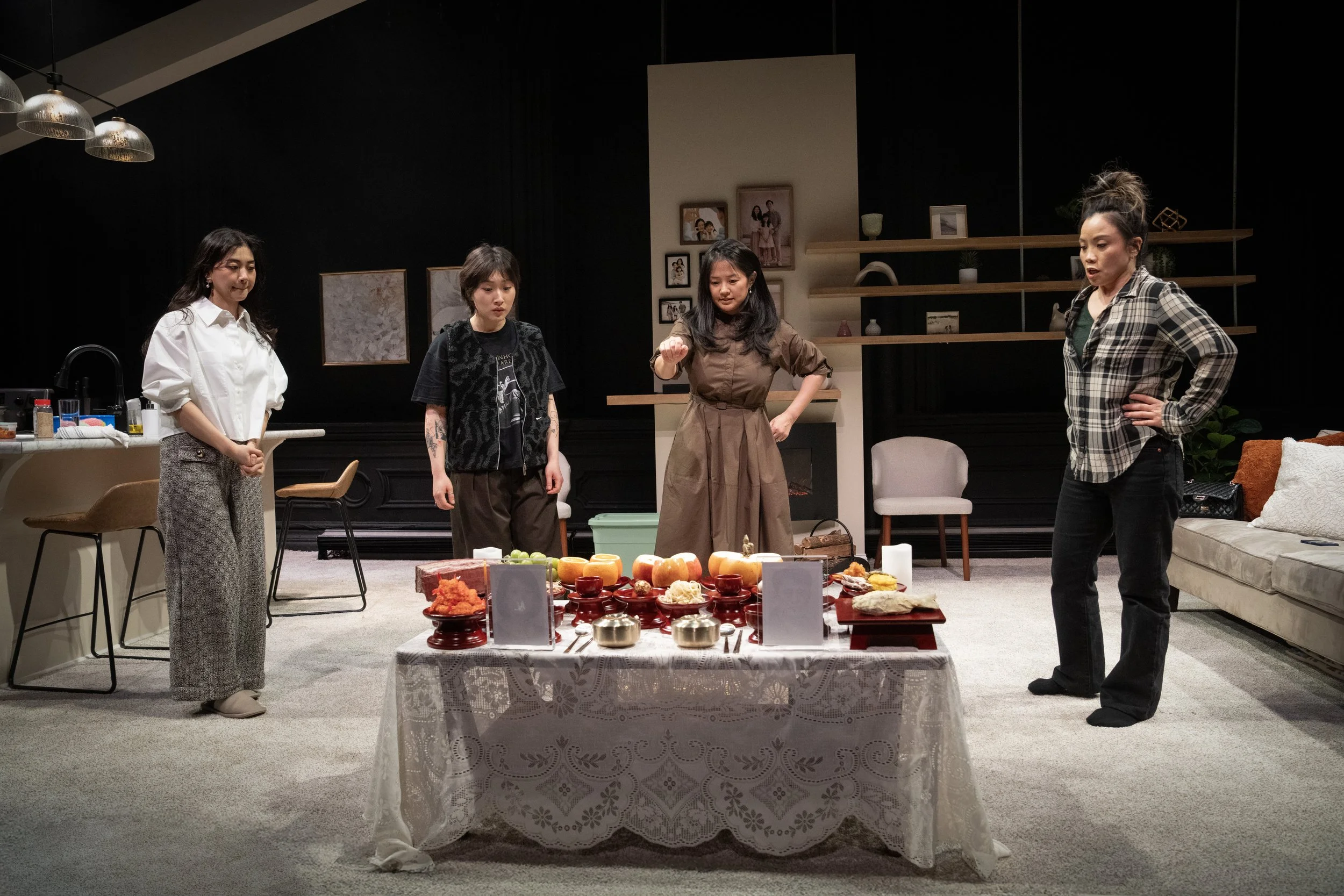
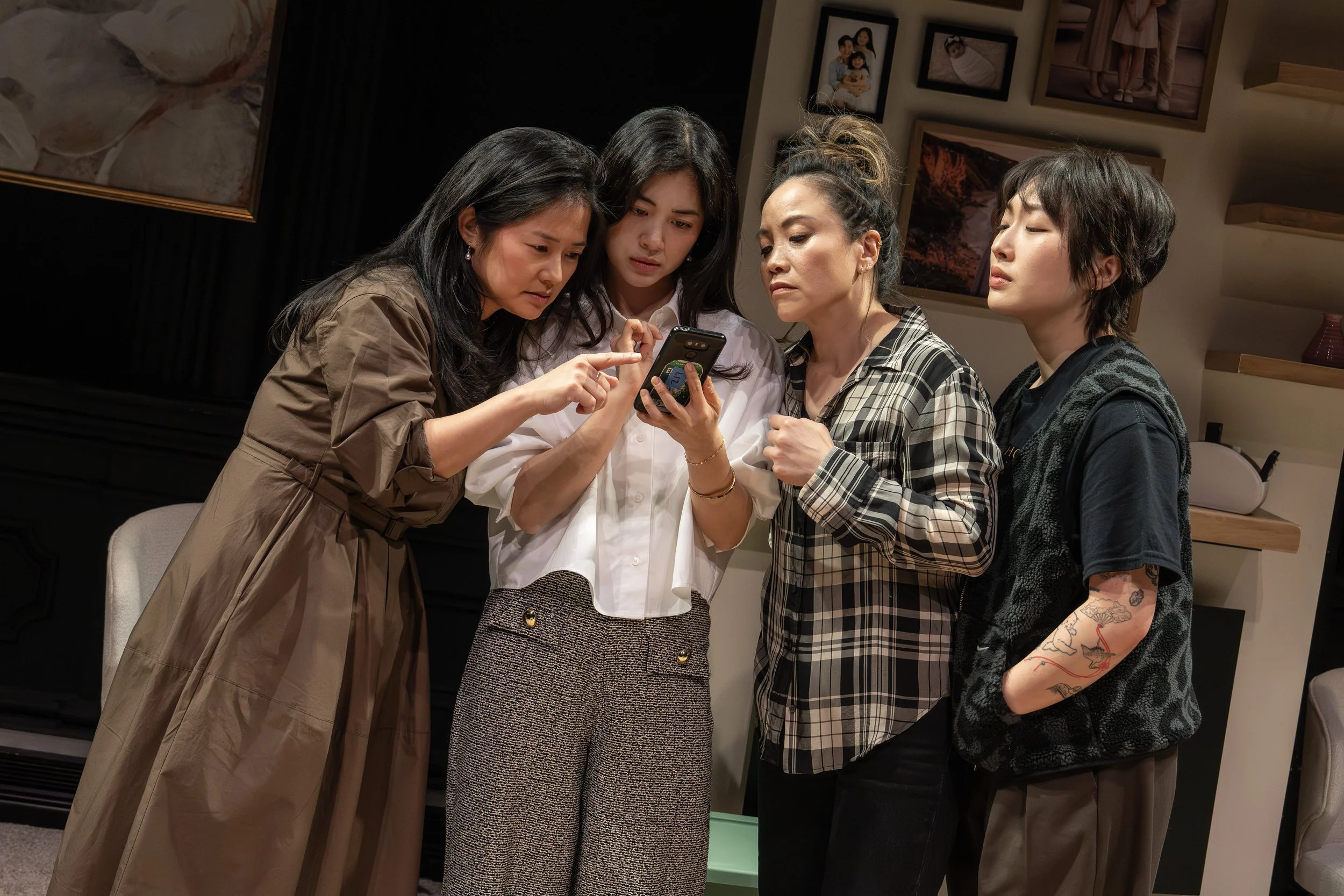
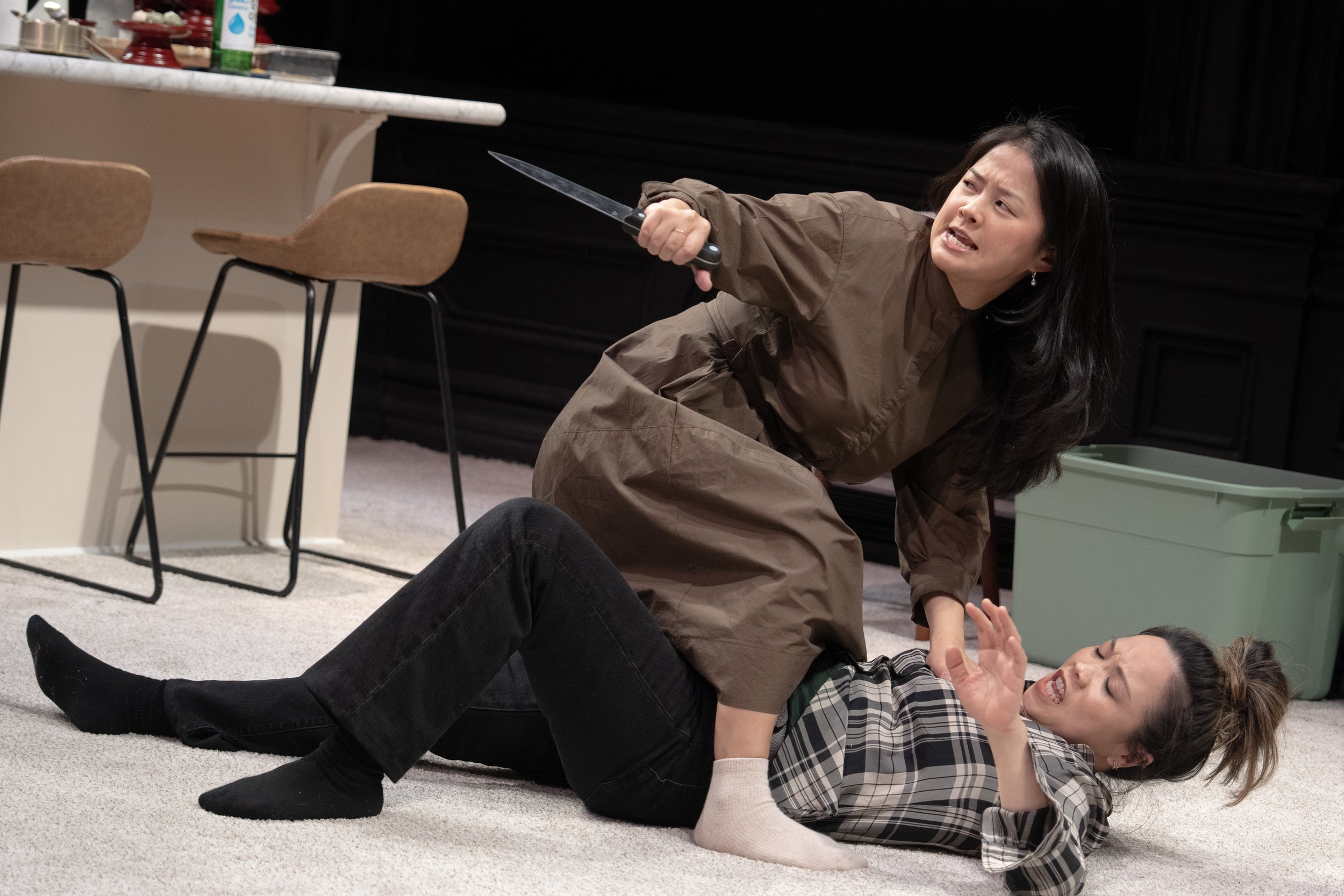
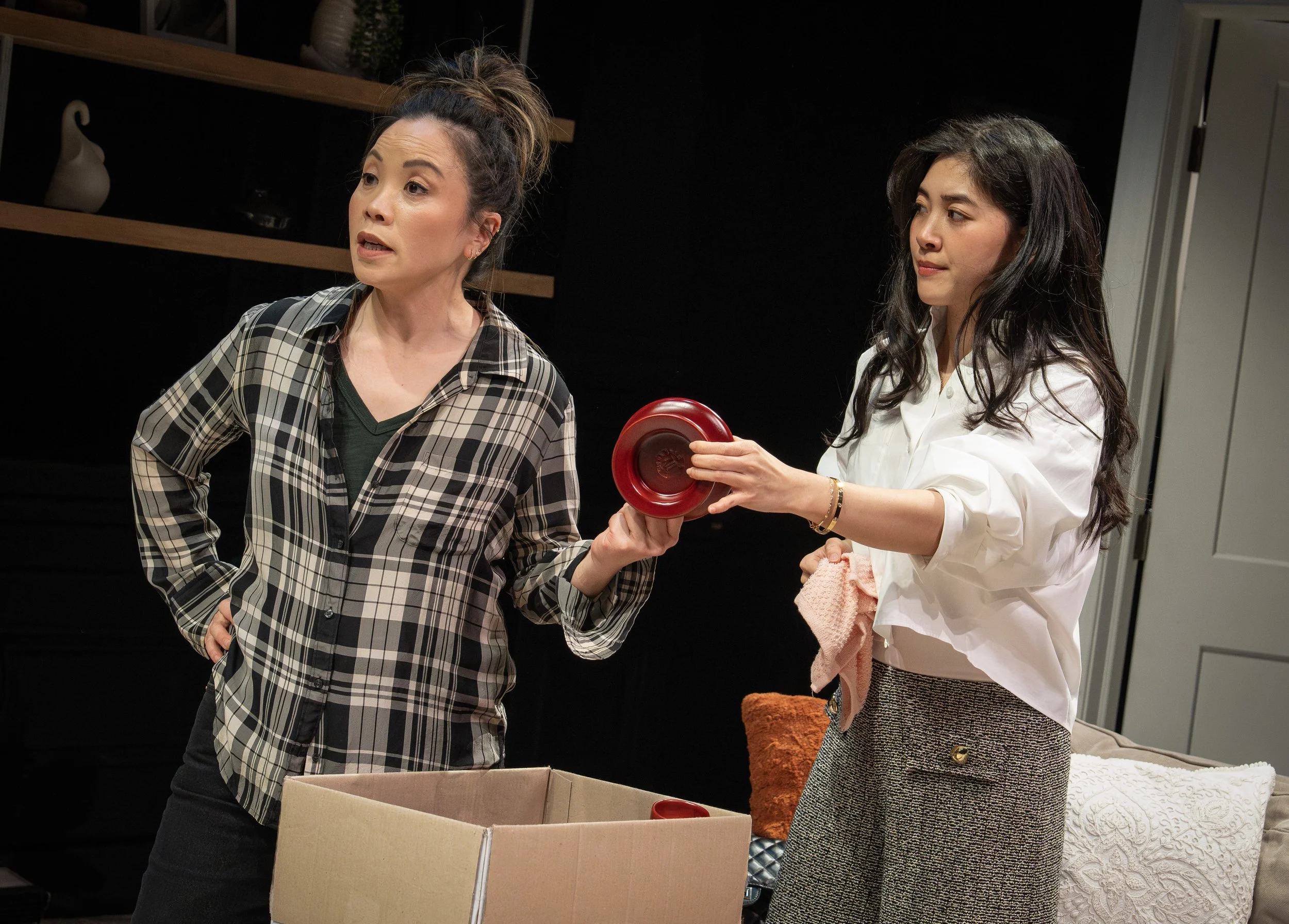
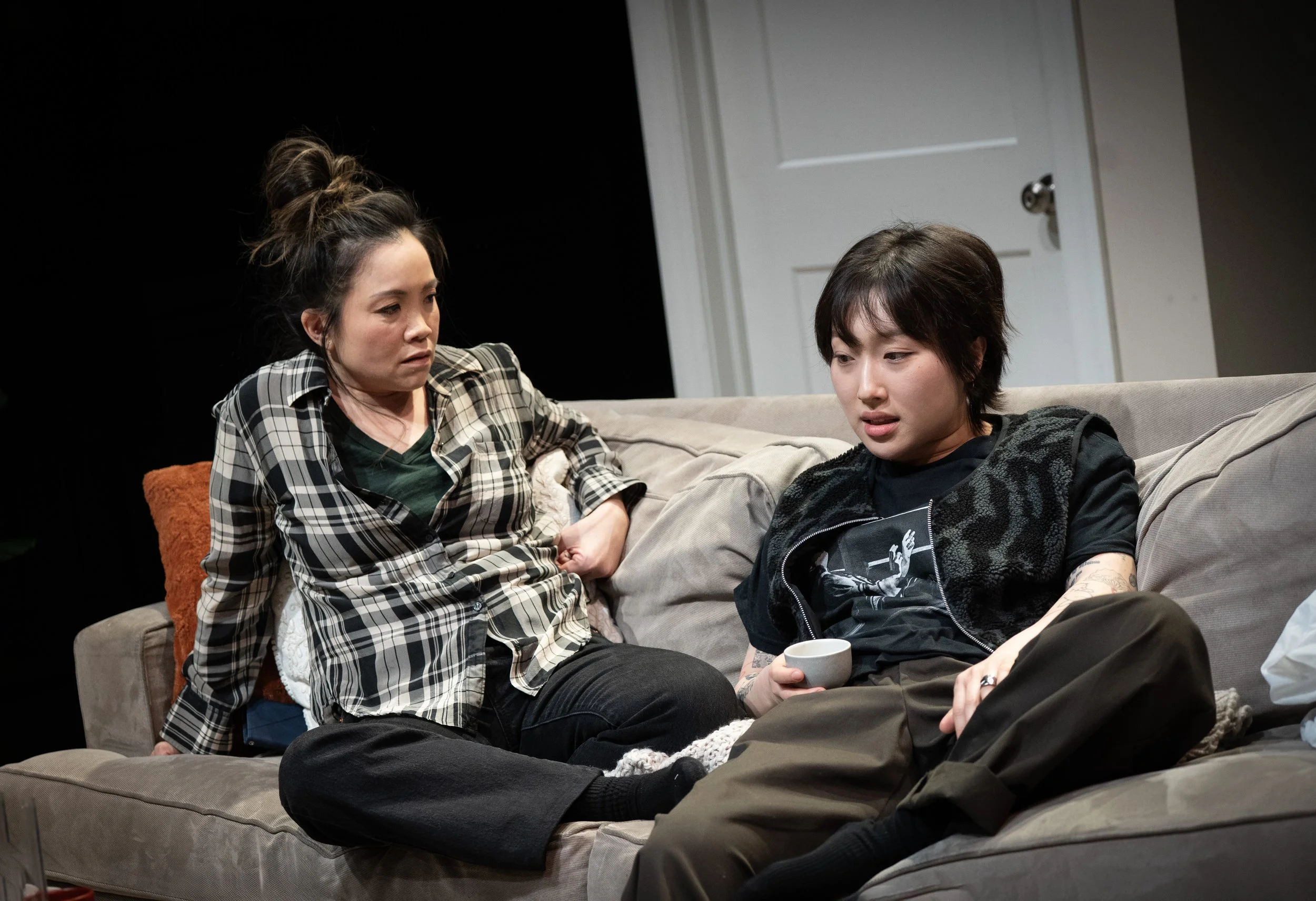
Photo credit by Joan Marcus
In JESA, the question of American inheritance—so often reduced to the blunt arithmetic of assimilation—blooms into something knottier, more intimate, and far less easily resolved. Nearly everyone in this country descends from elsewhere; the drama lies not in that fact but in the choices that follow. What, exactly, do we carry forward? What do we discard? And, perhaps most unsettlingly, what continues to shape us long after we have declared ourselves free of it?
The world-premiere production, presented by Ma-Yi Theater Company at The Public Theater’s modest Shiva Theater, arrives with the quiet assurance of a work that understands the weight of these questions without presuming to answer them cleanly. Written by Jeena Yi and directed with sinewy precision by Mei Ann Teo, JESA unfolds over a taut ninety minutes, locating its inquiry within the charged domestic space of a Korean American family gathered to perform a jesa, the ritual honoring the dead. This annual rite invites families to commune with their ancestors through a carefully choreographed sequence of offerings—elaborate spreads of food, ritualized bows of filial respect, and the liberal pouring (and consumption) of soju, the clear, rice-based spirit that loosens both memory and restraint.
Teo proves an exacting and imaginative steward of the play’s tonal shifts, guiding its passage between the rigor of lived reality and the porous, destabilizing realm of memory and the supernatural with remarkable fluency. These transitions—so often the graveyard of lesser productions—are here rendered with a kind of fluid inevitability, as if the boundary between worlds had always been this thin.
Much of this alchemy is achieved through a deft orchestration of design. Jeanette Oi-Suk Yew’s lighting moves from the cool, uninflected glare of suburban domesticity to something far more expressionistic, carving the stage into pockets of revelation and dread, while Hao Bai supplies an aural landscape that seems to emanate from just beyond the visible, a low, persistent hum of the uncanny. Mel Ng’s costumes serve as a quiet but incisive taxonomy of the sisters’ divergent lives, delineating, with unerring clarity, the social and psychological terrain each inhabits. Fabric, silhouette, and polish become a kind of visual shorthand: ambition, domestic aspiration, artistic precarity, and studied rebellion are all inscribed in what these women wear, the garments functioning less as decoration than as extensions of identity. All of it unfolds within You-Shin Chen’s impeccably observed California-suburban-cool interior—a space whose tasteful neutrality becomes, in Teo’s hands, the perfect vessel for rupture, its placid surfaces repeatedly breached by forces it cannot contain.
The setting—a beige, aspirationally neutral home in Orange County—feels less like a sanctuary than a stage set for filial performance, each room haunted by expectations as much as by memory. Into this space arrive four sisters, each bearing her own uneasy relationship to the parental gaze that persists even after death. Elizabeth (Laura Sohn), a private-equity success story and the youngest, enters first, her composure suggesting a life lived in careful alignment with inherited ambition. Her host, Grace (Shannon Tyo), has achieved a different but no less exacting ideal: the immaculate homemaker, curating not only her house but her own image as the perfect daughter.
Their symmetry—two women who have, in distinct registers, perfected the art of parental appeasement—is deftly ruptured by the arrival of Tina (Tina Chilip), the eldest, whose entrance, motorcycle helmet in hand and defiance barely contained, detonates the room’s fragile equilibrium. Tina’s self-appointed role as the family’s disappointment is worn like armor; she skewers her sisters with a comedian’s timing and a wounded child’s fury. Last comes Brenda (Christine Heesun Hwang), a struggling New York director whose artistic ambitions have estranged her from both her family and the more rigid definitions of success they uphold.
Yi’s great achievement is to resist the gravitational pull of stereotype. These women might initially suggest familiar archetypes—the dutiful daughter, the rebel, the overachiever, the artist—but the play patiently dissolves such simplifications, revealing instead how these identities have been constructed, contested, and, in some cases, weaponized within the family unit. The sisters do not merely argue; they revise one another, disputing not only present grievances but the very narrative of their shared past.
Grace, the self-appointed steward of the evening’s rites, has made the quietly radical decision to consolidate the ceremony: this year’s jesa will stand in for both parents, their deaths—separated by only a month on the calendar—collapsed into a single act of remembrance. “Their jesas are only like a month apart, it’s easier this way,” she explains, with a breezy pragmatism that barely conceals the calculation beneath. In fact, Grace has tailored the truth to suit her audience, telling each sister that the ritual primarily honors the parent she most preferred—a small but telling manipulation that reveals how even acts of mourning, in this family, are subject to revision, negotiation, and control.
The absent parents—Appa and, more insistently, Umma—hover at the center of these revisions, their legacy refracted through contradictory recollections. To Grace, Umma remains a paragon of maternal devotion; to Brenda, she is recalled with a blunt, unvarnished fury. Anecdotes accumulate like shards: a moment of resistance against domestic violence, a flash of virulent homophobia. The portrait that emerges is not a coherent figure but a collage of incompatible truths, each sister clinging to the version that best explains her own wounds. In this, Yi gestures toward a larger, more disquieting idea: that tradition, when left uninterrogated, can calcify into a form of inherited harm, passed down as unquestioningly as the rituals that purport to honor the dead.
Another inheritance proves harder to sanctify: the ritual of conflict itself. These sisters return to one another not only through ceremony but through combat—verbal skirmishes that escalate into physical confrontation. In these moments, the stage seems to tilt; the women circle, lunge, and parry with a ferocity that recalls not delicacy but sport, as if they were wrestlers or fencers locked in a contest they know by muscle memory. Knives flash more than once in this compact one-act, their presence less shocking than grimly inevitable, a testament to how deeply aggression has been inscribed into the family’s vocabulary. Under the exacting guidance of Chelsea Pace, these encounters land with a visceral immediacy that resists caricature. And yet, just as quickly as the violence ignites, it dissipates. The sisters’ animosity proves mercurial, flaring and fading with a practiced efficiency that suggests long familiarity. What lingers is not the rupture but the reflex to repair—to smooth over grievances, to fall back into uneasy alignment. It is as if, having spent a lifetime bracing themselves against the more formidable forces embodied by their parents, they have learned to treat one another less as true adversaries than as sparring partners in a shared, unending rehearsal for survival.
Much of the sisters’ shared damage radiates from the very figures they have convened to honor—parents who, in life, dispensed favoritism as freely as they did cruelty, shaping their daughters through cycles of emotional and, at times, physical harm. And yet, rather than submitting these inheritances to the slow, unsparing labor of reckoning, the women cleave to a ritual they can scarcely reconstruct. Their attempt to consult an online guide—to verify the proper sequence of bows and blessings—quickly collapses into a small, devastating admission: none of them can read the language in which those instructions are written. The ceremony persists, then, less as an act of continuity than as a fragile, half-remembered performance, its meaning eroded even as its form is anxiously preserved.
The production’s performances are as finely calibrated as the script they serve. Chilip’s Tina is a volatile marvel, oscillating between caustic humor and exposed vulnerability with a velocity that keeps the audience perpetually off-balance. Her barbs land with surgical precision, yet it is in the fissures—when the bravado falters, and the pain beneath surfaces—that her performance achieves its deepest resonance. Opposite her, Tyo’s Grace is a study in controlled fracture: every gesture, every carefully modulated tone, betrays a woman straining to maintain an impossible ideal of perfection, even as it corrodes her from within.
Sohn and Hwang, though afforded fewer overt crescendos, provide the play’s essential counterpoint. Sohn’s Elizabeth embodies the seductive tyranny of success, her confidence shadowed by an almost imperceptible dread of failure; Hwang’s Brenda, by contrast, moves with the loose, searching energy of someone who has rejected conventional metrics of achievement but remains haunted by their absence. Together, they map the economic and emotional terrain that undergirds the family’s conflicts, tracing how class aspiration and artistic desire alike can become sites of both liberation and estrangement.
Teo’s direction, largely grounded in a naturalistic idiom, proves most striking when it departs from it. In a late sequence that fractures the play’s realism, Umma materializes—not as a ghost in the conventional sense, but as a force that collapses past and present into a single, harrowing moment. Through choreographed movement and sudden eruptions of color and light, Grace is compelled to relive her mother’s final act of violence, the revelation of her love for a woman triggering a blow that reverberates across time. The effect is less spectral than psychological: an embodiment of trauma that refuses to remain buried.
From this rupture emerges the play’s quiet catharsis. The sisters, shaken into a new clarity, begin—tentatively, imperfectly—to see one another beyond the scripts they have inherited. Grace’s subsequent confession—her fractured marriage, her absent child, her ongoing affair—lands not as a sensational twist but as an inevitable shedding of illusion. When Tina, invoking her authority as big sister, urges her sister not to wait, the moment carries the weight of both admonition and absolution.
JESA resists the temptation to resolve its tensions into a neat moral. Instead, it offers something more bracing: a recognition that tradition is neither inherently sacred nor inherently suspect, but contingent—its value determined by the lives it shapes and the harms it perpetuates. The rituals worth preserving, Yi suggests, are those that foster connection, that allow the living to encounter one another with honesty rather than obligation. The rest—no matter how venerable their origins—may be left behind without regret.
Click HERE for tickets.
Review by Tony Marinelli.
Published by Theatre Beyond Broadway on April , 2026. All rights reserved.
