
Presented by Irish Repertory Theatre
Written and Performed by Mary Kate O Flanagan, Directed by Will O’Connell
W. Scott McLucas Studio Theatre at Irish Repertory Theatre, 132 West 22nd Street, in Manhattan
February 4, 2026 - March 1, 2026
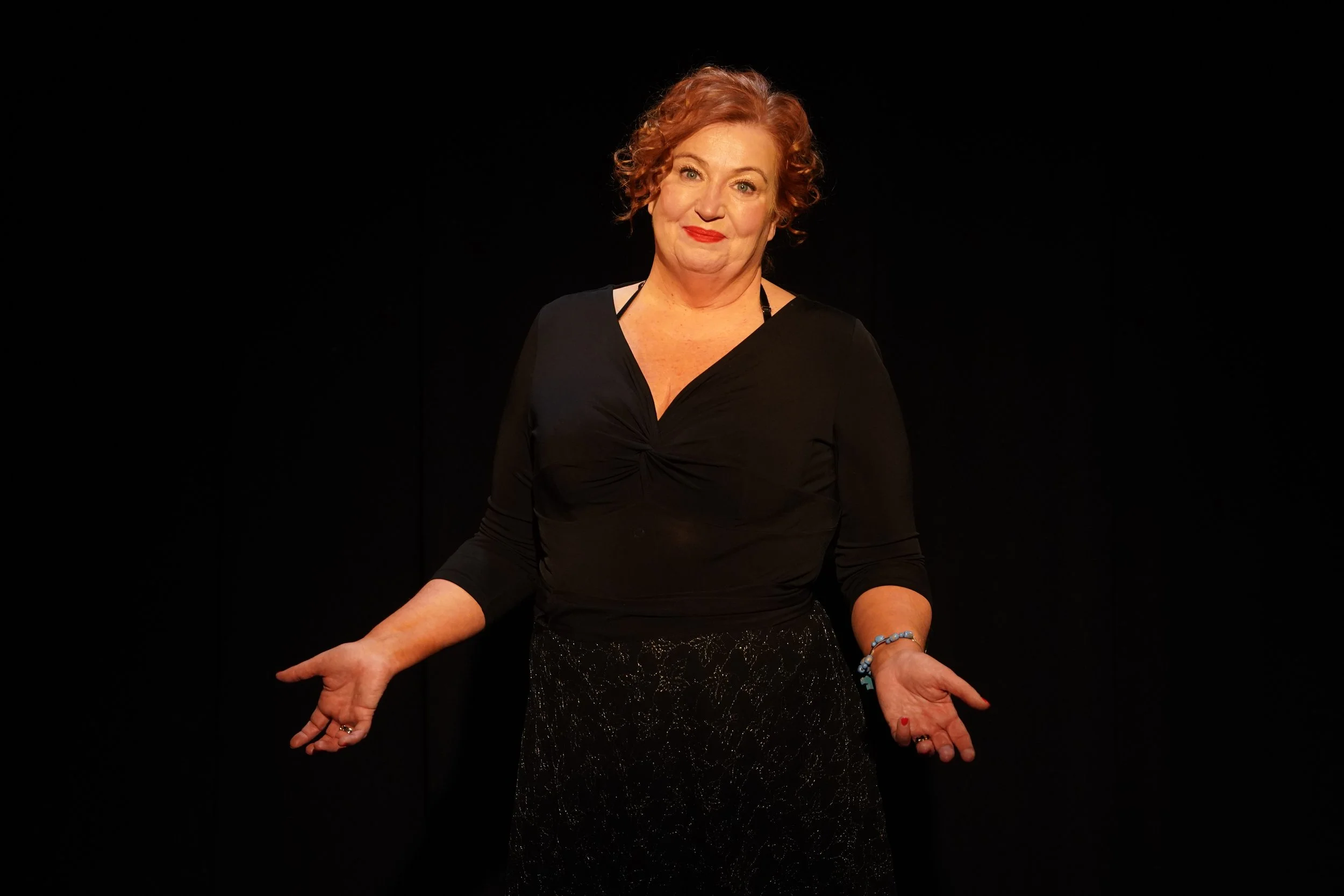
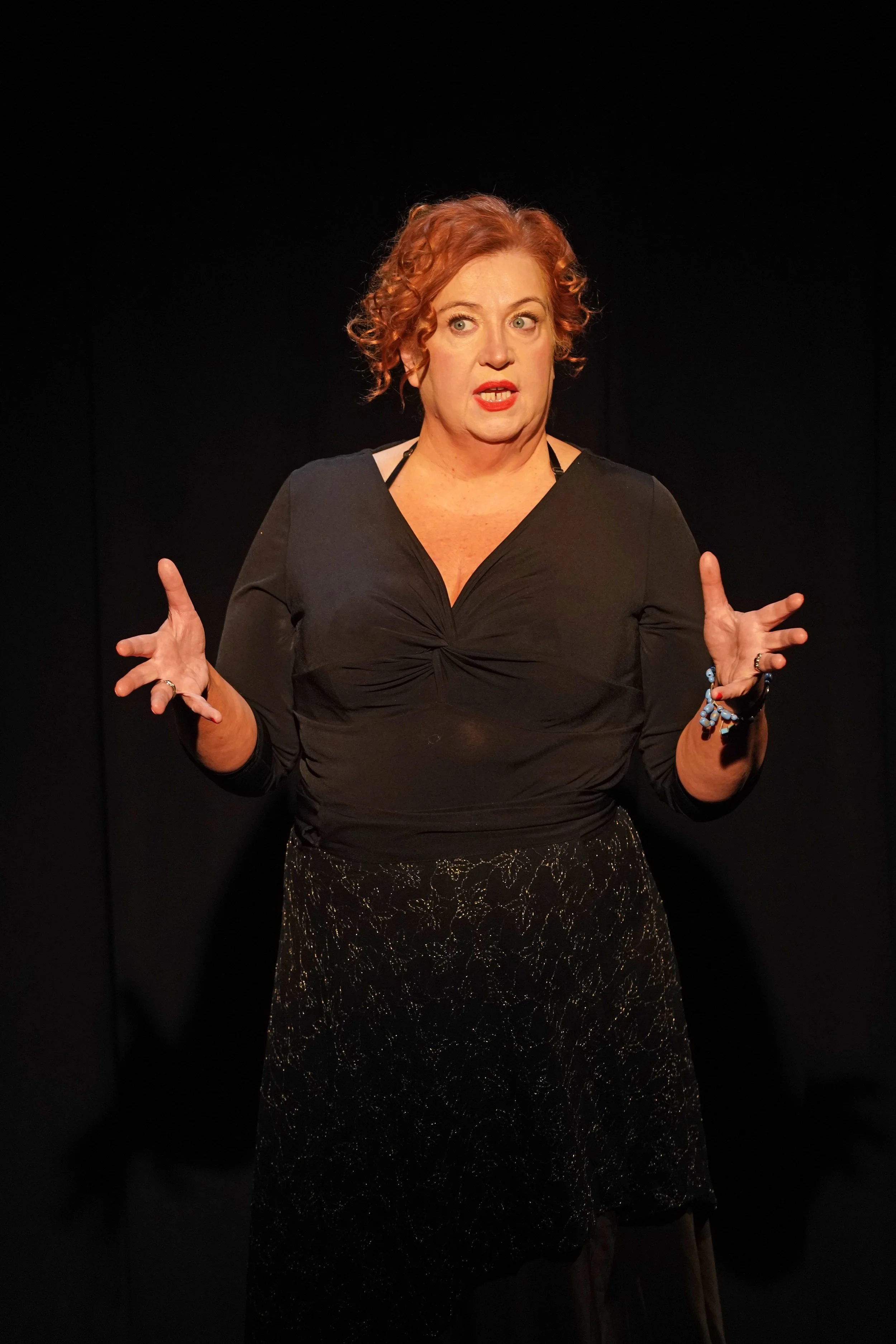


The solo confessional has become one of the defining forms of contemporary theatre, a distilled encounter between performer and audience in which a single voice carries the full weight of lived experience. At its best, this format offers an intimacy and immediacy that larger productions can only envy, and Making a Show of Myself, Mary Kate O Flanagan’s radiant solo turn in the basement of the Irish Repertory Theatre, stands as a shining example of how rich and deeply theatrical such simplicity can be.
The staging is elegantly spare, a kind of aesthetic humility that places absolute trust in the performer and the story. There is no set, only subtle shifts in lighting that gently shape the emotional contours of the evening, and no ostentatious sound design to distract from the human instrument at the center. The voice we hear feels natural, present, and alive in the room. Even more remarkable is the absence of a written script: O Flanagan tells these stories as though they are inseparable from her being, summoned not by memorization but by instinct and need. With her open expression, riot of curly red hair, and unmistakable warmth, she greets the audience not as spectators but as companions. Her Irish lilt is lyrical and welcoming, drawing us in immediately, and she lays out the structure—six autobiographical stories—with a graceful curtsey that becomes both punctuation and invitation. From the outset, she makes good on her belief that story is not only entertainment, but sustenance.
Each tale, she tells us, contains a twist, and she marks these turns with a playful spin. The choice, one of the subtle and inspired touches attributed to director Will O'Connell, is emblematic of the production as a whole: understated, intelligent, and perfectly attuned to the performer’s rhythms. The opening story, a wry and winning account of an early internet-dating escapade, introduces a gallery of figures who soon feel like members of our own extended family. There is Jean, the steadfast best friend; five sisters bound by affection and mischief; a mother of boundless generosity; and a father whose rule about television—permitted only for films starring Fred Astaire or John Wayne—becomes a charming shorthand for a household guided by both discipline and delight. These details sparkle with humor and affection, and they quietly establish a moral universe grounded in curiosity, kindness, and connection.
Another story finds O Flanagan at twenty-one, newly arrived in London and navigating a male-dominated workplace where she feels keenly out of place. An obligatory office party coinciding with her birthday leads to a social misstep so mortifying it might curdle lesser material. Here, it blossoms into comic triumph. The anecdote exemplifies O Flanagan’s storytelling gift: moments of vulnerability are never exploited, but transformed, revealing how openness and good humor can transmute discomfort into communion.
The evening’s emotional heart, however, lies in two profoundly moving stories about encounters with outsiders. In one, O Flanagan recounts how her grandmother, during wartime, rescued a German prisoner of war from a hostile mob and brought him home for tea. Through shared language lessons and quiet companionship, an extraordinary bond forms across enemy lines. Years later, an accidental meeting with the soldier’s family in Germany provides a payoff of such grace and generosity that it feels almost mythic, yet utterly true. In the other story, O Flanagan volunteers in Calais and befriends a sixteen-year-old Sudanese refugee detained in legal limbo. Her account of the six-month struggle to secure his asylum in Ireland is both harrowing and inspiring, a testament to perseverance, empathy, and moral courage.
These stories articulate the evening’s central truth: that small, humane actions can ripple outward in ways we may never fully anticipate. O Flanagan does not preach this idea; she lives it before us. Her recollection of her father’s funeral—handled by the O Flanagan sisters with a balance of sorrow, humor, and love—brings the room into a collective stillness. The image she conjures of the six O Flanagan daughters—arrayed in descending and ascending heights, an uneven but resolute phalanx—shouldering their father’s coffin is at once devastating and deliciously comic. One can see them: wobbling slightly, adjusting their grips, determined to do the job themselves. In O Flanagan’s telling, the moment becomes a minor epic of familial devotion, where grief and absurdity walk arm in arm. The sight of those mismatched sisters acting as pallbearers is heartbreaking in its love and loyalty, yet irresistibly funny in its physical incongruity—a perfect distillation of how sorrow, in this family, is met not with solemn paralysis but with courage, solidarity, and a flicker of irrepressible wit.
In one of her most quietly resonant observations, she reminds the theatre that the middle of every story is necessarily fraught with challenge—that is precisely what makes it the middle. It is the stretch where certainty falters, where resolution remains out of reach, where characters (and people) are tested. In articulating this simple structural truth, she elevates it into something philosophical: a gentle reassurance that difficulty is not a detour from the narrative but its very engine. The muddle, the doubt, the apparent impasse—these are not signs of failure but evidence that the story is still alive, still unfolding toward meaning.
And when she finally addresses the question that has quietly threaded itself through the performance—why this luminous, generous woman has remained single—the answer arrives as a moment of genuine joy, perfectly in tune with the show’s hopeful spirit.
“Story has become my religion,” O Flanagan says, and in that moment the line feels neither inflated nor ironic, but deeply earned. Making a Show of Myself relies on the most elemental tools of theatre: a body, a voice, and an audience willing to listen. What O Flanagan accomplishes with those tools is nothing short of remarkable. She sends us back out into the world lighter, more attentive, and more inclined toward kindness…a reminder why theatre, at its most intimate, still matters profoundly.
Click HERE for tickets.
Review by Tony Marinelli.
Published by Theatre Beyond Broadway on March 7th, 2026. All rights reserved.
