
OTHELLO
Presented by Bedlam
Written by William Shakespeare, Directed by Eric Tucker
West End Theatre, 263 West 86th Street, in Manhattan
April 19, 2026 - May 31, 2026
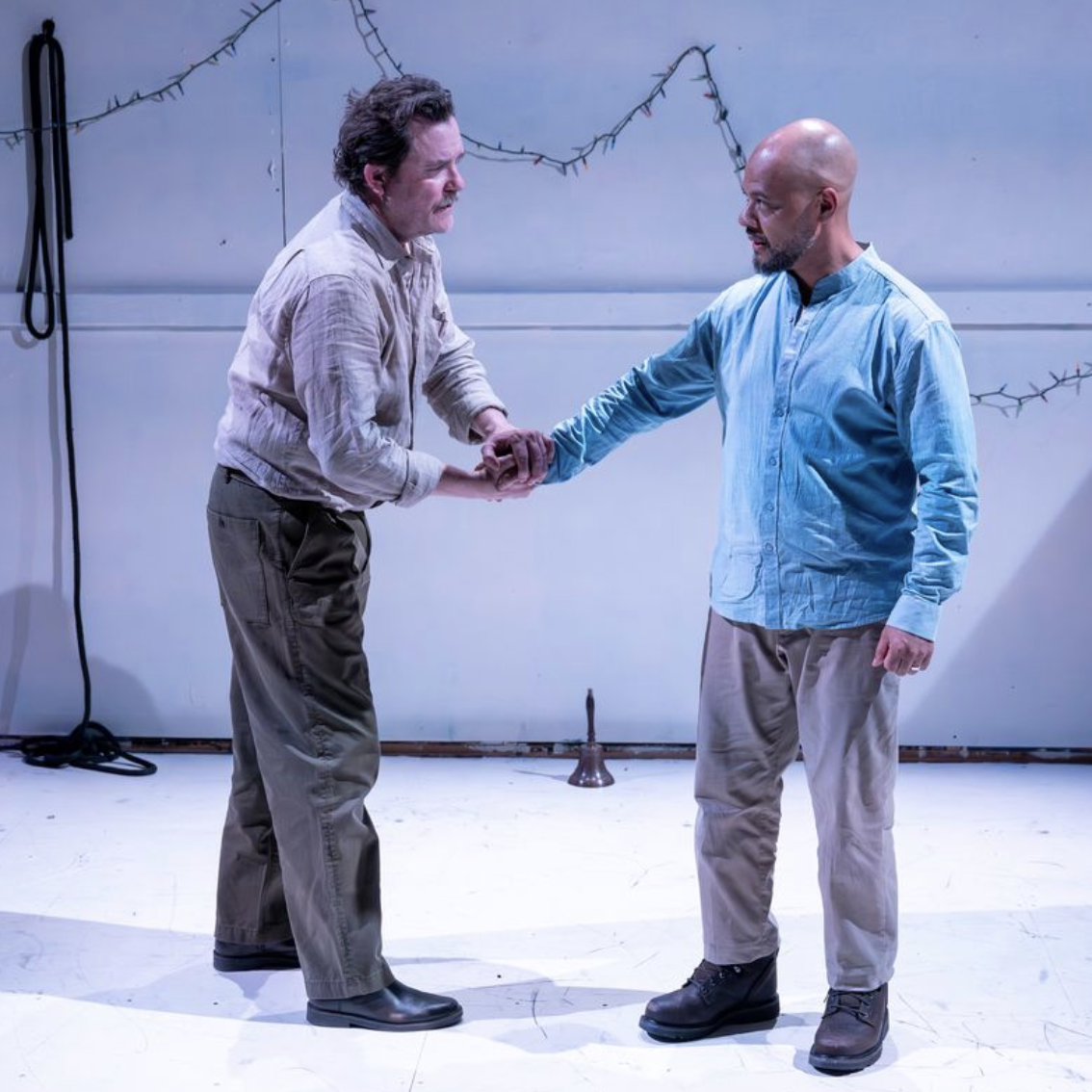
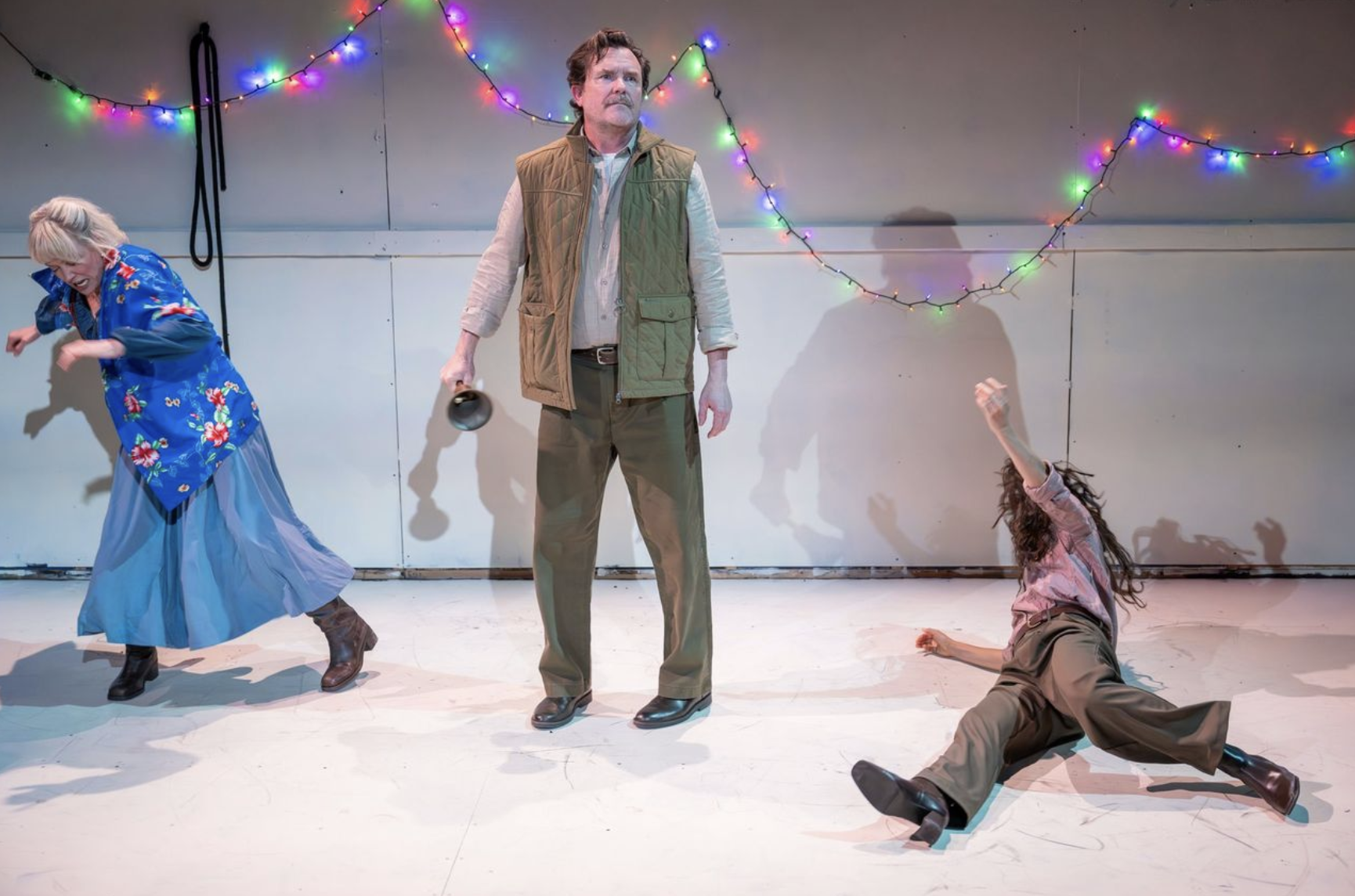

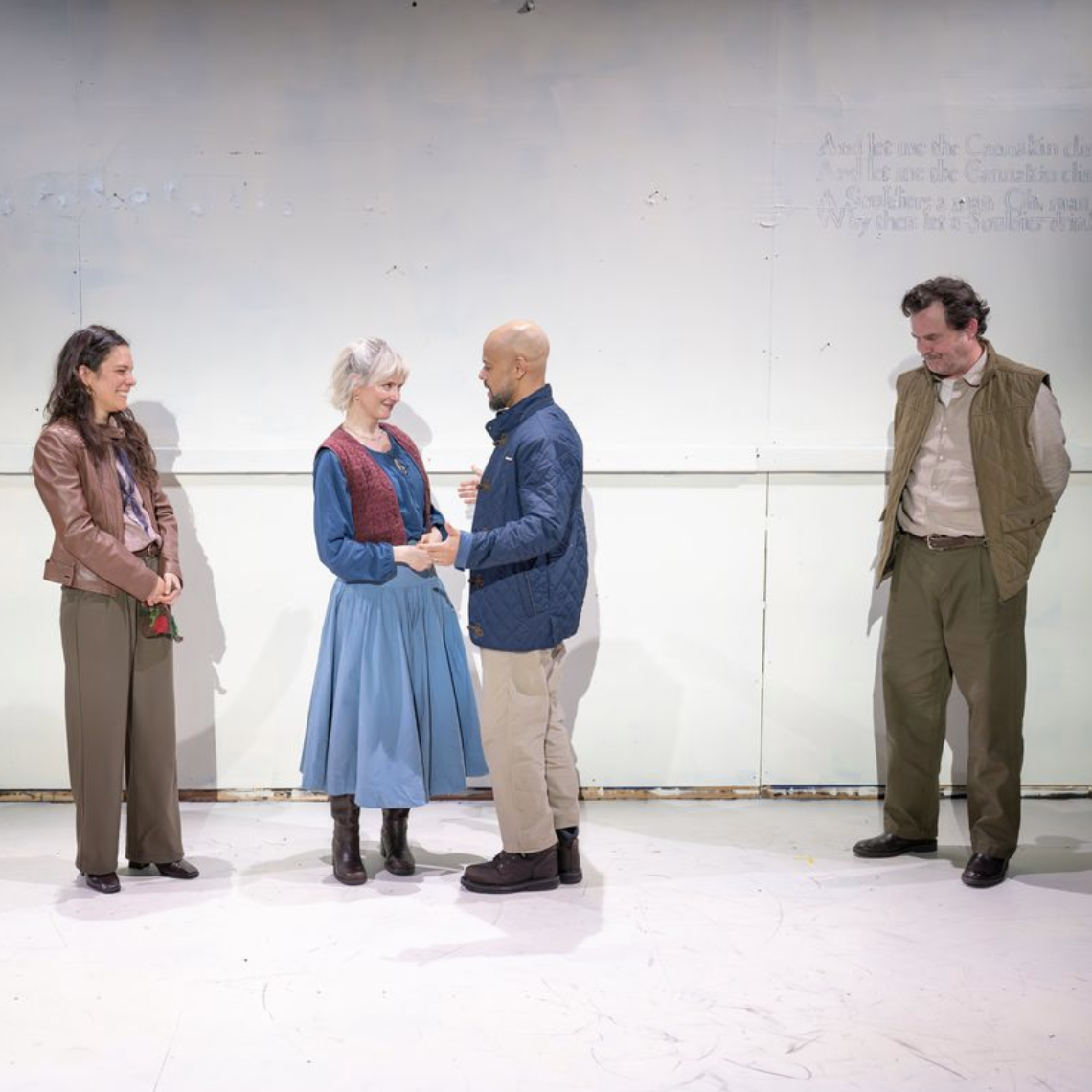
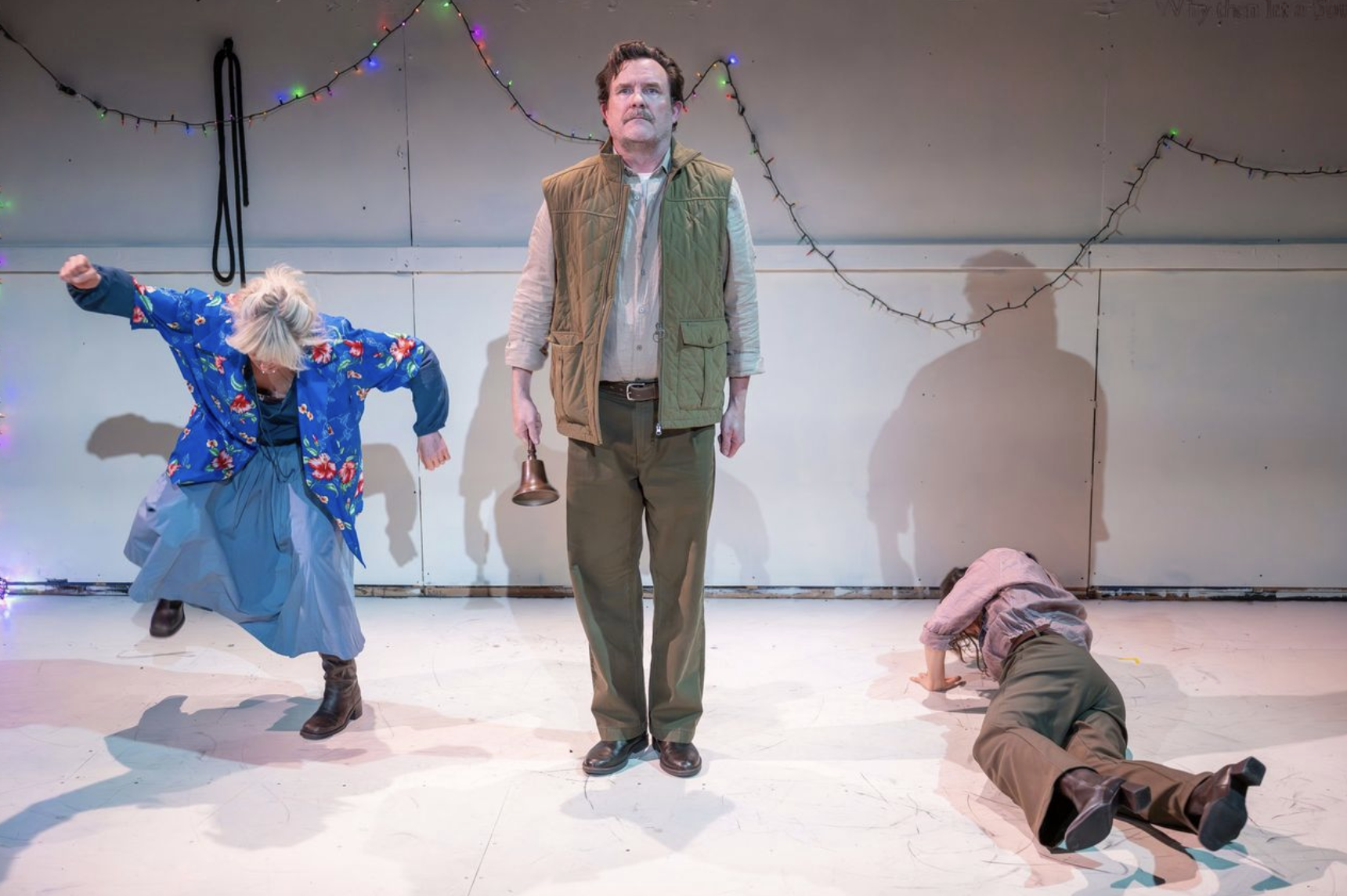
Shakespeare’s Othello has survived four centuries of reinvention, but rarely has it felt as immediate, dangerous, and alive as it does in Bedlam’s astonishing production at the West End Theatre. Directed with ferocious intelligence by Eric Tucker, this stripped-down staging excoriates every conceivable theatrical luxury until virtually nothing remains except Shakespeare’s language, four actors, and the audience’s imagination. The result is not an exercise in austerity but a thrilling demonstration of theatrical abundance. The evening unfolds with such velocity and concentration that one scarcely has time to blink before being swept into its vortex of jealousy, manipulation, racism, desire, and murder.
Bedlam was founded on the proposition that great plays require neither elaborate scenery nor large casts, only artists capable of transforming limitations into opportunities. With Othello, Tucker returns triumphantly to the company’s original aesthetic. Four performers inhabit more than a dozen roles on a playing area scarcely larger than a living room, armed with little more than a handful of props and subtle shifts of posture, voice, and gaze. The achievement is so complete that after a few minutes one ceases to marvel at the mechanics and instead surrenders entirely to the story. Shakespeare’s tragedy emerges not diminished by its reduction but startlingly clarified.
The production begins in an atmosphere of simmering menace. Tucker’s Iago, passed over for promotion in favor of Cassio, sets his scheme in motion with a disarming casualness that proves far more terrifying than overt villainy. This is not a snarling monster but an ordinary man whose grievance metastasizes into catastrophe. Tucker plays him with a sardonic ease that often borders on comedy, allowing his malice to arrive sideways. His conversational delivery of the play’s most poisonous rhetoric makes the character’s racism, resentment, and cruelty all the more chilling. Watching him improvise his campaign of destruction feels like observing a spider discover the shape of its web while already spinning it.
As Othello, Ryan Quinn gives one of the most extraordinary Shakespearean performances to be seen in New York in many a season. Rather than presenting the Moorish general as a figure of unyielding authority from the outset, Quinn allows us to encounter a man radiant with love and confidence. His early scenes with Desdemona possess an almost youthful tenderness. That humanity renders his subsequent collapse devastating. The poisonous insinuations gradually infiltrate his consciousness until jealousy consumes him entirely, and Quinn charts every stage of that transformation with devastating precision. His delivery of “Haply, for I am black” becomes not merely an expression of self-doubt but a heartbreaking recognition of the prejudice that has surrounded him all along.
Tucker wisely foregrounds the racial tensions embedded in Shakespeare’s tragedy without imposing contemporary commentary upon it. Othello’s outsider status is never allowed to recede into the background. The production continually reminds us that the society celebrating his military accomplishments remains deeply uncomfortable with his presence. Iago’s racist language lands with renewed force, exposing how easily personal malice can exploit cultural prejudice. Othello’s downfall becomes not simply the consequence of individual manipulation but the product of a community willing to view him through the lens of suspicion and otherness.
The women of the production emerge with unusual power and clarity. Susannah Hoffman’s luminous Desdemona possesses both intelligence and independence, qualities that make her fate all the more unbearable. Hoffman moves effortlessly among multiple roles, including Cassio and Brabantio, yet each characterization remains distinct and fully realized. Her Desdemona is no passive victim but a woman whose confidence and generosity survive almost to the end. The terror and bewilderment she conveys as Othello’s behavior darkens are profoundly affecting, culminating in scenes of heartbreaking vulnerability.
Susannah Millonzi proves equally remarkable, navigating the seemingly incompatible roles of the foolishly infatuated Roderigo and the morally steadfast Emilia. Her Emilia becomes the production’s conscience, cutting through the fog of lies with startling directness. In her famous speech about the injuries men inflict upon women, Shakespeare suddenly feels centuries ahead of his time. Millonzi delivers the passage with a quiet fury that electrifies the room. For a fleeting moment, the tragedy appears to belong less to Othello than to Emilia, whose clear-eyed understanding of patriarchal cruelty feels astonishingly contemporary.
The production’s visual ingenuity extends far beyond its minimalist design. During intermission the audience is asked to leave the theater while the seating configuration is transformed. What begins as a horseshoe arrangement becomes an intimate circle, drawing spectators into ever closer proximity with the unfolding catastrophe. The effect is extraordinary. The audience no longer observes events from a comfortable distance but becomes implicated in them. Characters move through the crowd, shadows gather behind the risers, and sounds emerge from unexpected corners. Tucker’s concept for sound design repeatedly surprises with theatrical magic fashioned from almost nothing: the sudden thunder of boots behind our seats and a keen understanding of how imagination amplifies the simplest gesture. Cheyenne Sykes’ evocative lighting and ingenious use of darkness create moments of suspense that rival anything achievable with far greater technical resources. Though the production relies on virtually no costume changes, Sam Debell’s design speaks volumes. Iago’s earthy hunting vest contrasts tellingly with Othello’s richly patterned jacket, quietly underscoring the Moor’s status as both celebrated insider and perpetual outsider. Equally ingenious is the simple solution for Bianca: Othello’s shirt draped off the shoulder instantly transforms Quinn, allowing him to shift between characters with remarkable clarity and ease. Like so much in Tucker’s production, Debell’s work demonstrates how imagination and precision can make the smallest theatrical gesture feel revelatory.
At times the staging evokes an unexpected homage to José Limón’s The Moor’s Pavane, that landmark dance interpretation of Othello in which physical relationships and spatial geometry reveal emotional truths beneath the narrative. Tucker similarly understands that movement can function as storytelling. Bodies orbit one another, converge, separate, and reconfigure with an almost choreographic precision. One particularly inspired transition allows an upset Bianca to transform seamlessly into Othello, creating an effect akin to a cinematic dissolve while simultaneously recalling Limón’s exploration of jealousy as a dance of fatal attraction. Such moments reveal a production deeply attentive not only to Shakespeare’s words but also to the expressive possibilities of theatrical form itself.
What distinguishes Bedlam’s Othello most profoundly is its trust in the audience. Shakespeare famously asked spectators to imagine horses, battlefields, and kingdoms through language alone. Tucker extends that invitation with exhilarating confidence. A string of lights suggests a tavern; footsteps in darkness become an army; a shift in posture creates an entirely new human being. The production continually reminds us that theater’s greatest special effect is the collaboration between performer and spectator. The imagination is not merely engaged but enlisted.
By the final moments, the tragedy lands with the force of an unavoidable reckoning. What unfolds is not only the destruction of a marriage or the triumph of a villain but the exposure of an entire society’s failures—its racism, misogyny, credulity, and silence. Yet for all its darkness, the production remains exhilarating because it demonstrates the enduring vitality of Shakespeare’s art and the transformative power of theater itself. Bedlam’s Othello is a masterclass in ensemble acting, inventive direction, and imaginative storytelling. It proves that when artists possess talent, rigor, and conviction, a bare stage can contain an entire world.
Click HERE for tickets.
Review by Tony Marinelli.
Published by Theatre Beyond Broadway on June 1, 2026. All rights reserved.
