THE UNEXPECTED 3RD
A PEOPLE’S LIGHT PRODUCTION
Presented by New York Theatre Workshop as part of In The Bricks Festival
Written & Performed by Kathryn Grody
Directed by Timothy Near
New York Theatre Workshop, 79 East 4th Street, in Manhattan
May 5, 2026 - June 14, 2026
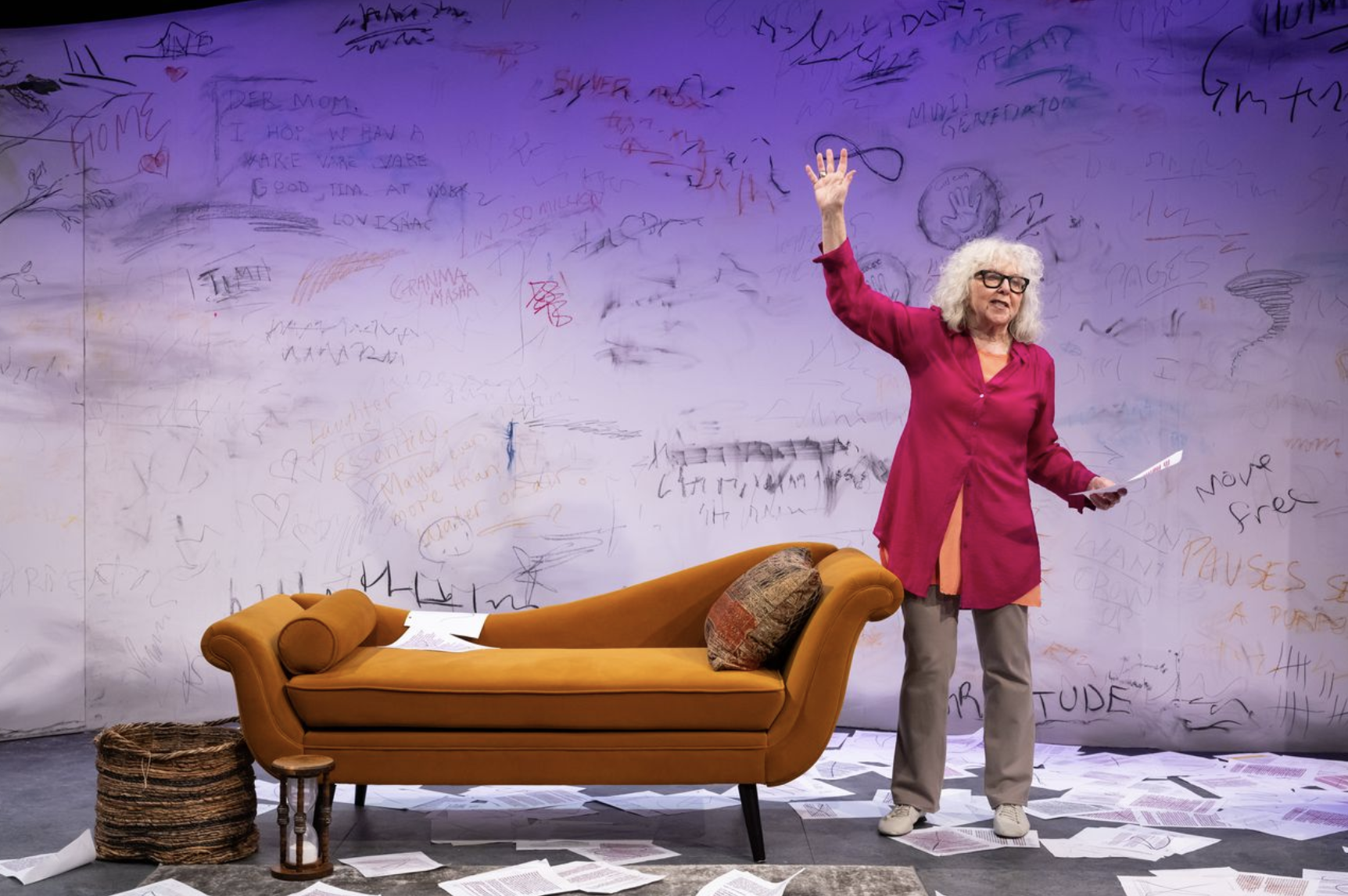
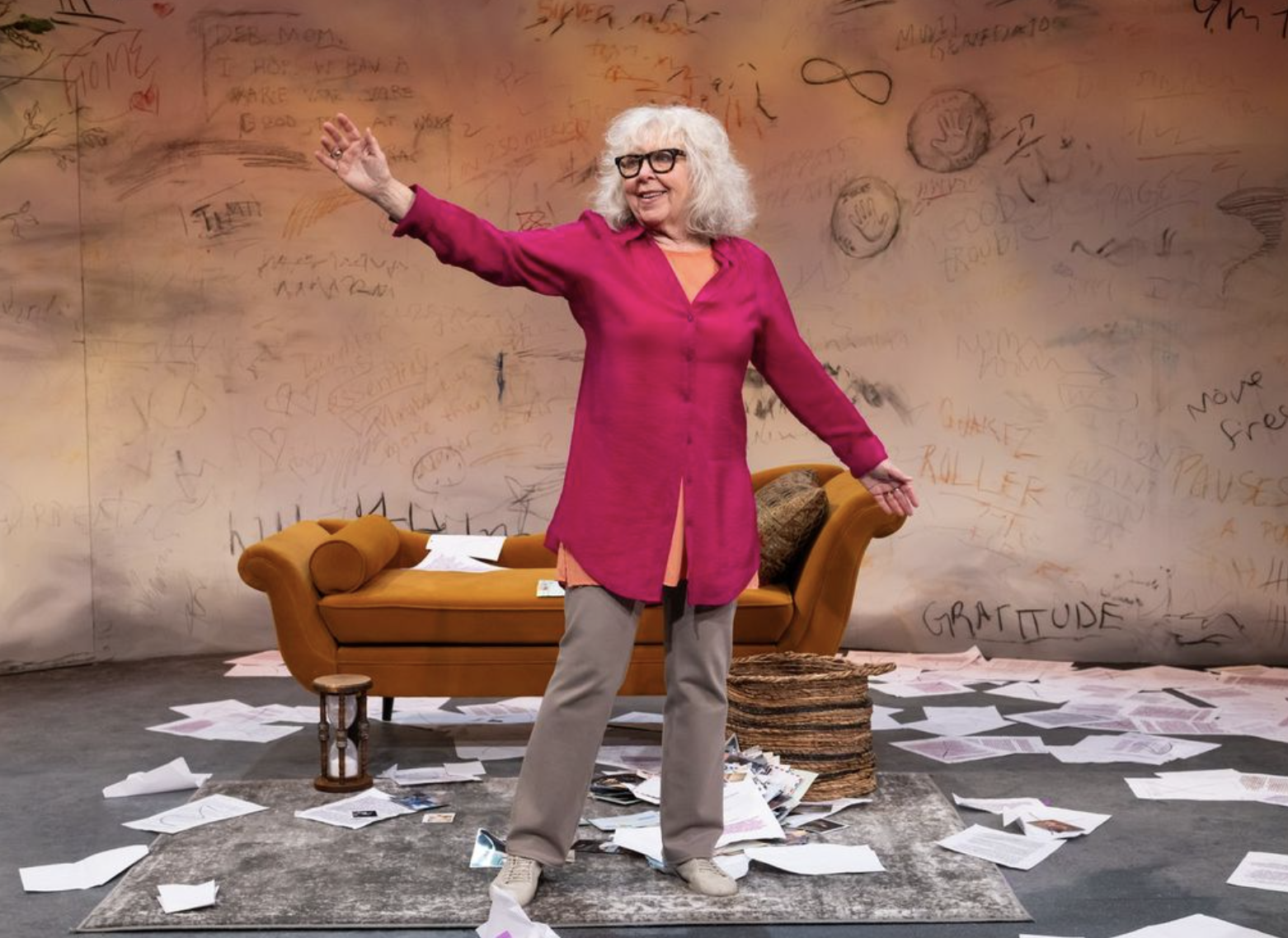
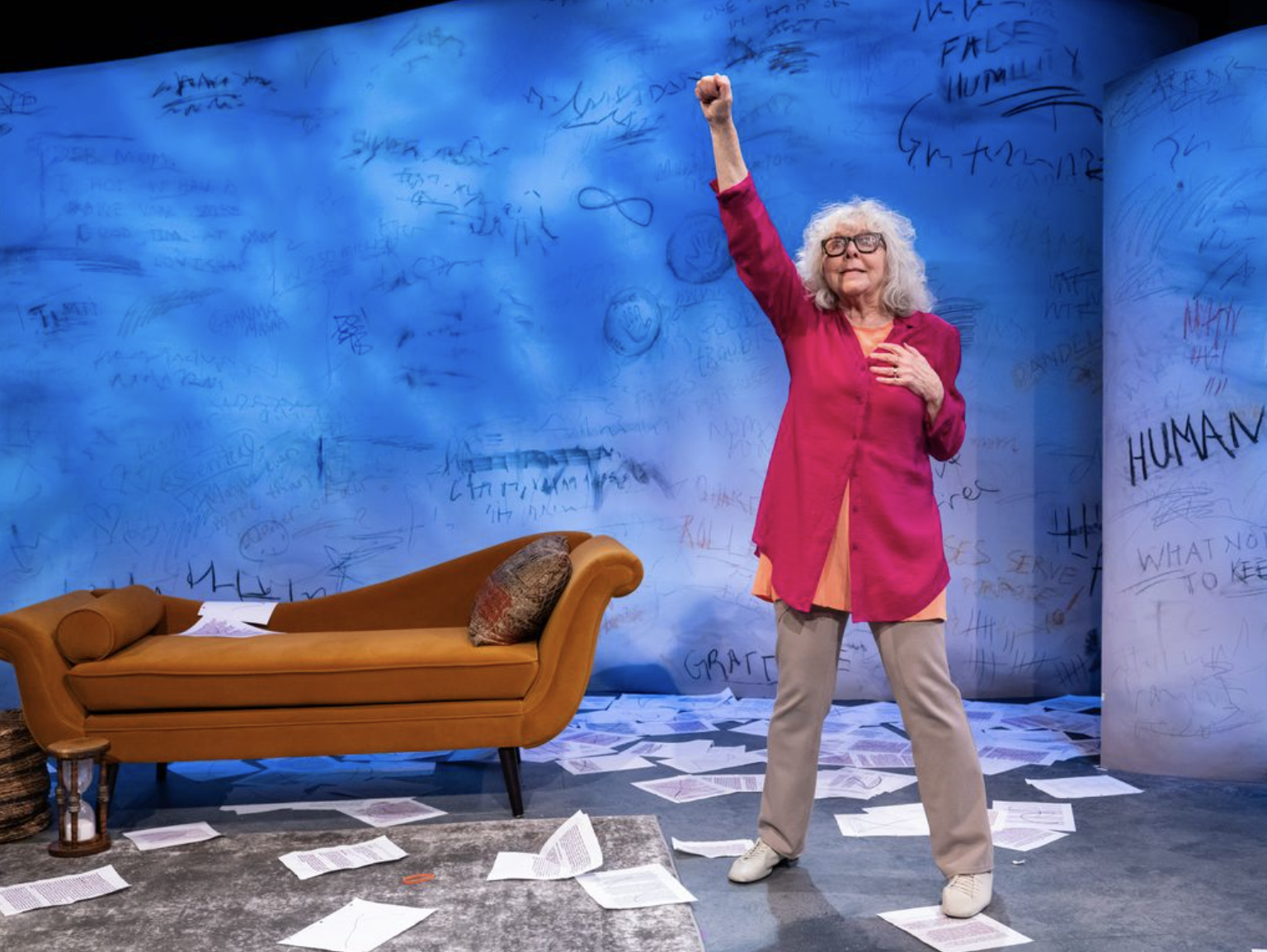
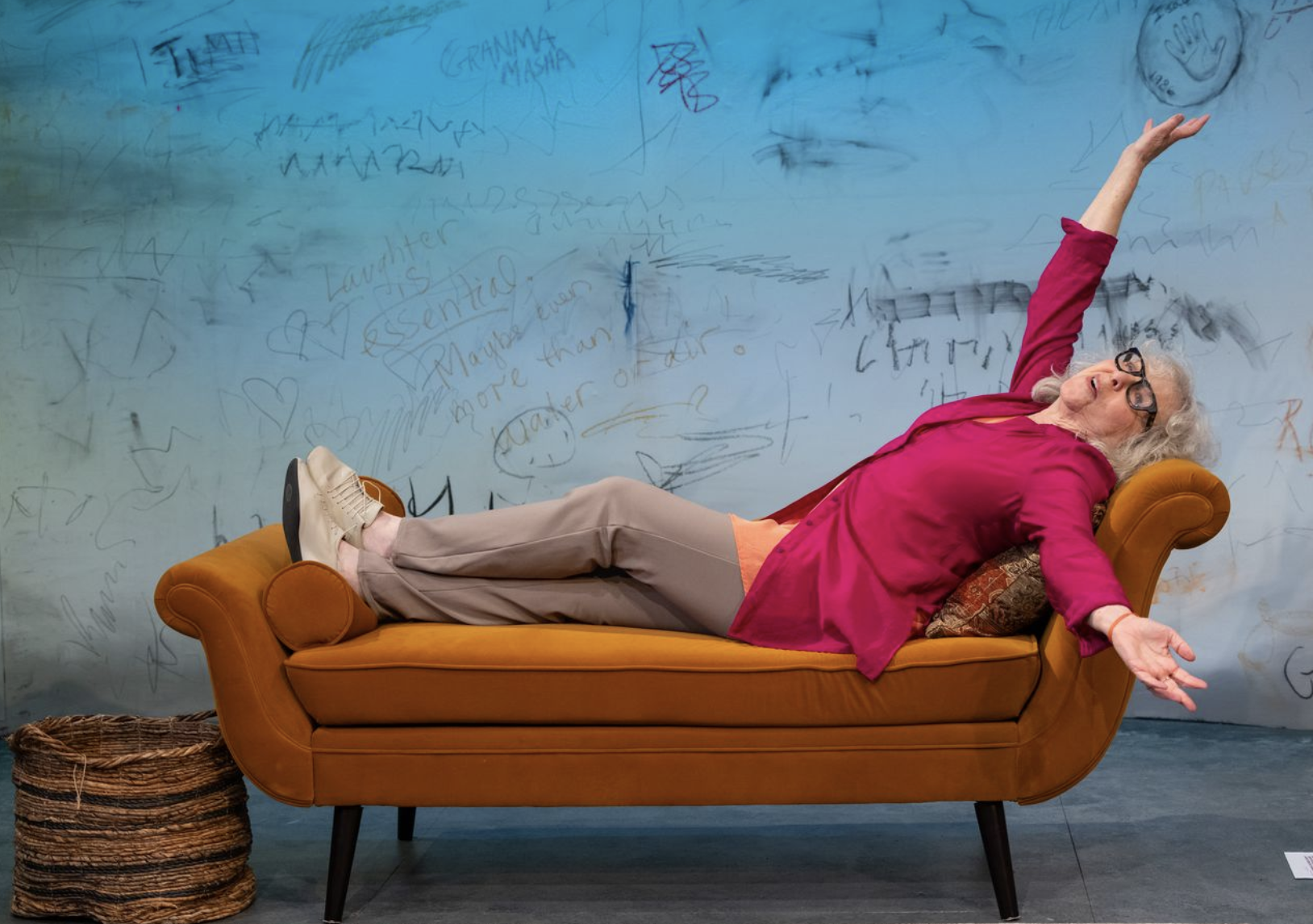
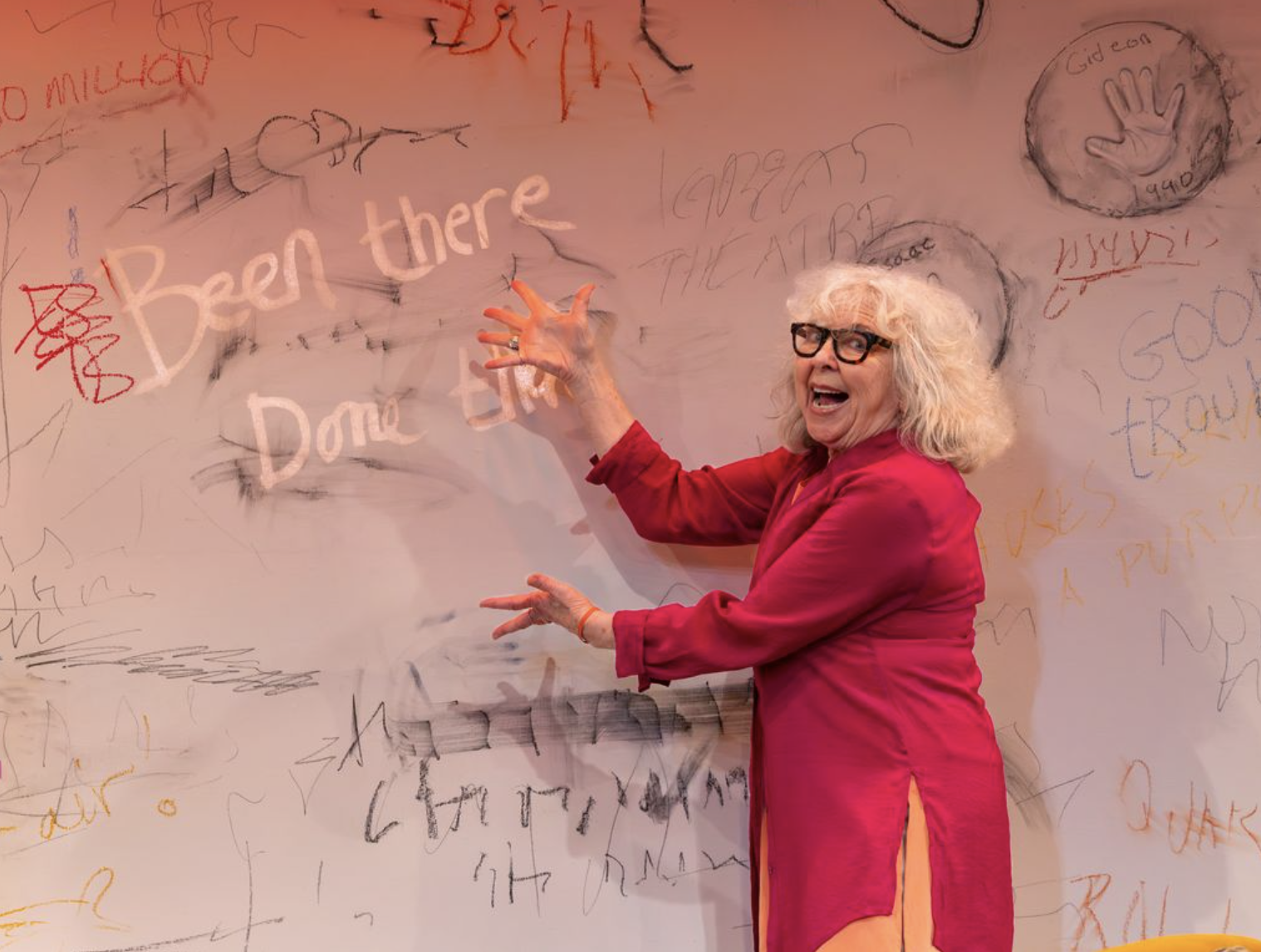
Kathryn Grody begins The Unexpected 3rd with the sort of invitation that instantly disarms an audience and dares it to follow wherever her mercurial mind may wander: seated on a chaise amid a blizzard of manuscript pages, she announces, “Welcome to my mind.” What follows at New York Theatre Workshop is less a conventional solo show than a séance conducted in broad daylight—a rummaging through memory, grief, vanity, fury, comedy, marriage, mortality, and the stubborn, humiliating miracle of remaining alive. At seventy-nine, Grody has fashioned not merely the finest work of her career but one of the most piercing and exuberant theatrical meditations on aging we have encountered in years.
The stage itself appears to have erupted from the interior of Grody’s consciousness. Nina Ball’s inspired scenic design resembles a half-finished notebook abandoned by a philosopher in the middle of a nervous breakdown: walls scrawled with words like “human,” “why,” and “gravity,” loose pages stacked in drifts across the floor, lecterns sagging under the weight of endless revisions, a twisted tree standing to one side like a witness from a Beckett play. Grody has reportedly drafted the piece nearly sixty times, and the production turns that compulsive rewriting into visual poetry. Pages emerge from impossible places; scripts proliferate like memories one cannot quite suppress. The stage becomes an atlas of unfinished thought.
Directed with exquisite suppleness by Timothy Near, the evening never calcifies into static reminiscence. Grody prowls, digs, crouches, lunges, perches, and ricochets across the space with astonishing vitality. Grody’s predicament is not entrapment but abundance. Her mind overflows. Near wisely understands that Grody’s intellect is inseparable from her physicality; the body itself becomes part of the argument against cultural invisibility. She is not aging gracefully—a phrase Grody would likely despise—but aging flamboyantly, noisily, defiantly in public.
What astonishes most is the density of thought packed into the evening without ever sacrificing intimacy. Grody leaps from Albert Einstein to Philip Roth, from second-wave feminism to Buddhist philosophy, from the prehistoric handprints at Chauvet-Pont d’Arc to the strange cosmic “collective purr” detected by scientists somewhere in the universe’s vast dark machinery. Stanley Kunitz appears. Rilke appears. Mandy Patinkin appears, though often more as emotional climate than celebrity spouse. Grody reflects on their forty-five-year marriage with a candor both bruised and tender: “We are a scarred pair,” she says, recalling “the brutalities of intimacy.” Few performers can transform marital endurance into something simultaneously comic, terrifying, and holy.
And yet the production’s deepest achievement may be its refusal of sentimentality. Grody complains magnificently—about her sons, her body, technology, loneliness, ageism, memory, the panic of obsolescence—but never once begs for pity. She recognizes vanity in herself too clearly for that. “Aging didn’t suit my personality,” she remarks early on, tossing off the line with a comedian’s timing and a tragedian’s awareness of the abyss beneath it. Again and again, she circles the same impossible questions: How does one remain visible? How does one continue becoming? What survives after usefulness appears to expire? Her answer is neither optimism nor despair but restless curiosity.
The production’s technical elements operate with such stealth and precision that one almost fails to notice their extraordinary artistry. Frederick Kennedy’s sound design and Cat Tate Starmer’s lighting move through the piece like subconscious impulses, quietly enlarging Grody’s emotional weather. A single bell tolling in memory of her brother lands with devastating force. Elsewhere, a sketched floor lamp suddenly glows with magical simplicity, as if imagination itself had briefly materialized. Naomi Lachter’s costume design announces Grody before she speaks: Look at me. I am still here.
Part of the evening’s emotional power derives from Grody’s uncanny ability to collapse generational distance. Younger audience members may arrive expecting a meditation on late life and leave realizing the play addresses anxieties already colonizing their own futures. Grody understands that modern culture terrifies people into believing life must be completed by thirty-five: secure the partner, profession, identity, apartment, body, and curated happiness before the clock runs out. The Unexpected 3rd detonates that lie. Grody insists, with ferocious humor, that identity remains unstable until death—that reinvention, confusion, erotic embarrassment, grief, and discovery continue indefinitely. “We should never think of ourselves as finished,” she seems to declare with every glorious digression.
There is, throughout, the exhilarating sense of watching a great actress rediscover her artistic necessity in real time. Grody speaks movingly of the professional invisibility that descended as she aged, before an accidental late-life renaissance emerged through the pandemic videos posted online by her son Gideon Grody-Patinkin. Yet The Unexpected 3rd never feels like a victory lap for belated fame. Instead, it is a howl against diminishment itself. Grody rejects the culture’s dreary vocabulary around aging—its euphemisms, its condescensions, its obsession with decline—and proposes something far more radical: elderhood as expansion rather than erosion.
By the end, one feels not that Grody has solved the riddles tormenting her but that she has transformed the act of questioning into a form of communal grace. Early in the play, she compares herself to bats using echolocation, sending signals outward in hopes of discovering where she is. That becomes the evening’s governing metaphor. Grody sends her pings into the darkness—about love, terror, death, memory, time—and the audience answers with recognition. Theater rarely feels this alive anymore: this intellectually unruly, emotionally naked, and spiritually inquisitive. The Unexpected 3rd is not merely a superb solo performance. It is a thrilling act of resistance against disappearance, delivered by an artist who has decided that growing older is not a retreat from life but a deeper and stranger entrance into it.
Click HERE for tickets.
Review by Tony Marinelli.
Published by Theatre Beyond Broadway on June 1, 2026. All rights reserved.
