
WELL, I’LL LET YOU GO
Written by Bubba Weiler
Directed by Jack Serio
Studio Seaview, 305 West 43rd Street, in Manhattan
April 30, 2026 - June 20, 2026
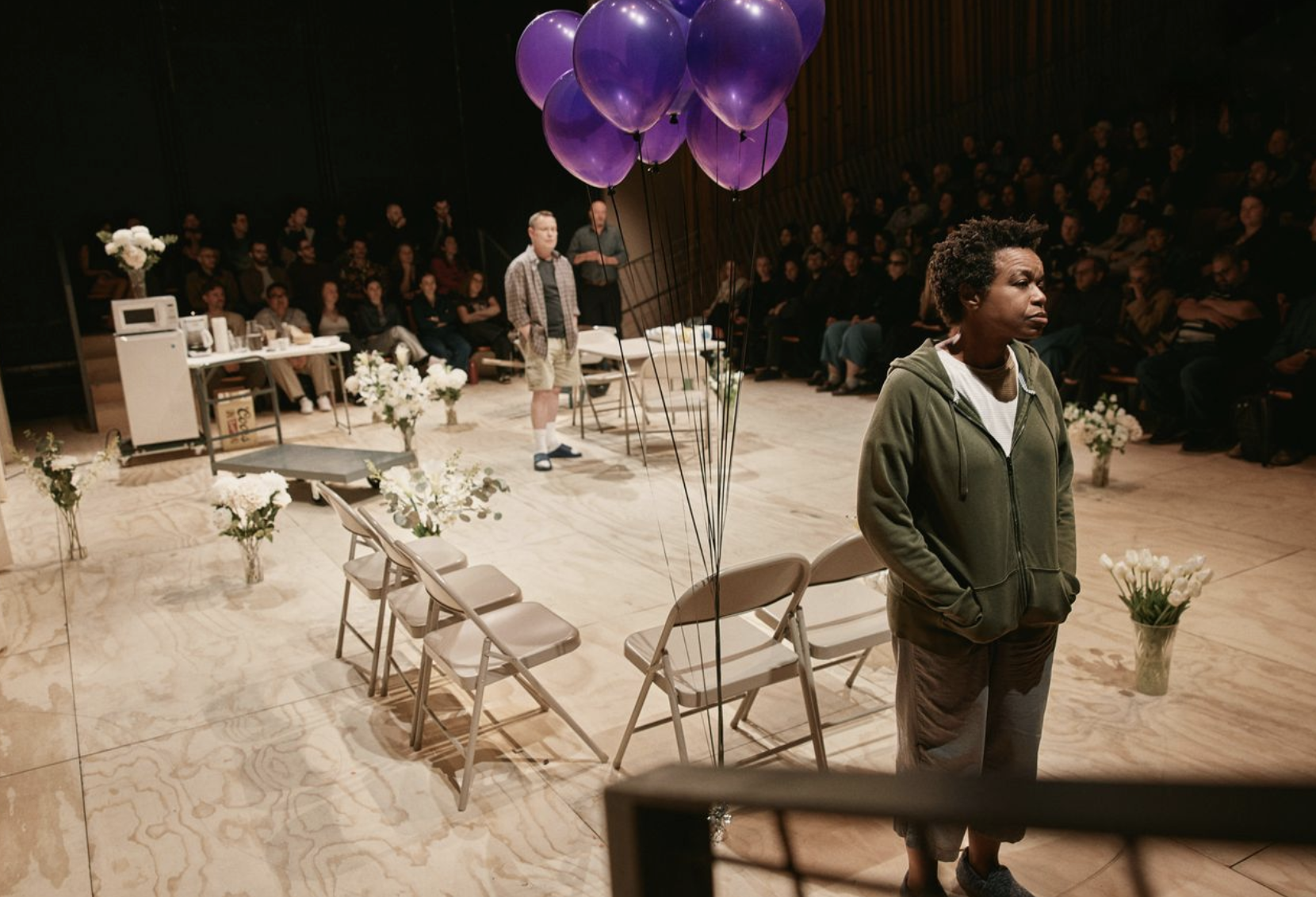

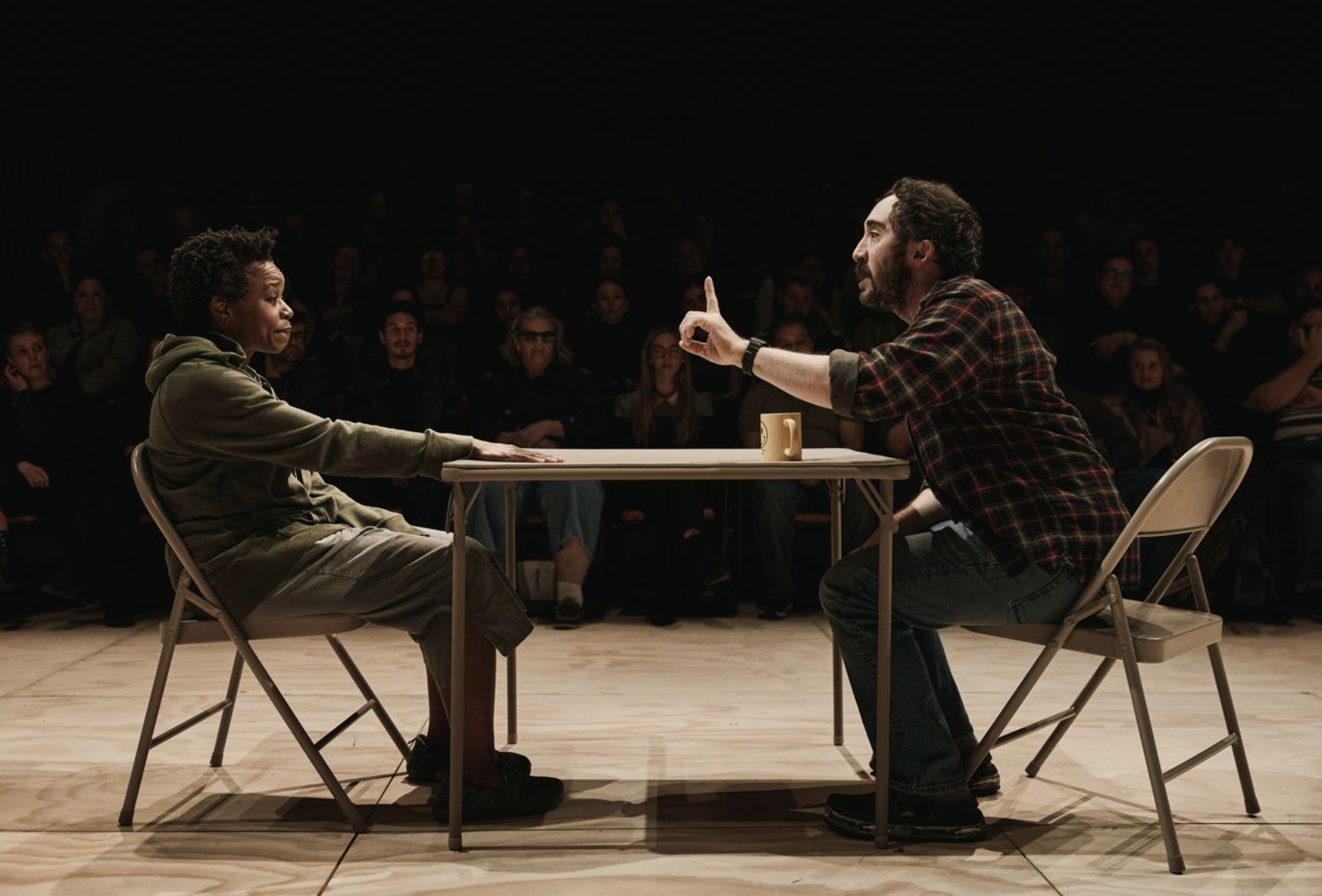
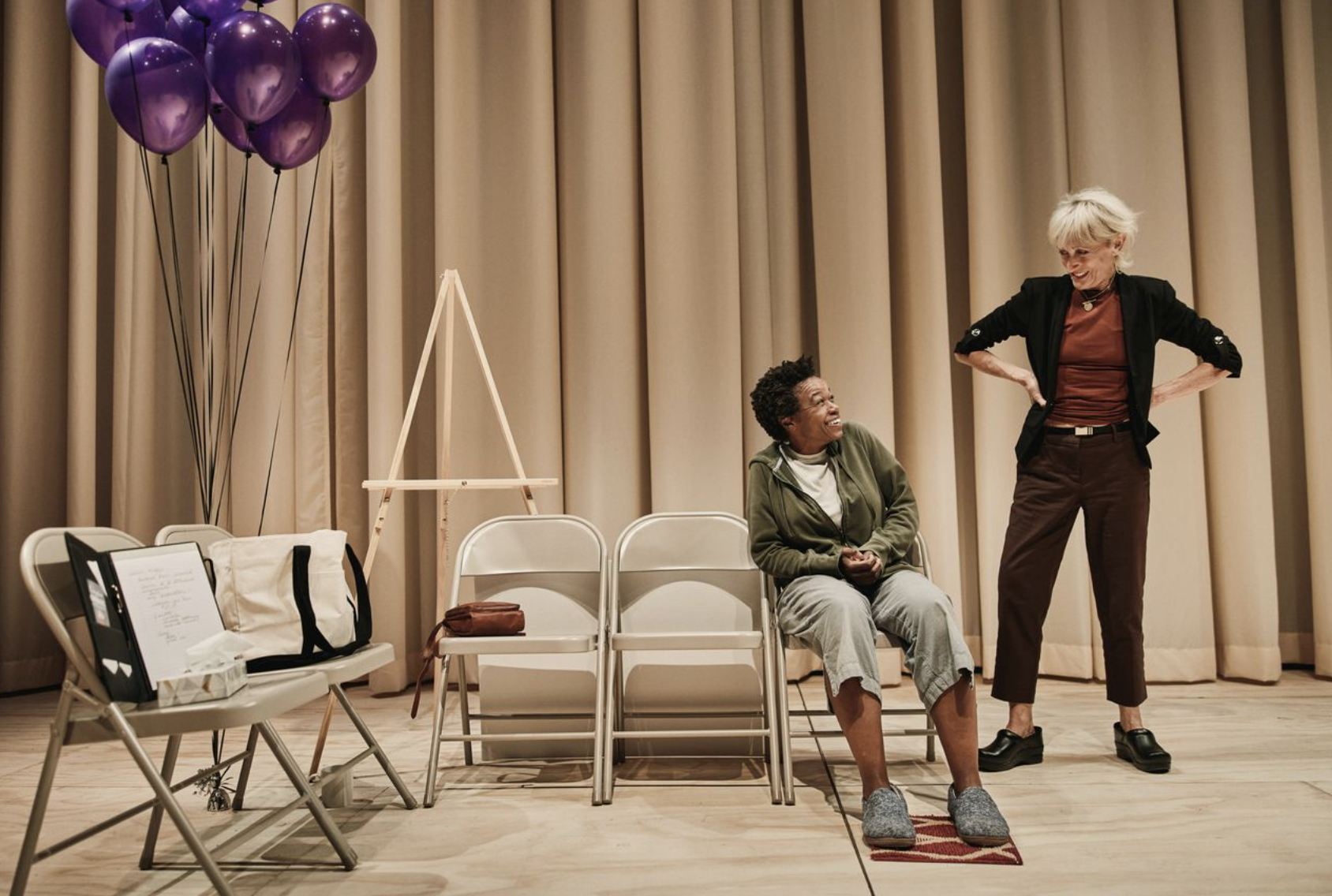
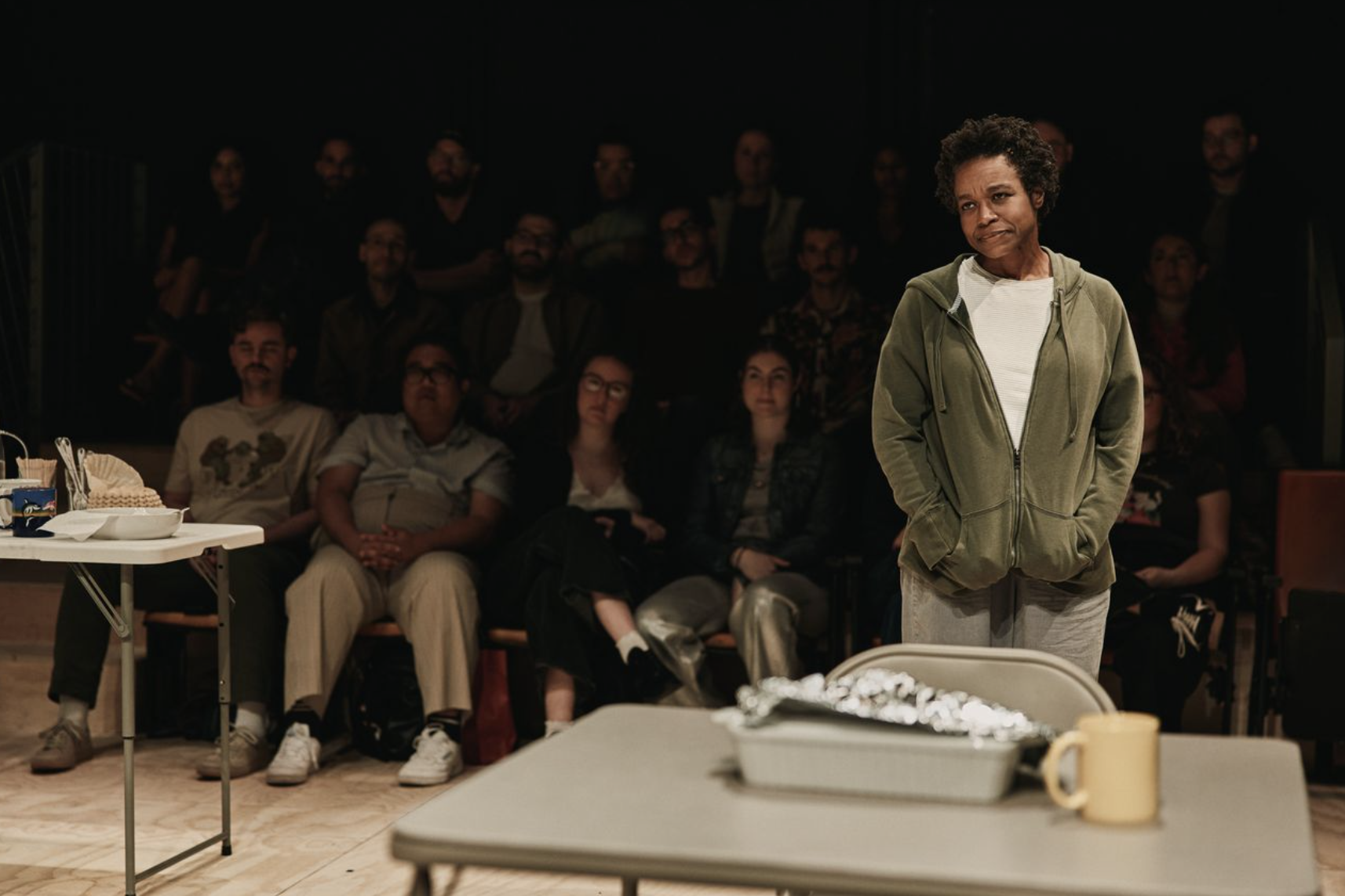
Photo credit by Emilio Madrid
Bubba Weiler’s Well, I’ll Let You Go arrives at Studio Seaview with none of the usual trappings of theatrical importance. There are no marquee names, no flashy conceptual hook, no technological wizardry, and scarcely a set to speak of. Yet this extraordinary drama exerts a force that many far larger productions never approach. Having already earned Outer Critics Circle Awards for Best New American Play and Best Leading Performer in an Off-Broadway Play for Quincy Tyler Bernstine, Weiler’s play returns from its acclaimed Brooklyn premiere not merely as a promising debut but as one of the most quietly devastating achievements on the New York stage.
The premise appears deceptively simple. Maggie, a middle-aged Midwestern widow, spends the days immediately following her husband’s death receiving visitors who arrive bearing casseroles, condolences, unsolicited advice, and barely concealed agendas. Her husband, Marv, a small-town lawyer, has died while intervening during a shooting connected to a Planned Parenthood visit and a nearby community college. To the town, he is rapidly becoming a hero. Streets may be named after him. Memorials are being discussed. Yet Maggie cannot shake the suspicion that she does not understand what happened—or perhaps even who her husband really was.
From this setup, Weiler constructs a drama of remarkable patience and emotional intelligence. The play unfolds through a sequence of intimate two-person encounters, each revealing another fragment of the story while simultaneously exposing the hidden compromises, disappointments, and self-deceptions that have shaped Maggie’s life. The mystery surrounding Marv’s death proves compelling, but Weiler is after something larger and far more profound. The real subject is the unknowability of other people, even those we love most deeply, and the uneasy realization that we may not fully know ourselves either.
The achievement is all the more striking because Weiler refuses melodrama. Instead, revelations emerge gradually, almost casually, accumulating with the inexorable logic of lived experience. Each conversation subtly reframes the audience’s understanding of Maggie’s marriage, her community, and her own history. By the time the play reaches its final disclosures, the effect is less that of a conventional plot twist than of a tectonic shift in perspective. Audible gasps ripple through the audience—not because Weiler has manipulated us, but because he has so carefully earned every surprise.
At the center of this extraordinary work stands Quincy Tyler Bernstine, delivering one of the finest performances currently on any New York stage. Rarely leaving the playing area during the production’s uninterrupted hundred minutes, Bernstine creates a portrait of grief so intricate and deeply felt that it seems to unfold at the molecular level. Wrapped in a hoodie and sweatpants, moving with the exhausted gait of someone whose body has not yet caught up with catastrophe, she reveals Maggie through the smallest of means: a tightening jaw, a fleeting smile, a hand pressed against her forehead, a momentary pause before answering a question she wishes had never been asked.
What makes Bernstine’s work so astonishing is her refusal to signal emotion. She does not perform grief; she inhabits it. Maggie’s exhaustion, resentment, confusion, humor, tenderness, and flashes of fury coexist simultaneously, often within a single line. Even while listening—a surprisingly large portion of the role—Bernstine remains mesmerizing. One watches her face the way one watches shifting weather, aware that entire emotional climates are passing across it. It is a master class in psychological realism and one of those rare performances that enlarges our understanding of what stage acting can accomplish.
Surrounding her is an ensemble of exceptional precision. Will Dagger gives vivid life to Wally, Marv’s needy and irritating cousin, whose dependence masks a profound loneliness. Constance Shulman nearly steals the evening as an aggressively cheerful funeral representative whose comic timing only sharpens the sadness beneath her character’s relentless professionalism. Amelia Workman brings aching authenticity to Maggie’s lifelong friend and sister-in-law Julie, while Danny McCarthy layers unexpected vulnerability beneath the defensive armor of Marv’s brother Jeff. Cricket Brown and Emily Davis, appearing later in the play, become crucial participants in Maggie’s search for truth, each delivering scenes of tremendous emotional force.
Equally impressive is Matthew Maher as the play’s narrator, a figure who initially evokes the Stage Manager of Thornton Wilder’s Our Town. Maher guides us through the geography, history, and social fabric of this declining Midwestern community, a place where vanished industries have given way to economic stagnation and an Amazon fulfillment center. Yet the narration proves far more than a stylistic flourish. As the evening progresses, Maher reveals layers of complexity that transform what first appears to be an observational role into something unexpectedly moving.
The supporting cast offers exquisitely observed portraits of flawed, deeply recognizable human beings. Though each arrives ostensibly to comfort Maggie, they are too consumed by their own anxieties, regrets, obsessions, and unmet needs to offer anything resembling uncomplicated sympathy. Yet Weiler and his actors render these shortcomings with such compassion and precision that every character emerges not as a type but as a fully realized soul, caught in the messy, unfinished process of becoming.
The comparison to Wilder is unavoidable, but Weiler’s accomplishment extends far beyond homage. Like Our Town, this play uses theatrical simplicity to illuminate the extraordinary within ordinary lives. Yet its concerns are distinctly contemporary, encompassing economic decline, reproductive politics, communal mythmaking, and the uneasy tension between public narratives and private realities. Weiler writes with uncommon compassion for human contradiction. His characters are flawed, frustrating, occasionally selfish, yet never reduced to caricature. Every person who crosses Maggie’s threshold arrives carrying burdens of their own.
Jack Serio’s direction is a model of restraint and confidence. For this remounting, Serio has reconceived the staging for a thrust configuration, surrounding the action with spectators on three sides. The result is a heightened sense of intimacy that proves ideal for Weiler’s quietly revelatory drama; rather than observing Maggie from a distance, we feel as though we have been invited directly into her living room, sharing the awkward silences, uncomfortable confidences, and hard-won revelations alongside her. Working with Frank J. Oliva’s initially bare scenic design, Serio transforms emptiness into expressive space. The wide distances between characters become emotional landscapes, visual manifestations of isolation, misunderstanding, and longing. Gradually, physical objects accumulate across the stage—flowers, chairs, traces of communal mourning—until the production arrives at a final visual gesture of breathtaking simplicity and power. Few directors understand as thoroughly as Serio how to allow silence, stillness, and proximity to generate theatrical meaning.
The production’s design elements operate with similar elegance. Avery Reed’s costumes feel less designed than lived in, perfectly capturing the modest rhythms of Midwestern life. Stacey Derosier’s lighting subtly charts the play’s emotional trajectory before culminating in imagery of startling beauty. Brandon Bulls’ sound design and Avi Amon’s plaintive score work almost invisibly, deepening the atmosphere without ever announcing themselves. Every artistic choice serves the story rather than competing with it.
In the end, Well, I’ll Let You Go achieves something increasingly rare in contemporary theater. It transforms the ordinary details of one woman’s life into a meditation on memory, grief, forgiveness, and grace. The play asks whether we can ever truly know another person, and whether love survives the discovery that our understanding was incomplete all along. Weiler’s answer is neither sentimental nor cynical. Instead, he offers something more difficult and more valuable: compassion. The result is a work of extraordinary humanity, anchored by a career-defining performance from Quincy Tyler Bernstine and shaped by a production of exquisite sensitivity. What first appeared to be a notable debut now reveals itself as a major theatrical event—one of those rare evenings that leaves audiences not merely entertained but permanently altered.
Click HERE for tickets.
Review by Tony Marinelli.
Published by Theatre Beyond Broadway on June 1, 2026. All rights reserved.
