
THE APPROACH
Written by Mark O’Rowe, Directed by Conor Bagley
W. Scott McLucas Studio Theatre, Irish Repertory Theatre, 132 West 22nd Street, in Manhattan
April 3, 2026 - May 10, 2026
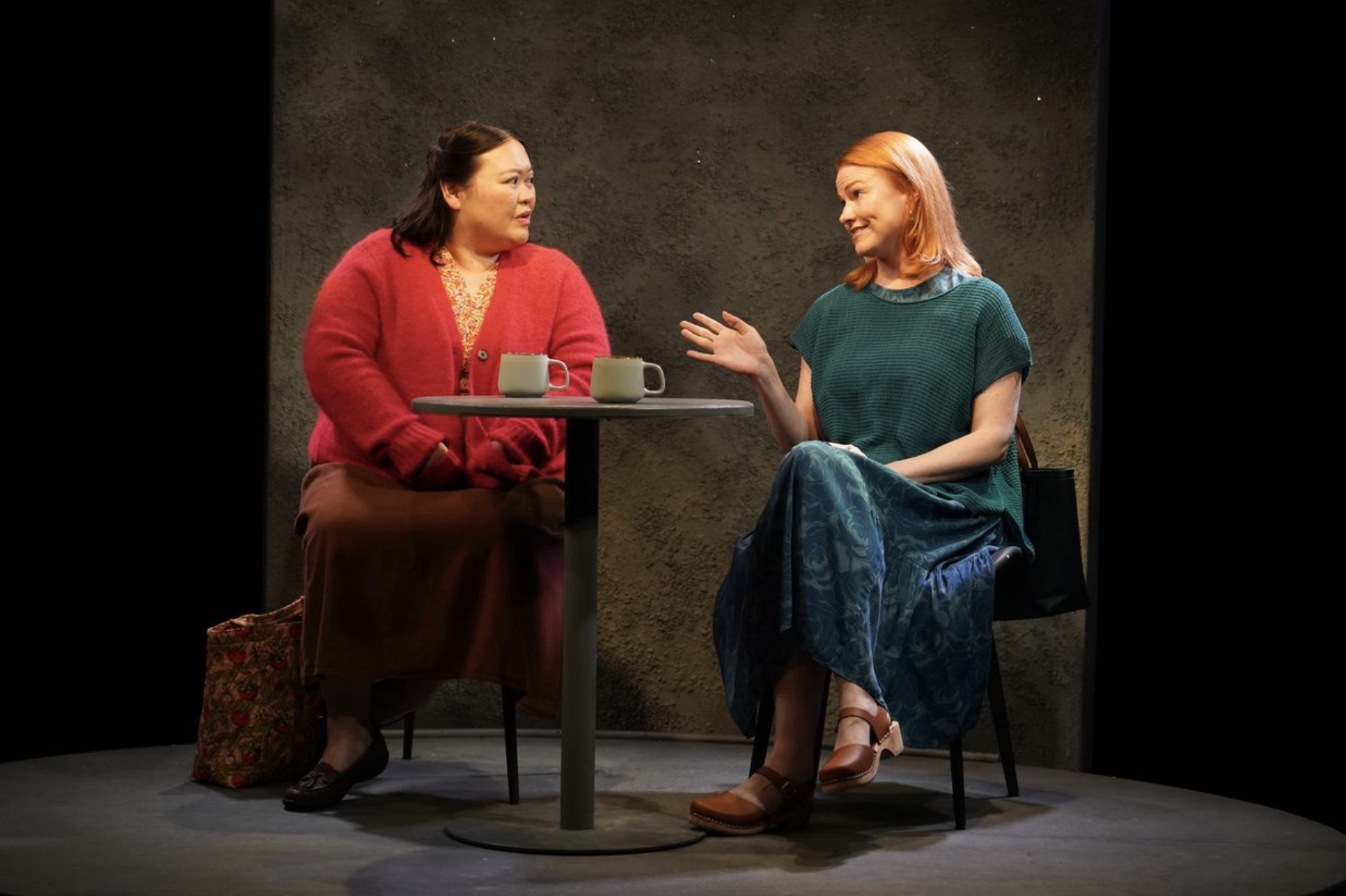
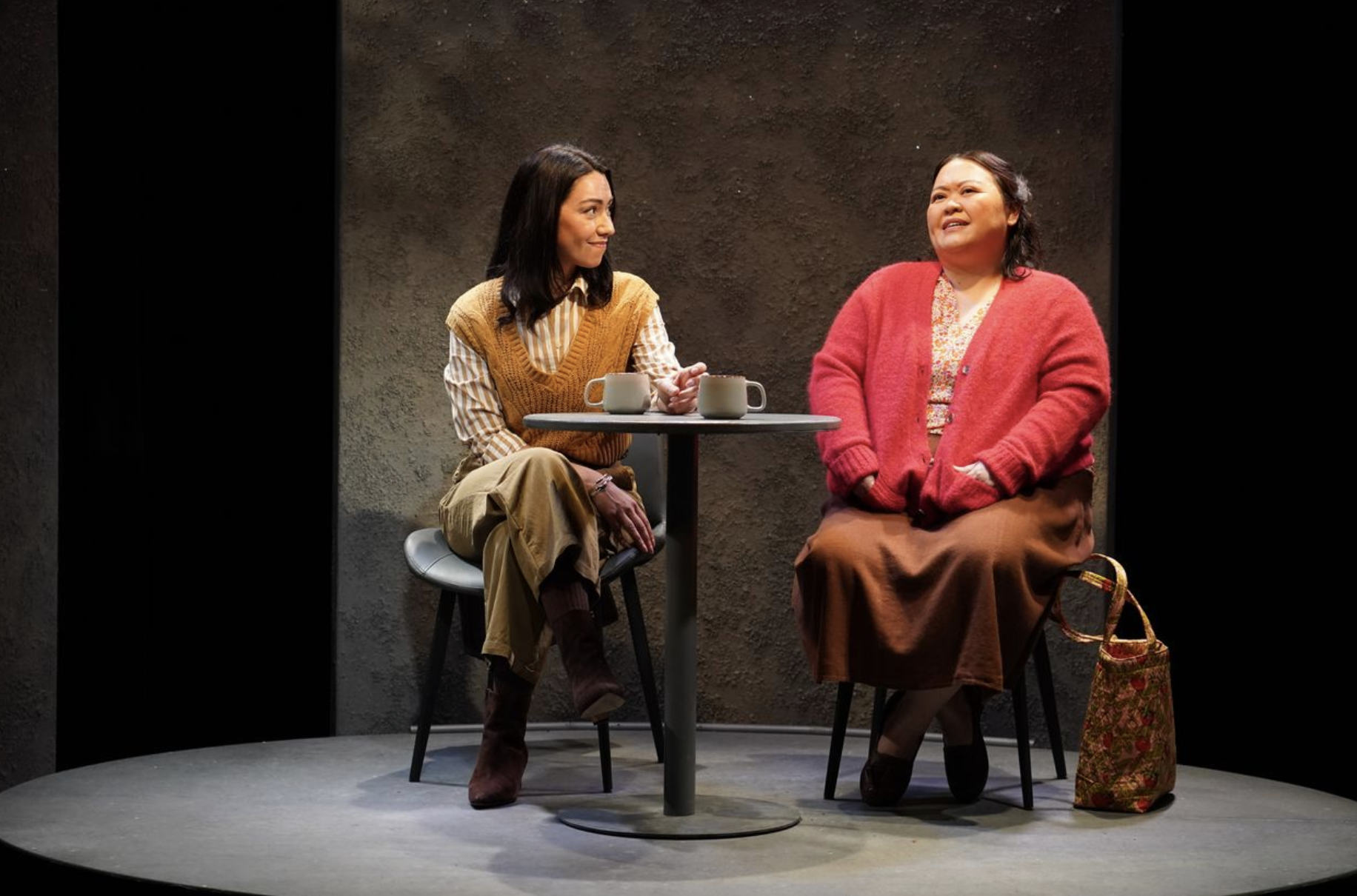
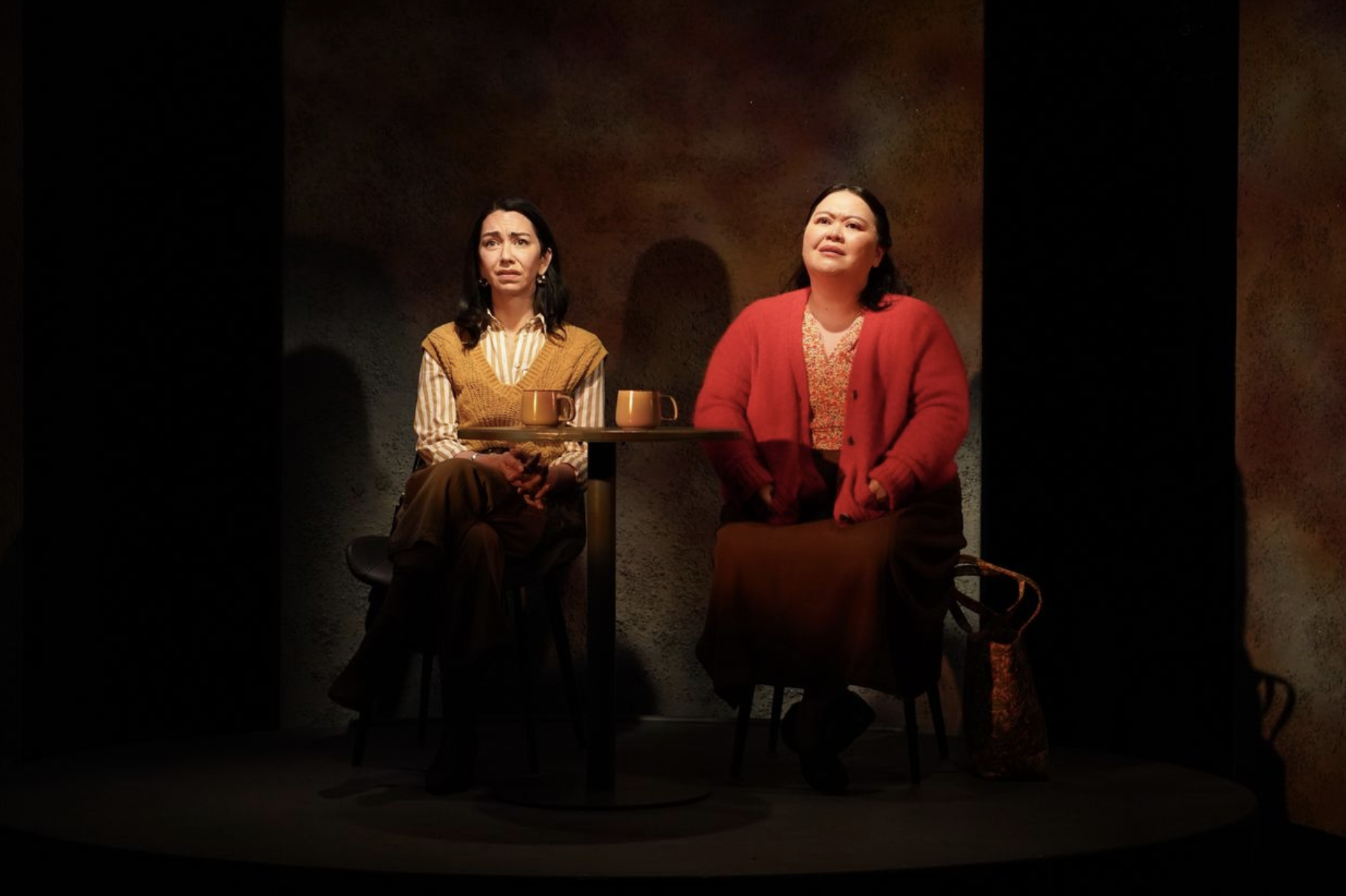
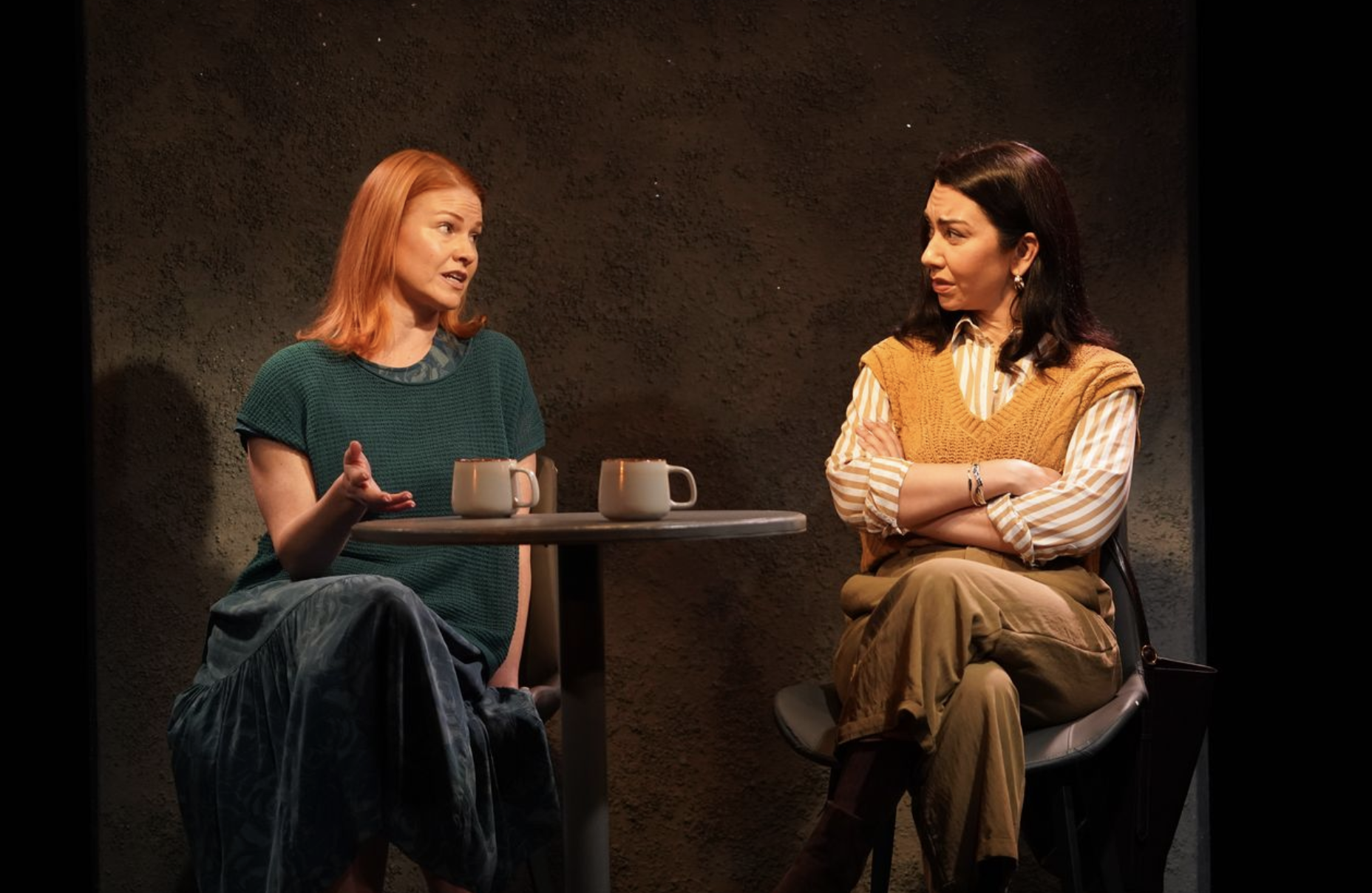
There is something almost perversely modest about The Approach, the quietly devastating chamber piece by Mark O'Rowe now receiving an exquisitely calibrated production at Irish Repertory Theatre. The play arrives with little theatrical machinery: three women, several cups of coffee and tea, a handful of old grievances, and seventy uninterrupted minutes of conversation. Yet beneath that seemingly casual framework, O’Rowe constructs a drama of extraordinary emotional intricacy, one that examines the subtle humiliations and private negotiations that structure modern friendship. It is a play about loneliness disguised as chatter, about the lies people tell not merely to deceive others but to survive themselves.
At first glance, the evening appears almost aggressively ordinary. Three longtime Dublin friends meet in pairs and talk. They discuss shopping, diets, relationships, jewelry, old acquaintances, and mi irritations. No grand confessions erupt. No melodramatic confrontation shatters the room. O’Rowe instead places his faith in the rhythms of ordinary speech, in the tiny hesitations and evasions through which entire emotional histories leak out sideways. The result is mesmerizing. One begins by casually observing these women and ends by scrutinizing every pause, every repetition, every aborted sentence for clues to the immense sadness concealed beneath their polished civility.
The production, directed with remarkable restraint and intelligence by Conor Bagley, understands that the play’s power lies precisely in what remains unspoken. Bagley refuses to oversell the material or inflate its tensions artificially. Instead, he allows the audience the pleasure—and discomfort—of becoming detectives. Tiny inconsistencies emerge. Memories fail to align. Casual remarks acquire the force of veiled accusations. Conversations circle back on themselves with the maddening logic of unresolved emotional wounds. The cumulative effect is hypnotic: one feels perpetually on the verge of discovering something catastrophic, only to realize the catastrophe has been there all along, quietly embedded inside the women’s inability to connect honestly with one another.
The production unfolds elegantly on a minimalist set by Daniel Prosky: a raised circular platform containing little more than a cocktail table and two chairs, framed by opposing doors upstage. The geometry is deceptively simple but deeply suggestive. Characters enter and exit like figures trapped in an emotional roundelay, endlessly returning to the same conversational battlegrounds. Under Emma Deane’s delicate lighting, the stage becomes less a realistic café than a kind of psychological arena where intimacy and performance coexist uneasily. Stephanie Bahniuk’s costumes, attractive and elegantly understated in themselves, resist any firm attachment to a specific era, lending the play a faintly untethered quality—as though these women might be trapped in an eternal present, forever recycling the same conversations, grievances, and reconciliations.
The first encounter, between Cora and Anna, establishes O’Rowe’s mastery almost immediately. Carmen M. Herlihy gives Cora a tentative warmth that barely conceals profound uncertainty, while Danielle Ryan’s Anna radiates a carefully managed volatility. Their exchange drifts through familiar conversational terrain before gradually darkening around the edges. An offhand reference to a mutual acquaintance’s suicide suddenly acquires unbearable emotional weight. Even the most banal observations begin to sound like coded pleas for reassurance. When Cora gently observes, “You do your best to be nice to, or to connect to someone, but after a while you just kind of admit to yourself…that you’re wasting your time,” the line lands with startling force—not because it is theatrically heightened, but because it emerges so naturally from the hesitant flow of ordinary speech.
The subsequent scenes deepen and complicate everything that came before. When Cora later meets Anna’s estranged sister Denise, played with poised self-possession by Kate MacCluggage, the narrative subtly destabilizes. Accusations previously accepted as fact begin to blur. Memories shift shape depending on who recounts them. O’Rowe reveals how friendship itself can become a competitive act of self-curation, each woman presenting the most flattering possible version of her own suffering while quietly diminishing everyone else’s. The play’s title begins to resonate in multiple directions: every interaction is an approach toward intimacy, but also a retreat from it.
What makes the evening so enthralling is O’Rowe’s astonishing ear for conversational negotiation. Nearly every line contains two simultaneous meanings: the polite social response and the deeper emotional reality struggling not to surface. Characters constantly revise themselves in real time, testing how much truth can safely be admitted before vulnerability becomes intolerable. The repetitions and circular rhythms are not stylistic affectations but the very grammar of emotional avoidance. The women talk the way wounded people often do—carefully, indirectly, forever edging toward honesty before swerving away from it at the last moment.
Bagley’s production trusts these subtleties completely, and the actors respond with performances of extraordinary precision. Herlihy, MacCluggage, and Ryan never force the drama outward. Instead, they allow feeling to accumulate almost microscopically, through fleeting glances, awkward silences, and sudden tonal shifts. Their chemistry is so persuasive that one feels decades of shared history humming invisibly beneath every exchange. Particularly impressive is the production’s refusal to sentimentalize reconciliation. When Anna and Denise finally meet face to face after years of estrangement, their tentative movement toward understanding feels neither cathartic nor tidy. It feels earned, fragile, and painfully human.
By the end of The Approach, one realizes that O’Rowe has achieved something extraordinarily difficult: a play in which virtually nothing happens and yet everything is at stake. Beneath its conversational surface lies a piercing meditation on insecurity, jealousy, loneliness, and the exhausting labor of maintaining the versions of ourselves we present to others. The production leaves behind the lingering ache of recognition. These women are not merely talking over coffee; they are performing survival for one another, hoping that if they maintain the performance long enough, the emptiness underneath might remain hidden. Rarely has a play so quiet spoken so loudly about the desperate human need to be seen, forgiven, and loved.
Click HERE for tickets.
Review by Tony Marinelli.
Published by Theatre Beyond Broadway on May 13, 2026. All rights reserved.
