The Fire This Time Festival
Presented by Frigid and The Apollo
Jonelle Procope Theater at The Apollo Stages at The Victoria | 233
West 125th Street New York, NY 10027
Jan 23-Jan 31, 2026
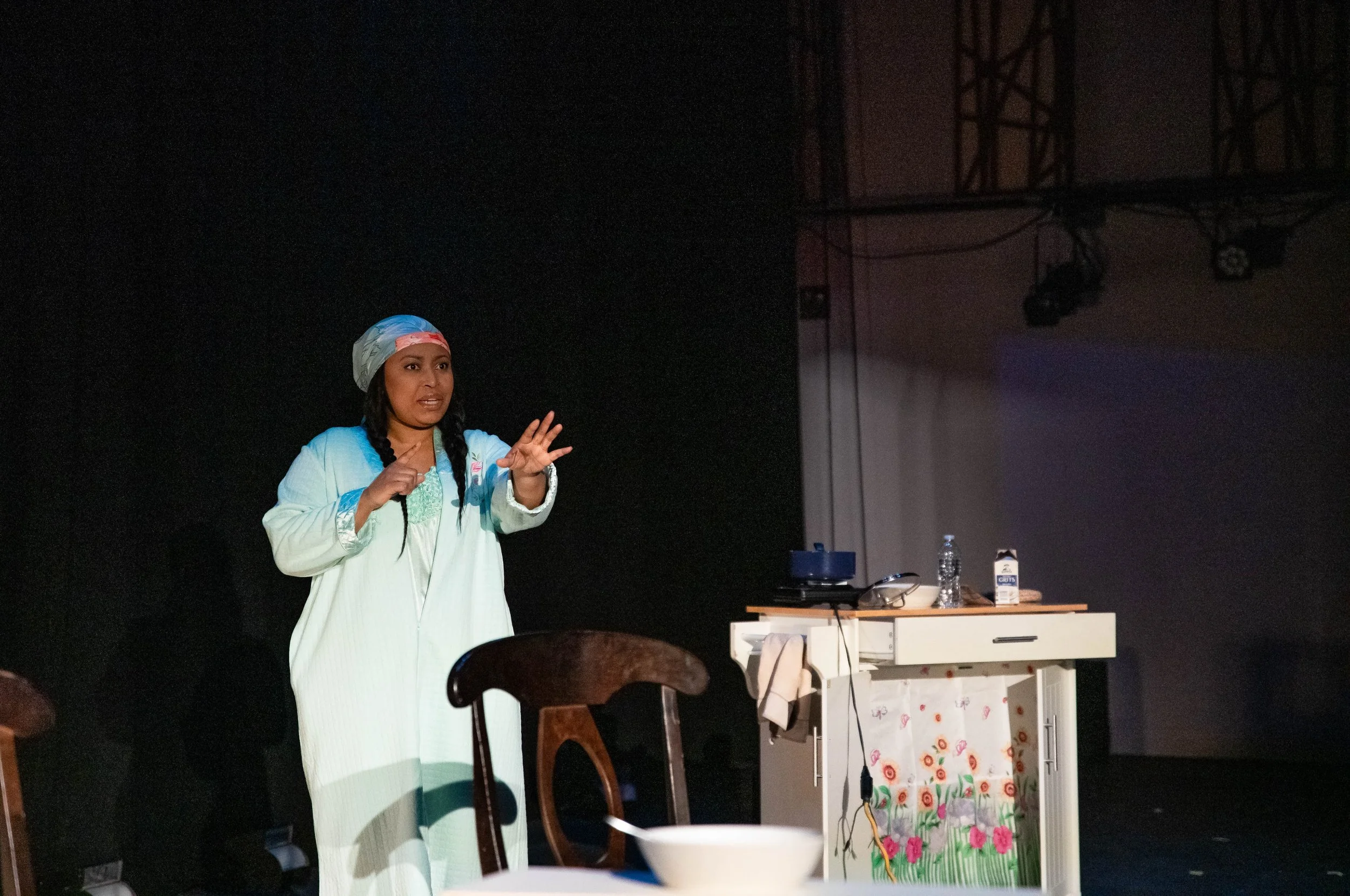
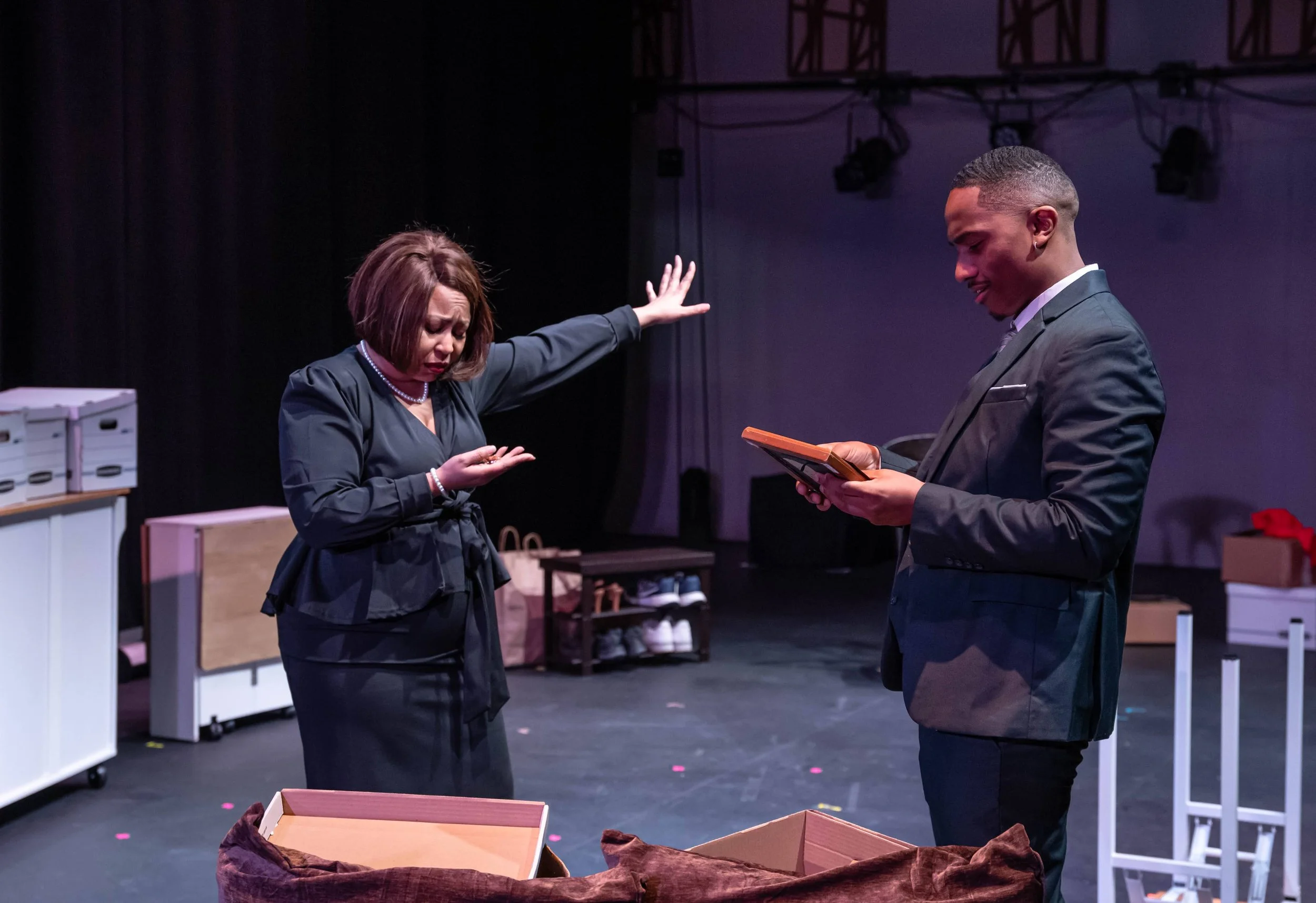
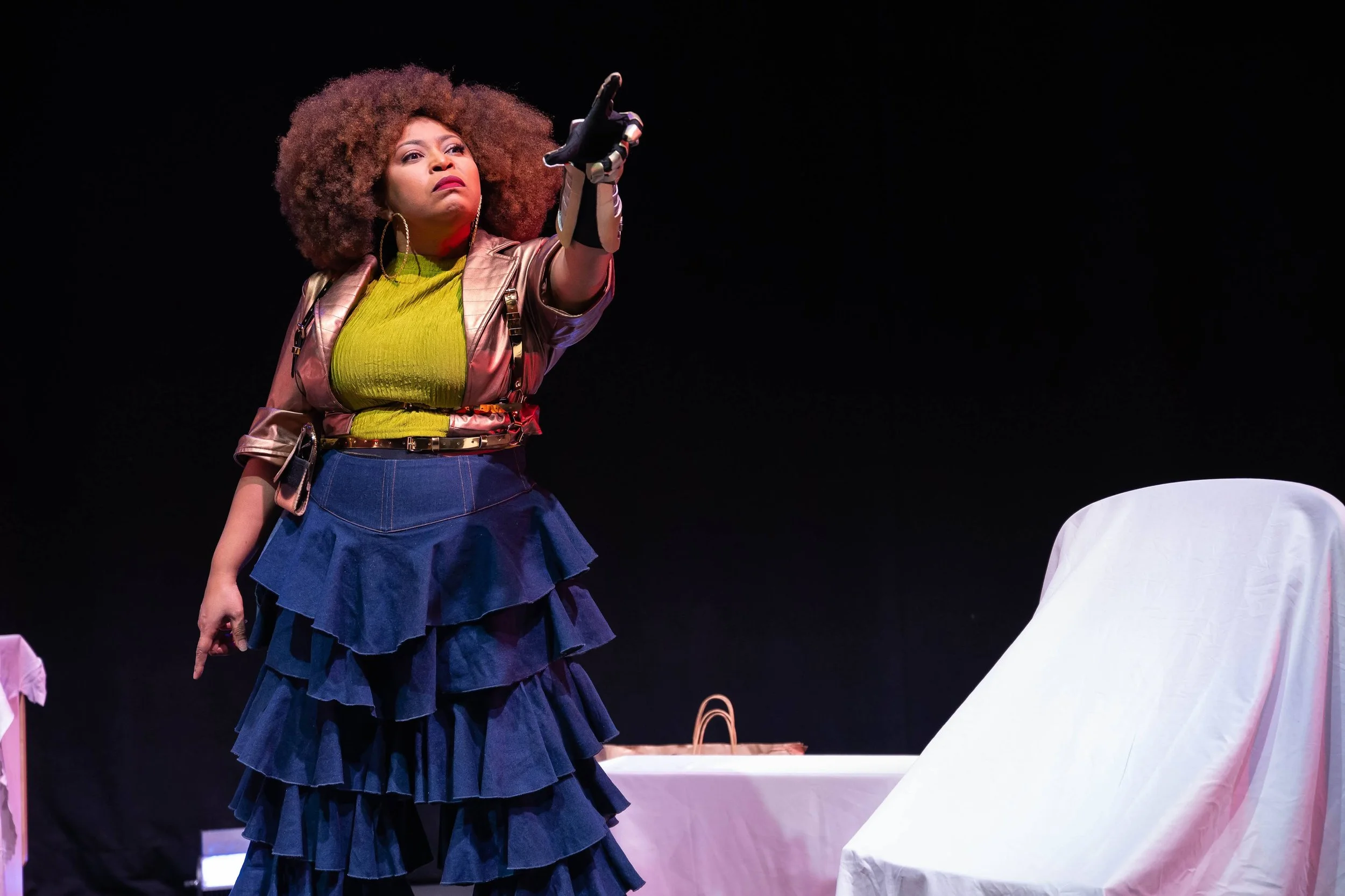
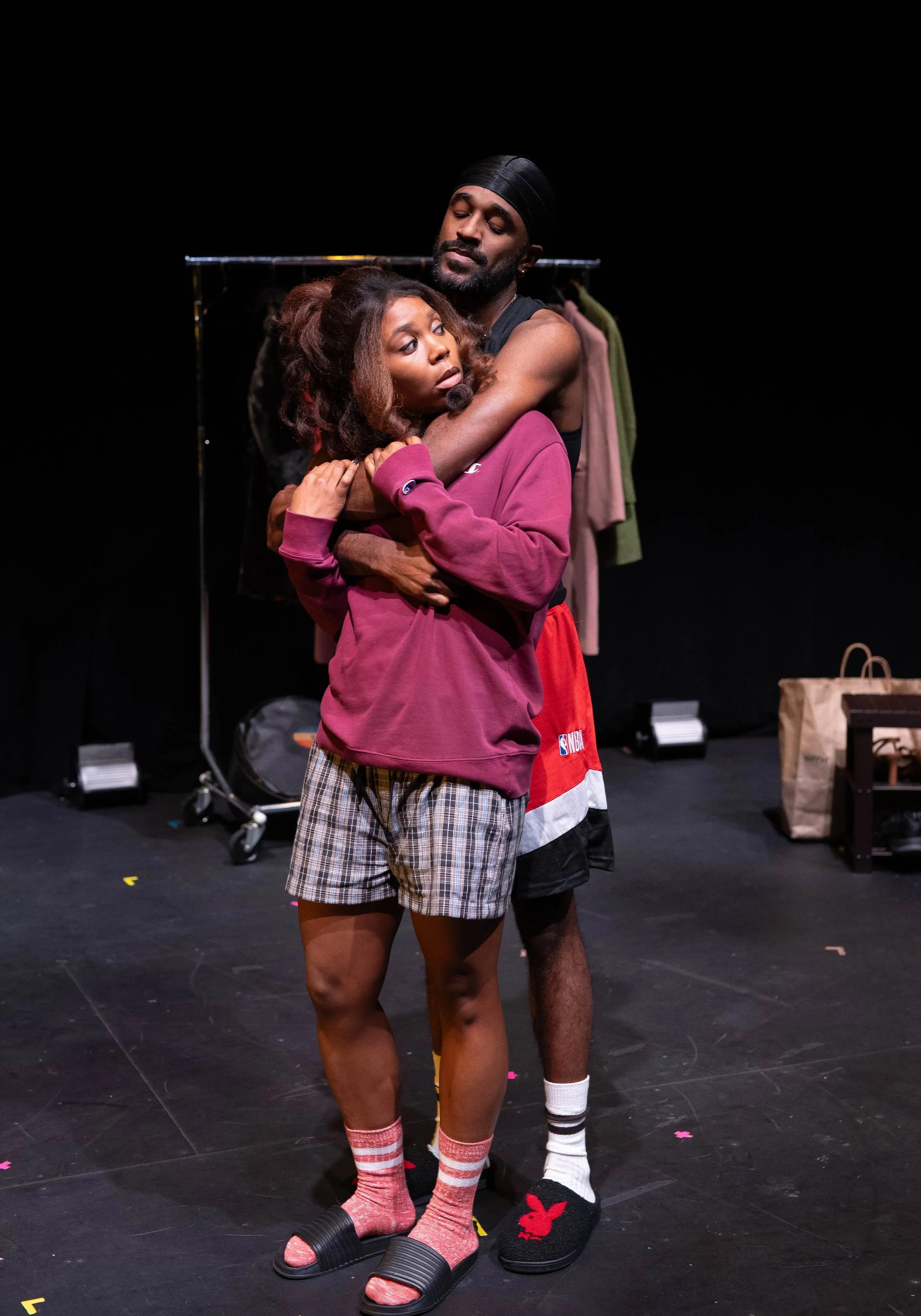
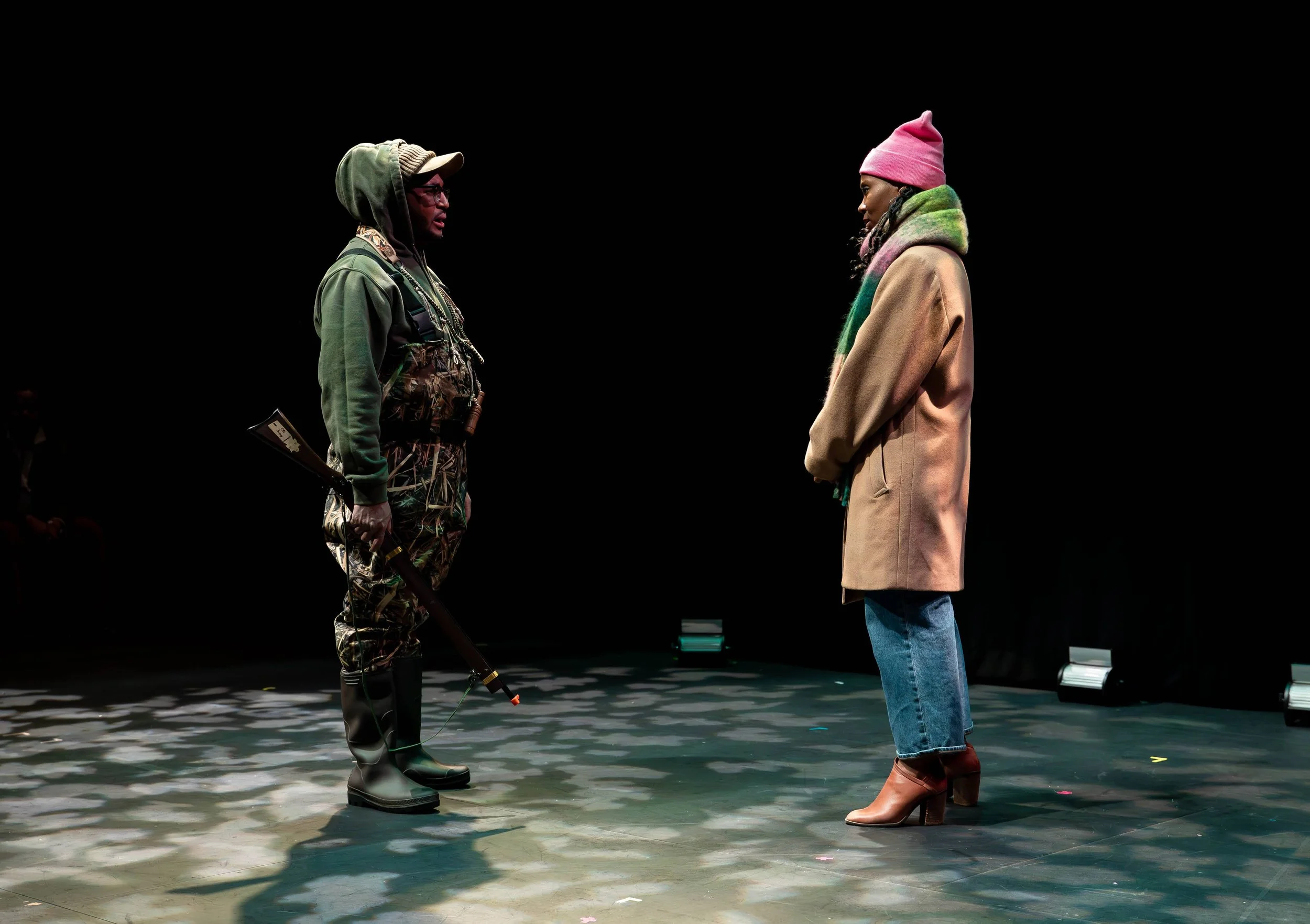
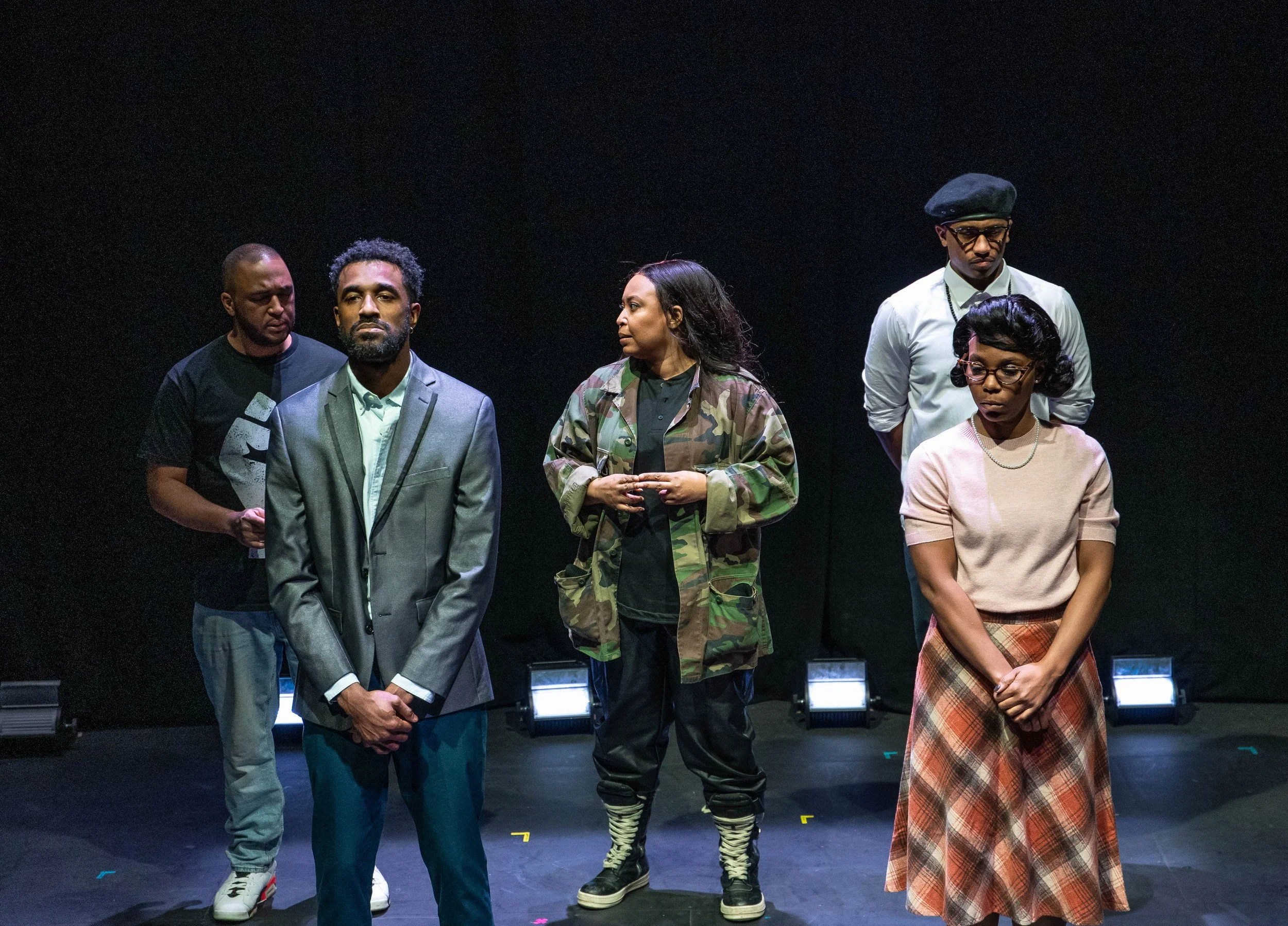
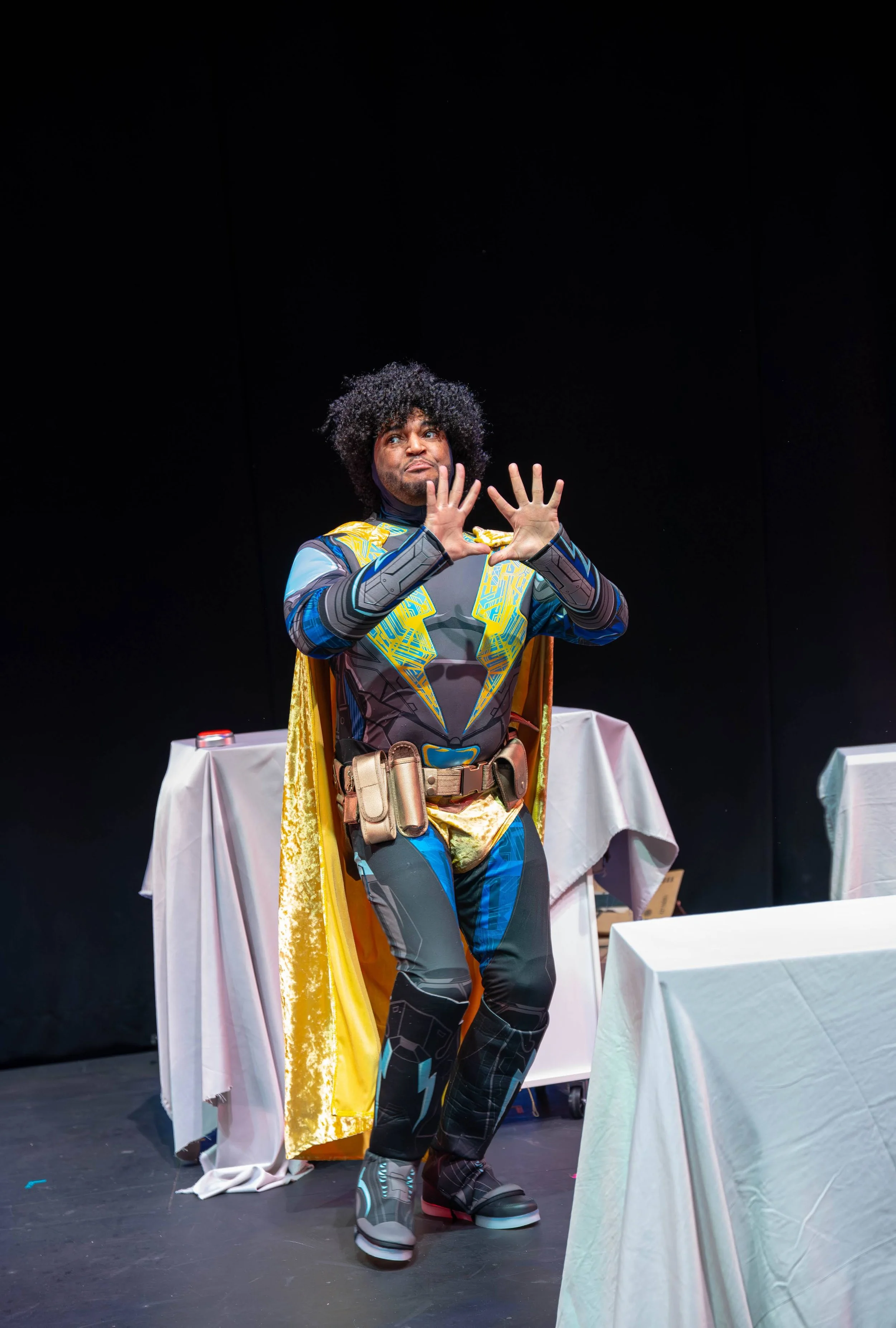
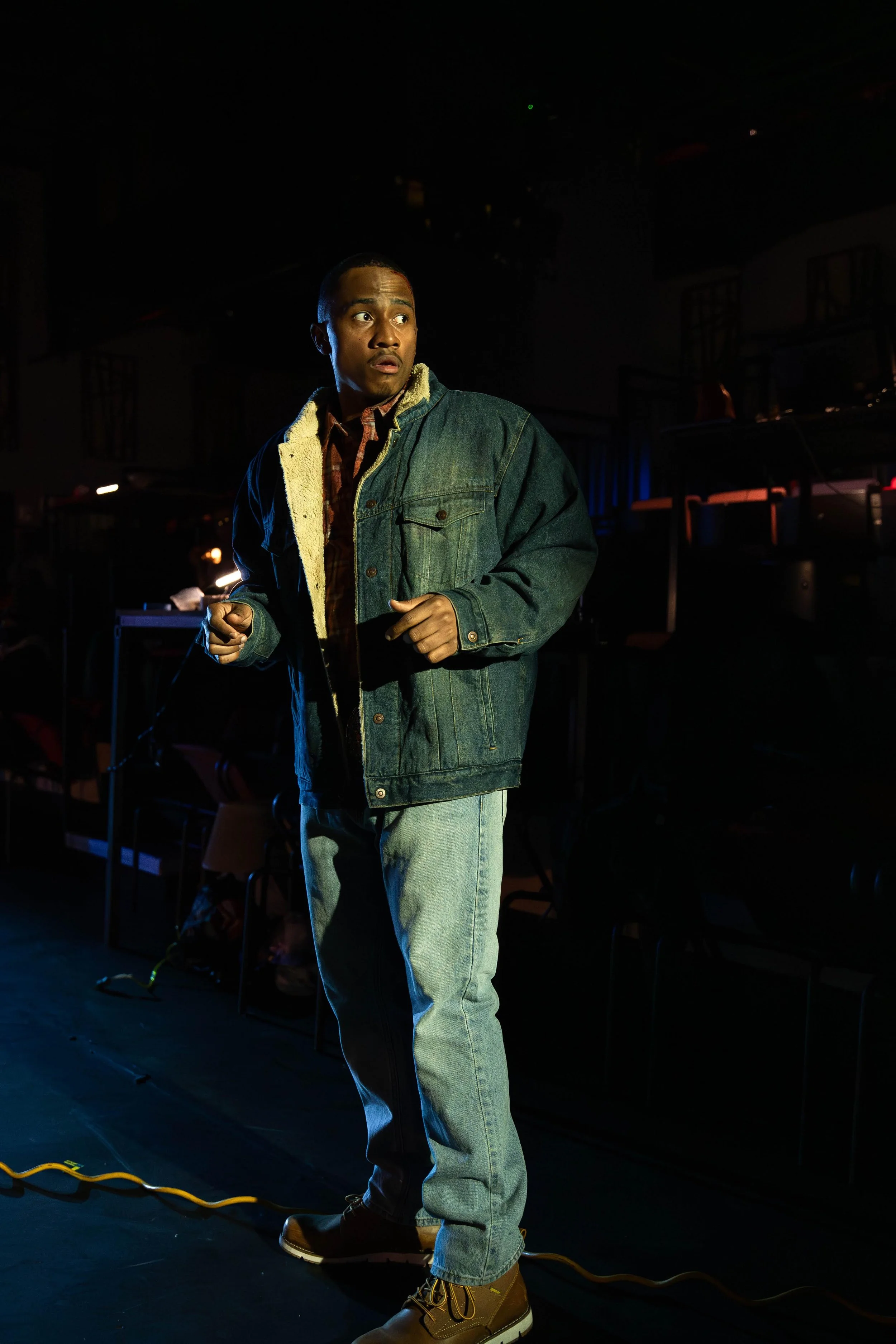
Photo Credit: Maya Jackson.
There’s a particular kind of excitement that comes from following a festival over time, knowing where it began, watching how it has grown, and recognizing the consistency of purpose that sustains it. Fire This Time Festival, now in its 17th season, continues to exemplify whathappens when mission, passion, and artistic rigor align.
From its early days in the East Village, a time many of us remember as emblematic of when artists made work wherever space could be found, Fire This Time has long served as a vital springboard for early-career playwrights. Seeing the festival now at the Jonelle Procope Theater at The Apollo Stages at The Victoria feels both earned and resonant. The journey from back rooms and storefronts to this beautiful,
state-of-the-art space reflects years of dedication to new work and
emerging voices.
The space itself is striking. A stage with raised seating and an audience on three sides creates multiple vantage points, paired with modular set pieces that were anything but generic. These elements transformed fluidly across all six short plays, functioning as both practical scenery and evocative design. The house was nearly full, and the audience energy was generous and engaged throughout.
The production was directed by Ken-Matt Martin, whose vision allowed each play to stand firmly on its own while also serving the larger arc of the program. His talent for storytelling across multiple theatrical styles was evident in the clarity, pacing, and cohesion of the entire evening.
Martin’s curation of the evening was one of its great strengths. The order of the pieces was both intentional and expressive. The program moved with purpose from satire to realism, from intimacy to absurdism, and from personal stories to collective memory. Each piece was stylistically distinct, thematically varied, and tonally unique, yet unified by authenticity and cultural urgency. The way the ensemble
rotated through the plays reinforced this cohesion, creating continuity while honoring the individuality of each story.
Lighting Designer Sim Carpenter, Scenic and Prop Designer Ezekel Claire, and Sound Designer G Clausen came together to fulfill that vision with precision and imagination. Their work created dynamic storytelling across the entire evening, with design elements that transformed fluidly from piece to piece, enhancing tone, mood, and narrative without ever overpowering the performances.
The cast, Malik Childs, Naomi Lorrain, Victor Musoni, Kareem Lucas, and Nikiya Mathis, carried the entire evening with remarkable range and generosity. Watching them move through multiple roles was both fun and impressive, a demanding feat that each actor met with clarity, specificity, and emotional truth. Malik Childs brought grounded authority and subtle humor to his work. Naomi Lorrain’s performances were layered, emotionally precise, and quietly devastating. Victor
Musoni shifted seamlessly between intensity and vulnerability. Kareem Lucas delivered sharp timing and deep presence. Nikiya Mathis brought warmth, strength, and emotional intelligence to each role she inhabited. Together, they formed a true ensemble. Just beautiful work.
The evening opened with Black To Save The Day by Preston Crowder, a sharp, tongue-in-cheek superhero satire that skewers gentrification, respectability politics, and the cost of selling out. As Sista Steel navigates the pull between community loyalty and personal advancement, the play sets the tone for the difficult conversations that follow, using humor as both entry point and critique.
Following that, White Diamond by Donathan Walters shifts the lens to grief, tradition, and generational tension as a mother and son confront what it means to be seen by family, by community, and by oneself. Beneath the search for a missing brooch lies a deeper excavation of identity, legacy, and love, layered with remarkable
economy and emotional resonance.
From there, the program flowed organically through realism, absurdism, intimacy, and memory. Everything But by Teniia Micazia Brown explores what is left unsaid, what is felt but not chosen, and what is ultimately lost when commitment wavers. It also reminds us that intimacy can be an enigma in the early stages of a relationship, where there can be claiming and denial in the same breath, and where desire and uncertainty coexist in complicated ways.
Clumsy by Mo Holmes presents an almost absurd premise, a jeep crashing into a woman’s kitchen. She responds by making grits for the driver who caused the accident. The question lingers throughout the piece: is this a memory or a dream? The play lives in that strange, tender space between shock, hospitality, and the human instinct to care for one another even in the midst of disruption.
DNR by Naomi Lorrain offers a poignant meditation on family, faith, and end-of-life decisions. It captures the emotional complexity that arises when loved ones believe they are acting out of care but are not always having the same conversation or honoring the same truths. These are stories we live through quietly. Seeing them named onstage feels both uncomfortable and necessary.
The evening closed with Goose by DeLane McDuffie, an ensemble-driven piece that proved to be a powerful and kinetic finale. Set on a bus filled with activists spanning generations, the choreography and blocking were so precise that the space fully transformed. We believed the bus, the movement, the urgency. The play asks vital questions about collective action, inherited struggle, and whose battles we choose to fight, offering no easy answers but plenty to reflect on.
Each piece stood confidently on its own, yet together they formed a cohesive whole, a collection bound by truth-telling, cultural interrogation, and the courage to sit in complexity. I genuinely did not have a favorite. Each play offered something different to hold onto.
Fire This Time Festival continues to prove not only why it has endured, but why it is necessary. In a cultural moment that demands both honesty and imagination, this festival does not flinch. It makes space for difficult conversations, bold theatrical language, and unapologetic storytelling. Seventeen seasons in, Fire This Time is not
just surviving. It is leading.
Click HERE for tickets.
Review by Malini Singh McDonald.
Published by Theatre Beyond Broadway on January 28th, 2026. All rights reserved.