Written by Jake Shore; Directed by Paul Smithyman
Chain Theatre | 312 W 36th St. 4th floor, New York, NY 10018
November 30th - December 12th, 2025
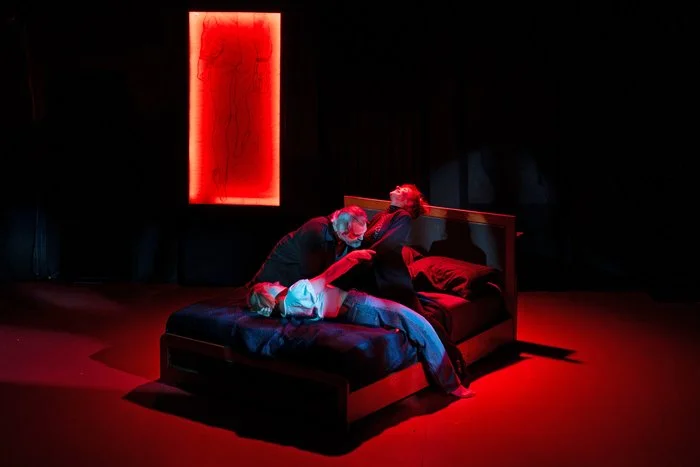
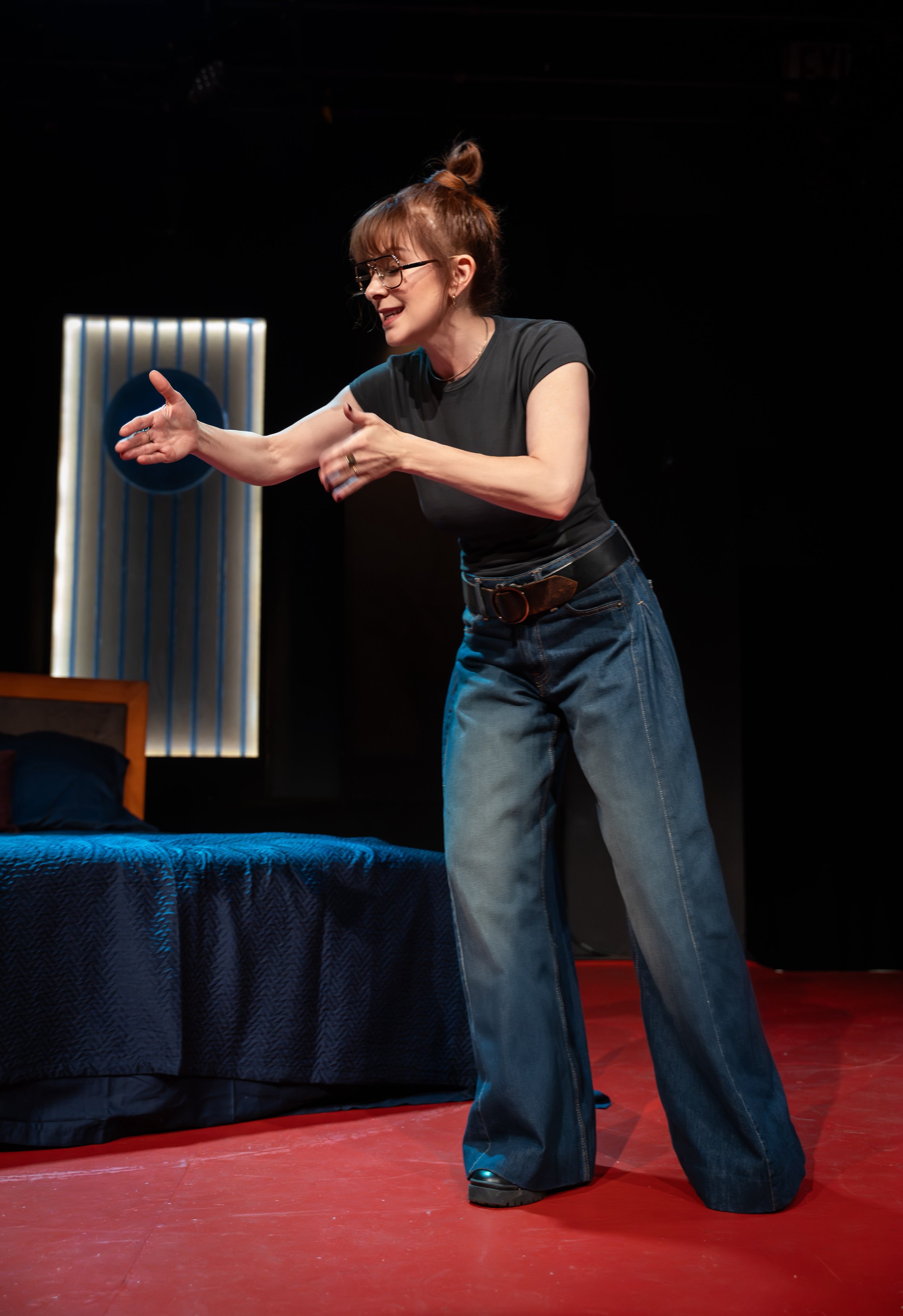
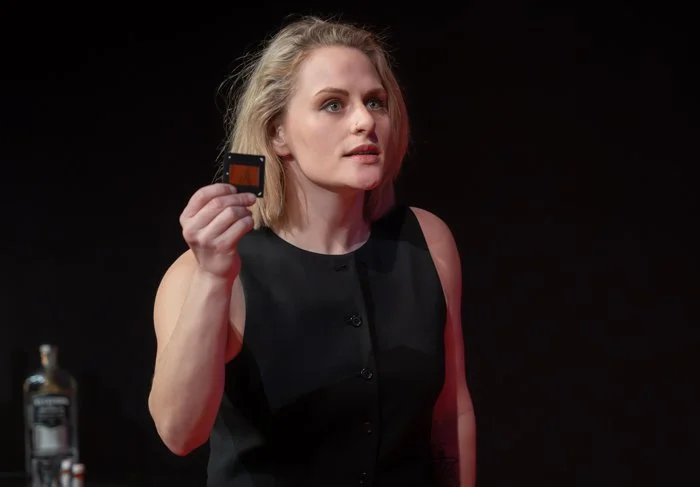
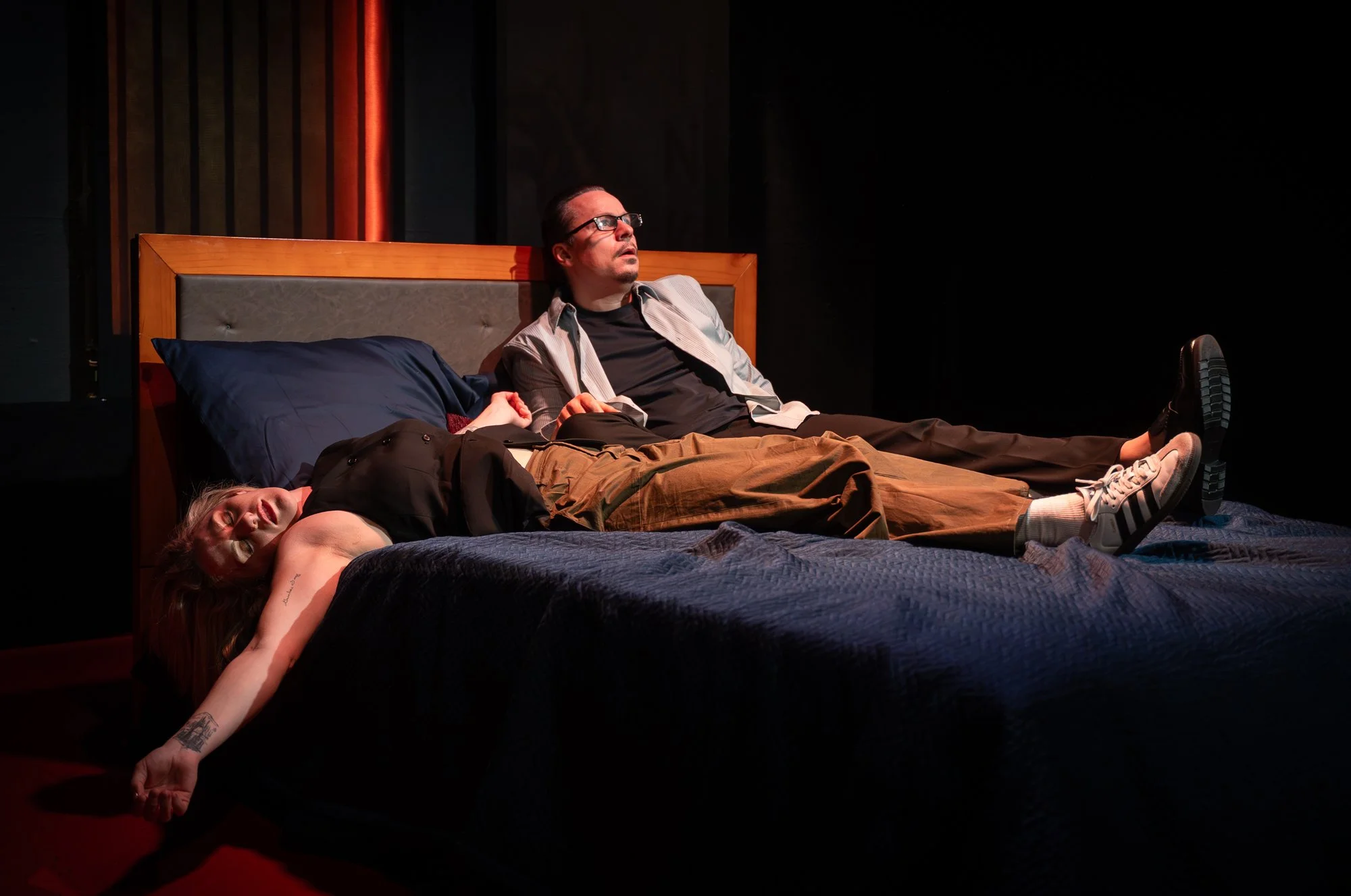
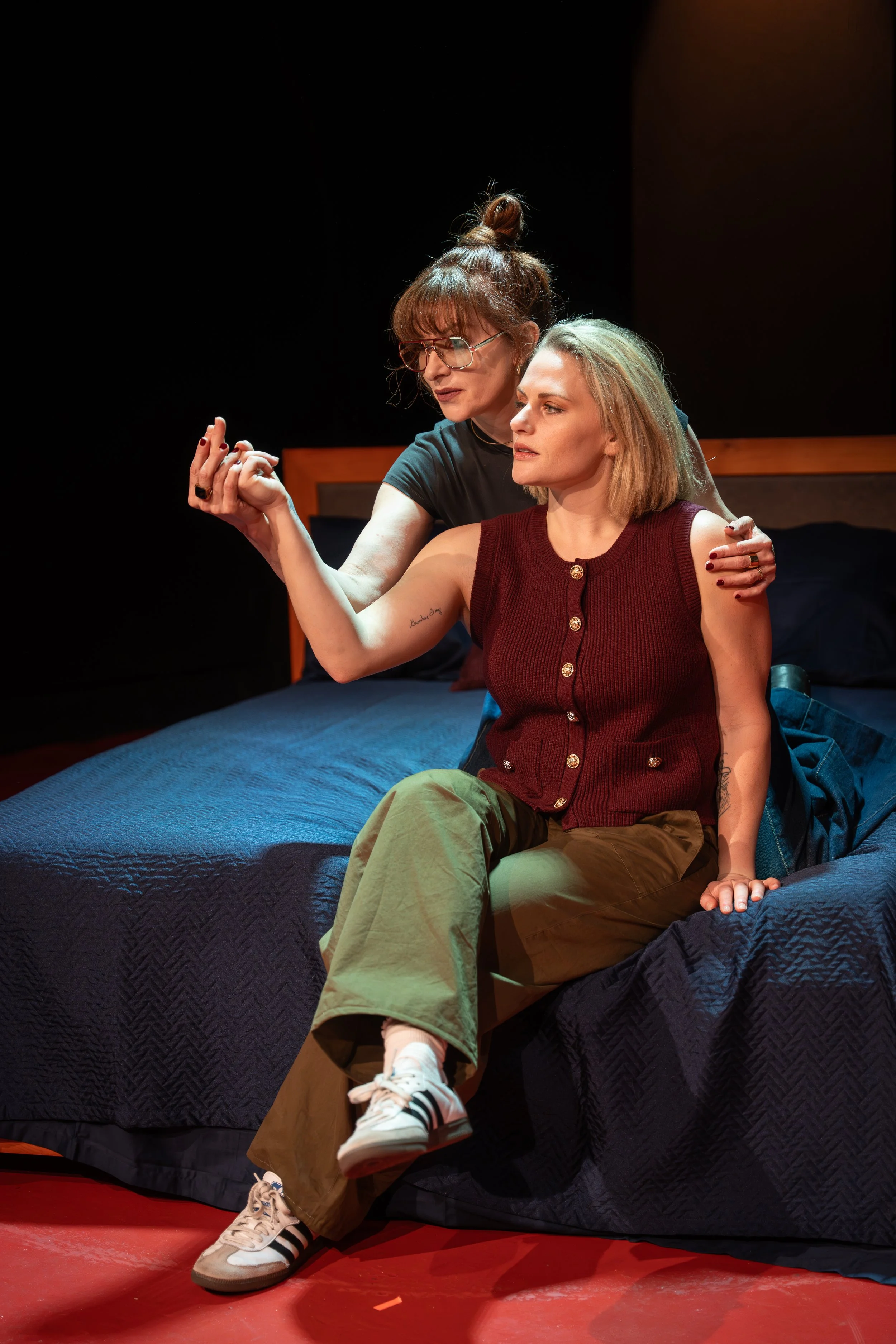
Photo Credit by John Robert Hoffman
When you arrive at the Chain and check-in with the box office, you will be handed a white envelope in which to seal your powered down phone for the duration of the performance. While I wish more theaters did this to protect us from folks lighting up the theater while the doom scrolling, this was done to protect the actors from intimate photos being shared with the world. This is where life imitates art - as one of the characters of the play snaps an intimate photo of a friend only to use it to further her career despite protest. You can’t trust anyone.
The six characters of the play are two couples, a gallery manager and an offstage dog. While I believe the original friendship is the two men, all become intimately acquainted. Kelly and Barry have a threesome with Anne while Joe is passed out. Kelly and Joe have sex on a later occasion and Anne decides she’s leaving Joe for Barry though no one is convinced Barry reciprocates Anne’s intensity. Even Barry and Joe have shared intimate moments earlier in their friendship. Each character has their moment of intoxication, infidelity and ugliness. In fact, I am hard pressed to come up with a redeemable quality for any of the characters. They are selfish, mean creatures. The dog that Joe reportedly cares so much for is never seen because he’s not allowed in the house because he’s sick. It’s no surprise that when Kelly snaps a photo of Anne during a drunken romp in the hay, that photo means more to her than anyone around her.
But any tension that could be built by this betrayal, Anne’s desire to not be compromised on public display, the secrets held by every variation of couple is lost because there is not one person the audience cares about. The play has no likeable characters. I’m trying to think of another story with such a set-up, but even in Macbeth you have hope that he might not become a monster driven by envy that he stops before it is too late. There’s a reason why no one has written The Four Iagos. If I want to watch people at their worst being monstrous to one another until everyone dies, I could simply watch the news. Is it worth it that the intersection of these four despicable souls has created a masterpiece? Sadly, it turns even the gallery manager into a monster happily profiting off the work's horrific backstory. Only the sickly little dog we never see might have a chance at redemption though he ultimately cannot escape the evil around him.
The director, not having a redeemable character among these selfish souls, decided to combat the issue by distracting the audience with sex and violence. Yes, yes, there is obviously sex and violence implied in the script. It is a provocative photo at the heart of the story. Yet, as I read the script there is no implicit call for nudity. I could even understand if the use of nudity was to portray Anne as vulnerable compared to the rest of the characters, but then how does one justify Kelly being naked a few scenes later? It felt more like a choice that since we have beautiful actresses let’s see as much of them as possible. On the other hand, the violence which was a necessary plot point, was the most well executed fight choreography I’d ever seen. Kudos to the Judi Lewis Ockler , the fight choreographer and to actors Sophie Moshofsky and Ryan Tramont for pulling it off. I just ask that they consider throwing a sheet over the corpse, so we don’t see the actor’s heaving diaphragm as they try to catch their breath from the epic battle post-mortem.
Iago never sees himself as evil. We are never the bad guy in our own story. To their credit, the actors in this production pull off both their bad behavior and justify it to themselves equally well. As the play begins, we know that Tramont’s Joe has done something awful. As we travel back in time through the play, we see his drunken, drug-addled selfishness lead him down a path where he cares more about money and reputation than the harm caused by his actions. Brad Fryman plays Barry completely devoid of any concept of reality. He shows no emotion at the loss of someone he reportedly cared for. His skill as a writer and new book are all that matter. Moshofsky’s infidelity which she does not regret leads to her image being exploited and used for the success of another. Unable to accept that this image could reveal her misdeeds, she stages an elaborate ruse to recover the single copy of the photo. Cady McClain defines Kelly with a sexual laissez faire. As puppetmaster, she manipulates everyone in her airspace all in a hope of having her success as a photographer eclipse her husband's success as a writer. Lady Macbeth shows more signs of regret.
As the play ends, Barry, an award winning author, is considering a new twist, a true revelation for the novel he is working on – a happy ending! But there is no happy ending for these characters, so if you’re in the market for miserable people behaving miserably, this production is for you.
Click HERE for tickets.
Review by Nicole Jesson.
Published by Theatre Beyond Broadway on December 6, 2025. All rights reserved.