
The Surgeon And Her Daughters
Written by Chris Gabo; Directed by Adrienne Campbell-Holt
Theatre 154 | 154 Christopher Street, New York, NY 10014
November 23 - December 20, 2025
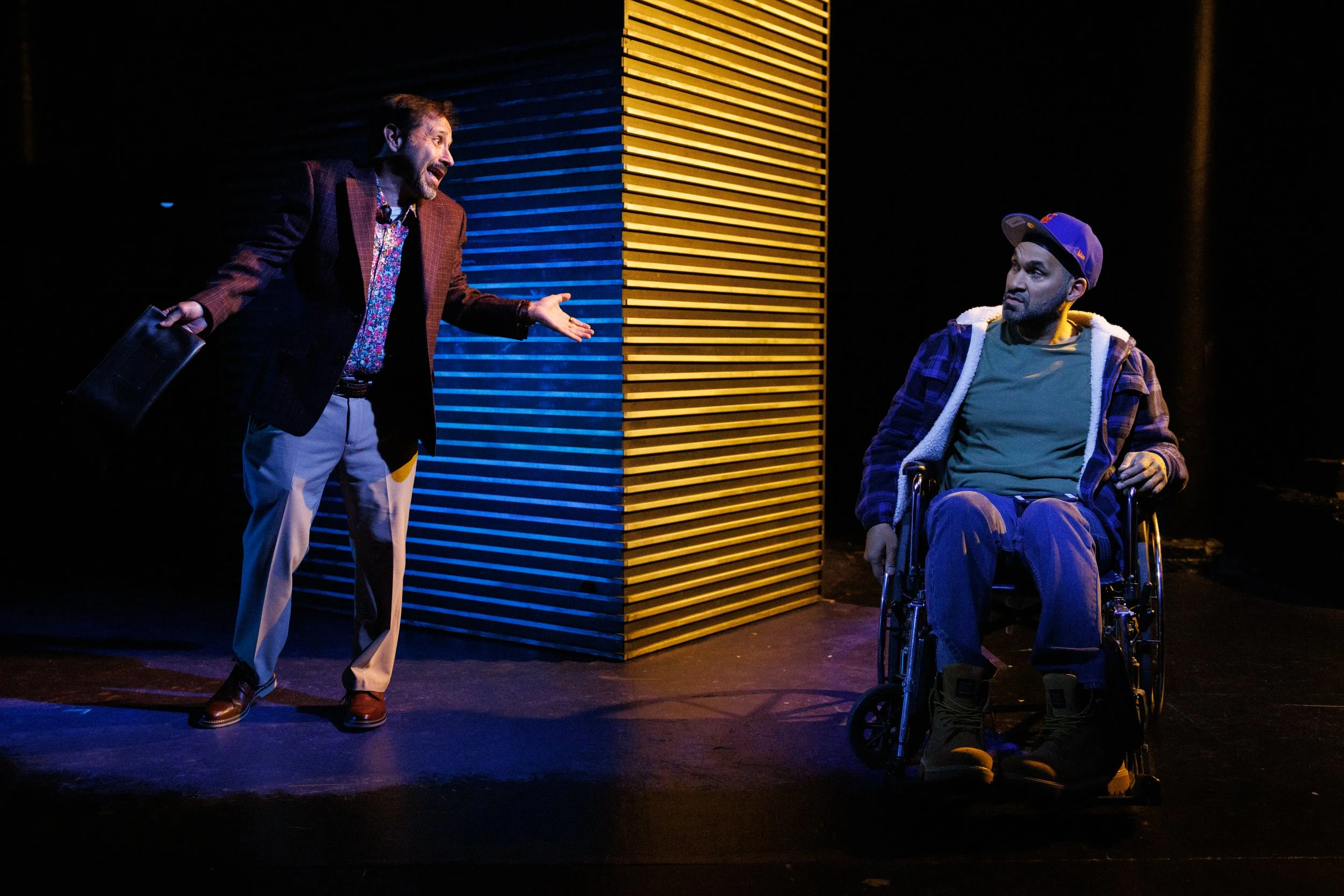
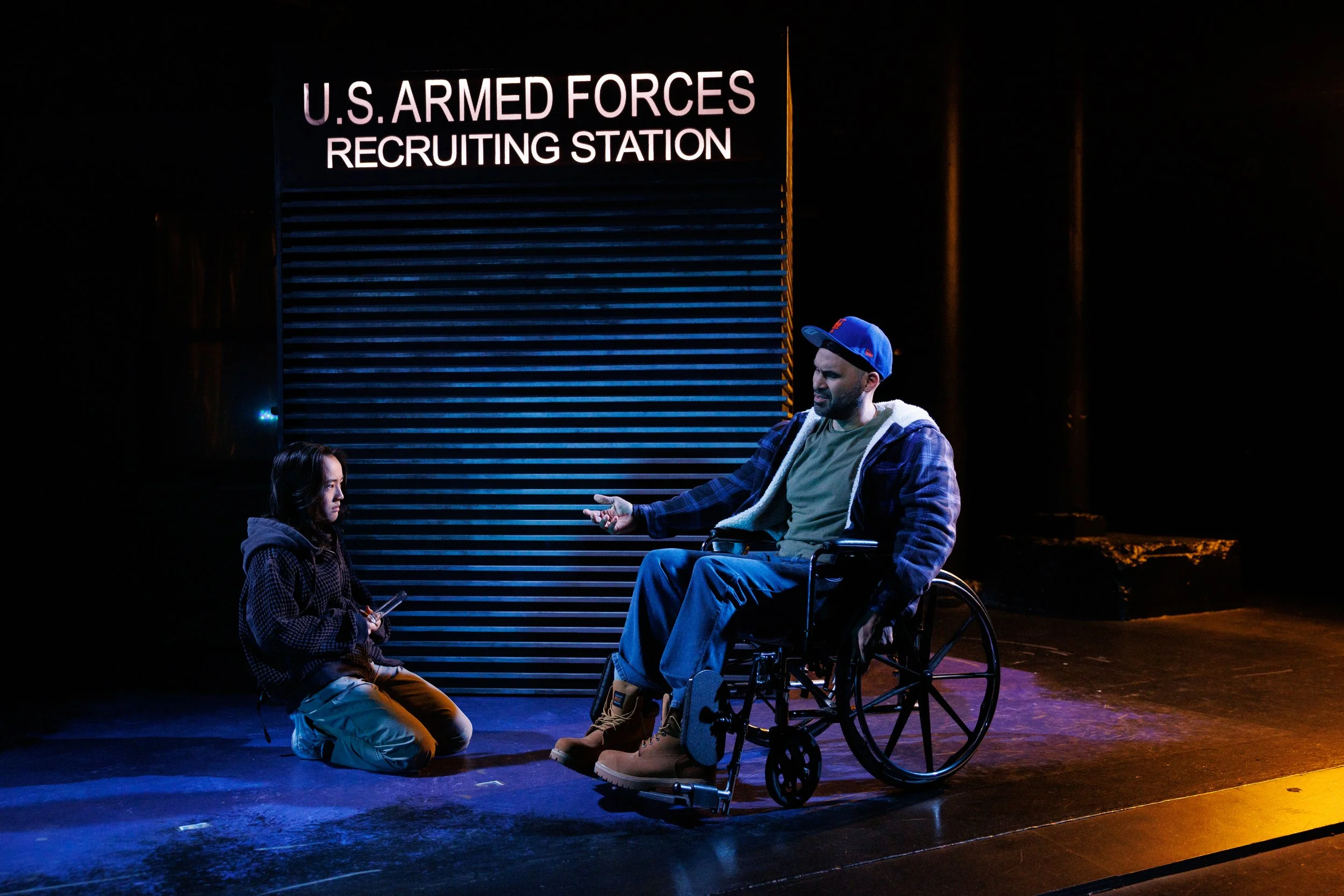
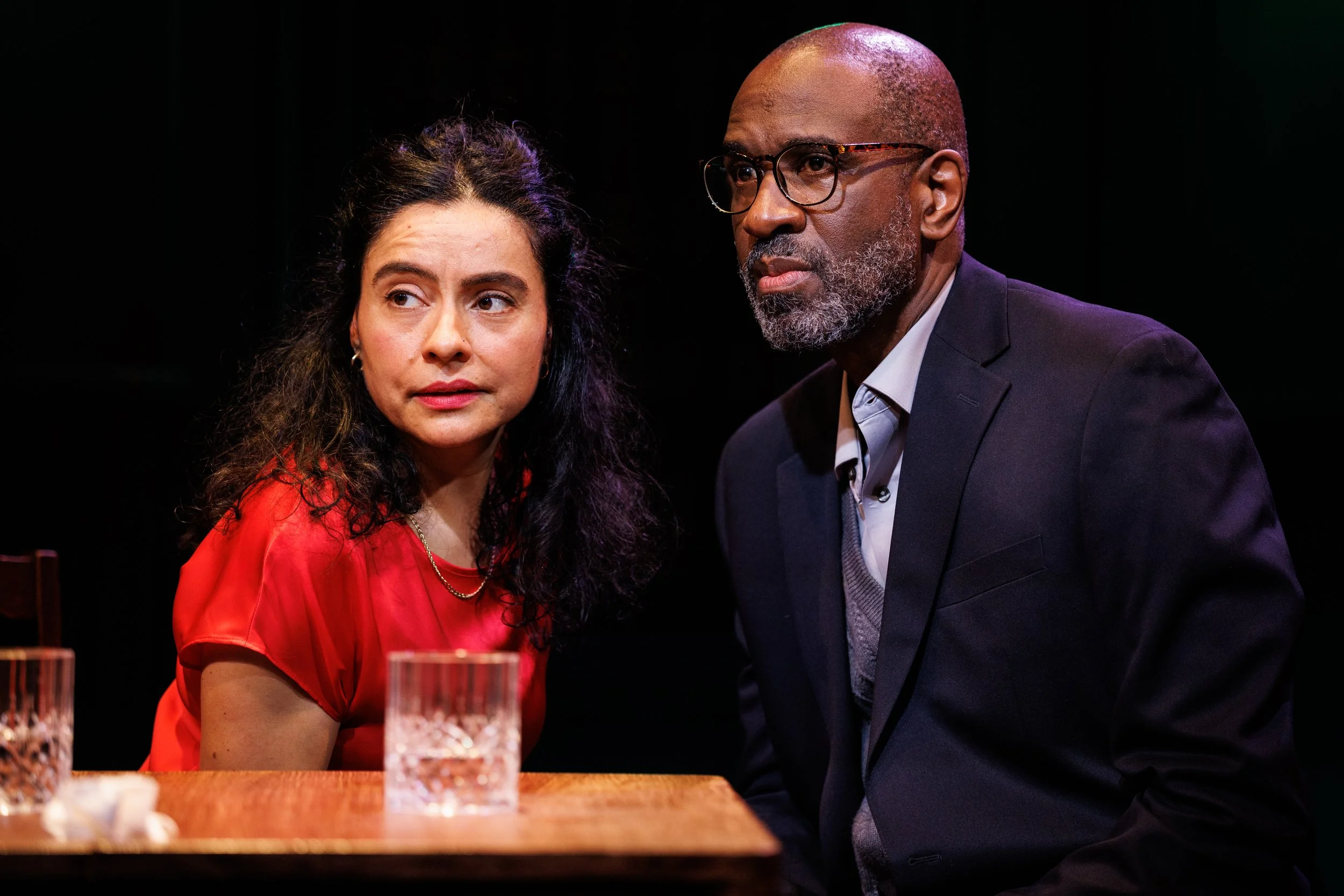
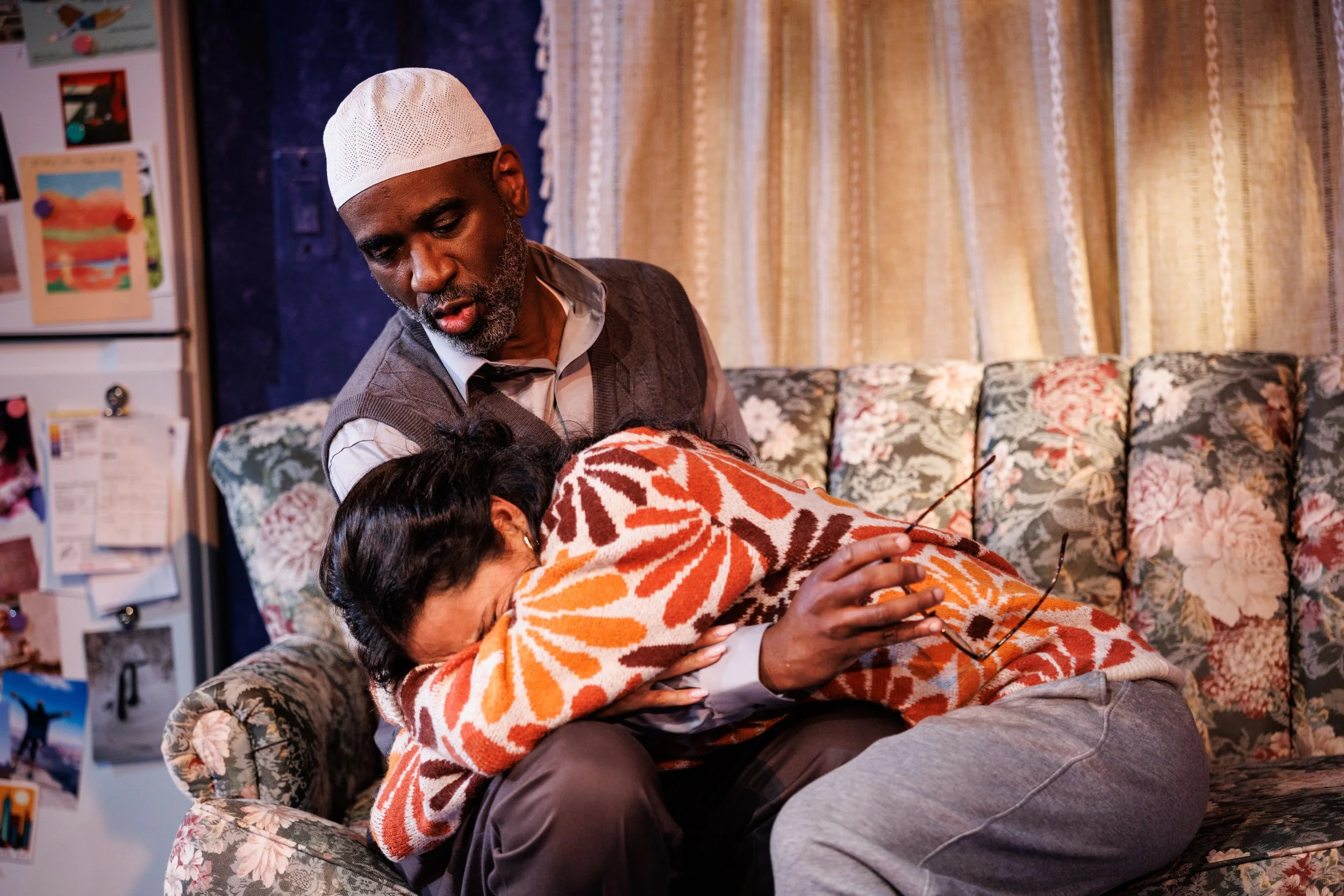
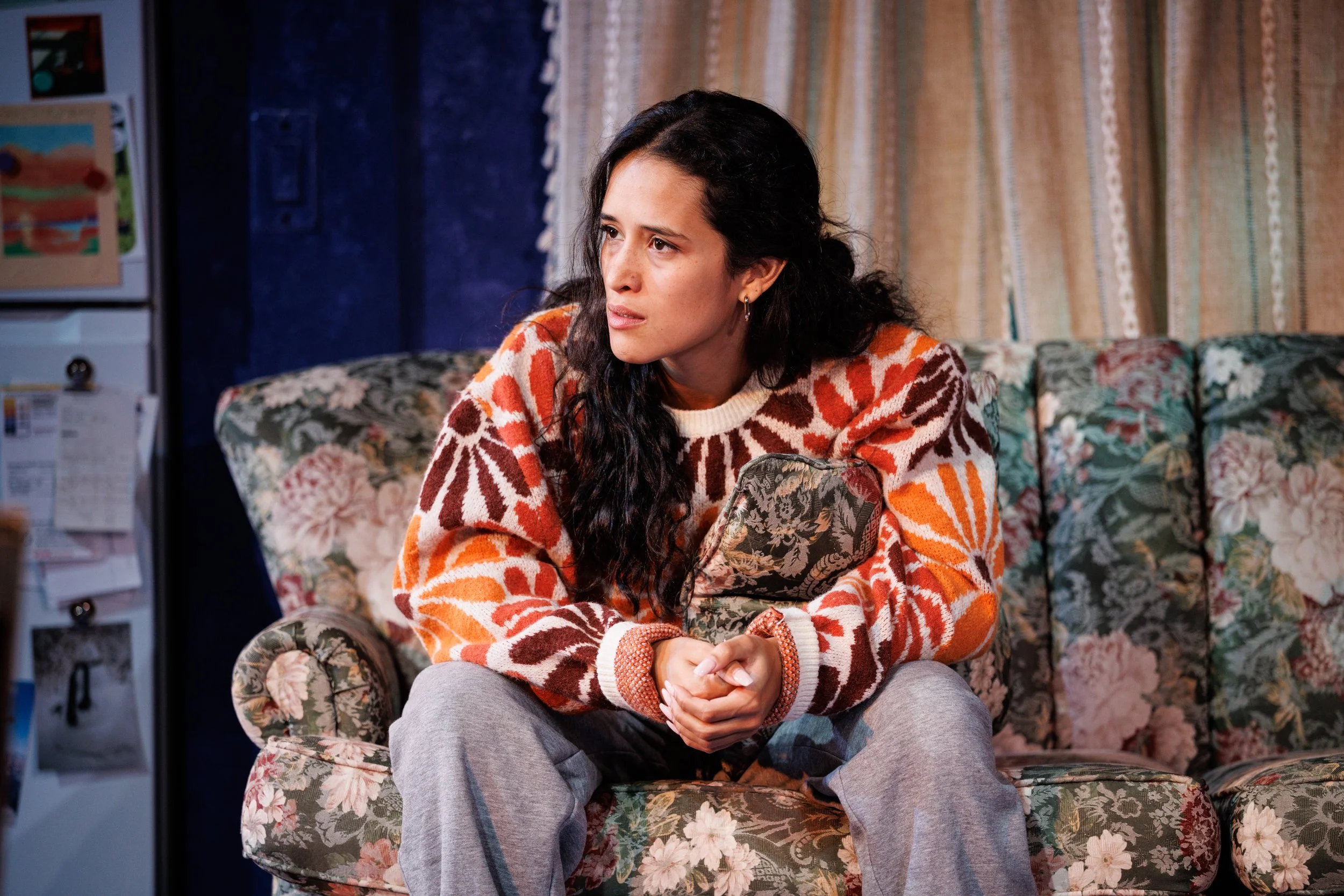
Photo Credit: Maria Baranova
In The Surgeon and Her Daughters, Chris Gabo offers up a theatrical banquet so prodigious, so overflowing with rhetorical carbohydrates and dramaturgical fats, that one feels almost challenged—dared, even—to consume it whole. It is a play that lurches toward you with the expansive appetites of a bygone era, stuffed to bursting with declamatory speeches, volcanic emotions, and characters who seem constitutionally incapable of speaking in anything other than cathartic monologues. Its sheer bulk threatens collapse. At times one worries it will succumb to the structural equivalent of organ failure. And yet—miraculously, perversely—just when the whole edifice appears to have wandered into narrative quicksand, Gabo produces some shimmering shard of dialogue, some implausible-but-undeniably-effective twist, and the pulse quickens anew. It is an ungainly, galloping beast of a work, but a vital one, announcing a writer who, though still learning to domesticate his theatrical instincts, already possesses a voice unmistakably his own.
The titular surgeon, Mohammed-Ahmed, a middle-aged Sudanese émigré whose past is an uncharted trauma terrain, drifts into a Times Square bar and into the orbit of Mariana, a motor-mouthed single mother whose military résumé is treated by the playwright with a frustrating vagueness—its particulars shifting with the dramaturgical weather. Their meet-cute is memorable less for its romance than for Mohammed-Ahmed’s panicked conviction that he is mid–cardiac arrest. Mariana, half-seductress and half–combat medic, talks him down with such disarming élan that one understands his subsequent enthrallment.
It begins with an almost mythic crackle, as though the theatrical gods themselves were clearing their throats. Mohammed—played with trembling gravitas by Brian D. Coats—staggers into a Times Square watering hole as if it were the last sanctuary on earth. Before we can fully register his distress, lighting designer Reza Behjat yanks our gaze, like a marionette string, toward the opposite side of the stage. There stands Mariana (Liza Fernandez), downing her liquid fortification with the gusto of a woman determined to outrun her own pulse.
This mumbling stranger, clutching at his chest and muttering in Arabic, is—implausibly but unmistakably—the lodestone of her suddenly awakened desire. She too is a healer, though of a more martial persuasion: an army medic whose bedside manner leans heavily on bravado. Awkwardness, it seems, is their shared love language. After several minutes of Mariana’s boozy self-mythologizing and Mohammed-Ahmed’s fragile stabs at undergraduate lyricism, the stars themselves appear to gather in an astral committee and issue their unanimous decree: these two are going to couple with the inevitability of a Greek tragedy and the enthusiasm of a late-night rom-com.
Mariana, a dazzling geyser of self-mythologizing verbiage, joins the lineage of Gabo’s compulsive talkers. Her lines drip with a ripeness at once comic and carnivorous: “I am competitively hot,” she crows, proceeding to unfurl a boastful autobiography in the key of Ozone Park bravado. She is, she assures us, “a fucking dandelion in heat”—a botanical metaphor for desire so extravagant one can almost hear the audience’s collective eyebrows rising. Mohammed-Ahmed, kindled and terrified by this erotic tempest, murmurs that “it would take me till sunrise to get…hard,” a line that could have escaped from a lost Neil LaBute or John Patrick Shanley manuscript—and indeed both playwrights’ colorful use of language hovers amiably as dramatic influences over much of the evening. Gabo’s literary ancestry is proudly worn and unmistakably New York.
Morning brings with it a radiant, borderline deranged glow of post-coital triumph as Mariana bursts into her Astoria kitchen, fizzing like shaken seltzer. Her adult daughters—Celia (Yadira Guevara) and Ashley (Kana Seiki)—pounce with forensic enthusiasm, grilling her over chocolate chip pancakes and bacon. Scenic designer Tatiana Kahvegian, not one to resist a sensory flourish, provides a functioning stove on her rotating set, allowing the scent of frying bacon to waft into the house like an olfactory overture. It’s a rare moment in contemporary theater when dramaturgy is aided by breakfast.
Giggles ripple through the room until Mariana detonates her news with the precision of someone who knows exactly how to ruin a morning: she is being redeployed, mere inches from retirement. The mood shifts from sitcom froth to operatic indictment in a heartbeat. Celia, whose moral rectitude seems to have been honed on a whetstone, launches into a blistering lecture about her mother’s complicity in the machinery of empire—an indictment delivered, it must be noted, over a plate of ethically questionable bananas and chocolate. And then, with the solemnity of a witch marking a boundary in salt, she pronounces her curse: “If by some miscarriage of fate, that you invited—you end up dying…for them. I will never—ever—forgive you.” The theatrical crystal ball barely needs polishing to predict what narrative storm clouds gather next; Gabo plants his omens with the subtlety of a brass band. The tension of that curse lingers in the air—heavy, humming, and entirely irresistible.
From Queens, where Mariana spars with her combative daughters (the older a budding orator, the younger an aspiring dancer perpetually shrouded in a scowl), to Midtown, where Mohammed-Ahmed now ekes out a living as a sandwich-board sentinel for an “Irish” bar owned by a Mexican immigrant masquerading as Mr. O’Halleron, the play disperses itself across the city like a fever dream of intersecting fates. Gabo populates his world with Dickensian exuberance, if Dickens had been raised on contemporary spoken-word poetry and late-night subway rants. Each new character strides in bearing a steamer trunk of backstory and a monologue ready to detonate. Isaiah, the wheelchair-using philosopher-knave with a tragic past cemented by a fall from a window washing gig while pursuing a career in modern dance, may be the most egregious example of this dramaturgical maximalism—though the toxic, bile-spewing O’Halleron gives him stiff competition.
By the second act, the proliferation of tangents threatens to capsize the plot entirely. One occasionally wonders if the true subject of the play is simply Gabo’s inability to silence any character long enough for the story to advance. The coincidences, too, pile up with preposterous abundance: Times Square becomes a village green where destiny, apparently short-staffed, keeps recycling the same handful of souls. One senses the playwright’s deep affection for every figment he has created, but affection is not a replacement for dramaturgical restraint.
Director Adrienne Campbell-Holt, confronted with this torrent of material, does what any seasoned general might do: she fortifies the trenches of the one-on-one confrontations and lets the actors fire at will. If Campbell-Holt cannot, despite her best exertions, inflate the play’s overarching dramatic architecture to match the operatic ambitions of the text, she nevertheless marshals its innumerable one-on-one skirmishes with an invigorating, almost athletic brio. In these tightly drawn duels—verbal, emotional, occasionally metaphysical—her staging finds its clearest pulse. Fortunately, she is blessed with a company whose heart and dexterity render them equal to Gabo’s luxuriantly overgrown speeches. These actors do not merely deliver monologues; they surf them, riding each billowing crest of language as though it were the most natural thing in the world.
Fernandez makes Mariana a combustible cocktail of bravado and bruised longing. Coats lends Mohammed-Ahmed an exquisite melancholy, the kind that suggests a man who has bargained with God too many times to count. Eden Marryshow’s Isaiah steals scenes with a deftness that borders on larceny, his sharp-tongued lectures cutting through the surrounding excess. Johnny Sánchez, as O’Halleron, transforms a caricature into something like a folk demon of capitalist contempt. Meanwhile, Seiki and Guevara, as Ashley and Cecilia, wrestle valiantly with writing that skews their grief into shrillness—an indication, perhaps, that Gabo’s fluency falters with characters not yet battered by adulthood.
The design elements buttress the production with unfussy, street-level grit. Kahvegian’s turntable-mounted cube of a set offers a kind of urban centrifuge, spinning the characters through their intersecting miseries. Behjat’s lighting widens and contracts the world like a diaphragm responding to breath, while Sarita P. Fellows' costumes chart the socioeconomic cartography of Gabo’s New York with quiet accuracy. Salvador Zamora’s sound design—rainstorms, street noise, bar-room murmurations—gives the play its ambient respiration.
When the sprawling ensemble ultimately converges in Mariana’s kitchen—an accidental family, or the shards of one—Gabo grants Mohammed-Ahmed the final soliloquy, a wrenching invocation of a past only half-glimpsed. The play’s dénouement is undeniably moving, a volcanic surge of emotion that briefly eclipses the longueurs that preceded it. One leaves both exhilarated and exhausted, ears still ringing with the linguistic fusillade.
The Surgeon and Her Daughters is, in the end, a study in theatrical overabundance: a contemporary fable stitched from nightmare and tenderness, shaped by headlines yet spoken in an almost operatic dialect all its own. It exasperates, seduces, bewilders, and enthralls—often within the same breath. And if it talks one’s ear off, well, those ears will likely be waiting, curious, for whatever Chris Gabo has to say next.
Click HERE for tickets.
Review by Tony Marinelli.
Published by Theatre Beyond Broadway on December 12, 2025. All rights reserved.