The Tempest
Presented by Teatro Grattacielo; Music by Joseph Summer; Libretto by Eve Summer, adapted from the play by William Shakespeare; Directed by Stefanos Koroneos; Conducted by Enrico Fagone
Shares at La MaMa, Ellen Stewart Theater, 66 East 4th Street, in Manhattan
Thursday July 16 @ 7:00pm Saturday July 18 @ 3:00pm, 2026
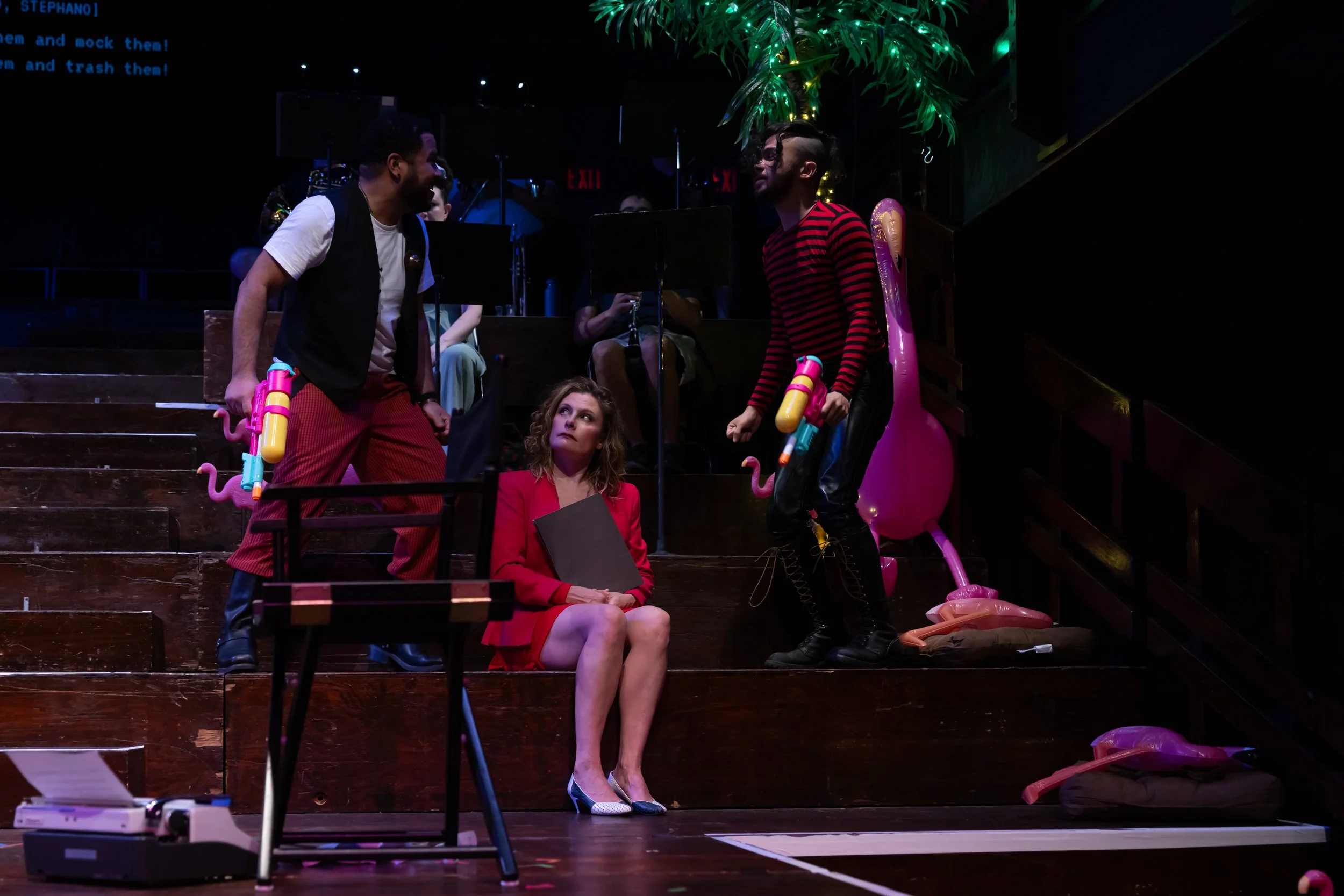
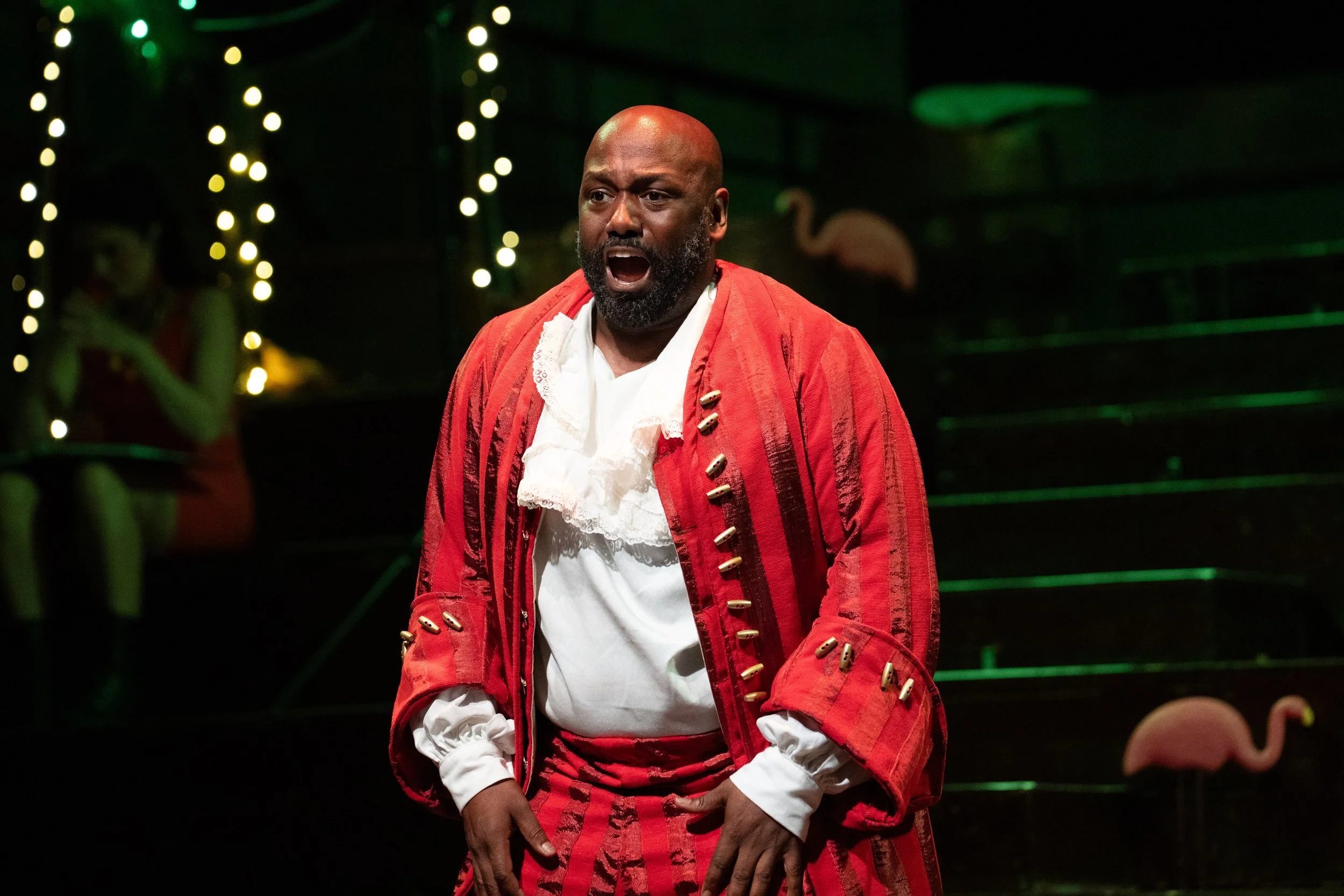
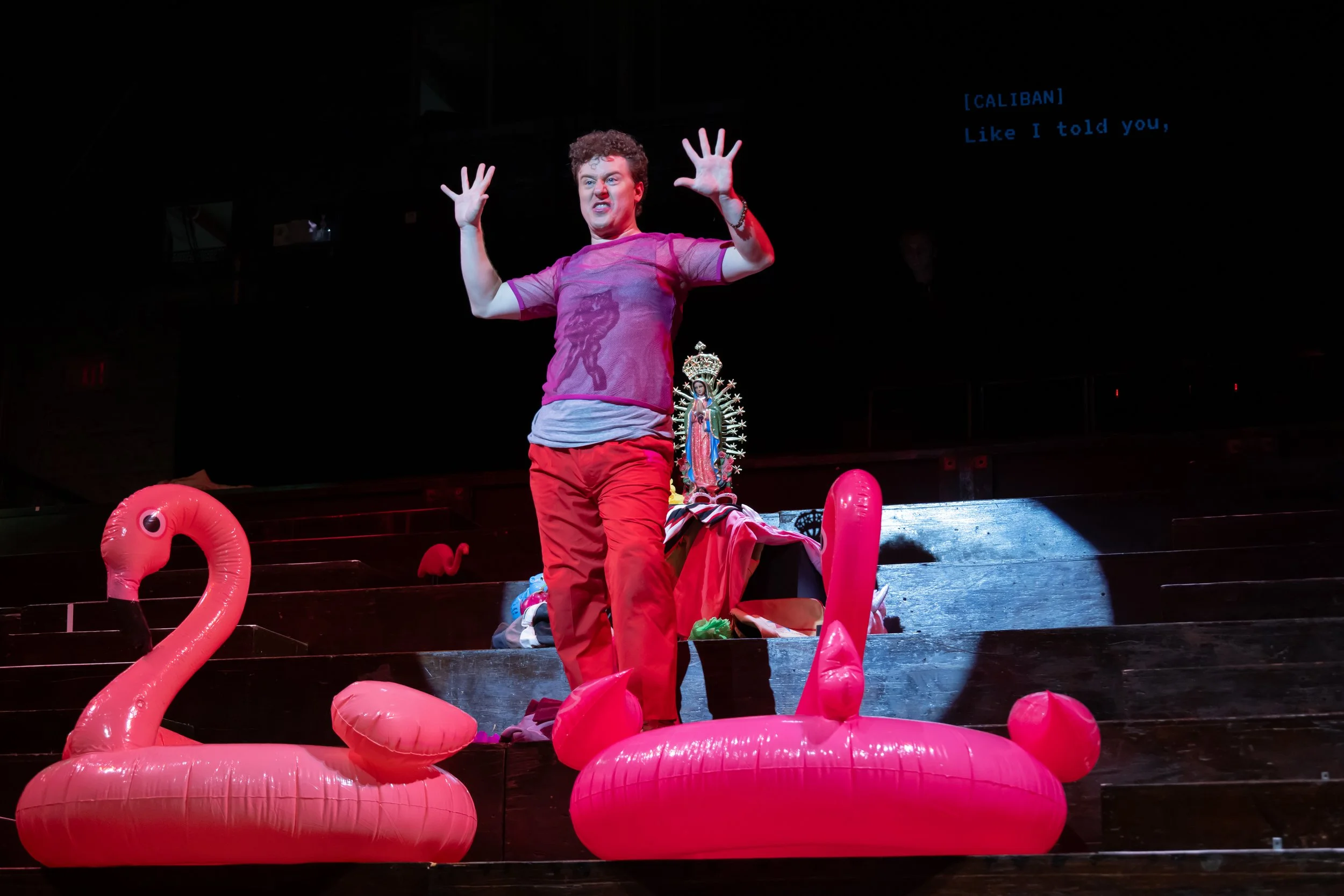
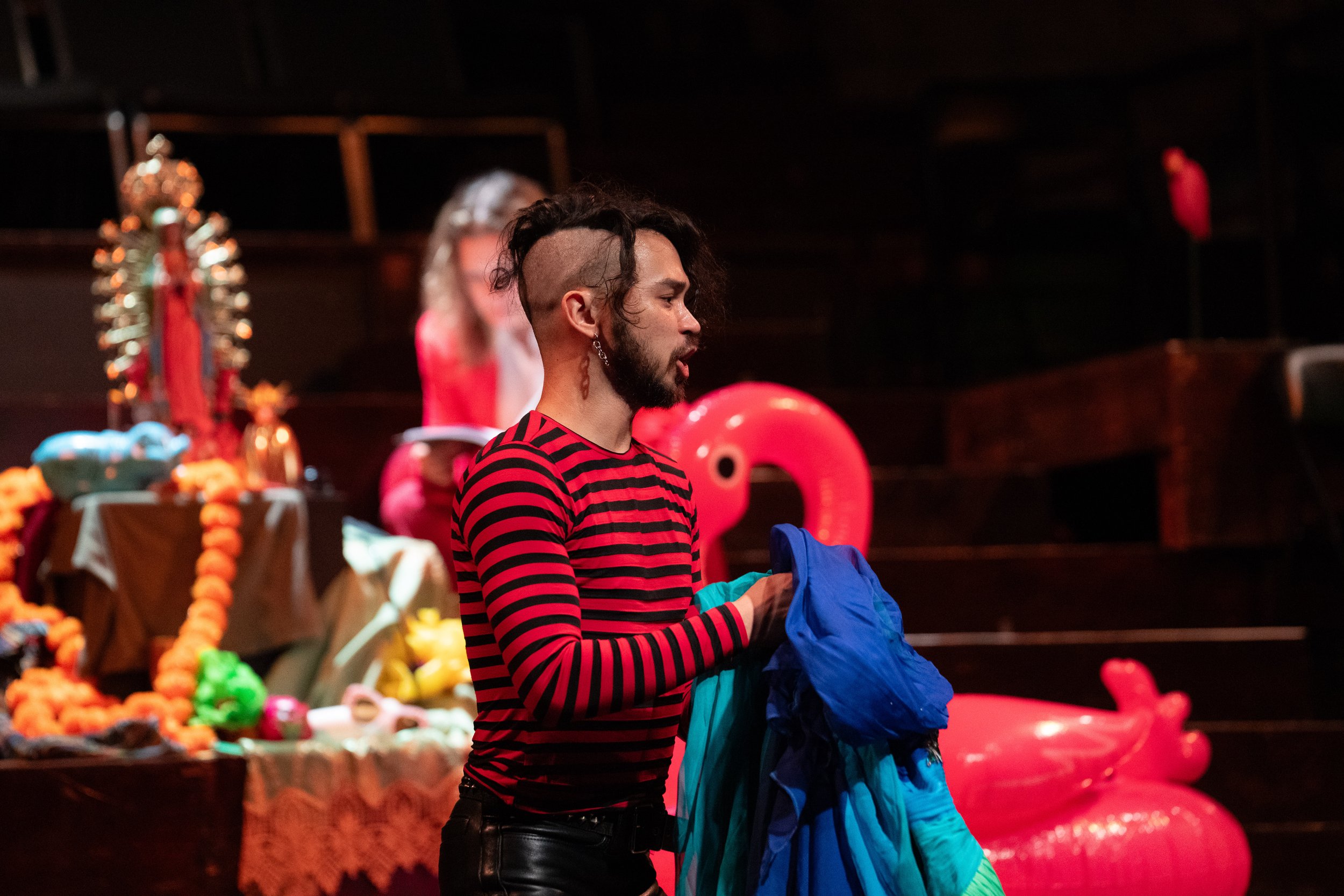
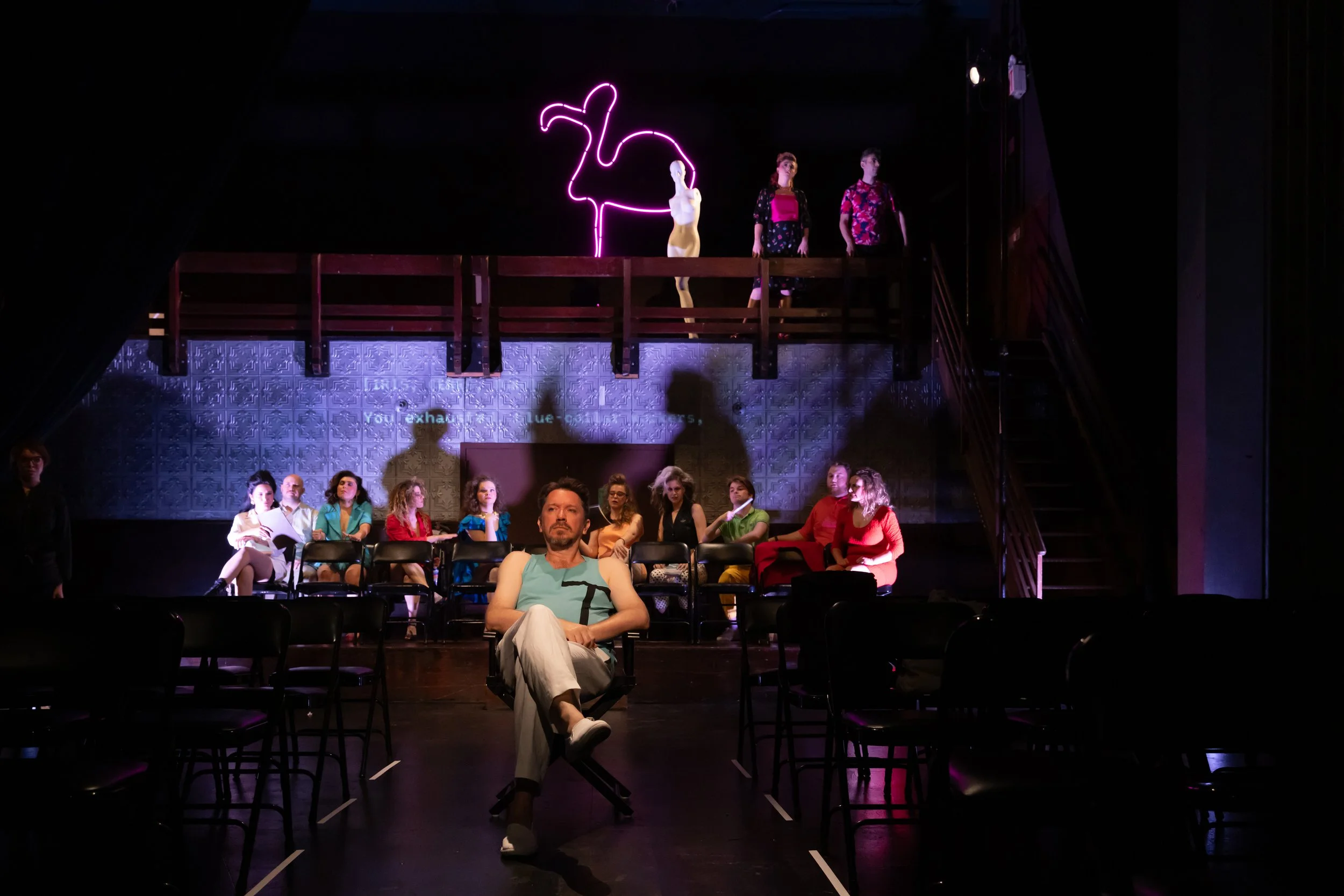
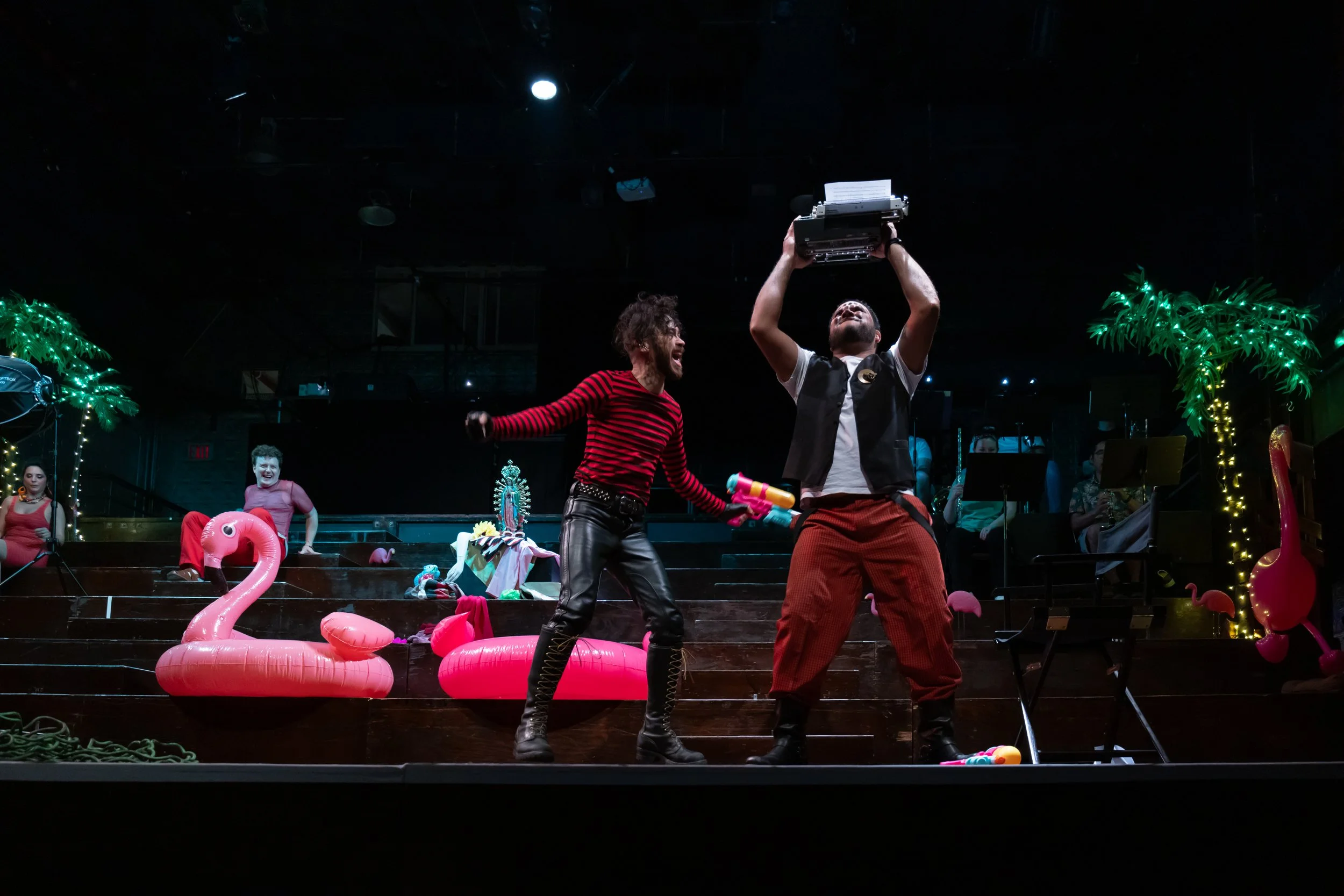
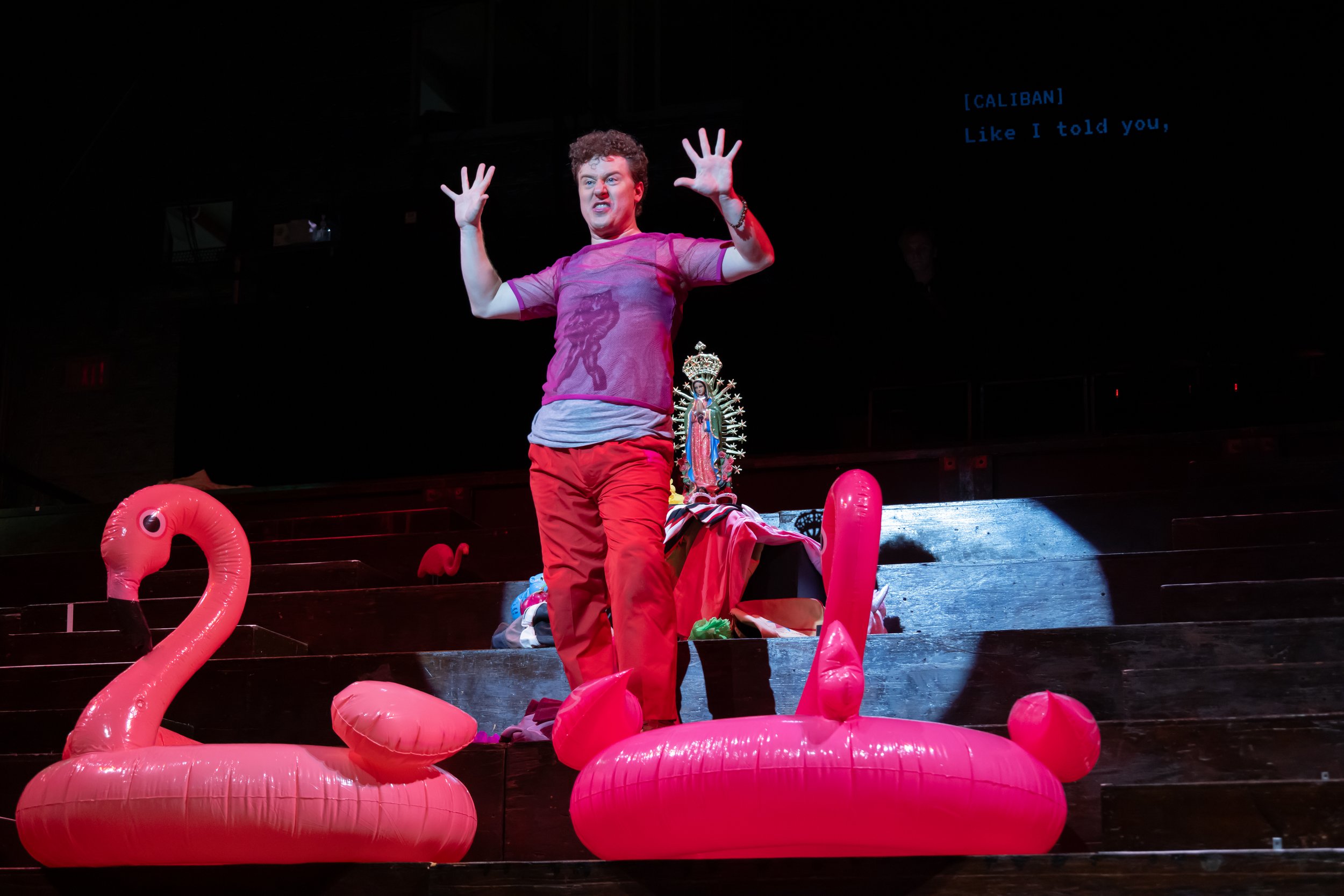
Photo Credit: Jennifer Katzman
Joseph Summer's The Tempest, presented by Teatro Grattacielo at La MaMa's Ellen Stewart Theatre, arrives not as another dutiful operatic treatment of Shakespeare but as an ambitious meditation on authorship itself. Opera has always found Shakespeare both irresistible and elusive. Too often composers either embalm the language beneath lush orchestration or reduce it to a scaffold for spectacle. Summer, with a libretto by his daughter Eve Summer, seeks another path, one in which music and drama exist in conversation rather than competition. The result is an evening that may surprise even devoted Shakespeareans, not because it slavishly reproduces The Tempest, but because it asks what the play might reveal when filtered through the peculiar alchemy of opera.
That question finds its fullest expression in Stefanos Koroneos' intellectually adventurous staging. His production refuses the easy enchantments of a magical island. Instead, Prospero inhabits the decaying shell of a 1980s film studio, a landscape assembled from inflatable palms, plastic flamingos, faded vinyl, dangling vines, harsh artificial lighting, and the detritus of manufactured fantasy. At first glance the concept appears almost defiantly kitschy. Yet as the evening unfolds, its melancholy logic becomes increasingly persuasive. This is no tropical paradise but a memory factory, a place where illusion has become exhausted by repetition and where imagination itself has begun to decay.
Koroneos' accompanying director's note proves invaluable because it reveals that every visual choice serves a larger philosophical argument. His Prospero is less a sorcerer than a filmmaker—or perhaps any artist—incapable of relinquishing authorship. Shakespeare's magician, after all, spends the play orchestrating encounters, manipulating emotions, directing every movement of those around him. Koroneos simply extends that instinct into the language of cinema. Prospero hammers away at an old typewriter, scripts replacing spell books, while a camera silently records his carefully manufactured reality. The enchanted island becomes a soundstage where identity itself is performed, desire continually rewrites the script, and even gender appears as something fluid, provisional, and theatrical. It is a provocative reading that locates the play's deepest conflict not in magic but in the corrosive hunger to control both art and life.
Perhaps the production's most resonant insight is its understanding that illusion grows sadder rather than grander as it accumulates. The synthetic jungle slowly overruns the abandoned studio, yet every inflatable palm and glowing plastic ornament only underscores the fragility of Prospero's carefully constructed universe. Koroneos suggests that artists inevitably risk sacrificing those closest to them in pursuit of perfect control. The evening therefore becomes less a fantasy than an elegy for authorship itself. By the time Prospero must finally lay down his pen—as Shakespeare's original lays aside his staff—the gesture feels not merely like forgiveness but like artistic surrender: the painful recognition that stories, like children, must eventually exist beyond their creator's command.
Eve Summer's libretto embraces that interpretive freedom without severing its roots in Shakespeare. Rather than preserving every celebrated speech, she distills the original into lyrical episodes that privilege emotional movement over textual fidelity. Supertitles translate the Shakespearean texts into more colloquial language; this may be jarring at first, as one tends to look for exact replication even if it is “English.” Additional appearances by mythological figures such as Iris, Ceres, Juno, and other classical spirits expand the work's operatic dimensions, creating an atmosphere where Renaissance drama mingles comfortably with mythic ritual. Purists expecting Shakespeare's familiar architecture may occasionally find themselves reorienting their expectations, but the libretto consistently strives toward its own dramatic integrity, allowing Joseph Summer's score to breathe with uncommon independence.
Summer's music repays close listening. Its opening pages evoke a restless, watery atmosphere before gradually venturing into more angular harmonic territory, always remaining tethered to dramatic expression rather than mere sonic display. Particularly memorable is the radiant masque in the second act, where Iris, Ceres, and Juno receive music of Straussian amplitude and shimmering lyricism that becomes one of the evening's undeniable musical high points. Throughout, conductor Enrico Fagone leads the orchestra with admirable confidence and sensitivity, shaping the score with elegance and avoiding the temptation to overwhelm the singers, allowing the emotional currents beneath the music to emerge naturally.
The cast responds with impressive commitment to this unusual theatrical vision. Bass-baritone Daniel Klein gives Prospero a quiet authority that favors introspection over bombast, charting the character's difficult passage from bitterness toward mercy with understated dignity. Mezzo-soprano Kayla Viviana lends Ariel an ethereal grace and vocal agility that perfectly complements the spirit's elusive nature, while soprano Sara Kennedy and tenor Omar Najmi provide warmth and sincerity as Miranda and Ferdinand, grounding the production's more conceptual impulses in recognizably human affection. Bass Benjamin Sieverding's Caliban avoids caricature altogether, revealing the wounded soul beneath the monster with moving emotional complexity. Sopranos Maggie Finnegan, Sarah Johnson and mezzo-soprano Chantelle Grant make an especially distinguished impression in the masque sequence, their luminous ensemble singing offering one of the opera's richest musical rewards. Jordan Rutter-Covatto fashions Trinculo into a delightfully eccentric presence, his distinctive lighter countertenor lending the court fool an ethereal buoyancy that floats gracefully above the surrounding gravitas. Elsewhere, the remaining principals acquit themselves admirably despite having comparatively little opportunity to leave individual marks, including bass-baritone Eliam Ramos as the convivial butler Stephano, tenor David Gordon as the scheming Sebastian, baritone Justin Ryan as the treacherous Antonio, and bass DeAndre Simmons as the dignified King Alonso. Around them, an expansive ensemble performs with evident discipline and cohesion, reinforcing the production's impressive musical standards.
The visual collaborators contribute substantially to the production's distinctive atmosphere. Oscar Escobedo's scenic design transforms La MaMa’s stadium seating into an unstable landscape where memory and performance constantly overlap, while Anabel Simotas' striking costumes use bold monochromatic palettes to create an almost painterly procession of characters. Gregory Pernicone Jr.'s whimsical props reinforce the production's deliberate artificiality, but it is Will Rossiter's masterful lighting design that ultimately binds the disparate visual elements into a coherent theatrical dreamscape. His shifting palette deftly distinguishes memory from performance, fantasy from reality, bathing the synthetic jungle in an uncanny glow that renders even its most deliberately artificial objects strangely poetic. The overall visual vocabulary achieves an oddly haunting beauty precisely because it never pretends to realism. If the unconventional staging occasionally asks the audience to shift its attention as the action migrates through different parts of the theater, that restlessness ultimately reinforces Koroneos' larger conception of a world in perpetual rehearsal, where perspective itself refuses to remain fixed.
What lingers after the final curtain is not simply admiration for an ambitious new opera but appreciation for a company willing to approach contemporary work with the seriousness usually reserved for established masterpieces. Teatro Grattacielo demonstrates that Shakespeare's immortality depends less on faithful replication than on fearless conversation across centuries and artistic forms. Joseph Summer's The Tempest may chart its own course through familiar waters, yet it remains faithful to Shakespeare's deepest concern: how power yields, however reluctantly, to compassion. In an era when theatrical reinvention often mistakes novelty for insight, this production offers something rarer—a genuinely thoughtful dialogue between past and present, reminding us that the greatest classics continue to live because they still possess the power to teach us how to see, how to listen, and, ultimately, how to let go.
For info on Teatro Grattacielo programming, visit www.grattacielo.org/season
Review by Tony Marinelli.
Published by Theatre Beyond Broadway on July 23, 2026. All rights reserved.