What To Wear
Presented by BAM and Prototype by BMP Direction, Libretto and Production by Richard Foreman
Music by Michael Gordon, Music Direction by Alan Pierson, Creative Direction by Paul Lazar and Annie-B Parson
BAM Harvey Theater, 651 Fulton Street, Brooklyn, NY 11217
January 15, 2026 - January 18, 2026
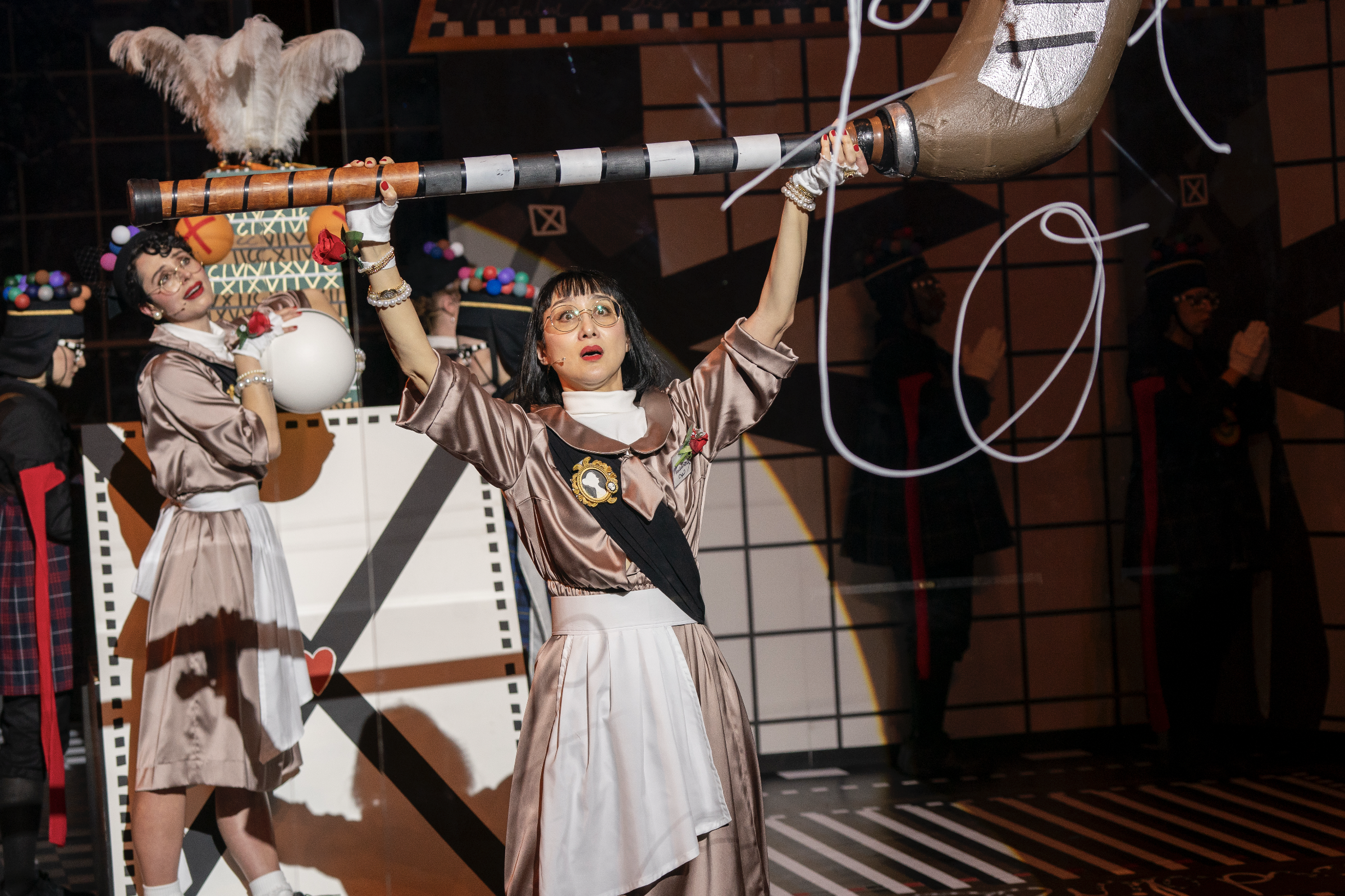
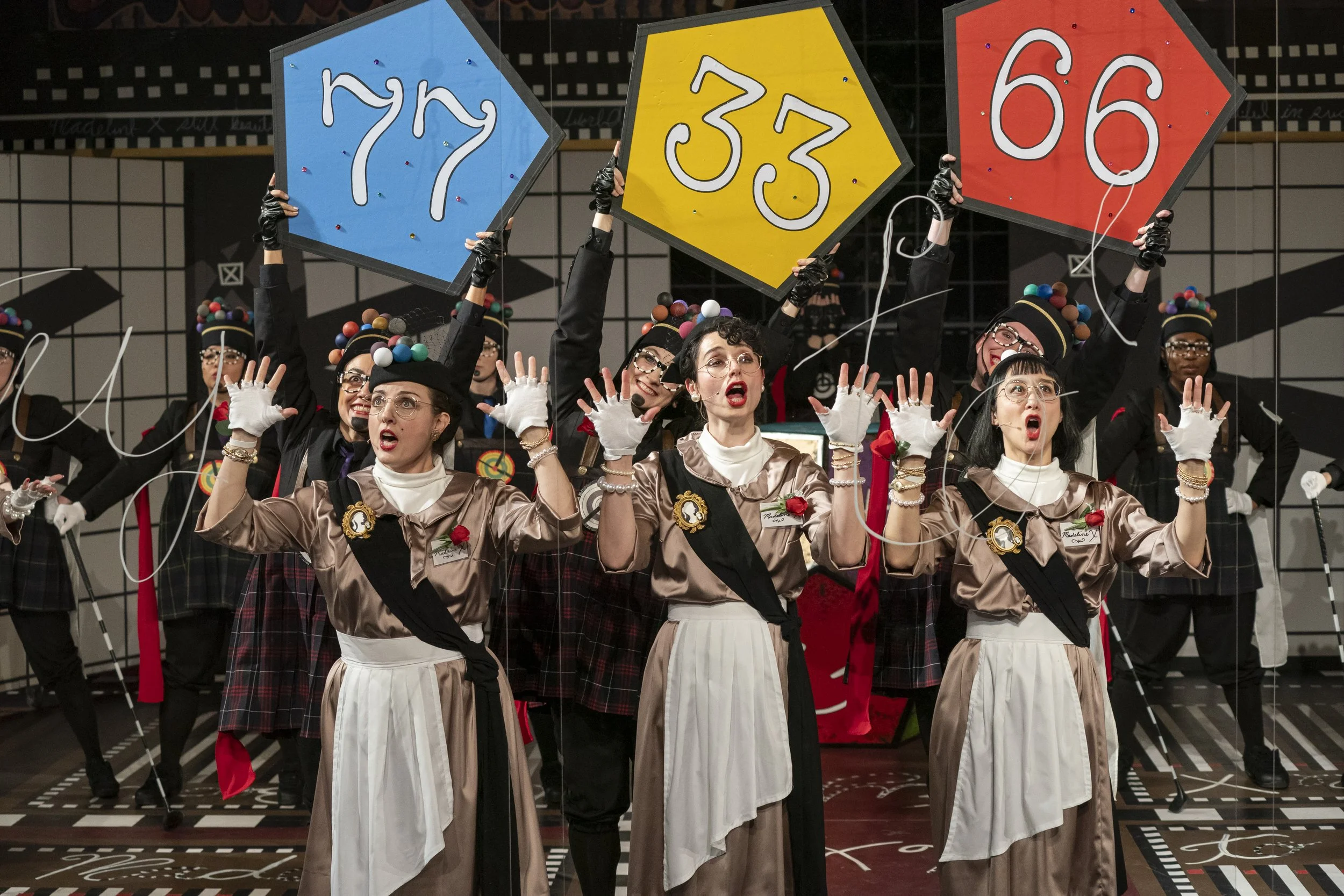
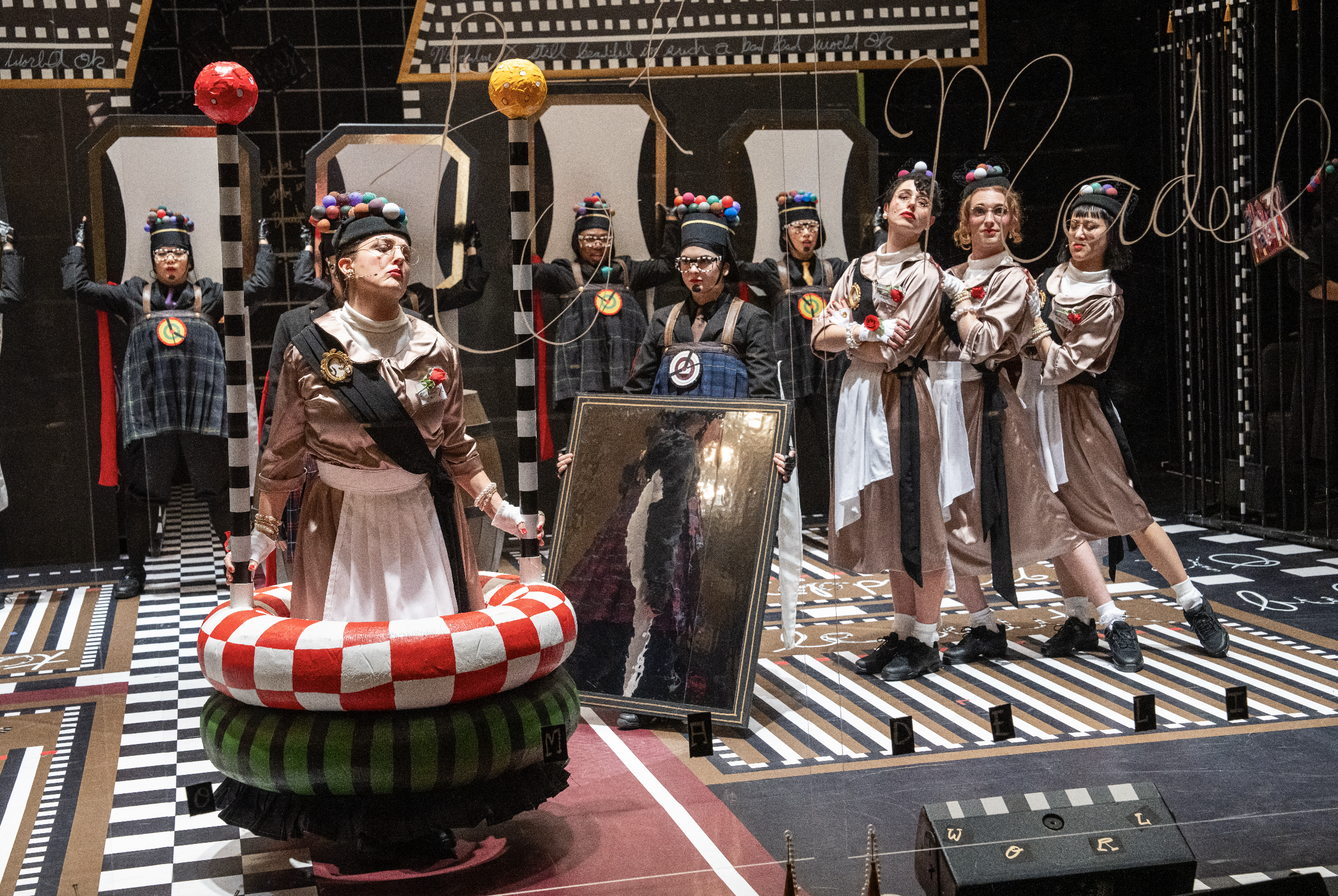
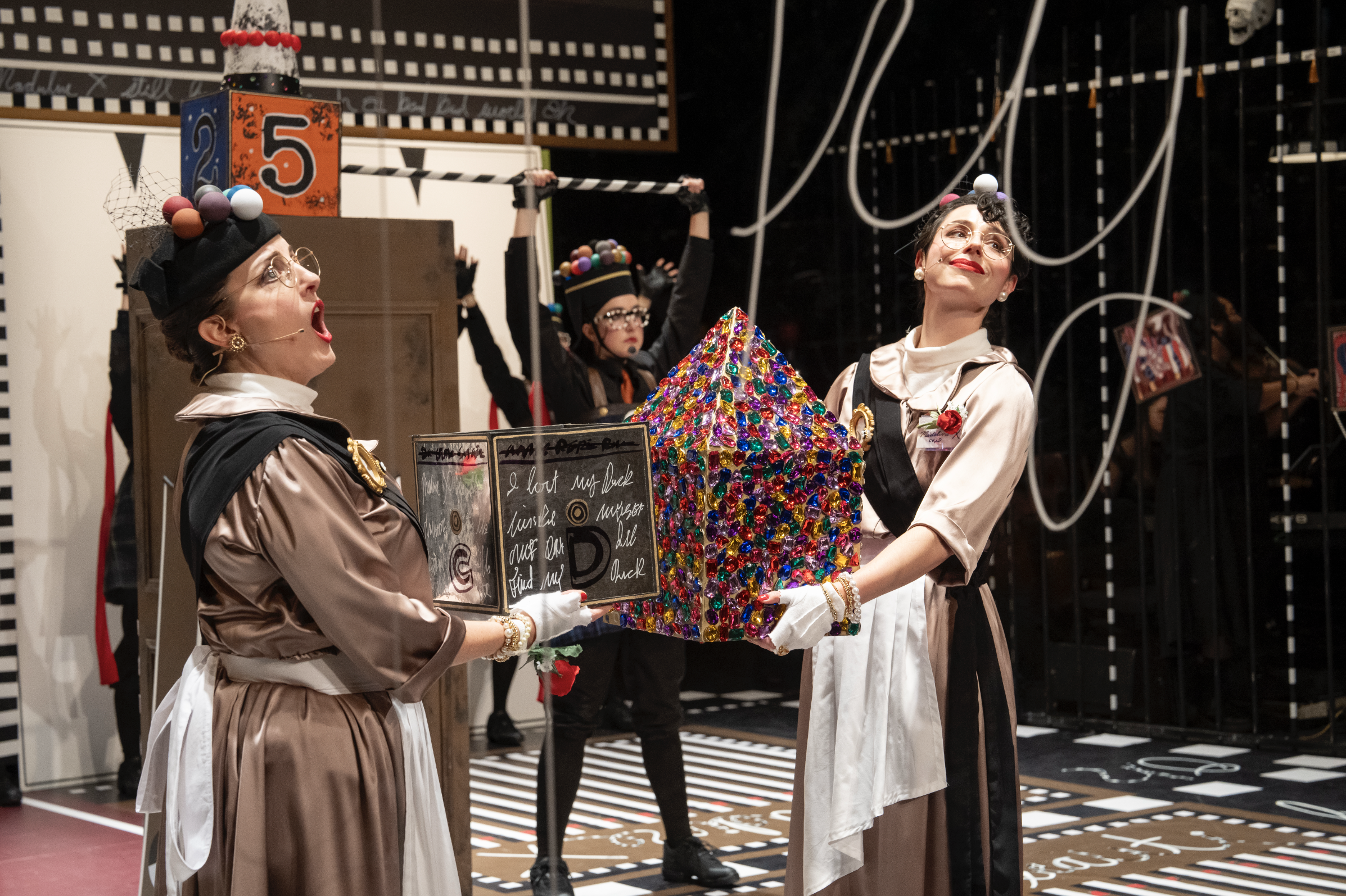
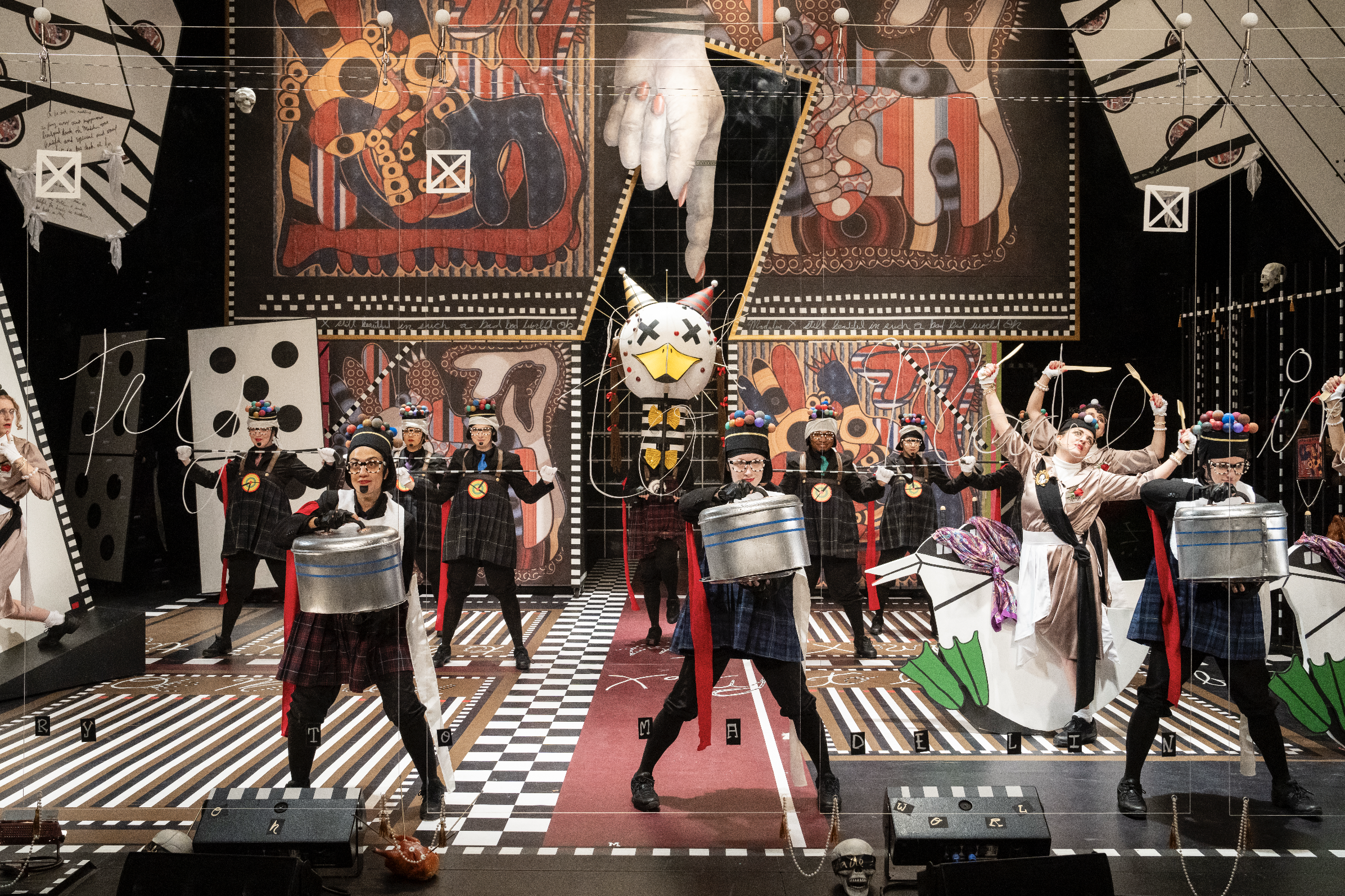
After debuting at CalArts way back in 2006, and now exhumed, burnished, and enigmatically reframed by Paul Lazar and Annie-B Parson of Big Dance Theater for the 2026 Prototype Festival, Richard Foreman’s What to Wear proceeds less as a narrative than as a succession of vitrines: glassed-in psychic exhibits through which we observe the agitated cogitations of Madeline X as she stands before the abyss of her own closet. Clothing, here, is not mere fabric but fate. Each assembled tableau seems to ask, with deadpan ferocity, who is permitted entry into the immaculate kingdom of the presentable, and who is exiled, ungroomed and ungilded, beyond the velvet rope that separates the merely visible from the officially beautiful.
At its most succinct—and perhaps its most truthful—it can be described as an absurdist, post-rock pageant masquerading as a meditation on attire, though “about clothes” hardly captures the perversity of its ambition. Garments here are elevated to metaphysical problems, while the stage is periodically surrendered to images so blithely irrational they feel smuggled in from a half-remembered dream: among them, the calmly preposterous sight of ducks who not only wander onto the scene but do so as golfers, as if leisure itself had slipped its symbolic leash. The effect is less gag than worldview. By yoking the banal rituals of dressing to such willfully unmotivated intrusions, the piece situates itself squarely in an absurdist lineage, where meaning is not constructed but short-circuited, and where post-rock’s repetitive, declarative sonic heft underwrites a parade of images that refuse, with cheerful obstinacy, to behave. A duck returns to enter a restaurant but therein lies the fear of ending up the crispy skin of Peking, the rich, slow-cooked tender of French confit, or the sweet-savory flavor à l'Orange. The libretto confirms: When a duck enters a fine restaurant/Dressed very beautifully/That duck is eaten.
The role of Madeline is incarnated not by one performer but by four voices—two sopranos, a mezzo-soprano, and a tenor—who circulate through Foreman’s aphoristic text like thoughts chasing one another through a restless mind. At times they succeed one another, handing off phrases as if passing a mirror; at others they braid into a tight vocal quartet, individuality dissolving into choral self-scrutiny. A chorus clad in tartan advances and retreats with ceremonial deliberateness, bearing props as though they were sacred relics and periodically forming a human palisade behind the principals. Between audience and action stand broad planes of plexiglass, erecting a literal fourth wall that produces the faintly queasy sensation of peering into an impeccably curated terrarium: an aestheticized ecosystem, hermetically sealed against the contaminating warmth of empathy.
It is an opera that erupts before the eye as a disciplined delirium of geometry: tartans colliding with stripes, cones and pyramids staking their angular claims, checkerboard borders hemming the space like ornamental battlements, and taut fishing lines slashing the air on diagonal vectors. Michael Darling’s brilliant scenic and props recreation work seamlessly with E.B. Brooks’ out-there costume design and Joe Levasseur’s inventive lighting. The stage appears less composed than plotted, as if a draftsman’s fever dream had been granted volume and light. Patterns refuse to settle into background decoration; instead they advance, assertive and mildly confrontational, insisting that vision itself become an act of navigation through grids, angles, and intersecting planes. The result is a visual field at once playful and severe, a riot ordered by ruler and protractor, in which ornament hardens into architecture and the eye is compelled to wander, measure, and lose its bearings all at once.
Emotion, like the performers themselves, is kept under glass. The singers, miked and mediated, often flatten their timbre into a straight, almost anti-lyrical tone, as if lyricism itself were an indecorous excess. Yet fissures open. In one beguilingly absurd episode, the tenor Morgan Mastrangelo lends plush, comic ardor to Madeline’s contemplation of a duck attempting entry into a fine restaurant, a vignette that feels both Lewis Carroll and Kafka in evening wear. Elsewhere, mezzo Hai-Ting Chinn spins the question “Am I still beautiful?” into a mesmeric ascent of scales, her voice climbing against a backdrop of grief-struck, teetering strings, the music seeming to measure beauty even as it mourns its inevitable decay. Periodically, Foreman’s own recorded voice intrudes—Delphic and implacable—like a disembodied stage manager calling cues from the void.
Off to one side, the Bang on a Can All-Stars, marshaled by Alan Pierson and crowned with bellboy caps sprouting cheerful pompoms that border on Easter eggs, generate the momentous Michael Gordon composition, a clangorous, motoric soundscape driven by electric guitars and hammering keyboard ostinatos. The score advances in discrete slabs rather than flowing lines: a phrase obsessively reiterated, the sonic mass accumulating pressure, then an abrupt halt, as if the music had run headlong into an invisible wall. These sharp edges find their visual analogue in the production’s geometric rigor—patterned borders, taut vertical strings, and rectilinear frames slicing the space into measurable units. One senses a universe fixated on calibration and categorization, on the mapping of surfaces at the expense of narrative depth.
Games of chance flicker insistently through the evening’s visual lexicon, as if fate itself had been drafted into the design scheme. A wheeled lotto tumbler trundles across the stage with the homely determination of a lawnmower, its transparent globe promising revelation while delivering only the mechanics of anticipation. Upstage, outsized dominoes stand at the ready, monolithic and mute, suggesting both the childhood pleasure of toppling sequences and the adult dread of irreversible consequence. Elsewhere, numbers materialize and vanish with teasing arbitrariness, numerical apparitions that refuse to settle into calculable patterns. Together, these motifs cultivate an atmosphere of ritualized randomness, a theatrical casino in which probability replaces plot and the audience is invited to contemplate not what will happen next, but how little control anyone ever had over it to begin with.
If the work circles any thematic center, it is the uneasy commerce between object and subject: the fetish of things and the thingification of people. Garments, props, panels, and partitions threaten to outlive and outshine the bodies that manipulate them. In this light, the revival also reads as a vigil. Richard Foreman, who died last year at eighty-seven, presides over the evening like a patron saint of productive bewilderment. His theater of disorientation—so allergic to tidy meanings and therapeutic resolutions—here becomes both memorial and manifesto for an avant-garde that once trusted confusion more than clarity.
That trust feels newly provocative. In an operatic landscape increasingly devoted to declarative relevance and emotional instruction manuals, What to Wear proposes opacity as a virtue and nonsense as a mode of truth-telling. Its Surrealist inheritance, long relegated to the margins, returns not as quaint eccentricity but as bracing corrective. By refusing to tell us what to think or feel, the piece creates the conditions for something rarer: a collaborative dream in which the audience and artwork meet on unstable, fertile ground.
The production’s seduction resides, paradoxically, in its refusal to seduce, in the disciplined austerity with which it declines to gratify our appetite for explanation. Meaning is neither offered nor denied but held perpetually in abeyance, like a garment glimpsed through frosted glass. This studied reticence becomes its own kind of spectacle: an art of deliberate incompletion that invites the audience to lean forward into the void, to supply with imagination what the stage withholds in certainty. In an era glutted with overarticulation, the work’s power emanates from its cultivated silence around itself, its insistence that fascination can flourish not from revelation but from the charged, tantalizing act of not quite knowing. At a moment when public language so often arrives pre-digested and overdetermined, this spectacle of radical silliness and stern abstraction feels oddly, exhilaratingly candid. It offers no story to follow, only a field of signs to wander. And in that wandering—in the bafflement, the laughter, the flashes of estranged recognition—opera reclaims one of its oldest, strangest powers: not to explain the world, but to make it newly, vertiginously imaginable.
What lingered after this delightfully baffling encounter was less any decipherable thesis about what What to Wear is supposed to mean than a sharper intuition of what it addresses in our present climate of incessant proclamation. In an age when the influencer’s camera-facing murmur arrives burnished with the authority of revealed truth, when opinion is packaged as doctrine and taste markets itself as moral law, the piece’s steadfast refusal to instruct feels almost insurgent. This opera stages a small rebellion on behalf of ambiguity, reminding us that not every utterance requires belief, not every image demands endorsement. In the face of voices that speak as if certainty were a commodity to be endlessly dispensed, this work answers with a poetics of doubt—an invitation to dwell, if only for an hour, in the fertile discomfort of not being told what to think.
Click HERE for tickets.
Review by Tony Marinelli.
Published by Theatre Beyond Broadway on January 27th, 2026. All rights reserved.
